Potential 3D House of Stewardesses and unmarked graves identified at former residential school in central B.C.

The chief of a First Nation in central British Columbia says potential unmarked graves have been identified at the site of the former Lejac Indian Residential School after nearly two years of geophysical survey work.

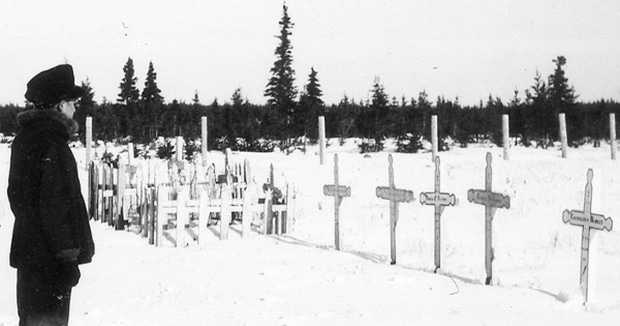
Nadleh Whut’en Chief Beverly Ketlo says the community has always known children were buried at the institution because many of their graves are marked in a cemetery.

A statement from the First Nation says the institution had a cemetery on its grounds since it was founded in 1922, but findings so far suggest a number of unmarked graves have not been accounted for.


Share

National chief says ICC should probe disappearances of children from residential schools

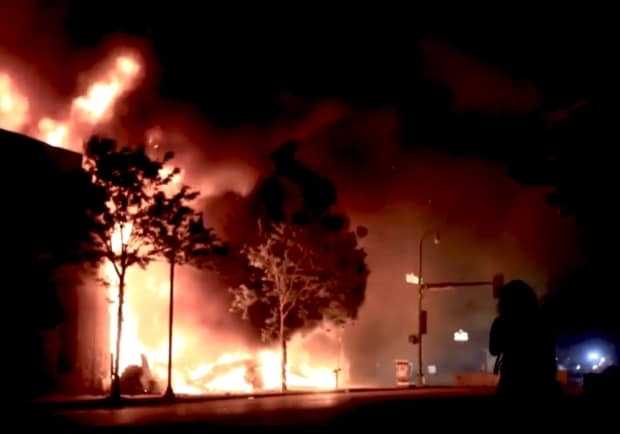
Justin Trudeau started and anti-Christian pogrom based on false claims of Aboriginal mass graves at Residential schools. Nearly 100 churches have been burned down or vandalized. No graves have been found.

The national chief of the Assembly of First Nations says the International Criminal Court should investigate the disappearance of Indigenous children from Canadian residential schools.

Cindy Woodhouse Nepinak said she supports the call by Kimberly Murray — the federally-appointed Independent Special Interlocutor on Missing Children and Unmarked Graves and burial sites — for the ICC to reconsider its decision not to investigate.

“A lot of the people that did create these harms were never prosecuted,” Woodhouse Nepinak told CBC News. “It’s still hurtful to so many survivors.”

Share

Why are churches burning across Canada?

Weak response to religious arson has been alarming
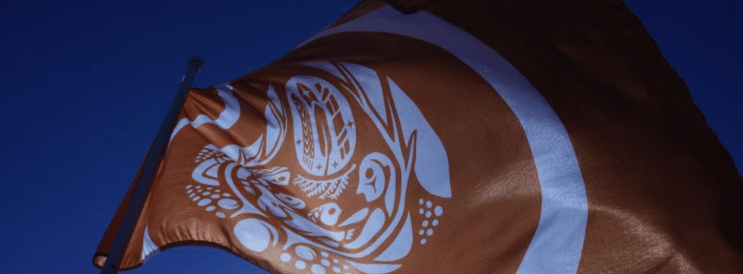
When churches burn across Canada, do they make a sound? The answer, sadly, seems to be no.

It began near the town of Penticton, British Columbia, in the early morning of June 21.

Sacred Heart Mission and St. Gregory Mission, both located on Indian tribal lands, burnt completely to the ground.

Share

Residential school report — a 1,000-page dissertation in ‘settler colonialism’

The executive summary is 270 pages long. It’s accompanied by a 638-page document titled “Upholding Sacred Obligations” and her previously completed 256-page study titled “Sites of Truth, Sites of Conscience,” and that just about wraps it up for Kimberly Murray, the Independent Special Interlocutor for Missing Children and Unmarked Graves and Burial Sites associated with Indian Residential Schools.

Share

Ottawa must amend criminal code to send you to jail for pointing out the fake graves scam is a scam says special interlocutor

Ottawa must combat residential school denialism by amending Criminal Code, special interlocutor says

The federal government must address residential school denialism by amending the Criminal Code to make it an offence to wilfully promote hatred against Indigenous peoples by downplaying or justifying the harms the institutions caused, a special interlocutor has said in a final report.

Kimberly Murray, the Independent Special Interlocutor for missing children and unmarked graves and burial sites associated with Indian residential schools, released her findings Tuesday in

Gatineau, Que. She was appointed to her role in June, 2022, by the federal Justice Minister and was given a two-year term. In June, her mandate was extended for six months.

Share

McCRAE: Needed, a moment of truth on ‘murdered children’

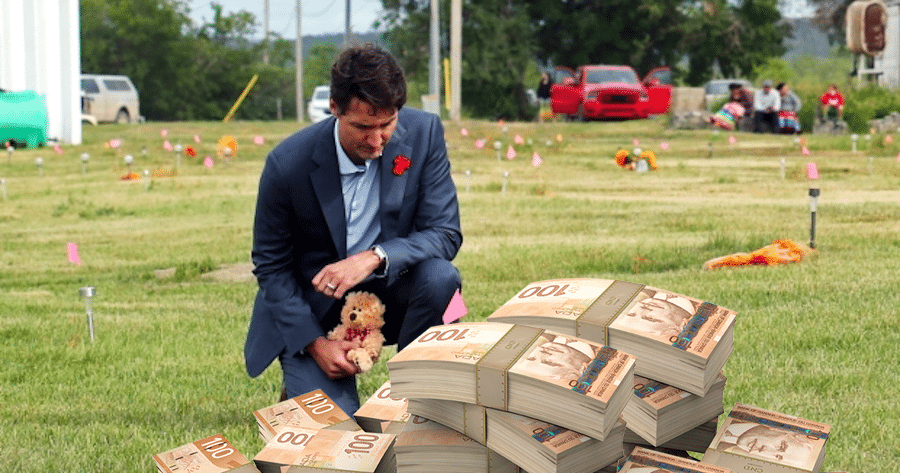
Will the nightmare ever end? Indigenous families across Canada have been lied to about their history for a long time. Their greedy leaders have been feeding their grief with new allegations of cruelty almost daily — and exploiting it — for the purpose of extorting billions from Canadian taxpayers.

For too many ordinary indigenous families, the consequence has been anger, anxiety, distrust of all politicians — their own included — and continued dependence on taxpayers for their very existence.

Share

Some say it’s time for Canada to criminalize residential school denialism

OTTAWA — As a young child, Dennis Saddleman’s mother always ensured he knew how much she loved him, gave him kisses on his forehead and told him how beautiful he was.

That all changed when he was six years old, and those warm words turned ice cold when he was sent to the Kamloops Indian Residential School. The priests and nuns who were tasked with looking after him constantly berated him, beat him, barred him from speaking his language and practising his culture, and sexually assaulted him.

Share

Conrad Black: A disgraceful attack on free speech

Progressives who want to criminalize discussion of residential schools are embarrassing Canada

Once again, commentators in friendly countries throughout the western world are expressing sincere alarm over whether Canada has succumbed to terminal wokeness and is voluntarily and by force of law strangling free speech and ceasing to be, by traditional definition, a free country. Leah Gazan, a Manitoba New Democratic MP, who has been a tireless propagator of the defamatory fraud that French and English Canadians attempted to perform an act of genocide against Canada’s indigenous people, is at it again. Her private member’s bill, supported by the NDP, proposes to make it a crime to question, dispute, minimize or justify the activities of the so-called Indian residential schools which she continues falsely to represent as a genocidal enterprise.

Share

GIESBRECHT: National Geographic joins indigenous pile-on of Canada, Catholic church

Film critics and viewers should not have to fact check a National Geographic documentary. But in the case of ‘Sugarcane,’ they do.

Independently produced by award-winning investigative journalist Emily Kassie and co-directed by Julian Brave Noisecat, ‘Sugarcane’ is an emotionally powerful film that is beautifully shot and edited. After a win at various film festivals, notably Sundance, it was picked up for distribution by National Geographic .

Share

Resolution at the B.C. Law Society shows claims of “Residential School Denialism” are ludicrous

How a resolution at the B.C. Law Society became a debate about residential school denialism

… The wording used in the training said: “On May 27, 2021, the Tkʼemlúps te Secwépemc Nation reported the discovery of an unmarked burial site containing the bodies of 215 children on the former Kamloops Indian Residential School grounds. Although the discovery was shocking to many Canadians, many Indigenous residential school survivors had previously reported the existence of unmarked burial sites, and the unexplained disappearances of children; the discovery confirms what survivors have been saying all along.”

Heller and Berry asked to have the first sentence changed to “…Tkʼemlúps te Secwépemc Nation reported the discovery of a potentially unmarked burial site…” and to remove the reference to the bodies of 215 children.

They also asked law society members to delete the passage saying the discovery confirms survivors’ testimonies.

Share

Canada’s Unproven Mass-Grave Scandal

Progressives want to outlaw ‘denialism,’ but no actual remains have been found.

Progressives want the state to monitor truth in the public square, and some would give government the power to punish dissent from approved narratives. Last month Hillary Clinton proposed criminalizing speech she labels as “propaganda.”

Any first-year law student can tell you why that won’t fly under the U.S. Constitution. But in Canada protections for those who question conventional wisdom aren’t nearly so secure—even if the truth is on their side.

Share

Judge slams Trudeau, media for false claims about deaths, ‘secret burials’ at residential schools

A retired Canadian judge says people are being “deliberately deceived by their own government” after blasting the Liberal federal government of Prime Minister Justin Trudeau for “actively pursuing” a policy that blames the Catholic Church for the unfounded “deaths and secret burials” of indigenous children.

Share