RUBENSTEIN: Kamloops still wallows in false accusations

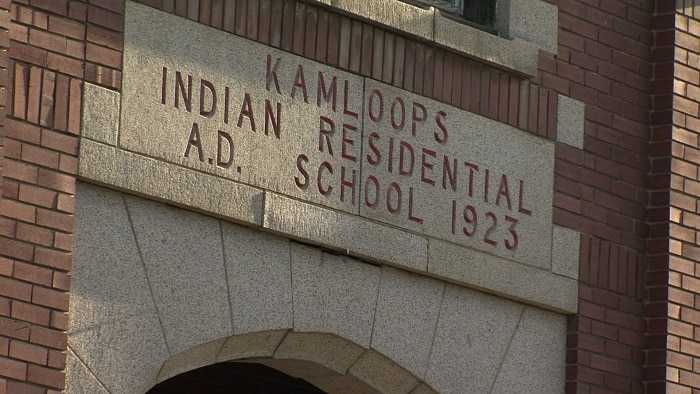
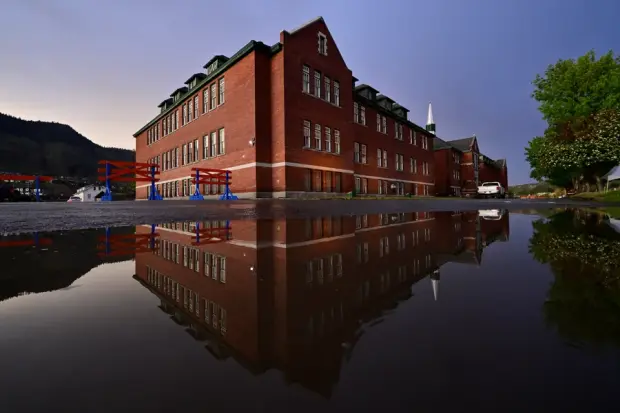
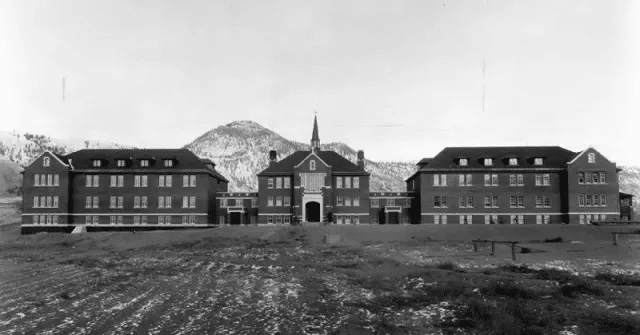
On February 12, Parks Canada announced the designation of the Kamloops, B.C. Indian Residential School as a national historic site but omitted any reference to the alleged graves containing 215 missing children in an adjoining apple orchard, according to Blacklocks Reporter.

This claim is misleading. The “215 missing children” refers to a May 27, Tk’emlúps te Secwépemc (legally known as the Kamloops Indian Band) press statement of seismic implications, literally and figuratively. A ground-penetrating radar survey of the area surrounding the city’s former Indian Residential School, the band claimed, had located the “remains of 215 children who were students” of the school.

Share

Ottawa ends funding for national advisory committee on unmarked residential school graves

Indian Money Dance

An expert committee formed to help Indigenous communities find unmarked graves at former residential schools in Canada says the federal government has discontinued its funding.

“It’s a betrayal,” said founding member Crystal Gail Fraser, who is Gwich’in and grew up in Inuvik, N.W.T. “We are losing sight of our values around truth and reconciliation.”

The committee will be forced to cease operations when its current funding agreement expires on March 31, Fraser said.

Share

Oscar-nominated documentary on residential-school horrors runs thin on facts

“Sugarcane,” an award-winning Canadian documentary billed as an investigation into “ a pattern of infanticide” in a B.C. residential school, has been short-listed for a 2025 Academy Award. Unfortunately, the film fails to deliver on its premise, revealing no evidence for even a single infanticide at a residential school, let alone a “pattern.”

In media interviews, Sugarcane’s director and producer Emily Kassie recalls being “gut-pulled” to her project by the 2021 “discovery of unmarked graves” at the Kamloops residential school. Having seen a news story about a search for missing children by the Williams Lake First Nation at the nearby St. Joseph’s Mission residential school , which had been established in 1891 by the Oblates of Mary Immaculate, Kassie approached them. They were amenable to collaboration.

The film’s title refers to the “Sugar Cane” community near Williams Lake, B.C., home to the Williams Lake First Nation.
Share

Councilor punished for denying unproven ‘mass graves’ narrative seeks court review

MURRAY HARBOUR, Prince Edward Island (LifeSiteNews) — A Prince Edward Island (PEI) councillor who was punished for denying the unproven claim of mass graves at residential schools is seeking a court review.

In a February 4 press release, the Canadian Constitution Foundation (CCF) announced they would defend PEI councillor John Robertson who was sanctioned by the town of Murray Harbour for placing a sign opposing the mass graves narrative on his lawn.


Share

Ottawa silent on funding for Kamloops graves monument

The Department of Canadian Heritage declined to comment on whether it would fund a proposed national shrine to commemorate 215 children allegedly buried at the former Kamloops Indian Residential School, despite millions in federal funding allocated for excavation efforts.

Blacklock’s Reporter says no remains have been recovered to date, according to public records.

Share

RUBENSTEIN: Kamloops… why wasn’t the money spent as intended?

According to Blacklock’s Reporter, Canada’s premier newsroom revealing machinations our federal government leaders would rather keep hidden, “Millions paid to a British Columbia First Nation to recover suspected children’s graves at an Indian Residential School were instead budgeted for publicists and consultants.”

The Department of Crown-Indigenous Relations even tried to conceal the financial records under the Access To Information Act.

Share

Millions spent on consultants instead of grave recoveries at Kamloops residential school

Millions in federal funding intended to recover the remains of children at a former Indian Residential School in Kamloops,vwere instead allocated for consultants, publicists, and other administrative costs, according to newly revealed documents.

Blacklock’s Reporter says the Department of Crown-Indigenous Relations attempted to withhold these financial records under the Access to Information Act.

Share

‘unmarked burial features’

An investigation has detected 114 “unmarked burial features” on the former property of McIntosh Indian Residential School (IRS) in the Kenora district of northwestern Ontario, the Wiikwogaming Tiinahtiisiiwin Project Team said Thursday.

It’s one of multiple searches underway for missing children and unmarked burials at former residential school sites across Canada.

Share

GIESBRECHT: Canadians ‘gamed’ on residential schools deaths

Readers trying to understand the many claims made about the number of children who died at residential schools can be forgiven for being confused about what they are being told. Various numbers, such as 3,201, 4,000, 6,000, and even 50,000 have been advanced by different people at different times.

So, what is the actual number of documented deaths of named children who died while attending a residential school?

Share

Potential 3D House of Stewardesses and unmarked graves identified at former residential school in central B.C.

The chief of a First Nation in central British Columbia says potential unmarked graves have been identified at the site of the former Lejac Indian Residential School after nearly two years of geophysical survey work.

Nadleh Whut’en Chief Beverly Ketlo says the community has always known children were buried at the institution because many of their graves are marked in a cemetery.

A statement from the First Nation says the institution had a cemetery on its grounds since it was founded in 1922, but findings so far suggest a number of unmarked graves have not been accounted for.

Share

National chief says ICC should probe disappearances of children from residential schools

Justin Trudeau started and anti-Christian pogrom based on false claims of Aboriginal mass graves at Residential schools. Nearly 100 churches have been burned down or vandalized. No graves have been found.

The national chief of the Assembly of First Nations says the International Criminal Court should investigate the disappearance of Indigenous children from Canadian residential schools.

Cindy Woodhouse Nepinak said she supports the call by Kimberly Murray — the federally-appointed Independent Special Interlocutor on Missing Children and Unmarked Graves and burial sites — for the ICC to reconsider its decision not to investigate.

“A lot of the people that did create these harms were never prosecuted,” Woodhouse Nepinak told CBC News. “It’s still hurtful to so many survivors.”

Share

Why are churches burning across Canada?

Weak response to religious arson has been alarming

When churches burn across Canada, do they make a sound? The answer, sadly, seems to be no.

It began near the town of Penticton, British Columbia, in the early morning of June 21.

Sacred Heart Mission and St. Gregory Mission, both located on Indian tribal lands, burnt completely to the ground.

Share

Residential school report — a 1,000-page dissertation in ‘settler colonialism’

The executive summary is 270 pages long. It’s accompanied by a 638-page document titled “Upholding Sacred Obligations” and her previously completed 256-page study titled “Sites of Truth, Sites of Conscience,” and that just about wraps it up for Kimberly Murray, the Independent Special Interlocutor for Missing Children and Unmarked Graves and Burial Sites associated with Indian Residential Schools.

Share