

Pew research reports that, as of 2021, 25 percent of 40-year-olds in the United States had never been married. In 2010, the figure was at 20 percent. In 1980, it was at 6 percent.
What kind of society have we become?
Pew research reports that, as of 2021, 25 percent of 40-year-olds in the United States had never been married. In 2010, the figure was at 20 percent. In 1980, it was at 6 percent.
What kind of society have we become?

In the early months of COVID, as one government after the other enforced lockdowns and mask mandates, one country stood as the outlier: Sweden. Going it alone against prevailing left-wing thinking was an unusual way to make headlines for the poster child of European progressivism.
Sweden and its Nordic neighbors make for an unexpected addition to the list of countries where the European Right has achieved victories in the past decade, including Orbán’s Hungary, Meloni’s Italy, and a Brexit UK. Poland and Spain, where elections this year will determine the fates of the incumbent Law and Justice party and the rising VOX party, will receive much attention as a test of the phenomenon’s durability. The Nordic countries, though, will also be worth keeping an eye on.

At a casual glance, the recent cascades of American disasters might seem unrelated. In a span of fewer than six months in 2017, three U.S. Naval warships experienced three separate collisions resulting in 17 deaths. A year later, powerlines owned by PG&E started a wildfire that killed 85 people. The pipeline carrying almost half of the East Coast’s gasoline shut down due to a ransomware attack. Almost half a million intermodal containers sat on cargo ships unable to dock at Los Angeles ports. A train carrying thousands of tons of hazardous and flammable chemicals derailed near East Palestine, Ohio. Air Traffic Control cleared a FedEx plane to land on a runway occupied by a Southwest plane preparing to take off. Eye drops contaminated with antibiotic-resistant bacteria killed four and blinded fourteen.
h/t Sweetpea

MY grandfather was not prone to sentimentality. Overt demonstrations of feigned emotion would usually be met with a short rebuke along the lines of ‘what a load of b*****ks’.
Much of this, no doubt, was just who he was. Some of it, however, must have been born from his experiences.
On June 6, 1944, at the tender age of 18, he parachuted into Ranville, Normandy. The next few months saw him fight across France and Germany, suffering life-threatening wounds along the way and losing his closest friends, particularly his mate Frenchie, which stayed with him till his dying days some 77 years later.
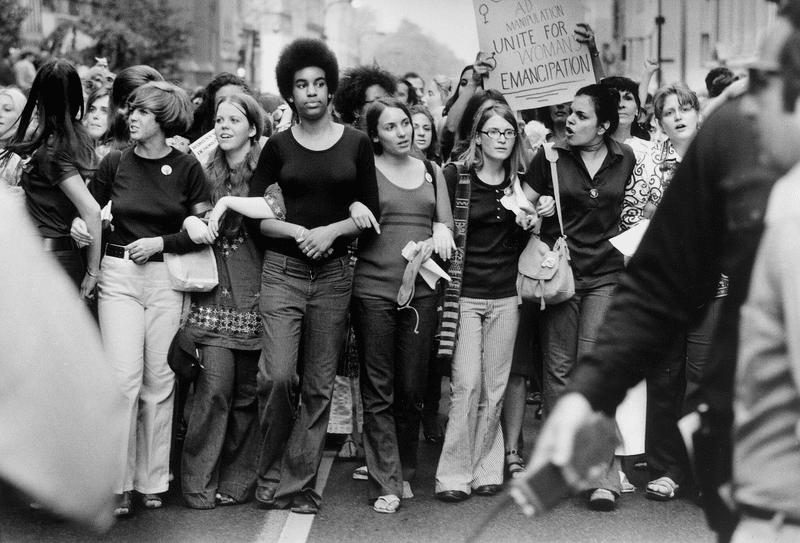
‘Those of us who came to adulthood post-Pill stand on another shore, an ocean apart from all generations before us.’ That’s how Baroness Alison Wolf describes the impact of the invention of the contraceptive pill on the lives of women in The XX Factor. ‘Sex can be safe. You can relax about it. Women can avoid an undesired pregnancy, completely, securely, and on their own’, she writes.
Chrissie Hynde, lead singer of the Pretenders, could hardly be more different from the scholarly Professor Wolf. Yet, born just two years later in 1951, she shares Wolf’s view that the Pill revolutionised women’s lives. ‘In the name of women’s lib, women were becoming like men, and that was good news for me because I wanted what the boys had’, Hynde wrote in her 2015 memoir, Reckless. ‘In thinking we were in charge of our own sexuality, now we could say “yes” instead of “no”.’

What happens with the competent retire, burn out or opt out? It’s a question few bother to ask because the base assumption is that there is an essentially limitless pool of competent people who can be tapped or trained to replace those who retire, burn out or opt out, i.e. quit in favor of a lifestyle that doesn’t require much in the way of income or stress.
These assumptions are no longer valid. A great many essential services that are tightly bound to other essential services are cracking as the competent decide (or realize) they’re done with the rat-race.
h/t DS

All across the globe, from Tokyo to Turin, an increasing number of young men are walling themselves off from society. In Japan, the issue of social withdrawal among young men is so severe that the Japanese have coined a term for it: hikikomori (hiki, “to withdraw,” and komori, “to remain inside”). This sociocultural phenomenon involves a complete rejection of the social contract, and a refusal to engage with other members of society. At least 1.5 million Japanese people, many of whom are young men in their 20’s and 30’s, have completely withdrawn from society. They don’t date, and they don’t work. They don’t do anything that requires them leaving their homes. In Japan’s neighbor, South Korea, some 350,000 people between the ages of 19 and 39 are “reclusive” or “lonely,” according to a Ministry of Gender Equality and Family (MOGEF) report. Again, many of these reclusive individuals are young men. They tend to live in small spaces, be disconnected from the outside world for extended periods of time, and display “noticeable difficulty in living a normal life.” Forty percent of the affected begin their isolation in their adolescent years. Numerous factors have contributed to the phenomenon, including financial difficulties, increased social media use, and battles with mental illness.
Of course, one needn’t live in East Asia to see the hikikomori phenomenon playing out.
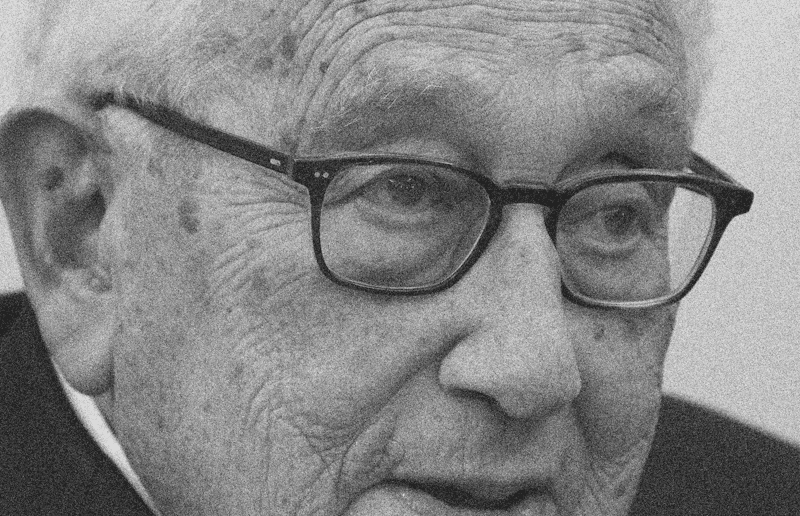
The great strategist sees a globe riven by U.S.-China competition and threatened by fearsome new weapons and explains why he now thinks Ukraine should be in NATO.
Eight years—that’s all the time Henry Kissinger was in public office. From January 1969 to January 1977, Mr. Kissinger was first national security adviser and secretary of state under Presidents Richard Nixon and Gerald Ford, holding both titles concurrently for more than two years. He was 53 when he cleared his desk at Foggy Bottom to make way for Cyrus Vance. In the 4½ decades since, he has worked as a consultant on strategic relations to governments around the world and consolidated beyond dispute his reputation—first earned when he co-piloted the U.S. opening to China in 1972—as the pre-eminent philosopher of global order and the most original, erudite and hard-nosed statesman of his era.

Among the most basic factors in what we may call the “practice of daily life” is one that is most easily forgotten or commonly neglected: trust. I mean, to begin with, trust in what we habitually regard as reliable without giving it a moment’s thought, as something we rarely doubt, let alone conceptualize. We seem to have little idea of the degree to which trust determines our every move, gesture and act. Trust, as James Bowman observes of honor in Honor: A History, is “reflexive” and at its core “inseparable from the human condition.”

Twilight Zone creator Rod Serling knew what kept his audience up at night.
In “Walking Distance” (1959), the third episode of the first season of The Twilight Zone, we meet an emblematic modern man. He is Martin Sloan (Gig Young), an anxious and driven executive. Out for a drive, he stops at a gas station. By chance, following the dream logic that was the series’ hallmark, he sees a sign for his hometown. Drawn by some irresistible force, he leaves the car to set off on foot. When he arrives, he finds that the town is just as he left it. Indeed, he has gone back in time, to a summer from his own boyhood. He meets his parents; he confronts his childhood self, riding a merry-go-round. He tries to speak to the boy, but frightens him, causing him to fall off the ride and break his leg. His father tells him that he must go back to where he came from. “There is only one summer to every customer,” he implores. “Don’t make him share it.”

The English-speaking world has turned its back on meritocracy, liberty and economic progress.
The pomp and ceremony of this weekend’s coronation of King Charles III could not hide the fact that Britain, once the most powerful nation on Earth, has become slightly dysfunctional and even a bit weird. In fact, this dysfunction is not just afflicting the United Kingdom itself, but also the broader Anglosphere, right from the antipodes up to the snowy wastes of Canada.
This is the West. If we become the victims there is nowhere else to turn.

So here we be, again. On the cusp, I would say. Four thousand years of Western Civilization at risk. On the verge. The eve of destruction, as the song says. The best that mankind has to offer is in the balance. I say “the best” because the West has set more men free than any other iteration of civilization, and freedom is the only standard by which we have to judge ourselves for what we are, or what we are capable of becoming. Being able to comply with the dictates of others is only the standard of a slave.

We are in the grip of an ideology that disowns our genius, denounces our success, disdains merit.
A few years ago the then-boss of Goldman Sachs explained to me the main reason he thought the firm had risen to such a dominant position in global investment banking over the previous half century. At the start of that period, banking was still dominated by a blue-blood class. In London especially, where I began my career in finance, the City was a place in which, in a still heavily regulated market, a slot in one of the big institutions was a coveted ticket to a life of riches.
Men and women are uniquely different, not only complementing but actually completing one another.
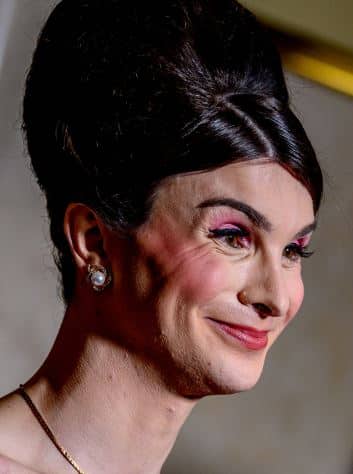 Despite its face-value absurdity, the transsexual movement has a stranglehold on society. Political and cultural elites are shoving the trans agenda down normal people’s throats, no matter the cost. Anheuser-Busch recently took a $5 billion hit for dedicating its Bud Light beers to trans activist Dylan Mulvaney, top YouTuber MrBeast is losing fans for promoting a staffer’s “gender transition,” American staple Jack Daniels faced boycotts for plugging drag queens in a marketing campaign, Disney lost its massive Florida tax breaks for endorsing pro-LGBT legislation, and the list goes on.

Does Generation Z take anything seriously? Earnestness is “cringe,” being in love makes one a “simp,” and ambition makes one a “try-hard.”
There is a “deeper ideology lurking in the minds of younger millennials & Gen Z,” as Esmé Partridge writes, “the rejection of idealism in all its forms.” Disenchanted with the world, plagued by hopelessness and nihilism, we have become a generation of zombies — a group of youth that is too dead to live and too alive to die.
