Capitalist radicals will shatter the world

Fragmentation is the new frontier of liberty

“We are back to the enigmatic pulse-beat of the messianic,” wrote the literary critic George Steiner a few months after the fall of the Berlin Wall. “No economist-pundit, no geopolitical strategist, no ‘Kremlinologist’ or socio-economic analyst foresaw what we are living through.” The surprise ending to the Cold War was followed by a period that many remember as one of global consciousness: a time of capitalist triumphalism, human rights talk, and corporate extension across borders, oceans, and continents. President George H. W. Bush gave the complex a name in 1990 when he praised the “New World Order”. The decade is marked in historical memory by a trend towards the scaling up of institutions: the World Trade Organisation, the European Union, NAFTA — new encasements for planetary supply chains.

Share

After Gentrification – What becomes of cities when the yuppies flee?

Gentrification is the urban policy most closely associated with the neoliberal era. Though reports of neoliberalism’s death are greatly exaggerated, there is no question that policies such as free trade, deregulation, entitlement reform, and foreign intervention are now more on the defensive than 20 years ago. Gentrification may be vulnerable, too. Certainly, fertility decline and remote work pose threats to it. The smaller family sizes that have become normal in 21st-century America mean fewer potential urban professionals in the college-to-city pipeline. Those currents will be yet further stemmed by the increased share of white collar jobs done via Zoom.

Gentrification is, at core, an economic strategy. It aims at increasing the number of middle- and upper-middle-class people living in urban cores. There always were, and always will be, young adults who want to live in cities. Gentrifiers differ from Patti Smith types, because they’re respectable and promise quantifiable gains to the urban economy such as higher real estate valuations. They moved into housing previously occupied by people with lower incomes.

Share

40 Percent of Canadian Children 14 and Under Are Not Living With Married Parents: Report

About 40 percent of Canadian children ages 0–14 do not live with married parents, according to a new report by Cardus, a think tank.

Data collected during COVID-19 suggested “a significant decline in marriage rates, divorce rates, and fertility,” according to the report, “Canadian Children at Home: Living Arrangements in the 2021 Census,” published Feb. 28. The report indicated it used previously unreleased Statistics Canada data from the 2021 census to examine the living arrangements of children from newborn to age 14 in Canadian families.

Share

The St Louis killing that went viral

The media have reduced murder to clickbait.

‘He was a nice, quiet individual. He kept to himself’, said one worker at a petrol station frequented by David Saldana, a homeless man who lived in St Louis, Missouri. ‘He would come in and then he’d go a couple of days without coming in and then he’d come back and get his little snacks.’

This week, Saldana was murdered.

Share

Confessions of a TikTok tradwife

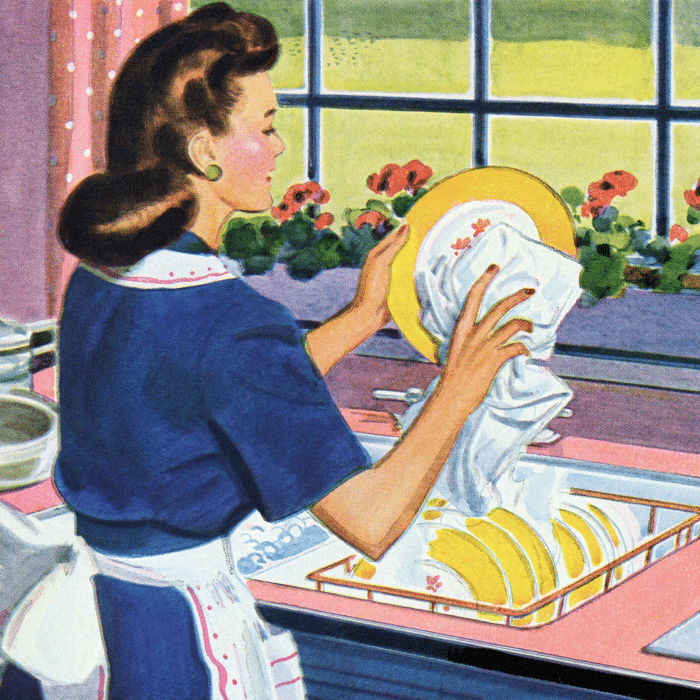
Estee Williams was studying meteorology at college when she dropped out to follow her dream: being a stay-at-home housewife. Now, while spending her days packing her husband’s lunchbox and scrubbing the skirting boards, she films videos for TikTok in flowy dresses where she promotes a return to “traditional” values. Think Betty Draper minus the melancholy.

Share

Pew Reports 63% of U.S. Men Are Alone

Extortionist.

Getting older has its problems. Hair loss, high blood pressure, and joints that suddenly no longer work like they used to are just a few. But when it comes to marriage and relationships, I thank God every day that my wife and I got married when we did. I cannot imagine being a single man today. First of all, there is no way I could keep track of all my alleged microaggressions, mansplaining, manspreading, cis-gendered patriarchal, imperialist… wait, what were we talking about again?


I have been wrestling with the likelihood that with K’s passing I will spend whatever remaining years I have left alone.

I am not looking nor do I think it possible to have a change of heart on the matter. It just is. I don’t know that I could summon the wherewithal to make the emotional investment in a new relationship. A doubtful prospect I suspect. It’s a tough knot with issues of faithfulness & loyalty owed making it near impossible for me to contemplate.

Well for companionship there’s always Xavier who has recently learned the art of extortion.

Share

War is About More than Big Battalions

A reflection on what people are willing to fight, kill, and die for.

Napoleon famously said that “morale is to the physical as three is to one.” More troops and bigger guns don’t necessarily guarantee victory, as Napoleon himself demonstrated. The post-revolutionary French army took on the wealthy great powers of Europe and with the exception of England, inflicted on them defeat after defeat, dominating most of continental Europe from 1804-14. History is full of other conflicts and battles in which the motivations for fighting trumped the greater numbers of the foe. Indeed, the West only exists because twice, in 490 and 480 B.C., the free Greeks defeated the massive, servile armies of the autocratic Persian Empire, preserving the ideals of political freedom and equality.

Share

Are King and Country worth fighting for?

WHO today would be willing to fight for King and Country? With the parlous state Britain is in right now, I wouldn’t hazard a guess.

But when the question was famously put to the test 90 years ago today, the answer was resoundingly clear, triggering outrage and condemnation.

On February 9, 1933, the Oxford Union, the university’s student debating society, discussed the motion: ‘That this House will in no circumstances fight for its King and Country’. The motion was carried by 275 votes to 153.

Share

Rise in middle-aged white ‘deaths of despair’ may be fueled by loss of religion, new research paper argues

So-called deaths of despair such as from suicide or alcohol abuse have been skyrocketing for middle-aged white Americans.

It’s been blamed on various phenomenon, including opioid abuse. But a new research paper finds a different culprit — declining religious practice.

The working paper, from Tyler Giles of Wellesley College, Daniel Hungerman of the University of Notre Dame, and Tamar Oostrom of The Ohio State University, looked at the relationship between religiosity and mortality from deaths of despair. The paper was circulated by the National Bureau of Economic Research.

Share

Maggie, Hitler and the Leaders’ Club

ANYONE who reflects on 20th century European history will ponder the perennial question: do exceptional individuals make history or does change come about through impersonal events? Historian Ian Kershaw, biographer of Hitler, examines 11 men and one woman who left a significant mark on their times against the backdrop and context of their rise to power. They are Lenin, Mussolini, Hitler, Stalin, Churchill, de Gaulle, Adenauer, Franco, Tito, Margaret Thatcher, Gorbachev and Helmut Kohl: six dictators, five democrats and Gorbachev, who fits neither category. Each chapter follows a similar formula: the background of the particular personality; their achievements or otherwise; and their legacy. The result is stimulating, provocative, absorbing.

Share

Uncle Sam’s open secret — American men are leaving the workforce in increasing numbers

In 2016, the American Enterprise Institute labour economist Nicholas Eberstadt published an important book called “Men Without Work.” Eberstadt’s book was basically about the evolution of the labour force participation rate among working-age males in the United States. In the years after the big war, close to 90 per cent of all American men were, at any given time, working or looking for work. At the time “Men Without Work” was published, the figure was more like 72 per cent. This week, with that number thrashing to keep its nose above 70 per cent, I learned that Eberstadt has published a “post-pandemic edition” of his volume with a new discussion of the problem.

Share

Letters Reveal What the World Was Like the Day JFK Was Shot

What became horrifying clear about Nov. 22, 1963, will also become clear about what is happening today.

Going through a box of memorabilia from family and friends recently, I found two letters. (The story you’re about to read is true; the names have been changed to protect the innocent.) On the morning of Nov. 22, 1963, a young married professional in Dallas wrote to his parents…

Share

Incentives: The Most Powerful Force In The World

By age 35, Akinola Bolaji had already spent two decades scamming people online, posing as an American fisherman to con vulnerable widows into sending him money.

The New York Times asked the Nigerian how he felt about causing so much harm to innocent people. He replied:

“Definitely there is always conscience. But poverty will not make you feel the pain.”

Scamming people is easier to justify in your head when you’re starving.

h/t DS

Share

The Nineties: our last decade of freedom?

There is a telling moment in former GQ editor Dylan Jones’s insider account of the 1990s, Faster Than a Cannonball: 1995 and All That. Loaded journalist Martin Deeson has gatecrashed a Cannes Film Festival party with his photographer in tow. ‘I ordered a large scotch, two gin and tonics, two glasses of champagne and then asked Derek what he wanted’, recalls Deeson. The two journalists then staggered around rat-arsed chatting to various A-listers before bumping into Sixties style icon Terence Stamp: ‘After looking at me for a while Stamp said, “I just don’t think I want to talk to you”, and walked away.’

Share