Tracing the Billions Spent on Net-Zero at All Levels of Government in Canada

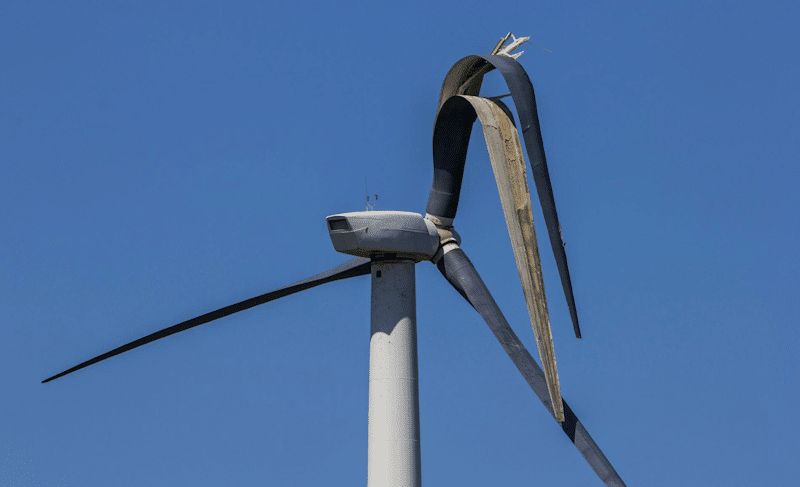
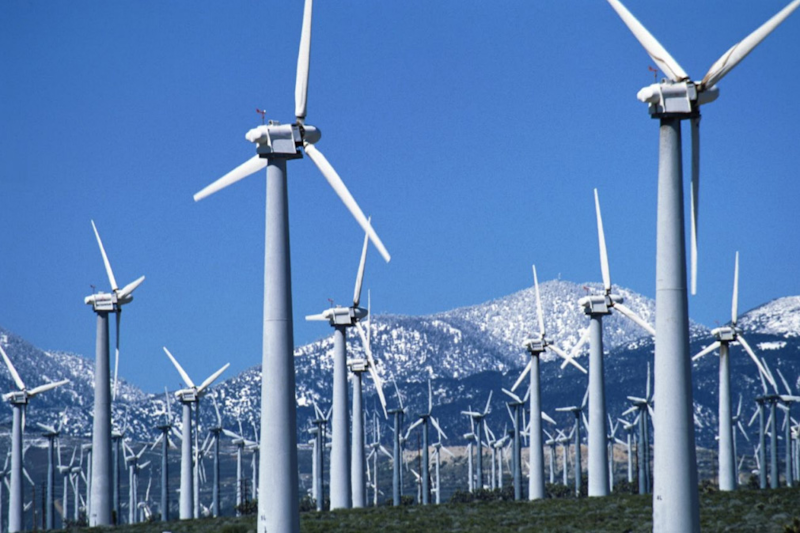
Wind Turbines – A Blight Upon The Land

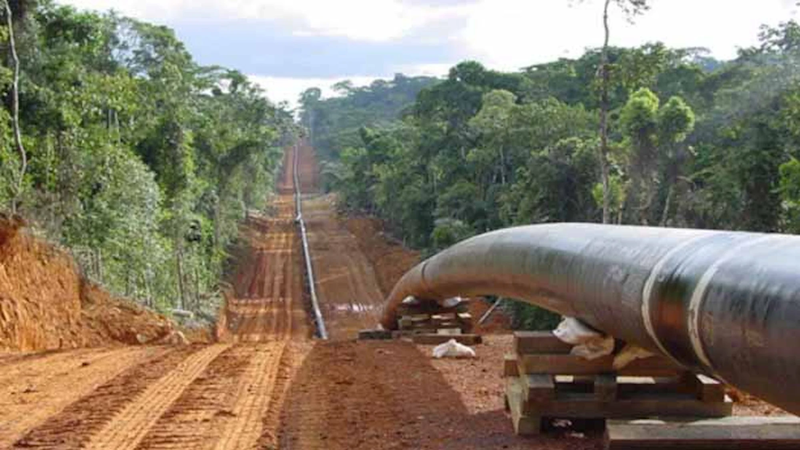
The Ottawa-Alberta memorandum of understanding links approval of a pipeline to B.C.’s coast with the $16.5 billion Pathways Alliance carbon capture project, for which industry players are counting on significant government support. While the sum may seem substantial, it represents just a fraction of the vast pool of Canadian taxpayer funds being directed by all levels of government to net-zero-emissions-related initiatives across the country.

These funds include billions in domestic policies as well as a $5.3 billion “international climate finance commitment” that Ottawa announced in 2021 for multi-year funding dedicated to helping developing countries “combat climate change.”

In 2024 alone, federal spending on environmental protection increased by 35.6 percent to reach $24 billion, a significant chunk of which is earmarked for emissions reduction.


I recommend a strong Egg Nog.

Share

Another feel-good EV disappears as automakers rethink electric dreams

Volkswagen’s most smile-inducing car — the electric reboot of its iconic hippie camper van — isn’t shipping to US dealerships in 2026.

The German automaker shelved next year’s Buzz for the US, pausing new production after just one full year on sale.

The stoppage comes as automakers reassess which electric vehicles still make sense in a market where federal subsidies of up to $7,500 were cut in September.


This can’t be good for VW’s Canadian EV operations, and all of the money tax payers were made to throw at it.

Share

Jamie Sarkonak: Electric buses are a disaster for every Canadian city that tries them

EV Bus Fire

Regina’s adoption of electric buses has been a disaster for the public. It’s the latest Canadian city to find this out the hard way.

The news slipped out during Regina city council’s Monday budget hearing, when transit union president Sukhwinder Singh was asked whether electric buses have impacted costs.

Share

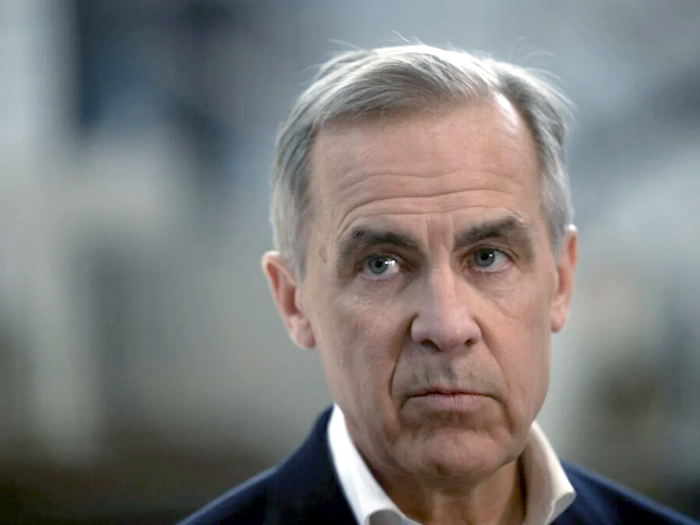
Mark Carney’s journey from climate ‘visionary’ to pipeline promoter

Cowboy Carney

When Mark Carney arrived on the Canadian political stage, Richard Brooks’s colleagues sought out his professional opinion.

Would they be dealing in the Liberal prime minister with a friend of the environment or a foe?

Brooks, the head of climate finance with Canadian advocacy group Stand.Earth, has followed Carney’s meteoric rise over the last decade from staid central bank governor to global climate guru to the Prime Minister’s Office.


Watch what he does not what he says. He left plenty of ways to block his “pipeline”.

Share

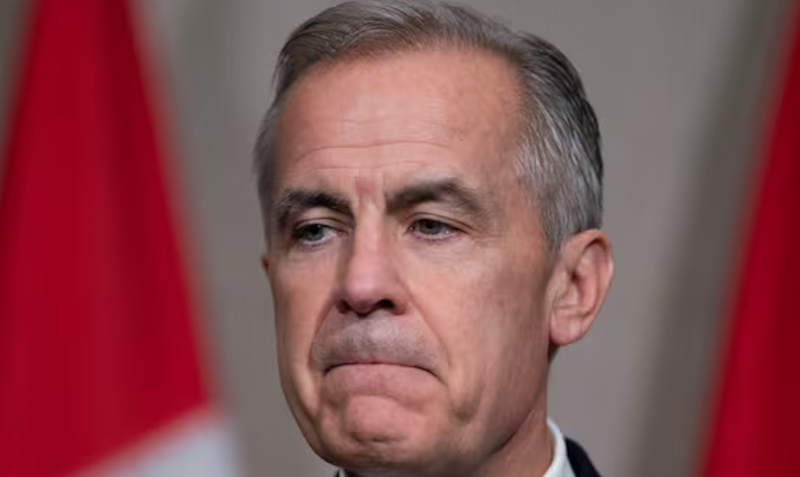
Ford retreats from EV’s with $19.5B loss while Carney pushes EV mandate

Ford Motor Co. says it will take a US$19.5 billion write-down and scrap several electric-vehicle programs, marking one of the most significant retreats yet by a major automaker from large-scale EV production amid weakening demand and major policy shifts under U.S. President Donald Trump.


EV Subsidies

Share

Margareta Dovgal: Liberals twisted themselves into pretzels over their own pipeline MOU

The plan isn’t designed to succeed

Playing politics with pipelines is a time-honored Canadian tradition. Tuesday’s events in the House of Commons offered a delightful twist on the genre.

The Conservatives introduced a motion quoting the Liberals’ own pipeline promises laid out in the Memorandum of Understanding (MOU) with Alberta, nearly verbatim. The Liberals, true to form, killed it 196–139 with enthusiastic help from the NDP, Bloc, and Greens.

Share

Common sense hasn’t won on climate file yet

Ten years ago, then-governor of the Bank of England Mark Carney gave a speech at Lloyd’s of London titled “Breaking the tragedy of the horizon.” It outlined his plan for the global financial system to internalize the “catastrophic impacts of climate change.” It was the first time Carney had publicly identified climate change as a threat to the stability of global financial markets — one that governments and regulators had to combat. Carney called on banks, insurance companies, public pension plans and other institutional investors to align their financing with their climate commitments by restricting oil and gas companies’ access to capital and investing instead in companies that would help the transition to the “net-zero world of the future.”

Share

Can Carney still put together a credible climate plan? Does it matter?

Ten months before he resigned from Mark Carney’s cabinet, Steven Guilbeault vouched for the then Liberal leadership contender.

“I’ve known Mark for many years. We’ve worked together on issues of green energy, transition, fighting climate change and the role of the financial sector in fighting climate change,” Guilbeault told reporters when he endorsed Carney’s candidacy to lead the party in January.


So long as he and Brookfield can profit.

Share

Canada’s environmental ‘realism’ looks more like surrender

Last week, the United Kingdom did something all too rare: it chose leadership by backing science and prioritizing public safety. The Labour government announced it would ban new oil and gas licences in the North Sea, strengthen a windfall tax and accelerate phasing out of fossil-fuel subsidies.

These are not symbolic gestures. They are an acknowledgment that the global energy system is shifting and that mature economies must shift with it.


Under the United Kingdom’s Communist-Islamist alliance energy impoverishment is a feature not a bug.

Besides Carney is at best playing a long game, he wants Canada desperately poor as well.

Share

The moment of truth has dawned for the electric vehicle industry

The nosedive in U.S. sales of electric vehicles since the elimination of the federal EV tax credit at the end of September is the latest moment of truth for the sector.

And that truth, when free market forces determine the true value of a product stripped of artificial sweeteners and incentives for buyers, is harsh.

Share

Cancel Net Zero: Wind Turbines Cause Ocean Heating

Your correspondent’s work is done. Offshore wind farms cause ocean heating, with localised surface sea temperatures rising by a persistent 0.3°C-0.4°C and interannual variability up to 1°C. This is according to ground-breaking calculations made by a group of American scientists and recently published by Science. Cascading effects rippling through eco-systems not only affect sea and atmospheric temperatures but reshape the upper ocean by destabilising marine food supplies and affecting plankton and larval growth. Disruption of the Mid-Atlantic Cold Pool, a key subsurface water mass supporting regional fisheries and ecosystems, can be affected. So no more ghastly inefficient wind turbines then – if similar fears arose about hydrocarbon extraction, the operation would be shut down quicker than you could say Christopher Gary Packham.

Share

Did Mark Carney give away the Liberals’ advantage on climate change?

Whether he intended to or not, Prime Minister Mark Carney cast aside a tenet of the Liberals’ brand last Thursday when he signed a memorandum of understanding (MOU) with Alberta that jeopardizes the Grits’ work addressing climate change.

For more than two decades, the Liberal Party of Canada told voters that it was the party that not only cared about climate change but was best able to address it. Election after election, from Jean Chrétien’s climate pivot in 2002 with the ratifying of the Kyoto accord, to Stéphane Dion’s “Green Shift,” to Justin Trudeau’s pan-Canadian framework on “Clean Growth and Climate Change,” to Carney’s platform, which mentioned the threat of climate change 27 times, the Liberal party told Canadians that the future of the planet depended on strong action to reduce greenhouse gas emissions, and it pledged to do that while strengthening the economy through clean energy investments.

Share

Liberals nervously await the effects of Steven Guilbeault’s resignation on the party’s Quebec fortunes

The Montreal riding of Laurier–Sainte-Marie is ground zero for Quebec’s media elites and the beating heart of the province’s cultural industries. Not surprisingly, it skews progressive and has reliably sent left-leaning MPs to Ottawa for more than three decades.

Last week’s resignation of local MP Steven Guilbeault from Prime Minister Mark Carney’s cabinet generated a minor earthquake in Laurier—Sainte-Marie whose aftershocks are being nervously monitored in federal Liberal circles in Quebec.

Share