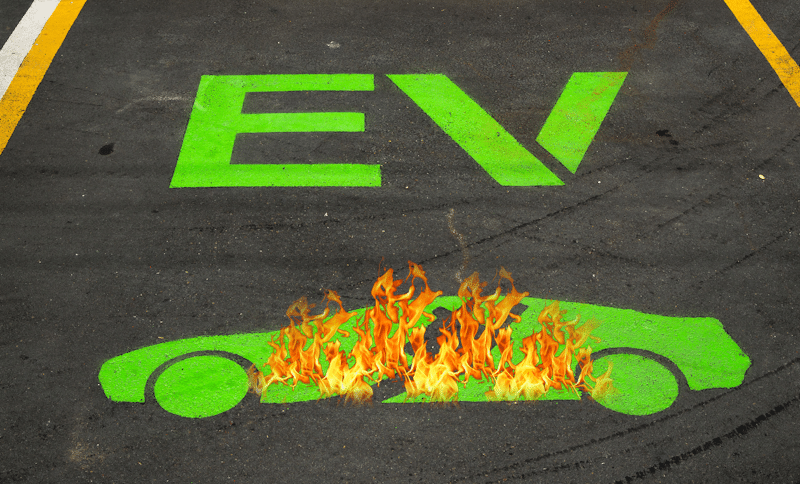
Among gambling addicts, it’s called “chasing your losses,” making ever larger and riskier bets to try to win back the money lost for initial bets.
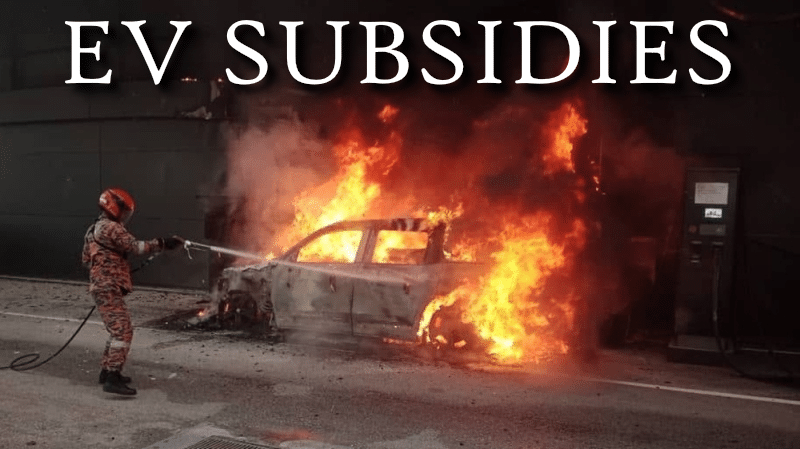
Canadian politicians are now chasing their losses on electric vehicles (EVs).

Among gambling addicts, it’s called “chasing your losses,” making ever larger and riskier bets to try to win back the money lost for initial bets.
Canadian politicians are now chasing their losses on electric vehicles (EVs).

By the time the environmental permits are signed off for a new TNT plant in Sweden at the end of this year, Russia will already be producing explosives at a new facility.
Swedish Ballistics (SweBal) is aiming to tap into Europe’s rush to rearm itself by opening what will be the EU’s second factory producing military-grade TNT, used in the production of artillery shells, landmines and grenades.
The firm hopes to produce 4,500 metric tonnes annually by the end of 2027, which will be enough for Europe to produce roughly 450,000 rounds of 155mm artillery ammunition.
Now I understand why Carney wants to hitch Canada’s wagon to the EU. They think like he does.

A few years ago, Li-Cycle was one of the biggest players in electric vehicle battery recycling in North America, providing a roadmap to a circular, sustainable economy for electric vehicles.
But just last month, the Toronto-based company filed for bankruptcy protection in the U.S. and Canada after years of struggling to get a facility off the ground in Rochester, N.Y. The company said the planned hub would have been able to extract lithium and other critical minerals from recycled material to actually build new EV batteries — a crucial step that North American recyclers haven’t achieved on a commercial scale yet.
CBC EV cheerleading despite the whole scam crashing and burning before their eyes.

Well, Canada’s electric vehicle policies are playing out exactly as I predicted. Which is to say, they’re a disaster.
Back in November, in the immediate aftermath of Donald Trump’s re-election, I wrote in these pages that, whatever else that election might mean for Canada, it would prove big trouble for the Justin Trudeau/Doug Ford EV scam.
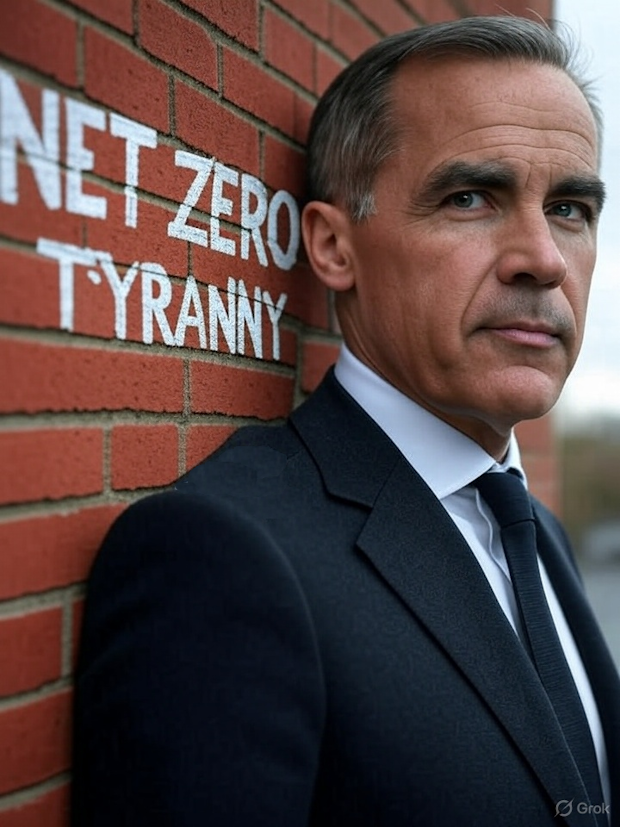
After Justin Trudeau, we now have a new Liberal prime minister who is also ardently net zero, but more cunning and better connected to the global eco-zealotry establishment.
Former prime minister Justin Trudeau’s carbon taxes, EV subsidies and net zero targets are without a doubt the key factor in Canada’s anemic GDP and doubling of the national debt.
Now we have a new Liberal prime minister who is also ardently net zero, but more cunning and better connected to the global eco-zealotry establishment.
Mark Carney has served as co-chair of the Glasgow Financial Alliance for Net Zero (GFANZ) and UN Special Envoy for Climate Action and Finance.

With the Trump administration back in the White House, America has an opportunity to restore commonsense energy and manufacturing policies after years of radical environmental overreach. One of the most glaring examples of this overreach is the electric vehicle (EV) push — a movement championed by progressive elites that, under the guise of sustainability, threatens to undermine national security, weaken domestic industry, and entangle our economy further with the Chinese Communist Party.

A massive blackout left 55 million in Europe in the dark—just as renewables peaked at 78% of grid power, exposing the fragility of unreliable energy dependence.
Imagine taking the subway to work when the train comes to a sudden halt halfway between scheduled stops. You pull out your smartphone to go online and see what the problem is, but you have no reception – no cell signal, no internet.
Hours later, rescue workers arrive to extract you and your fellow passengers from the stalled train. You make your way to the street in hopes of taking a taxi or an Uber. But without your phone apps and with credit card machines inoperable, you are forced to search for an ATM—only to discover those aren’t working, either.

One of the realities politicians don’t like to talk about is that turning Canada into a green energy superpower — as Prime Minister Mark Carney has promised — means eliminating the rights of communities directly affected by energy-related projects to have a say in them.
Often with disastrous results.

An increasing number of Albertans are now aware of the risks associated with dependency on wind and solar generators. These naturally produce less power during periods of peak seasonal demand. (For example, Arctic winter storms.) Less well-known is another risk that is emerging as these intermittent generators become further integrated into our grids — loss of frequency control, caused by intermittent power generators — wind and solar — leading to blackouts.

The greatest threat to the Canadian auto industry, the roughly half-million jobs it supports, the $38-billion in exports it generates annually, and the billions in foreign direct investment it accounts for, is not U.S. President Donald Trump. His threat of automotive tariffs is expected to disappear when Canadian-U.S. trade negotiations conclude.
The existential threat to Canada’s auto industry is our electric-vehicle mandate that mimics California’s.

Ottawa to bring back EV incentives: Minister Joly
As Canadian OEMs who assemble vehicles in Canada continue to announce delayed investments, and scaled back production plans, Canada’s newly-named federal Minister of Industry Mélanie Joly has been meeting with their leaders to encourage them to protect Canadian jobs.
After meetings with General Motors officials in Oshawa yesterday, Joly held a press briefing and answered questions from reporters.
“I’m a very pragmatic person, and I’m not naive. So we need to continue to fight for these jobs,” said Joly. “The auto sector is under huge pressure because of the U.S. tariffs.”
Carney looking after his pals.
With no federal budget in sight there is no way of knowing which of the Liberal government’s grand economic platform strategies and major government interventions are still on Prime Minister Mark Carney’s must-do list. The only item on the official agenda at the moment is a July 1 reduction in the middle-class tax rate from 15 to 14 per cent, a move that will cost the government about $5 billion this year and raise the 2025-26 deficit closer to $50 billion.

Spain’s leading energy companies—Iberdrola, Endesa, and EDP—remain stunned. After the nationwide blackout that cut power across Spain on April 28, the government has yet to provide a clear explanation or take technical responsibility. The companies, represented by the employers’ association Aelec, have denounced “surprising omissions” in the official investigation. They demand that the extreme voltage spikes recorded in the days leading up to the collapse be included in the analysis. They have criticized the preliminary report from ENTSO-E—the European network of electricity operators—for claiming that “the system was operating normally” just seconds before the failure. Meanwhile, severe voltage swings were recorded, going beyond safety limits and triggering automatic shutdowns of high-voltage substations and key refineries.

Mark Carney has made it clear that as part of continued net zero policies, his government will consider imposing a Carbon Border Adjustment Mechanism (CBAM.) That would be a carbon tariff applied to imports, to support Canadian products burdened by domestic carbon pricing.
Proposed in 2021 and included in the 2024 Fall Economic Statement, the Canadian CBAM is a misguided attempt to shield domestic industries. In response to America’s new tariffs, a CBAM has been proposed to pivot trade to the EU and adopt a European-style CBAM.
President Donald Trump signed a series of executive orders designed to fast-track the development and deployment of advanced nuclear reactors on Friday culminating a dramatic policy shift aimed at revitalizing the U.S. nuclear energy sector.

h/t DS