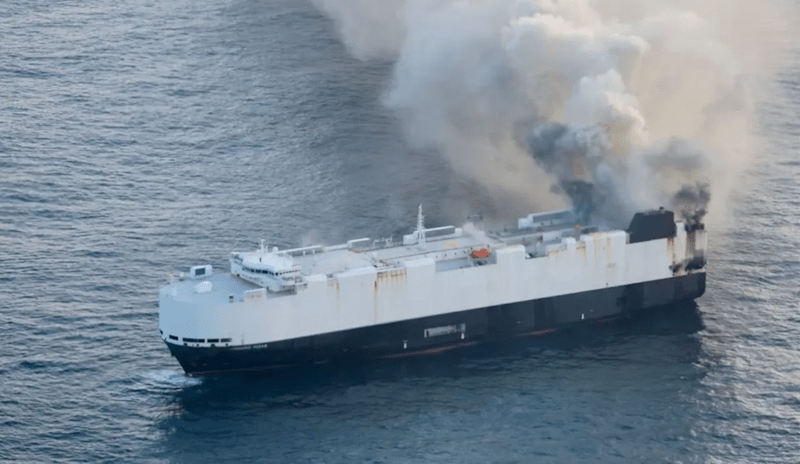

“Effective Immediately”: Shipping Line Suspends EV Cargo Due To Lithium Battery Fire Concerns

Morning Midas EV Car Fire

U.S. shipping and navigation services company Matson surprised customers in recent days by announcing new policies that halt all electric vehicle shipments due to the fire risk posed by lithium-ion batteries. This comes after the Morning Midas—a RoRo carrier transporting EVs and hybrids—erupted in flames early last month in the Pacific and subsequently sank.

h/t DS

Share

How the rise of green tech is feeding another environmental crisis

Raquel Celina Rodriguez watches her step as she walks across the Vega de Tilopozo in Chile’s Atacama salt flats.

It’s a wetland, known for its groundwater springs, but the plain is now dry and cracked with holes she explains were once pools.

“Before, the Vega was all green,” she says. “You couldn’t see the animals through the grass. Now everything is dry.” She gestures to some grazing llamas.

For generations, her family raised sheep here. As the climate changed, and rain stopped falling, less grass made that much harder.

Share

Contractors stiffed for millions in completed work by NextStar EV battery plant that Ontario & Federal governments propped up with $15B in tax breaks

Multiple Canadian contractors that have helped build a sprawling, taxpayer-supported electric vehicle (EV) battery plant in southwestern Ontario allege they haven’t been paid for millions of dollars worth of work, court records show.

Lawsuits between companies on complex projects like the NextStar Energy plant in Windsor aren’t abnormal, according to a veteran construction lawyer.

… But Sylvan Canada, one of the firms that has now resorted to legal action, says its experience on the $5-billion project was far from business as usual.

Share

What’s the deal with the Grits and EV cars?

In ten years you won’t be allowed to buy a new, gasoline-powered vehicle in our country. Sorry, but that’s the law.

Except you will be able to buy one. Confused? Can’t blame you. But the fog begins to lift when realizing the federal Liberals are involved in this malarkey. It’s because the Grits have successfully turned today’s legislation into nothing more than tomorrow’s electioneering gimmick.

Share

EV charger company Flo to close Quebec plant, lay off workers

A producer of electric-vehicle chargers in Canada is pointing to trade tensions and shifting political dynamics in America as a major contributor to its decision to close a manufacturing facility in Shawinigan, Quebec. Flo, founded sixteen years ago in Quebec as AddENÉRGIE, is shuttering one of its three plants, throwing approximately 80 employees out of work. Flo has two other production sites, one in the Grand-Mère area of Quebec, plus another in Auburn Hills near Detroit.


Of course … Canada Infrastructure Bank marks its first EV charging investment with a $220 million commitment to FLO®

Share

Green Dogma Forces the Dutch To Ration Electricity

More than 10,000 Dutch businesses—as well as hospitals, fire stations, and thousands of new houses—are waiting for electricity network connections, and in some cases will have to continue waiting until the mid-2030s.

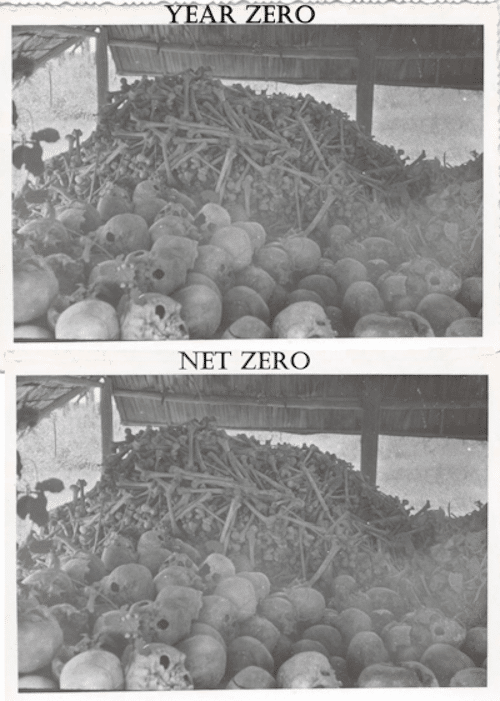
The country has taken a rapid turn to ‘renewable’ energy in recent years, with millions of homes now having solar panels on their roofs, while shifting away from more reliable sources, especially gas. This zealous drive towards net zero is proving incompatible with rapid electrification increases, and has forced network operators to ration power.

Share

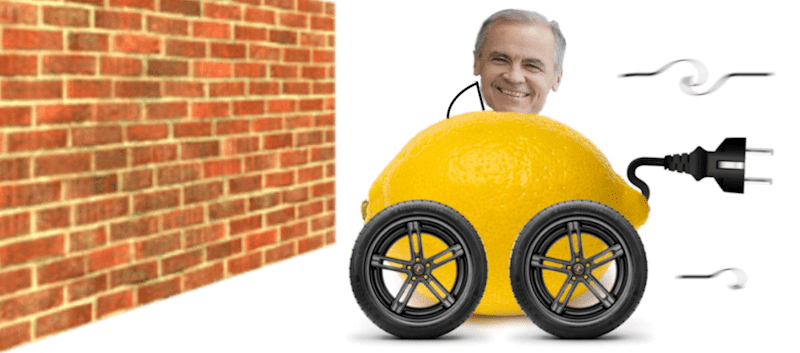
What will kill the electric car this time: Trump or Canada’s haplessness? … Suicide is more likely

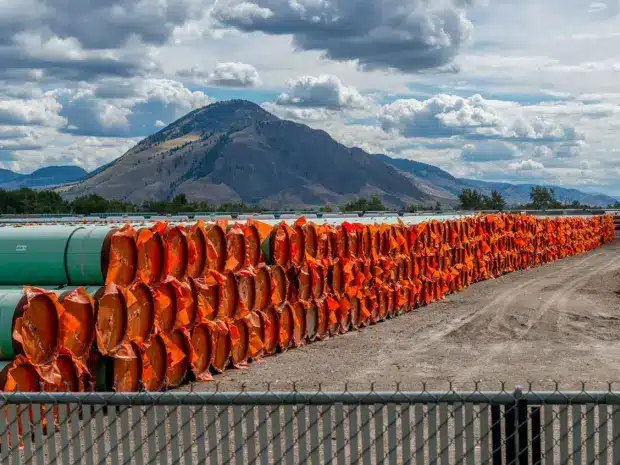
It appears we have elected a federal government that is not only eager to support a new oil pipeline in British Columbia, but may end up throwing our electric vehicle ambitions into reverse—if not into the ditch.

This could be hasty and unduly negative, but Prime Minister Mark Carney has so far shown far less interest in the clean technologies of the future than in roads, railways, ports and pipelines for his “major infrastructure” projects.

The most optimistic speculation is that his government will extend deadlines for EV adoption by a few years in response to pressure from the Canadian auto sector. Automakers argue, reasonably, that the Justin Trudeau-era decree—that 20 per cent of new cars sold in Canada must be zero-emissions by 2026—is undoable for a variety of reasons, with one of them being the Trump administration’s sharp turn away from electrification and back to gas-powered behemoths.

Another EV evangelist shorted out of reality.

Share

Conrad Black: Liberals must retreat from their climate obsessions

We are now close to the litmus test of the new Carney government as it approaches the bifurcation between the road to sensible fiscal and environmental policy and the road over the cliff into total war against the oil and gas industry and the piling on of taxes and higher gasoline and fuel costs in pursuit of a tokenistic reduction in Canada’s minimal contribution to world carbon use. So far, we have generally had inconclusive indications of attempts to straddle these irreconcilable options. There have been references to a ”carbon-neutral pipeline,” (a nonsensical idea), and fuzzy comments about how to pay for the prime minister’s vertiginously expensive doomsday climate wish list, including a referendum on tax increases.

Share

Canadians drastically downgrade climate as a priority, poll finds, as economic concerns escalate

OTTAWA — One of the key barriers that seemed to be facing the Carney government’s plans to fast-track big projects designed to boost the Canadian economy — namely, climate concerns — appears now to be not much of an obstacle at all when it comes to public opinion.

A new Leger poll released Friday asked Canadians about what they thought were the biggest challenges facing Canada. Trade and tariff issues and U.S. relations were No. 1, at 20 per cent. But climate change, one of the federal government’s key objections in recent years to building or expanding pipelines, ports and other big projects, was way down the list, a “third tier” issue, said Leger executive vice-president Andrew Enns.

Share

Canada’s EV mandate directly benefits Musk. He’ll lose big if it’s dropped.

OTTAWA — Canada’s electric vehicle mandate is under fire from Washington — and if it falls, one of the biggest losers could be Elon Musk.

That’s because the mandate, a climate change policy from the Justin Trudeau era, requires carmakers to hit 20 percent EV sales by 2026, or else buy credits from companies that have exceeded the goal. In Canada, that means they have to buy credits from Tesla, because it only sells EVs.

The Eco-Fanatics must be so torn.

Share

GREEN: Carney government should swiftly axe foolish EV mandate

Two recent events exemplify the fundamental irrationality that is Canada’s electric vehicle (EV) policy.

First, the Carney government re-committed to Justin Trudeau’s EV transition mandate that by 2035 all (that’s 100%) of new car sales in Canada consist of “zero-emission vehicles” including battery EVs, plug-in hybrid EVs and fuel-cell powered vehicles (which are virtually non-existent in today’s market). This policy has been a foolish idea since inception. The mass of car-buyers in Canada showed little desire to buy them in 2022, when the government announced the plan, and they still don’t want them.

Share

Braid: Carney promises development but keeps the Trudeau laws that hinder it

A friendly breeze blows out of Ottawa these days, but there’s a chance it’s nothing more than wind.

Prime Minister Mark Carney is all about development, energy, pipelines — one big Canadian economy.

He speaks of Alberta’s energy industry with none of the contempt so common in the Justin Trudeau years.

Share