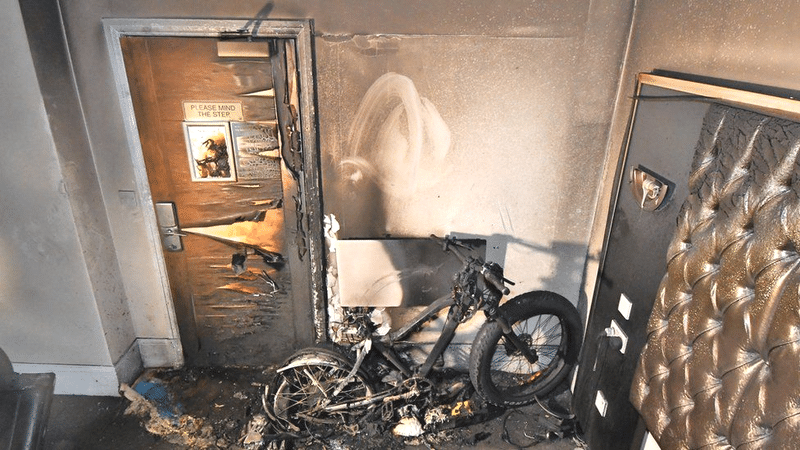
How E-Bike Battery Fires Became a Deadly Crisis in New York City

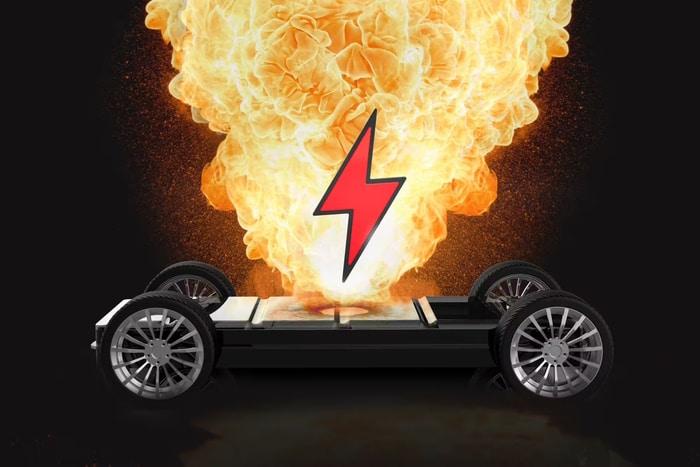
His girlfriend told him not to buy the electric scooter.

But Alfonso Villa Muñoz was intrigued. He was working in a Brooklyn bodega last August when a delivery man said he knew someone selling one for $700. Mr. Muñoz said yes.

The scooter was cherry red with the number 7 on the front. Under the seat was an extra-large lithium ion battery. When it needed charging, Mr. Muñoz would remove the battery from the scooter and use both hands to lug it up to the couple’s third-floor apartment in College Point, Queens.

E-Bikes are a menace.

Share

Your next EV could be made from metals extracted from the seabed – a potential environmental disaster

… Plans by Norway and other countries to dig up the seabed are more grim evidence that automotive utopia is a myth – there is no such thing as an environmentally friendly car, no matter the propulsion system, and EVs are certainly dirtier than advertised. Manufacturing them may result in wrecking entire ecosystems that had gone largely untouched.

Share

Bad news for electric planes — batteries only last “a few weeks”

Once again, batteries just aren’t living up to hopes and dreams. Only a year ago Rolls Royce were excited about the nine-seater P-Volt electric plane — forecasting that it would be carrying customers on ninety mile hops in 2025 and 250 miles by 2030. Alas, it must have been a sobering year. The developers of the P-Volt have pulled the pin indefinitely and decided to wait until battery capacity and weight improvements make it realistic.

h/t Mauser

Share

Why America Isn’t Ready For the EV Takeover

Software glitches, inaccurate range estimates and clunky charging options all limit adoption

The adoption of electric vehicles represents the biggest shift in our energy and transportation systems in more than a century—but it’s also the biggest shift in consumer electronics since the debut of the iPhone.

On both counts, progress is accelerating in the U.S. And on both counts, we are far from where we need to be.A recent 1,000 mile road-trip in the longest-range electric vehicle you can buy brought this home for me. That journey was as worrisome as it was thrilling, and it clarified how much more needs to be done for drivers to have a consistent and satisfying experience on par with buying a gasoline vehicle.


Electric Vehicles: The Toyoda War

Akio Toyoda is the grandson of Kiichiro Toyoda, a man who started an auto division within his family’s business. That division, it must be said, came to enjoy a fair degree of success (those who want to know why the company is called Toyota, not Toyoda, can find out here). Akio Toyoda joined Toyota in the 1980s, eventually becoming its CEO in 2009. He knows a bit about cars. He also speaks his mind.

Share

Jerome Gessaroli: Liberals’ war on cars harms low-income Canadians

A growing number of Canadians are finding it increasingly challenging to maintain their standard of living, with more and more people struggling just to afford basic necessities.

Even though a range of contributing factors — such as rising commodity prices, or supply disruptions due to the war in Ukraine — are beyond our government’s control, Canadians nonetheless hold the belief and expectation that any actions or interventions taken by the government will lessen the burdens we face. Unfortunately, too often government policies often have the opposite effect and financially burden Canadians further.

It’s a war designed to impoverish us.

Share

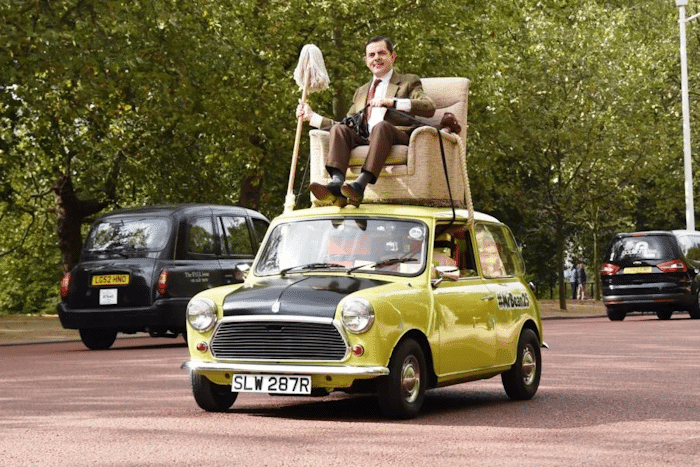
Rowan Atkinson: our honeymoon with electric cars is coming to an end

Over a decade ago, fans of BBC’s Top Gear will remember when it was Rowan Atkinson’s turn to have a go at the Star in a Reasonably Priced Car segment.

This is back when Jeremy Clarkson’s running gag centred around the BBC’s shoestring budget, meaning they had to torture their guests with various crap cars and see which of them could get around the (airport) track fastest without any tyres falling off. In Atkinson’s case, the car in question was a Kia Cee’d.

Share

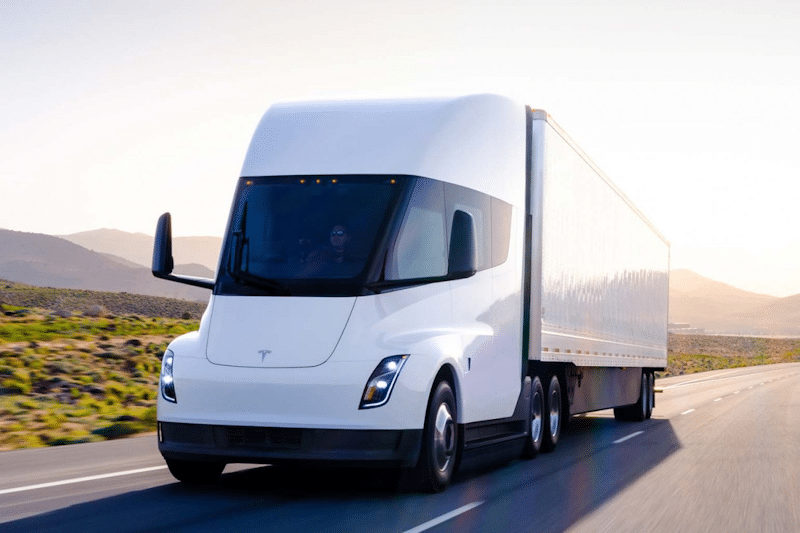
‘Literally Impossible’: Trucking Companies Brace for California’s Electric Mandate

Logistics companies are scrambling to meet California’s upcoming 2024 mandate that all trucks servicing ports, railyards, and distribution centers in the state be zero-emission vehicles, with experts questioning limited access to charging stations and the viability of switching from diesel to electric fleets.

Availability of electric semi-trucks is a concern, as is the price of the vehicles, the number of miles they can go on a charge, and the cost of maintenance and replacement parts, all of which currently remain unknown variables, according to industry experts.

Insanity, it’s as if California’s government lives in some kind of altered reality.

Share

Rowan Atkinson: I love electric vehicles – and was an early adopter. But increasingly I feel duped

Electric motoring is, in theory, a subject about which I should know something. My first university degree was in electrical and electronic engineering, with a subsequent master’s in control systems. Combine this, perhaps surprising, academic pathway with a lifelong passion for the motorcar, and you can see why I was drawn into an early adoption of electric vehicles. I bought my first electric hybrid 18 years ago and my first pure electric car nine years ago and (notwithstanding our poor electric charging infrastructure) have enjoyed my time with both very much. Electric vehicles may be a bit soulless, but they’re wonderful mechanisms: fast, quiet and, until recently, very cheap to run. But increasingly, I feel a little duped. When you start to drill into the facts, electric motoring doesn’t seem to be quite the environmental panacea it is claimed to be.

Share

Silly woman sincerely believes her electric car is saving the environment, develops priggish attitude toward poor people and those who don’t buy into her fantasy

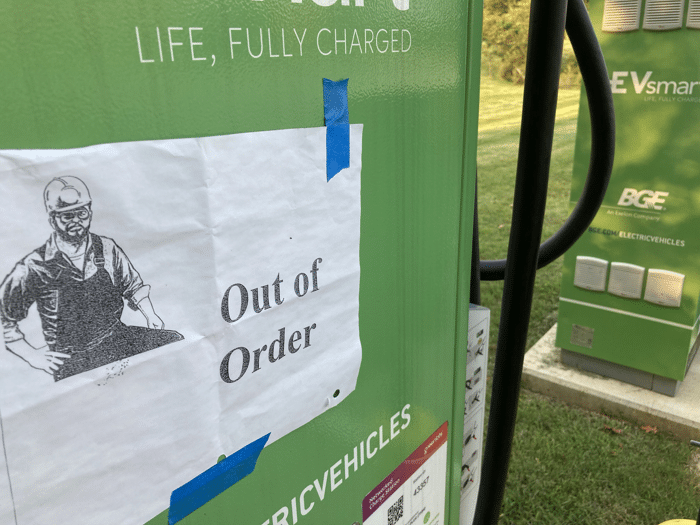
Not again. All the electric vehicle charging stations were taken, and I knew I was in for at least a 30- to 40-minute wait. And yet, the app on my phone showed two chargers had been available five minutes ago. I had driven in this pouring rain for nothing, but what choice did I have? My EV needed charging for the next day’s commute, and this was the closest station to my home.

When my old Hyundai Elantra received a death sentence at the repair shop in 2019, I decided that my new vehicle was going to be electric. Up until then, I had cared for the Earth by doing small things, such as using reusable grocery bags and recycling plastic and paper products. I wanted to do more. The demise of my gas-powered vehicle presented a perfect opportunity. I looked forward to driving a car that did not emit pollution or run on fossil fuel.


A callous prig in the making: Pay for my luxury poor people, I’m saving the world! She is unaware of what she has revealed about herself in this very CBC screed. The comments indicate people are waking up to THE BIG EV LIE.

Lo and Behold …

I received a survey from the Condo board today. They wanted to know our thoughts on installing EV Charging stations.

Unfortunately our building cannot accomodate a charger for every parking spot.

Their proposed solution is to convert some visitor parking to Pay as you go EV charging spots.

Oh fab, I get to pay so someone else has a charger handy.

An ROI wasn’t even mentioned. I doubt this limited conversion would boost resale value by an amount that could justify the investment.

Share

Job creation tied to Windsor, Ont., Stellantis EV battery plant compared to ‘musical chairs’: prof

A Carleton University business professor is casting doubt on the number of jobs that will be added to Windsor’s economy by an electric vehicle battery factory.

Ian Lee says the country’s unemployment level is the lowest it’s been since the 1960s and calls the idea that Ontario is desperate to create new jobs as “nonsense,” adding the province is already seeing a critical shortage of workers.

Stellantis and LG Energy Solution will draw many of their employees from other plants that are already operating in the region, he says.

Share

Are electric vehicles really the future?

When it comes to cars, tomorrow can take its good old time in charging ahead

It’s a cloudless spring day, made for a country drive. Chartreuse trees explode with pollen and glow to near neon. I wind past pastures and stone and brick farmhouses and amiable old barns that could set the scene of a Beatrix Potter story, elatedly adding to the hum of provincial enterprise by perfecting my rev-matching skills over the rolling hills and 8mph switchbacks that mark PA-74.

Share

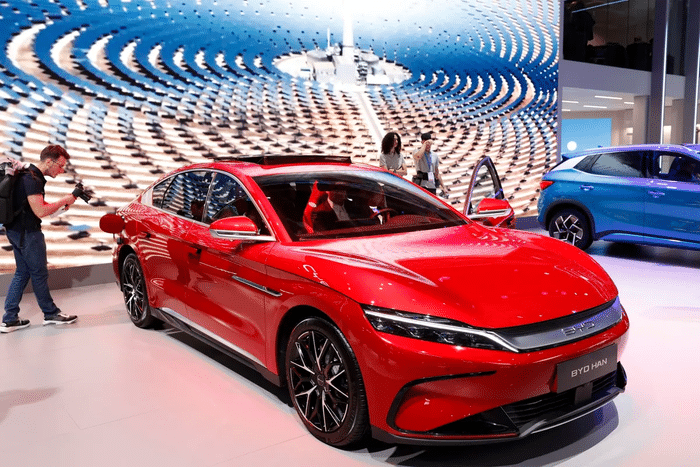
Chinese cars are about to wreck the German market

Government subsidies for electric vehicles are hurting domestic suppliers

Will China be the car manufacturer of the future? If one reads some of the more recent headlines in German media, it certainly seems like it. The leading tabloid paper Bild was in full panic mode, worrying that Chinese cars “will overrun Germany” and that they have “tripled their market share”. A closer look at the data, however, reveals that this 300% increase took place exclusively in the electric vehicle (EV) market, and even there Chinese cars are not the most popular. Starting from very low historic sales numbers, the market share for newly registered passenger cars between January and April 2023 was a meagre 0.8%, compared to the almost 60% share of German car manufacturers.

Share

The ugly downsides of Canada’s costly obsession with electric vehicles

Canada’s government is enchanted – obsessed even – with the idea of building batteries for electric vehicles on home soil. Already, Volkswagen is soaking up about $14-billion in public subsidies to build a battery factory in Southwestern Ontario, and Stellantis, owner of Jeep and Fiat, and LG Energy Solution are demanding equal treatment for their joint venture.

The mission to make Canada (well, Ontario) part of the global EV supply chain was inevitable and, from a purely industrial point of view, makes some sense, even though the per-employee job creation bill may emerge as the most expensive in Canadian history.

A good piece, you can’t come away without being convinced that EV’s are a ludicrous “green solution.”

Share