
The expensive electric vehicle that Energy Secretary Jennifer Granholm used during her ill-fated summer road trip is no longer eligible for federal tax credits thanks to a new rule that pulls subsidies for cars made with certain Chinese components.
The expensive electric vehicle that Energy Secretary Jennifer Granholm used during her ill-fated summer road trip is no longer eligible for federal tax credits thanks to a new rule that pulls subsidies for cars made with certain Chinese components.
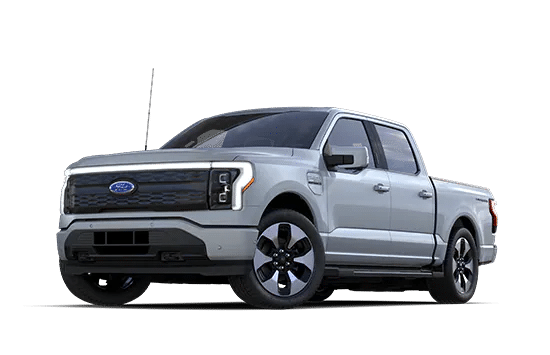 The inevitable, planet-saving, path to universal electric vehicle (EV) ownership is becoming increasingly cratered. Some 4000 dealers recently begged President Biden to stop pushing EVs. They can’t give them away. About half of all Ford Dealers refuse to stock them, and more than 50% of Buick dealers recently went out of business rather than sell them. Ford has largely bet its EV future on the F-150 Lightning pickup. It’s a sucker’s bet. Ford recently announced it was cutting its EV production plans in half. Articles like Motor Trend’s “Our Last Ford F-150 Lightning EV Pickup Road Trip Was A Nightmare” explains why…

Electric vehicles were supposed to be inevitable. Two years ago President Joe Biden climbed behind the wheel of a beefy white electric Hummer to tout his plan to make half of all new cars sold electric by 2030. The following year Congress passed the Inflation Reduction Act, which created a bevy of incentives for drivers to buy electric and for automakers to invest in EVs. That set off a flurry of new projects: EV plants, battery-manufacturing facilities, and mining operations began popping up. By the end of 2022 the situation looked promising: More and more Americans were going electric, and soon everyone would be driving an EV, reducing emissions in the process.
The transition to an all-EV future seemed like a slam dunk. It would not only give the government a highly visible way to show it’s fighting the climate crisis but boost the economy through new jobs and investment. But the electric-vehicle takeover has hit some serious roadblocks.
A friend got a rental of a Tesla over the holidays. It’s undoubtedly the industry standard for EVs and a complete blast to drive. The problem: It’s not a practical car at all. He was driving in the cold, and the car was nearly drained after two hours. Searching for a charge was no easy task. The first one didn’t work. The second one stated that it would be charged in 10 hours, which he didn’t have. The third one charged in one hour but that was a full hour wasted.
His conclusion: This is indeed a glorified golf cart designed to keep you at home and under the thumb of the manufacturer. And this is just a test. The repairs are worse. Keep in mind that this is the best the industry has to offer. The other manufacturers of these things make products not nearly as highly rated, which is why so many of them are sitting on lots unsold and why orders for the machines are plummeting.

Two of Hollywood’s great sci-fi villains from the last quarter century — Agent Smith from “The Matrix” and Marvel’s Thanos — both believed that the success of their evil schemes was inevitable. “You hear that, Mr. Anderson?” Agent Smith (Hugo Weaving) asked in the first (and only) Matrix movie as he pinned his opponent in front of an oncoming subway train. “That is the sound of inevitability… It is the sound of your death… Goodbye, Mr. Anderson.”

In Canada, despite massive government subsidies of new electric vehicle purchases and EV battery plants, as well as considerable government spending on EV infrastructure, the EV market still makes up only 13.3 percent of new vehicle registrations. I write “only” 13.3 percent, but the federal government somehow managed to interpret from this statistic that in double-quick time, 100 percent of Canadians will want to drive nothing but EVs. It cited the statistic as part of its newly announced mandate that by 2035, 100 percent of new vehicle sales must be electric or plug-in hybrid. The government also announced interim targets: From 13.3 percent last quarter, EVs must account for 20 percent of the market by 2026, and at least 60 percent by 2030. Dealers who fall short of these quotas face heavy financial penalties: They must either buy EV “credits” from other automakers or pay for public EV charging stations.
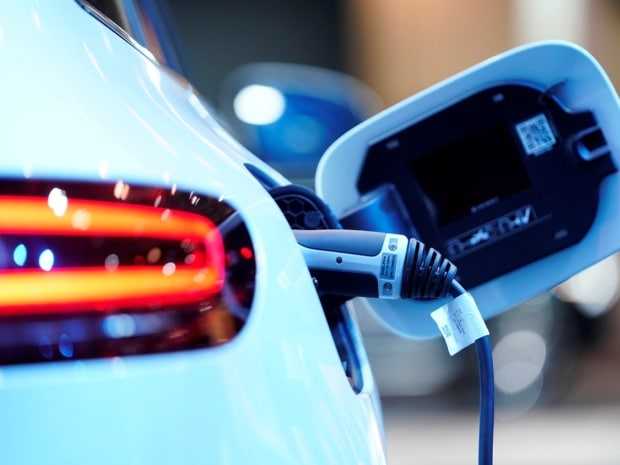
In a story that seems to be becoming increasingly common as time goes on, The Western Journal reported this week about a Canadian EV owner experiencing some massive sticker shock over the cost of replacing the damaged battery in his electric vehicle.
Now, those of us who have always driven internal combustion engine (ICE) cars have at one time or another been faced with big repair bills for some of those vehicles. I can remember spending $4,000 on a new radiator for a 10-year-old Infiniti QX 50 with 220,000 miles on it that I just couldn’t bear to part with several years back. I did finally retire that wonderful vehicle when faced with the prospect of a $6,000 tag for a rebuilt transmission.
Crazy subway fire. Instead of governments changing names of parks/colleges or cancelling past leaders, maybe in 2024 instead of woke feel-good projects, they can address e-bikes and scooter safety around batteries and how these wheels can terrorize the roads, paths and sidewalks pic.twitter.com/yDNRJmdgov
— Joe Warmington (@joe_warmington) January 1, 2024
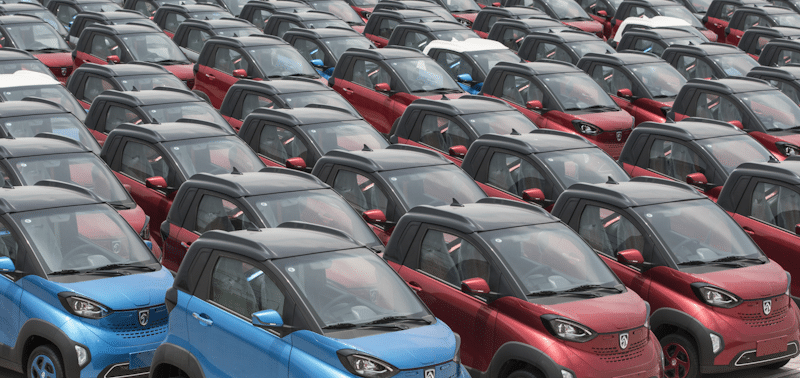
… If Justin Trudeau and his Liberals somehow, God forbid, manage to get themselves re-elected in the next federal election, a number of Chinese brands — BYD and Nio almost assuredly, but also others are surely girding up for the fight — will announce plans to start building a dealer network here in Canada, in advance of a full-scale invasion in 2026. As I stated in “The consequences of Canada’s EV mandate,” the main reason we haven’t yet been flooded with cheap Chinese electrics is because the United States has a 25-per-cent tariff on Chinese cars.

ANCHORAGE, Alaska (AP) — A large cargo ship with a fire in its hold is being kept 2 miles (3.22 kilometers) offshore of an Alaska port as a precaution while efforts are undertaken to extinguish the flames, the U.S. Coast Guard said Saturday.
There were no injuries to the 19 crew members aboard the Genius Star XI, which was carrying a load of lithium-ion batteries across the Pacific Ocean, from Vietnam to San Diego, the guard’s Alaska district said in a release.
h/t Mauser

… “In the case of Ontario, the answer was actually that we we have no intention of doing anything about this.”
When asked for its response, the Ontario Ministry of the Environment, Conservation and Parks did not return a request for comment from CBC News.
Winfield said the fact there is no public policy on the disposal of EV batteries is concerning because a number of the chemicals and components used to make EV batteries, such as cadmium, arsenic and nickel are listed as toxic under the Canadian Environmental Protection Act (CEPA) and simply can’t be thrown into a landfill.

A study is revealing some of the challenges that electric vehicles will pose to northern power grids — and it’ll likely be revised now that Canada has a plan for phasing out the sale of gas-powered cars and trucks.
“At no point in our studies did we consider 100 per cent electric vehicle adoption,” said Michael Ross, a researcher at Yukon University who is leading the study.
Ross, an industrial chair in northern energy innovation, said his research is looking at slow to high adoption rates of electric vehicles in Dawson City and parts of Whitehorse and Yellowknife. So far, it’s showing some of the ways residential power grids will be strained if people in those neighbourhoods add Level 2 electric vehicle charging stations to their homes, he said.
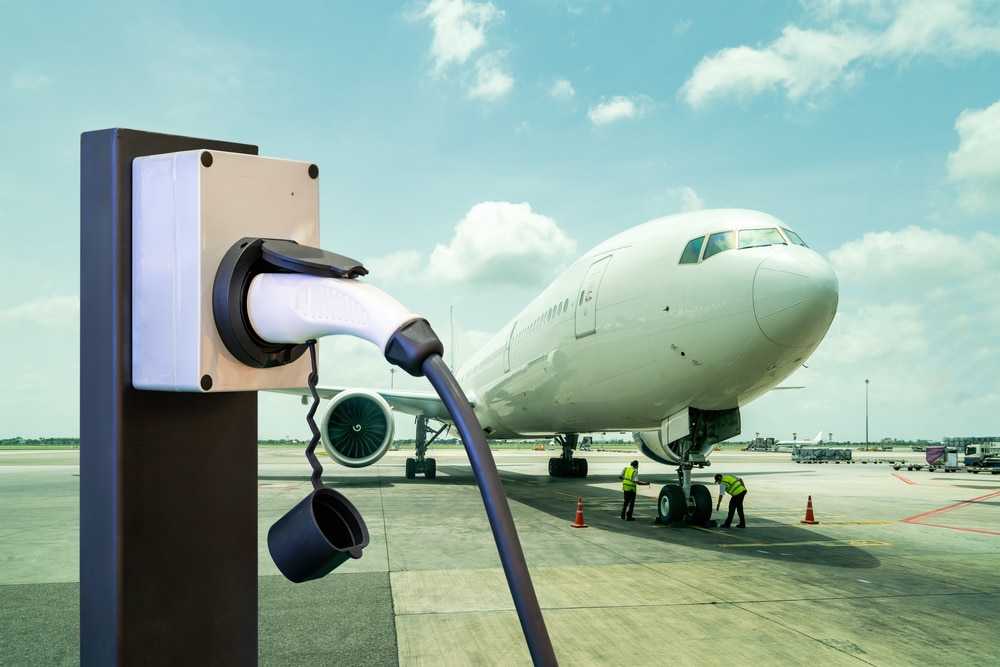
“Five years ago we were all optimists and hoping and figuring that where cars could go, airplanes would follow,” Mr. Spragg said in an interview.
But he now believes many of the battery-powered flight efforts to date amount to “green theatre.”
“We can make it work, but it’s going to be limited.”
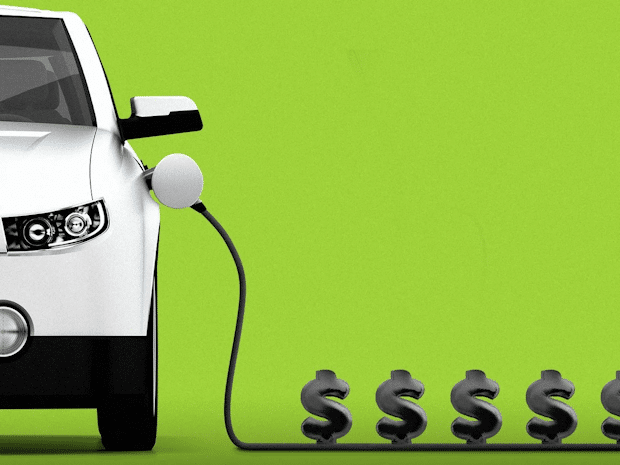
A Vancouver electric-car owner was shocked to learn earlier this fall that seemingly minor damage to his car’s battery required replacement of the unit and was quoted a $60,000 repair bill — more than the list price for a new car.
The failure of consumers to buy enough electric vehicles (EVs) to hit central planners’ targets is one reason that increasing efforts are being made to “encourage” them to switch over from traditional cars.
There are many reasons that EVs are, once relatively wealthy early adopters have bought theirs (typically making sure that they hang on to a spare traditional car — or two), struggling to find the hoped-for demand, but one of them is that they do not appear to hold their value.
