EV advocates want you to subsidize their shitty cars

Advocates calling for return to electric vehicle rebate in Ontario

The city of Toronto has an ambitious goal: by 2030, it wants 30 per cent of all vehicles on the road to be electric. But currently, that number is only between three and four per cent.

So what’s the hold up?

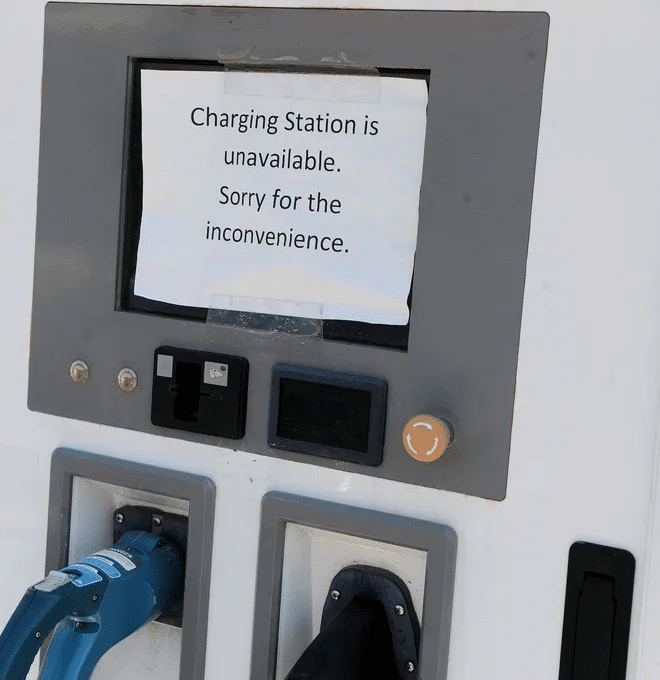
Canadian drivers’ main concerns about electric vehicles include up front purchase price, repairs and maintenance, battery replacement and a lack of charging stations, according to the EY Mobility Consumer Index report released this year.

A new electric vehicle in Canada costs an average of $67,920 — which is about $6,400 more than the average for all new vehicles across the market, according to car valuation service Canadian Black Book

Share

Exposed: Engineers ‘locked in factory’ to finish ‘unsafe’ electric car

Engineers working for the parent company of Jaguar Land Rover were locked in a Vietnamese factory in a rush to get an “unsafe” car to market, whistleblowers have told The Times.

One worker, who claimed he was sacked by Jaguar Land Rover after raising concerns about the electric cars, said he feared the vehicles had “critical” safety faults.

Share

EV owners increasingly looking to switch back to gas, discouraged by cost and lack of charging

Teresa Marshall was an early electric vehicle adopter.

In 2019, she was driving about 50,000 kilometres a year. To save on gas and maintenance, and reduce her impact on the environment, she purchased a used 2017 Nissan Leaf for about $20,000.

“It’s been a great vehicle,” she said. “Maintenance wise, it’s cost me a fraction. The oil change on my Acura TL was about 600 bucks. I’ve spent about $600 total on services on my Leaf in the last five years. It’s a big difference.”

Share

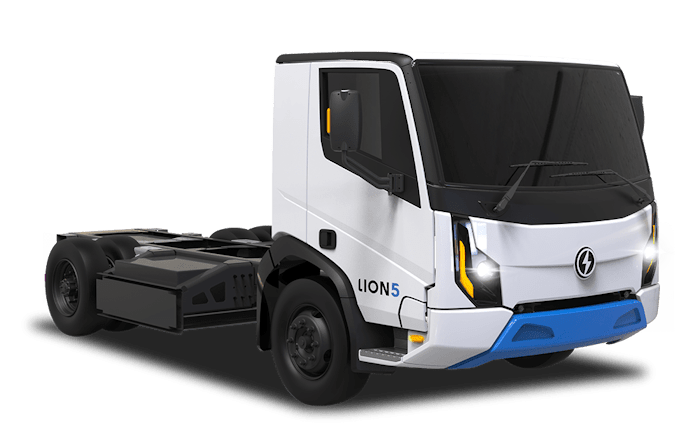
Lion Electric to file for creditor protection

The Lion Electric Co. says it expects to seek protection from creditors under the Companies’ Creditors Arrangement Act.

The electric school bus maker says it has defaulted on its debt and is in talks with its senior lenders to obtain additional funds for a new debtor-in-possession credit facility.

It says it plans to restructure its business and pursue a formal sales and investment solicitation process.

Share

Forbes: ‘Clean’ energy powered by ‘dirty’ means

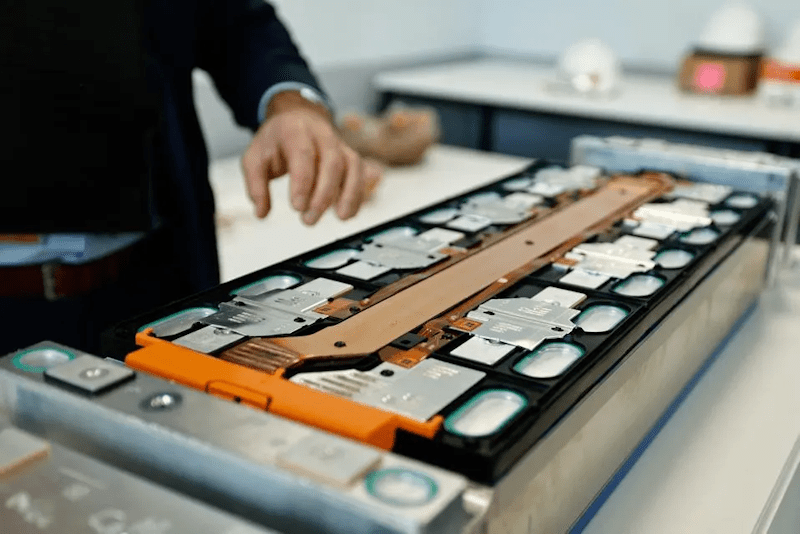
The left is entirely paradoxical, and nowhere is that more obvious than the “clean” energy narrative, a truth so inconvenient that even Forbes just published a new report exposing the disconnect: “Is Clean Energy Powered By Dirty Batteries?”

Spoiler alert: Yes, that’s exactly what keeps the industry going… along with “dirty” oil, “dirty” mining, and “dirty” human slavery…

Share

GM Calls It Quits on Cruise Robotaxi After Spending $10 Billion

This isn’t really a surprise at this point. GM’s Cruise robotaxi service went off the road more than a year ago after a terrible accident in San Francisco and lost its right to operate in the city. Not long after that the company laid off about 1/4 of its workforce. Yesterday, GM announced it was pulling the plug on the whole project despite having spent about $10 billion on it.

Share

Musk’s politics hadn’t seeped into Tesla. Then he axed its eco car of the future.

Earlier this year, top executives at Tesla gathered in Palo Alto to sell CEO Elon Musk on a line of compact cars that would bring the electric-vehicle revolution to budget-conscious consumers across the world. The more affordable car had long been part of Musk’s master plan for Tesla to fight climate change by “accelerat[ing] the world’s transition to sustainable energy.”

But Musk axed the proposal, amid budget constraints, according to two people close to Musk who spoke on the condition of anonymity to describe private conversations. Instead, the billionaire green-lit a massive purchase of computer chips, in a deal worth billions intended to enhance Tesla’s luxury cars (and a humanoid robot called Optimus) with energy-intensive artificial intelligence capabilities.

The axe fell because of the limited profitability an eco-car offered not politics.

Share

Net zero plans for Armed Forces could ‘put soldiers at risk’

Ministers are forging ahead with plans to use electric vehicles (EVs) for combat on the battlefield despite warnings from military grandees that they could put the Armed Forces at risk.

The Telegraph has learnt that the Ministry of Defence will be ramping up testing of battlefield EVs next year at the Army’s Bovington Garrison in Dorset, home of the Tank Museum.

The testing, described by an insider as “putting these vehicles through their paces”, is at an experimental phase, but is an expansion of plans first mooted under the Conservative government on the development of combat EVs.

Share

Lion Electric temporarily lays off 400 workers, gets extension from creditors

MONTREAL – Electric bus manufacturer Lion Electric is temporarily laying off 400 employees and shutting down production at its Illinois plant after getting a two-week reprieve from its lenders.

The St-Jérôme, Que.-based company said in a statement Sunday that it has secured an extension to Dec. 16 for a loan and a credit agreement with a syndicate of lenders, after a Saturday deadline passed.

Share

Britain Is Killing Its Auto Industry

This week’s net-zero carnage in Europe—these stories pop up weekly now—has happened in Britain, where the no-carbon energy transition is killing another country’s auto industry. How much longer can the insanity last?

Stellantis announced it will shut a plant in Luton, north of London, in the spring. The move imperils up to 1,100 jobs. The factory had been slated to produce electric vans under the storied British Vauxhall make, but the consumer demand isn’t there.

Stellantis may shift some jobs to a plant at Ellesmere Port in northwest England, which has been overhauled with the help of taxpayer subsidies to produce electric vehicles. But there’s spare capacity there, too.

Share

For EV Startups, Things Are Going From Bad to Worse

Electric-vehicle startups were struggling before the election. Donald Trump’s victory could send them into a tailspin.

Several high-profile companies, including electric SUV maker Fisker and bus manufacturer Arrival, filed for bankruptcy earlier this year. Swedish-based battery maker Northvolt became the latest casualty last week, filing for Chapter 11 after BMW canceled a key order.

At least a dozen other startups, specializing in electric vehicles or batteries, are at risk of running out of cash by next summer, according to a Wall Street Journal analysis of their most recent filings.

Musk is there as a counter.

Share

The EV revolution is crumbling

For over a century, there has been an anticipation that electric vehicles will replace internal combustion engines (ICE) and push them into obsolescence. Because the free market failed to deliver this result, in recent decades governments around the globe have been aggressively pushing for the adoption of EVs, including subsidies and — for now — legally-binding phase-outs of non-zero-emission cars. Alas, none of this appears to have had the desired effect: while global EV sales continue to grow, the pace is slowing down. According to Bloomberg’s Net Zero scenario, to accomplish a fully zero-emission vehicle fleet by 2050 it would be necessary to cease the sales of combustion engine vehicles by approximately 2038.

Share

Odds rise that Quebec EV maker Lion Electric will need to seek creditor protection

Canada’s electric truck and bus manufacturer Lion Electric Co. is up against a deadline this weekend to find new investors amid a cash crunch and an EV market that’s in turmoil.

The St-Jerome, Que.-based company said on Nov. 18 that it had received a two-week extension of its credit agreement with three lenders, as well as temporary relief on the conditions of a loan provided by the Caisse de depot et placement du Quebec and Finalta Capital Inc.

Share