
How working-class despair fuelled the opioid crisis

Back in 1990, when I first became involved in pain research, there was considerable optimism that new technologies would improve our understanding of pain mechanisms. Scanning technologies, such as MRI (magnetic resonance imaging) and PET (positron emission tomography), delivered spectacular images of the body and brain. It surely wouldn’t be long before new medications could use this new knowledge to deliver better pain relief, many of us thought.

Share

Alberta drug deaths soar to highest level ever recorded

Alberta is expected to break another annual record for toxic drug crisis deaths, with nearly 1,700 recorded in the first 10 months of last year.

The provincial government has been reporting these deaths since 2016. The latest figures it has released are from last October. According to those numbers, there had been 1,692 fatalities in the province from drug poisonings in the first 10 months of 2023, the majority linked to opioids.

Share

In Canadian cities, a surge in open drug use has sparked difficult debates

Living in downtown London, Ont., right next to a mission for people who are poor and homeless, Stephanie De La Celle’s children often see people using illegal drugs. Playing in the park, riding their bikes or just going to the store for ice cream, they come across men and women openly smoking or injecting. That bothers Ms. De La Celle, 41, who has five-year-old twins, an 11-year-old and a 14-year-old under her roof.

“They shouldn’t be exposed to that at their age,” she says.

Share

Belleville, Ont., declares state of emergency after rash of drug overdoses

The southeastern Ontario city of Belleville has declared a state of emergency after a rash of overdoses over a 24-hour period that prompted warnings from police this week.

Belleville Mayor Neil Ellis says the declaration on behalf of city council was made because of the growing addiction, mental health and homelessness crisis in the city and its impact on emergency services.

Ellis says municipal services are close to a breaking point and he is calling for support from provincial and federal governments.

All of Canada is suffering a death of despair under the Trudeau government.

Share

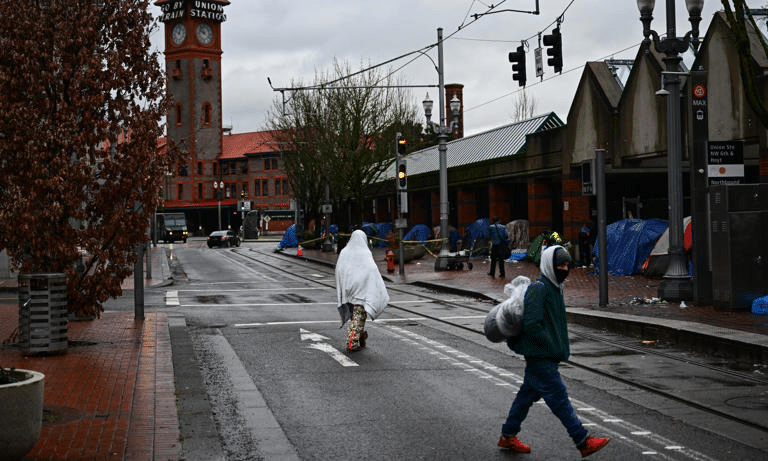
Portland’s Encampment Kids

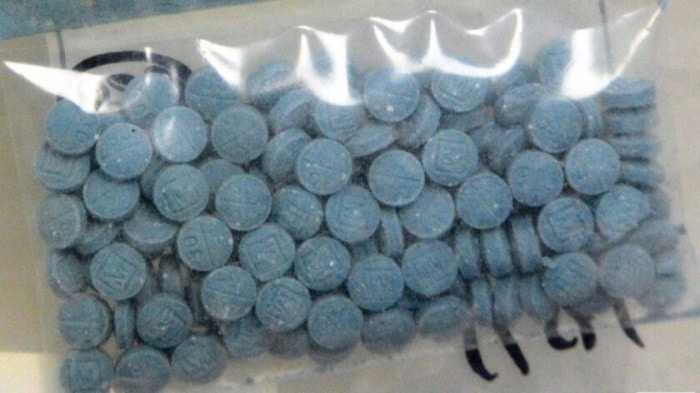
I’m standing outside the Central Police Precinct in downtown Portland, Oregon. Officer Eli Arnold and I have bicycled over to meet two of his colleagues, returned from a drug bust. We examine the proceeds of the crime on the hood of a squad car. The officers weigh the fentanyl powder on a small scale, record the amounts, and take out a few bags of pills to show me. A pill falls to the ground; one of the officers rushes to return it to the bag.

Share

Anthony Furey: Our Leaders Should Take a Lesson From US Bipartisan Push to Tackle the Drug Crisis

Tim Hortons is one of Canada’s most iconic brands. It’s a place to grab a double-double, a Boston cream donut, and catch up with friends. It’s also increasingly a place to do hard drugs—at least when it comes a Tim Hortons location in the city of Oshawa, just west of Toronto, that has had to close its indoor dining because too many drug users were injecting and being violent throughout the restaurant.

“It’s the darkest part of our country happening on the site of one of the businesses that is the pride of Canada,” wrote Joe Warmington in the Toronto Sun. “The fact that a Tim Hortons has decided it’s better to not let people dine in says all we need to know about the mess we are in.”

Share

Adam Zivo: ‘Safer Supply’ Is the OxyContin Crisis All Over Again

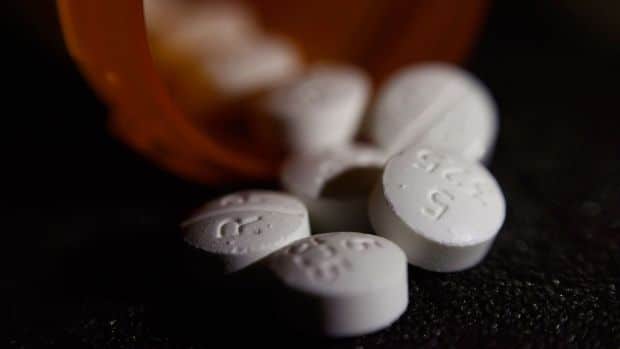
Canadian harm reduction activists believe that “safer supply” can reduce overdoses and deaths by providing addicts with easy access to “safe” pharmaceutical opioids—but we already tried this experiment 20 years ago. It was called the OxyContin crisis and it had nightmarish results. So why are we making the same mistakes all over again?

Share

Adam Zivo: With Activist Judges on the Bench, We Can Expect Nonsensical Rulings Allowing Drug Use on Playgrounds

Early last year, British Columbia decided to decriminalize personal amounts of illicit drugs under the misguided belief that this would mitigate overdoses and deaths. While the drug crisis in Canada is horrific and drastic action is sorely needed, the decriminalization experiment has been an absolute disaster.

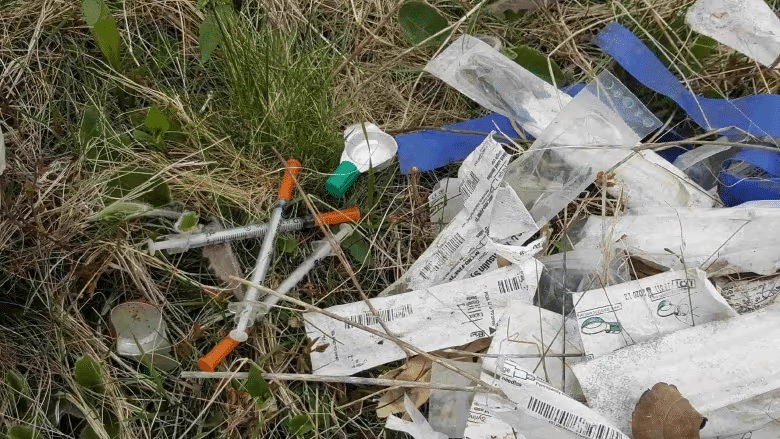
Deaths have only continued to skyrocket and public safety has rapidly deteriorated. Violent crime is rising, and discarded syringes and other drug paraphernalia have become common sights—including on playgrounds and other family-oriented spaces.

Share

BC Court Blocks New Law Against Public Drug Use, Warning of ‘Irreparable Harm’

The British Columbia Supreme Court has blocked new provincial laws against public consumption of illegal substances.

The Dec. 29 ruling in favour of the Harm Reduction Nurses Association imposes a temporary injunction until March 31, pending a constitutional challenge, with the judge saying “irreparable harm will be caused” if the laws come into force.

Share

Safe-Injection Sites and Crime

A new study shows a statistically significant increase in aggravated felony assaults in vicinities where these establishments operate.

Only two government-sanctioned “safe-injection sites” operate in the U.S., one in East Harlem, the other in Washington Heights. Their impact—on both those who use their facilities to inject hard drugs under medical supervision and on the neighborhoods where they are located—is thus of national significance. Other states, cities, and the federal government are doubtless closely watching these two experiments. That is why a new research paper on the Journal of the American Medical Association (JAMA) Network Open site is so important and why it has received so much attention.

Share

Fentanyl super labs in Canada pose new threat for U.S. opioid epidemic

At a rural property an hour outside Vancouver in October, Canadian police found 2.5 million doses of fentanyl and 528 gallons of chemicals in a shipping container and a storage unit. Six months earlier, they raided a home in a cookie-cutter Vancouver subdivision packed with barrels of fentanyl-making chemicals, glassware and lab equipment.

Thousands of miles away outside Toronto, police in August found what is believed to be the largest fentanyl lab so far in Canada — hidden at a property 30 miles from the U.S. border crossing at Niagara Falls, N.Y.

Share

London set to become like drug-ravaged San Francisco, warns policing chief

Opium Den London England Victorian Era

London and other UK cities risk becoming like drug-ravaged San Francisco because of a surge in super-strength synthetic opioids, one of Britain’s most senior policing figures has warned.

Donna Jones, who chairs the Association of Police and Crime Commissioners, said the epidemic of drug overdoses in the California city offered a stark warning of what the UK might face as a result of global changes in the illegal drug market.

Share