Military was told to prepare to intervene in convoy protests, Defence Department official says

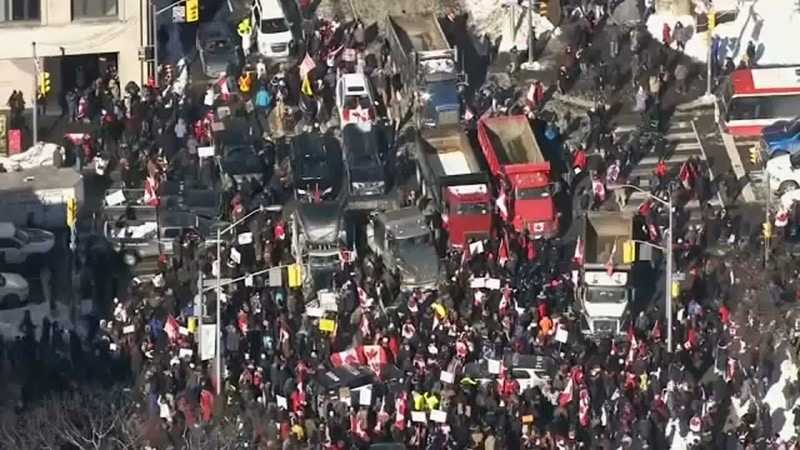
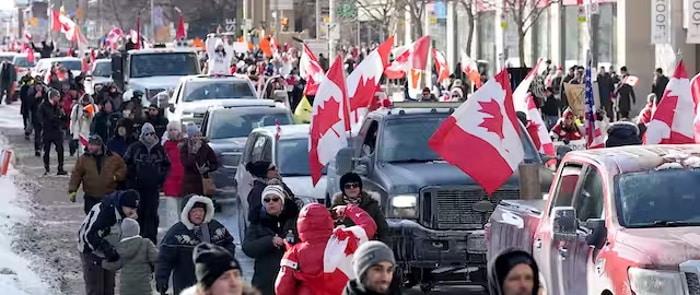
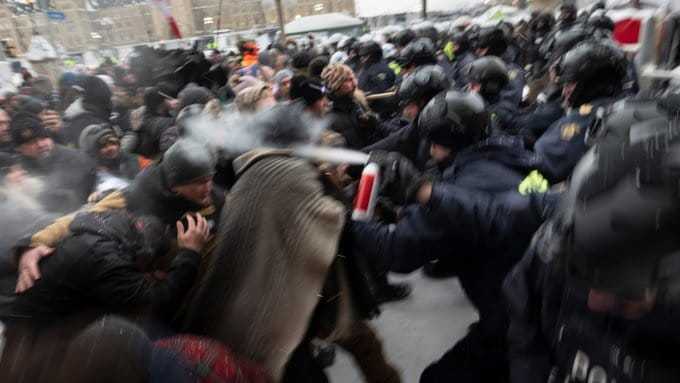
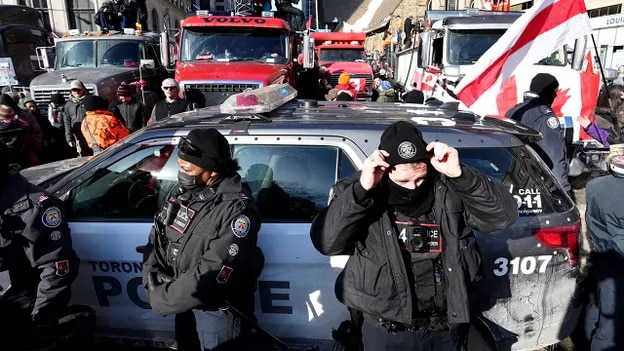
The Defence Department’s top official says he directed the military to prepare to intervene in the “Freedom Convoy” protests earlier this year, but the resulting plans were never seriously considered – in part due to concerns about another Oka Crisis.

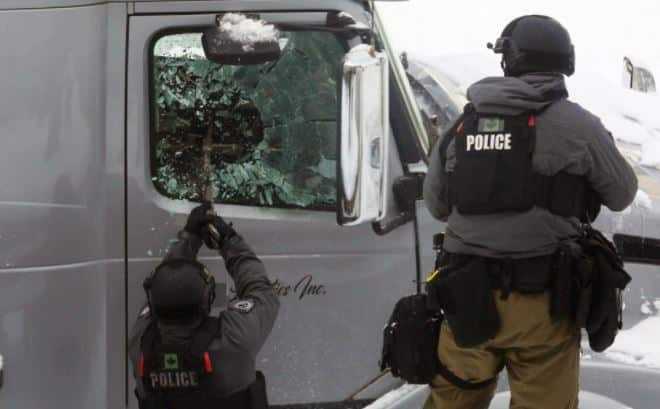
Deputy minister Bill Matthews and another top defence official also said the Canadian Armed Forces was prepared to fly police officers to demonstration sites across the country, but that its tow trucks were too big – and too old – to help with the protests.

Matthews and Defence Department associate deputy minister Stefanie Beck made the comments in an August interview with lawyers for the public inquiry looking into the Liberal government’s decision to use the Emergencies Act to end the protests.

That’s so Canada – Our tow trucks are crap.

Share

CAF Not Pleased That Military Members Supported the Freedom Convoy

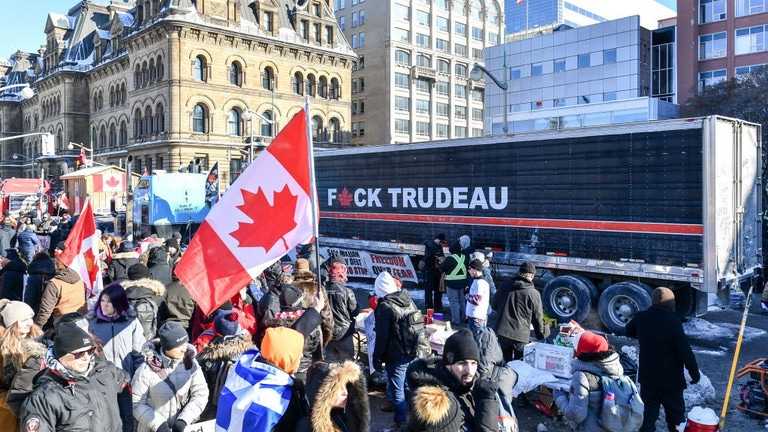
Emails from government and Canadian Armed Forces’ (CAF) officials regarding soldiers and military members who were in favour of the Freedom Convoy protest in Ottawa in February show that officials condemned any military member supporting the protest.

The emails, now public, were submitted as part of the inquiry into the invocation of the Emergencies Act to quell the convoy protest.

Share

Social media tools were key to ‘Freedom Convoy’ protest, expert tells inquiry

OTTAWA – Social media acted as the “central nervous system” of the “Freedom Convoy” protest in Ottawa last winter, the Public Order Emergency Commission heard Tuesday as it considered the role of misinformation in the lead up to the invocation of the Emergencies Act.

The policy phase this week follows six weeks of fact-finding hearings into the events that led to that decision, which included testimony about online threats and the role social media played in organizing the protest against COVID-19 public health measures.

Before thousands of trucks started rolling toward Ottawa last January, a loose group of protest organizers communicated mainly over TikTok and Facebook, the commission heard over those weeks of testimony. Many of them had never met in person until the protest began.

Share

Convoy protest lawyers didn’t do their clients any favours

The lawyers representing the organizers of the infamous trucker convoy at the Emergencies Act inquiry certainly didn’t do themselves or their clients any favours over the course of the hearings.

But given that some of the legal team was funded by the Calgary-based Justice Centre for Constitutional Freedoms (JCCF) that should come as no surprise. Its president, John Carpay, is facing professional misconduct charges following a request for a Law Society investigation into lawyers associated with the JCCF by Manitoba’s attorney general.

Share

Large Credit Union Allegedly Reported Convoy-Supporting Depositors to RCMP

One of Canada’s largest credit unions allegedly reported depositors to the RCMP whom it suspected of supporting the Freedom Convoy protests last winter.

Desjardins Group managers sent an email to the RCMP on Feb. 19 disclosing deposit amounts used to pay credit card bills of several of its customers that it believed were spending to support the convoy protesters, according to Blacklock’s Reporter.

“The money is used to pay some bills regarding marketing like signs and paper for the (protest),” managers wrote in the email. “We are waiting for more instructions in regards of the above.”

Desjardins specifically named a couple who deposited $20,000.

Share

Rex Murphy: Trudeau’s Emergencies Act theatre pure distraction

The Charter of Rights and Freedoms contains the famous notwithstanding clause. That clause empowers provinces to override otherwise Charter- guaranteed rights. Very recently for example, Doug Ford of Ontario, summoned the notwithstanding clause to “cancel” collective bargaining rights, though he eventually withdrew it. Quebec, as another example, has made invoking the notwithstanding clause one of its favourite jurisdictional hobbies.

Share

Peter Stockland: Trudeau Called for Dialogue During Indigenous Rail Blockade, but Assailed Convoy Protesters With Emergencies Act

Well, at least Prime Minister Trudeau is in a state of calm. Indeed he has, we’re told, achieved an abundance of bliss.

“I am absolutely, absolutely serene,” he said on Nov. 25 during his testimony at the Rouleau inquiry into declaration of the Emergencies Act in February.

Not just “absolutely serene.” But “absolutely, absolutely.” No scintilla of quivering, quavering, or doubt. The man stands at the apex of oneness with himself. And I am absolutely-squared confident we can all agree that is a good thing.

Share

The Liberal “government” at work

The CAF is gonna need even more transvestites to plug the recruiting holes now.

h/t Mauser

Share

Justin Trudeau in Wonderland

His testimony on why he suspended truckers’ civil liberties was ludicrously evasive

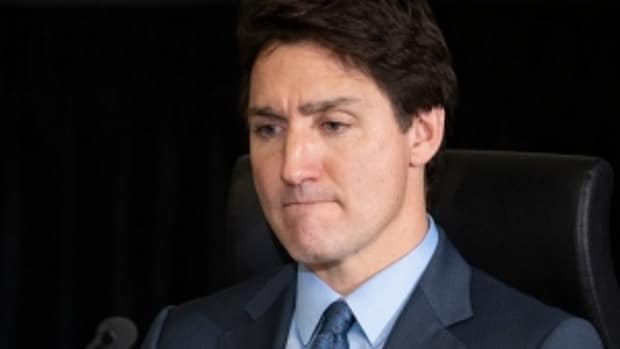
On Friday, Justin Trudeau made his much-anticipated appearance before the Canadian Public Order Emergency Commission, where he gave testimony about his unprecedented decision to use the Emergencies Act last February to suspend civil liberties in Canada and suppress the trucker protests.

To the fascinated eyes of the public, it soon became apparent that although the well-coached prime minister was present before the commission in body, in spirit he was with Alice in Wonderland — that magical place where words mean what one wants them to mean, neither more nor less.

Share

Trudeau: I Had to Use Martial Law to Suppress Freedom Convoy Because “What If Someone Had Gotten Hurt”?

Seven police officers were injured after BLM riots in Toronto.

A totalitarian clown doesn’t stop being a clown just because he’s also a totalitarian.

As the investigation delves into Trudeau’s illegal decision to ruthlessly suppress the Freedom Convoy protests, the investigation turned up extraordinary coordination and pressure from the Biden administration.

Share

Could the convoy come back?

In late January, as convoys of flag-bedecked tractor-trailers, RVs and pickup trucks streamed toward the capital from practically every corner of Canada, Charles Bordeleau watched with professional interest but not much concern.

As its former chief, Bordeleau knew the Ottawa Police Service (OPS) was deeply experienced — perhaps more experienced than any other law enforcement agency in the country — at managing protests of all shapes and sizes.

As well, police had ample warning about what was heading their way. They could literally watch the western convoy coming from 4,000 kilometres away, and were receiving regular intelligence updates as it approached the city.

Share

After six weeks of Emergencies Act testimony, questions remain about legal advice and redactions

No redactions have evoked as much frustration as the government’s claim of solicitor-client privilege, which it used to hide legal advice it received before invoking the Act

OTTAWA — After six weeks and 76 witnesses, including the prime minister and much of his cabinet, public hearings on the use of the Emergencies Act are done, but some crucial questions remain.

What did the government hide behind document redactions, and what was the key legal advice cabinet leaned on to invoke the act?

Share

Emergencies Act inquiry price tag estimated at nearly $19M

The price tag for the inquiry probing the government’s use of the Emergencies Act hasn’t been finalized yet — but it could be roughly $18.8 million, according to the Privy Council Office (PCO).

A PCO spokesperson told CBC News that while the total won’t be known until the Public Order Emergency Commission completes its work, the federal government approved $18.8 million to cover its costs.

Share