New leader, or new system? The Conservatives ponder life under two-party politics

The NDP, it is well known, is in deep trouble. With seven seats and 6.3 per cent of the popular vote in the recent election, the party posted its worst showing, not only since its founding, but since the founding of its predecessor, the Co-operative Commonwealth Federation, in 1935.

Leaderless, deprived of official party status in the House of Commons and the perqs that go with it (money, staff, committee seats, recognition, credibility), the party has launched a months-long “review and renewal process.” Only after that is completed will the leadership race get under way. It could be next spring before the party has a leader.

Share

Poilievre says he lost Ottawa riding for being ‘honest’ about plan to cut public sector jobs

Conservative Party Leader Pierre Poilievre says he lost his riding of Carleton in the federal election due to an “aggressive” campaign by public sector unions after he was honest about wanting to cut federal worker jobs.
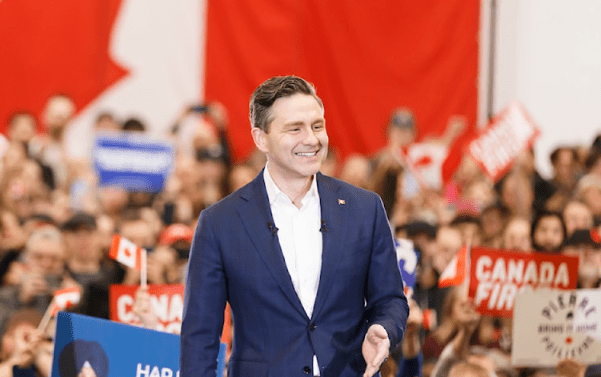

Poilievre had held the Ottawa riding of Carleton for two decades until the April 28 election, when he was defeated by Liberal candidate Bruce Fanjoy by 4,500 votes.

The loss was a major setback for the leader, who before the new year had been favoured to become prime minister.


Carney talks Big but the LPC has relied upon the Public Service Union vote bloc for years.

Junior increased their numbers by almost 40% Carney won’t harm that relationship.

Share

LILLEY: Poilievre fighting ghosts as party loyalists grumble about campaign defeat

Pierre Poilievre rode into the Calgary Stampede to cheers as he took in the parade on horseback. When he took to the stage Friday night, a young enthusiastic crowd cheered him on with a raucous reception.

The public reception for Poilievre was very different from what Conservative supporters were willing to say privately at various Stampede events.

Share

Poilievre has to contend with Alberta separatists as he vies for a Commons seat

Conservative Leader Pierre Poilievre’s path back to the House of Commons runs through a rural Alberta riding that has become a hotbed for Western discontent and the independence movement — a potentially tricky situation to navigate for a leader with national ambitions.

Poilievre, a Calgarian by birth who has lived away from Alberta for more than two decades, is running in the Aug. 18 byelection in Battle River-Crowfoot, a sprawling riding in the province’s east where the oil and gas industry is a major employer. It includes the small town of Hardisty, which sits at the nexus of the North American oil pipeline system and is home to a huge petroleum tank farm.

Share

Carney calls mid-August Alberta byelection, clearing Poilievre’s path to a new seat

OTTAWA — Prime Minister Mark Carney has scheduled a byelection for Aug. 18 in the Alberta riding of Battle River—Crowfoot where Conservative Leader Pierre Poilievre will be looking to regain a seat.

“The prime minister will be honouring his commitment of calling it quickly with ‘no games’ so that the byelection is complete well ahead of the House of Commons coming back in mid-September, rather than drawing it out in any way until December or January,” said a source familiar with the prime minster’s thinking, speaking on background because they were not authorized to speak publicly on the matter.

Share

Can Pierre Poilievre outrun the ‘yesterday’s man’ label?

If you are wondering what Pierre Poilievre has been up to while Prime Minister Mark Carney hosted the G7 Summit in Alberta, announced a new Canada-European Union security-and-defence partnership in Brussels, and signed on to a NATO pledge to massively boost military spending at The Hague, hogging the spotlight has definitely not been it.

The Conservative Leader has been all but invisible as Mr. Carney moves with lightning speed to steer “the biggest transformation of our economy since the Second World War,” as he likes to call it. That is likely by choice. There is not much Mr. Poilievre could say or do right now to distract attention from the new Prime Minister as he unleashes sweeping reforms to kickstart major infrastructure projects, negotiate a new economic and security pact with U.S. President Donald Trump and overhaul the public service.

I imagine the media is enjoying Poilievre’s deep freeze, he hasn’t exactly endeared himself to the press.

Share

Tasha Kheiriddin: Carney puts Poilievre between a rock and a hard place

What a difference six months make. In December, Canada’s Conservatives were in the catbird seat with 48 per cent support, while the Liberals dropped to 19. Practically everyone pegged Conservative Leader Pierre Poilievre as Canada’s next prime minister.

Then Justin Trudeau stepped down, Donald Trump took office and Mark Carney got elected Liberal leader. One federal election later, the Liberals have a minority and would likely have a majority if a vote were held today. It’s a reversal of fortunes worthy of a Shakespearean play (or, for the gen Z crowd, a Netflix drama).

Share

HANNAFORD: The Conservatives need to start acting like conservatives

There’s a message for the Conservatives in recent polling that shows the Liberals surging ahead in public confidence.

If you don’t do conservative things, and instead do vote with the Liberals on things people expect you to vote against them on, they will shrug you off as irrelevant or worse, as idiots. And although Eastern Canada has a distinguished ten-year history of voting for idiots, you as Conservatives do not have idiot privilege: The idiot has to be a Liberal.

You know this.

So, stop it.

Share

Pierre Poilievre has dropped out of the spotlight, What happens when he comes back?

Matt Gurney: Let’s open with something of a confession. Or maybe a strategic repositioning of the shield I use to cover my bottom from being called out for bad predictions. In the immediate aftermath of the election, I would have said, with no reservations, that I thought Pierre Poilievre was safe as Conservative leader. I still think that, but now only on balance — I think he is very likely to remain as leader, but small doubts have entered my mind. We can talk about why in a minute, but first, what do you think of the big question — is he safe?

Share

Mark Carney’s minority government has an unexpected partner in the Conservatives — for now

OTTAWA—There’s a new coalition in town.

If the last Parliament was dominated by the Conservatives’ insistence that the Liberal-NDP alliance had spun the country into an irreversible state of disarray, the opening weeks of the latest session has put a new pact on the map.

“It appears to me, and it remains to be seen, that (Prime Minister) Carney’s new majority coalition is Liberal-Conservative, delivering Pierre Poilievre’s policies with a more friendly face,” said the Green Party’s Elizabeth May on Monday, as she raised the alarm over C-5, the Liberals’ major projects bill.

Share

In his new riding, Pierre Poilievre will be stuck between a rock and a separatist place

The Alberta riding of Battle River-Crowfoot is roughly 3,000 kilometres away physically, and a good few light years away culturally, from the Ontario riding of Carleton, which Conservative Leader Pierre Poilievre held for the last 20 years – up until the recent federal election.

Yes, both are historically blue ridings, though Battle-River’s blue is that deep, rich, saturated hue that can disappear a bit of red in an instant, like a drop of blood in the ocean. Yes, both encompass rural areas, but Battle-River’s population density was 2.1 per square kilometre in 2021, compared to 111.5 per square kilometre for Carleton in the same year (notably, pre-redistribution). Roughly half the population of Battle River-Crowfoot had no education beyond high school according to 2021 census data, compared to just a third in Carleton.

Share

Poilievre is reaching out to unsuccessful candidates for feedback, say Conservatives: ‘he’s doing a post-mortem himself’

Conservative Party Leader Pierre Poilievre is reaching out to unsuccessful candidates from this year’s election to get their feedback and to gauge the level of support for him within rank-and-file party members ahead of the mandatory leadership review, say Conservatives.

“He’s doing a post-mortem himself,” said an unsuccessful candidate who only agreed to speak on a not-for-attribution basis because the conversation with their leader was private. “He wants to hear from everybody. It’s an individual check-in from him. He’s obviously trying to rally support, trying to figure who’s coming with him in the next election.”

Share

Post-Mulroney, the Conservatives’ brand is ‘loser.’ It’s time for an overhaul

How have Conservatives fared since making the big swerve rightward in the early 1990s?

We recall that under Brian Mulroney’s Progressive Conservative banner they won majority governments in 1984 and 1988. Then along came the dividers, the ideologues of the Reform Party, who grabbed

52 seats in the 1993 election and then proceeded to swallow the old Tories whole.

And the rest is history – a primarily painful party history. Since the late Mr. Mulroney’s departure from the party leadership in 1993, the Liberals have won eight elections to the Conservatives’ three.


How about NO? Visible minorities in the GTA increasingly supporting Conservatives: U of T study

Share