The Lab-Leak Hypothesis

The Lab-Leak Hypothesis

For decades, scientists have been hot-wiring viruses in hopes of preventing a pandemic, not causing one. But what if …?

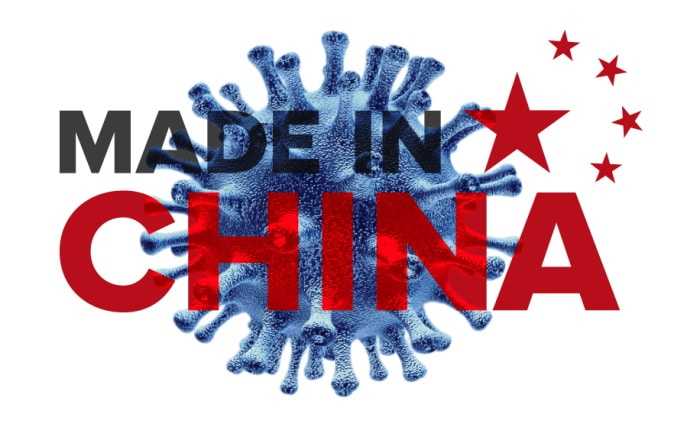
What happened was fairly simple, I’ve come to believe. It was an accident. A virus spent some time in a laboratory, and eventually it got out. SARS-CoV-2, the virus that causes COVID-19, began its existence inside a bat, then it learned how to infect people in a claustrophobic mine shaft, and then it was made more infectious in one or more laboratories, perhaps as part of a scientist’s well-intentioned but risky effort to create a broad-spectrum vaccine. SARS-2 was not designed as a biological weapon. But it was, I think, designed. Many thoughtful people dismiss this notion, and they may be right. They sincerely believe that the coronavirus arose naturally, “zoonotically,” from animals, without having been previously studied, or hybridized, or sluiced through cell cultures, or otherwise worked on by trained professionals. They hold that a bat, carrying a coronavirus, infected some other creature, perhaps a pangolin, and that the pangolin may have already been sick with a different coronavirus disease, and out of the conjunction and commingling of those two diseases within the pangolin, a new disease, highly infectious to humans, evolved. Or they hypothesize that two coronaviruses recombined in a bat, and this new virus spread to other bats, and then the bats infected a person directly — in a rural setting, perhaps — and that this person caused a simmering undetected outbreak of respiratory disease, which over a period of months or years evolved to become virulent and highly transmissible but was not noticed until it appeared in Wuhan.


Share

Are The Vaccines Already (Partially) Obsolete?

A few weeks ago I compared the emergence of the British variant of coronavirus to the twist at the end of a “Twilight Zone” episode. The entire planet spent 2020 waiting for a cure to the plague, and then it arrived to global jubilation just before New Year’s — only to be followed immediately by ominous news that a new strain of the virus had begun to circulate widely.

Share

LILLEY: Think tank suggests one more harsh lockdown, but will anybody buy it?

LILLEY: Think tank suggests one more harsh lockdown, but will anybody buy it?

At the best of times, anybody trying to sell a hard national lockdown is going to have their work cut out for them — and this week would be even harder.

The public is rightly skeptical of the political class telling them to stay home, that would be just ‘for a few weeks’ and we’re all in this together — all while they’re jetting off to a beach.

The Star is Gung Ho – To avoid COVID’s third wave, embrace longer lockdowns, gradual relaxing of restrictions, group urges provinces

Share

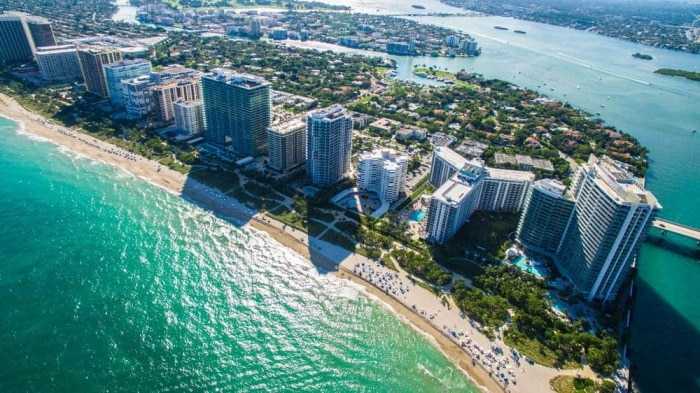
The Sunshine Exodus: New York license plates increasingly stand out on Florida roads.

“Cuomo and de Blasio are destroying the city,” cried a local restaurateur in a recent radio ad calling on people to visit his homey Italian eatery, where they can “fuggedaboudit.” The sentiment would have fit well in New York, where countless restaurants are struggling to pay rent, and where indoor dining is again banned. The Brooklyn accent griping from my car radio seemed out of place, however, as the Palm Beach trees flew by. The restaurant is in Jupiter, Florida. I’ve never been tempted to make the half-hour drive north from Palm Beach to dine there, but deserting New York for Florida’s warmer climes is easier to understand these days.

Share

Data suggests Canada is rolling out COVID-19 vaccines at a slower rate than peers

Data suggests Canada is rolling out COVID-19 vaccines at a slower rate than peers

Speed up immunizations – that’s the message from some doctors in Canada – as no province has administered more than 50 percent of the COVID-19 doses it has received so far.

Data compiled from the COVID-19 Canada Open Data Working Group reveals the country is administering vaccines at a slower pace than some of its peer countries.

Israel, Britain, the United States and Germany have all inoculated a larger share of their populations, despite Canada being one of the first to start authorizing vaccines.

Share

A quarter of Canadians don’t want the COVID-19 vaccine. We asked the experts why

A quarter of Canadians don’t want the COVID-19 vaccine. We asked the experts why

After the COVID-19 pandemic tossed the world into chaos, the light at the end of the tunnel was the announcement that major pharmaceutical companies had vaccines in development.

Two vaccines, made by Pfizer-BioNTech and Moderna, have now been approved for use. As Canada rolls out its vaccination campaign, beginning with frontline workers and later the general population, life may soon return to normality.

Share

Covid: LA ambulances told not to transport “goners” to hospital

Covid: LA ambulances told not to transport “goners” to hospital

Ambulance workers in Los Angeles County, California, have been told not to transport hospital patients that have extremely low chances of survival.

The directive comes as officials say the region could soon hit over 1,000 Covid-related deaths per day, and hospitals are overrun with patients.LA ambulances told not to transport some patients

Emergency workers have also been told to ration oxygen, which is in short supply due to the pandemic.

Hospital beds in LA are running low and officials fear a post-holiday spike.

Share

Report: U.S. Funded Specific Research at Wuhan Lab that Led to Coronavirus

The World Health Organization is beginning an investigation into the scientific origins of the coronavirus. They’ve assembled a blue-ribbon panel of doctors, researchers, and scientists to get to the bottom of the mystery.

As it turns out, investigative reporter Nicholson Baker did most of the work for them. Writing in New York Magazine, Baker reveals a horror story about an accidental release of the coronavirus deliberately created in a lab funded by U.S. tax dollars.

Share

GOLDSTEIN: Jet-setting politicians undermine the case for lockdowns

The real issue with so many politicians of all political stripes flying out of the country over the Christmas/New Year holiday isn’t that they ignored the advice of their own governments not to do so.

It’s that they’ve undermined the credibility of government-imposed public health measures and lockdowns to fight the pandemic, and handed their fiercest critics an argument about why they’re unnecessary and extreme.

Share

Ontario reports 3128 new Covid cases

Ontario is reporting another day with more than 3,100 new COVID-19 cases, along with 51 new deaths, as hospitalizations hit a record high and test positivity remained at worrisome levels.

“Locally, there are 778 new cases in Toronto, 614 in Peel, 213 in York Region, 172 in Durham, 151 in Middlesex-London and 151 in Hamilton,” Health Minister Christine Elliott wrote on Twitter.


Health authorities to start naming specific Toronto workplaces with significant COVID-19 outbreaks

…There are currently more than 250 active workplace outbreaks across the province, according to the latest provincial data — the second-highest source behind care settings. There are currently 16 active workplace outbreaks in Toronto, Dr. Eileen de Villa, the city’s medical officer of health, said Monday.

Three employers with outbreaks that “pose a significant public health risk” are now named on the city’s website: skin care manufacturer DECIEM, meat processor Sofina Foods and circuit board manufacturer TTM Technologies. The new cumulative data shows warehouses, manufacturing and distribution companies have had the largest number of outbreaks at 132, followed by bars and nightclubs with 41. Food processors have seen 31 outbreaks since the start of the pandemic, and the retail sector has registered 24.

I am very curious about what is considered an essential business and how you make the list.

Share

Confusion swirls over city’s hockey, tobogganing crackdown

Confusion swirls over city’s hockey, tobogganing crackdown

As the city’s struggle against unsanctioned hockey and tobogganing continues, residents are being left in the cold over what they are — and aren’t — allowed to do outside this winter.

Requesting to remain anonymous, a Toronto Sun reader who tried to take his kids for an afternoon of sledding at Earl Bales Park was left scratching his head over what he described as conflicting messages from city officials.

Share