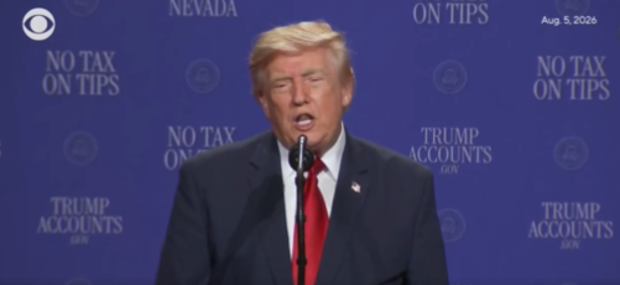
Trump administration expands trade investigations to more countries, including Canada

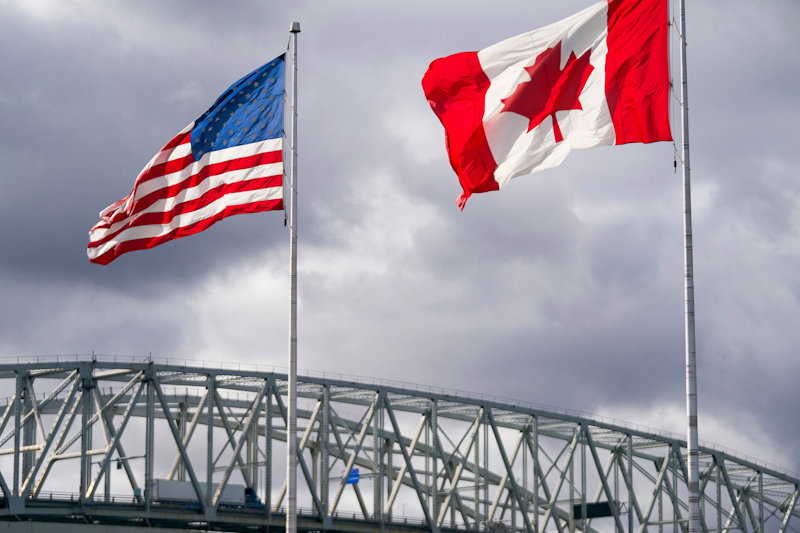
WASHINGTON — The Trump administration has expanded its trade investigations to 60 countries, including Canada, in an effort to shore up the president’s tariff policies.

“We are trying to move very quickly,” United States Trade Representative Jamieson Greer told CNBC Friday. “We are trying to move in a matter of months.”

Greer’s office announced Wednesday that it was launching investigations of the European Union and a handful of other countries under Section 301 of the Trade Act of 1974.

Share

Nanos survey says border crossing no longer ‘on the radar’ for many Canadians

A new survey from Nanos Research for CTV News found 43 per cent of Canadians are less likely to travel to the United States in 2026, compared to the previous year.

Thirty-eight per cent said they don’t vacation in the United States in general, while just four per cent said they are likely to spend more leisure time south of the border.

For many Canadians, “the U.S. is not on the radar in terms of a travel destination,” said Nik Nanos.

Share

Just over half of Americans say they don’t want tariffs on Canada: poll

As U.S. President Donald Trump’s trade war against Canada stretches into its second year, more than half of Americans said in an Angus Reid survey that they don’t want any tariffs on Canada, with the majority viewing their northern neighbour positively.

With the Canada-U.S.-Mexico (CUSMA) free trade agreement up for renegotiation this year, 51 per cent of U.S. respondents told the survey that if they had their way, there would be no tariffs on Canada at all.

Share

Up to 16 Liberals considering support for NDP’s arms-control legislation

When the NDP’s arms-control bill that seeks to end largely permit-free Canadian military exports to the U.S. is put to a vote on Wednesday, it could garner the support of more than a dozen Liberal MPs.

That would be the first time some in the Liberal caucus split from the government’s position on legislation under Prime Minister Mark Carney.

“By my count, so far, I think there may be somewhere between … nine to 16 Liberal members who may support the bill,” said the NDP’s Jenny Kwan, the bill’s main sponsor, at a news conference on Tuesday.

Share

Economy One year after Trump’s sovereignty threats, Canadians keep ‘elbows up’

For Lisa Mcbean, buying American-made snacks and traveling to the U.S. was second nature. That changed for the Ontario resident starting in early 2025.

Since then, the 54-year-old has checked if products are made in Canada before buying at the grocery store. Mcbean canceled multiple trips to the U.S. she had planned for concerts. Once-common jaunts across the border to shop are out of the picture.

Share

MCGREGOR: Canada is gambling with its US alliance — it won’t end well

There is a comforting idea making the rounds in Canada: stay neutral, keep everyone calm, and we will be fine. We can distance ourselves from the United States (US) without losing the benefits of the alliance and let markets and multilateral forums do the heavy lifting.

It sounds smart. It is also risky.

Share

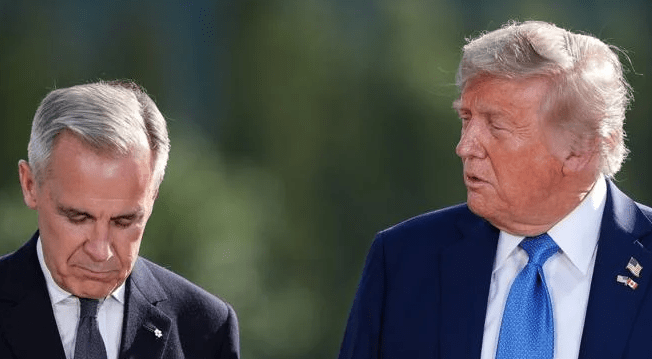
Trump and Carney speak … allegedly, as Liberal government proposes debate on Iran war

OTTAWA — Liberal House leader Steven MacKinnon says Prime Minister Mark Carney’s government has proposed to debate the turmoil in the Middle East on Monday evening, following a weekend meeting of ministers that discussed the issue.

Steven MacKinnon, who is also transport minister, said in a Sunday post on X the government has proposed to opposition parties that a debate on the hostilities in Iran and the impact for Canadians abroad be held in the House of Commons.


WTF?

h/t Mauser

Share

With Ottawa’s China Pivot, Beijing Expects Canada to Overlook Its Meddling: Former Diplomat

China scholar and former Canadian diplomat Charles Burton says Beijing expects that its strategic partnership with Ottawa means Canada will refrain from disrupting its espionage and foreign interference operations.

The partnership suggests Canada “won’t disrupt China’s operations in Canada, and espionage and influence operations, so that they can continue to expand their influence in Canada for the future when, from their point of view, China becomes the dominant power on the planet,” Burton said.

Carney will do whatever Xi says.

Share

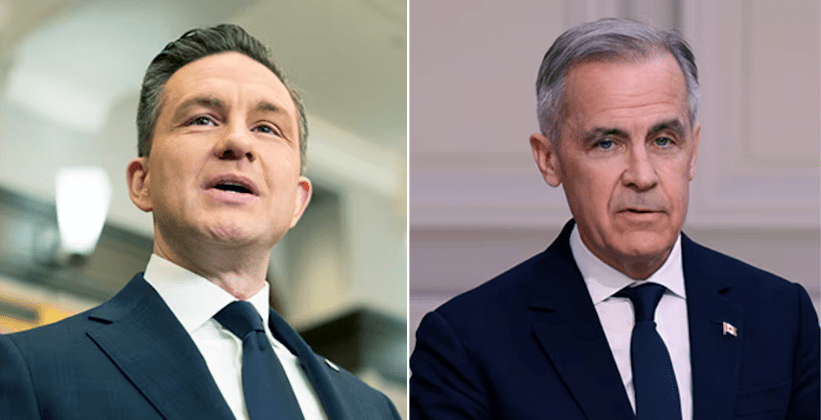
Do Carney and Poilievre have different visions for the Canada-U.S. relationship?

The clearest attempt at a line of demarcation during Conservative Leader Pierre Poilievre’s speech on Canada-United States relations was an apparent rejoinder to Prime Minister Mark Carney’s insistence that a “rupture” has occurred.

Quoting a John F. Kennedy hymn about the geography, history, economics and necessity that have brought Canada and the U.S. ever closer, Poilievre said the former president’s “insight captures a reality deeper than any temporary dispute.”

Share

The awkward truth dogging USMCA talks: ‘They just hate Canada.’

One year into the trade war, Canadians are feeling more patriotic and more convinced the United States is a worse place under Donald Trump. And as the president dangles the fate of North American free trade above a wood chipper, a split has emerged between business leaders worried about bottom lines and Canadians who are simply over the president’s provocations.


Bear in mind that Politico called on a former hack from the universally despised Trudeau government to provide insight.

Share

Canada-U.S. trade talks have restarted. Here’s what’s at stake

For the first time since U.S. President Donald Trump called off negotiations last October — ostensibly over a TV ad — Prime Minister Mark Carney’s point man on trade met face to face with his White House counterpart.

Canada-U.S. Trade Minister Dominic LeBlanc was in Washington, D.C., on Friday to meet U.S. Trade Representative Jamieson Greer.

When LeBlanc emerged from the meeting, CBC News asked him what happened in the talks, but his only comment before getting into a waiting vehicle was “Have a good weekend.”

Share

‘Buy Canadian’ policy likely to cost taxpayers $12 billion yearly: study

A study released by the Montreal Economic Institute estimates the federal government’s “Buy Canadian” policy could increase the cost of large infrastructure projects by more than $12 billion per year.

The study states that, among Organization for Economic Co-operation and Development (OECD) countries, total expenditures on public procurement accounted for 12.9 per cent of gross domestic product in 2021.

Share