Canada ready to further distance itself from U.S. on military procurement

Canada ready to further distance itself from U.S. on military procurement

The flareup in the Canada-U.S. tariff war has not only strengthened Ottawa’s resolve to boost military co-operation with Europe and Asia — it’s also hurting prospects of major military purchases from the United States.

In an interview, the head of the Defence Investment Agency says the Canadian public would have no appetite for sole-source military contracts to American firms.

Share

Dispatches from the front lines of a trade war

Dispatches from the front lines of a trade war

Business owners on both sides of the Canada-U.S. border are tired.

For those whose goods have been affected by the tariffs fired back and forth between the two countries over roughly the last year and a half, this latest and possibly most punitive round of levies announced by U.S. President Donald Trump only adds to the uncertainty – and fatigue.

It’s a long list and a steep number. Cosmetics, toiletries, packaging, electrical components, chemicals, clothing and flowers are among the bevy of Canadian products now subject to a 50-per-cent U.S. tariff as of Aug. 22.

Share

Canada does not have enough pricing power to weaponize its energy exports in U.S. trade war

Canada does not have enough pricing power to weaponize its energy exports in U.S. trade war

Emotions are running high.

As the name-calling and mudslinging between Canada and the U.S. ramps up, so too are calls to reach for the biggest weapon in our economic arsenal: energy.

The argument has an undeniable appeal.

The Americans want to hit Canadian steel, aluminum, autos, and billions more in exports? Fine. Canada has something they need too.

Share

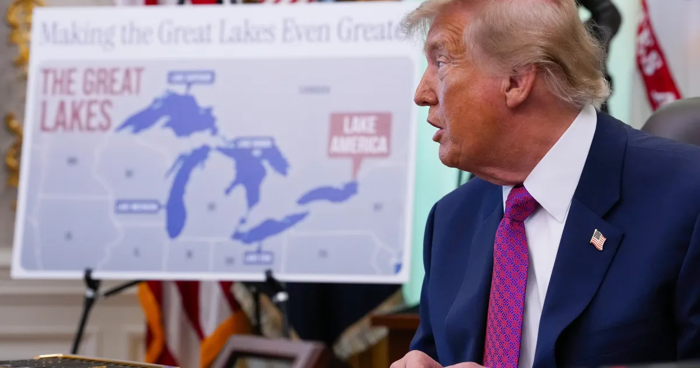
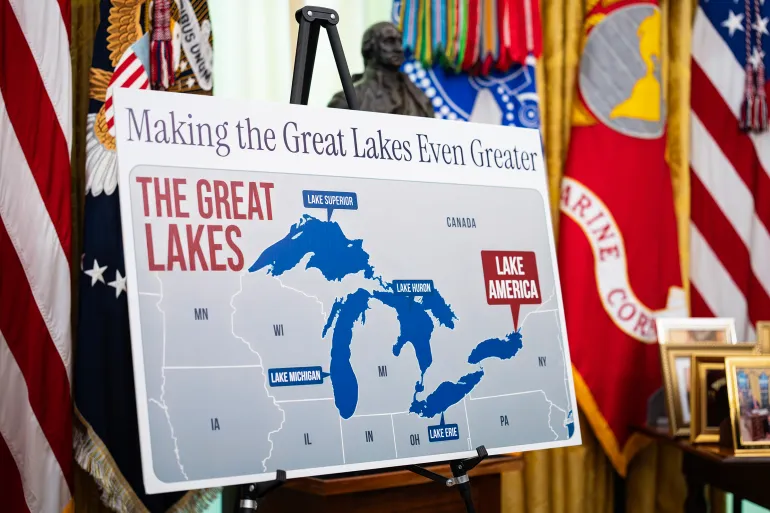
Make no mistake, Trump’s ‘Lake America’ nonsense is deadly serious

Make no mistake, Trump’s  ‘Lake America’ nonsense is deadly serious

Donald Trump sat in the Oval Office at the White House on Thursday and used his signature Sharpie to sign an executive order renaming Lake Ontario as “Lake America.”

I expect there’ll be a flood of commentary mocking this as absurd, ridiculous, laughable. Why not “Lake Melania” or “Lake Natalie,” if you want to get into the latest rumours about Trump’s female companionship.

Or comments to the effect that this proves Trump has gone completely off the rails, that he’s a wingnut, an insane person.

Share

Mark Carney is running out of excuses

Mark Carney is running out of excuses

So close, and yet so far. Only last week, Canada and the US were finally on the cusp of reaching a long awaited trade deal. Already Trump had announced the joyous news on Truth Social, already Canadian prime minister Mark Carney had celebrated securing the “best terms” for Canada and called for provinces to lift the ban on US alcohol.

Then, somehow, defeat was snatched from the jaws of victory. Late last Friday, Carney told Canadian negotiators to walk away, saying Washington was offering “a bad deal.” Trump promptly reimposed the 50 percent tariffs on goods imported from Canada that had been put on hold pending the signing of the deal. On Tuesday, August 25, Carney announced dollar-for-dollar retaliation, in what some are calling “the dumbest trade war in history.”

Carney has cynically stoked fear of America

Share

David Clement: Counter-tariffs will hurt Canadians more than they’ll hurt Trump

David Clement: Counter-tariffs will hurt Canadians more than they’ll hurt Trump

Late Wednesday the federal government announced that it was removing seafood from Canada’s list of retaliatory tariffs. The finance ministry justified the move stating, “Based on feedback, we have made select adjustments to protect against broader economic harms, including removing seafood and fish products from our list of counter tariffs.”

The invocation of economic harm here is a tell, because it should be obvious to everyone, our politicians included, that tariffs on foreign products are a tax paid for by domestic consumers.

Share

Don’t bring back COVID-era shaming in this Buy Canadian moment

Don’t bring back COVID-era shaming in this Buy Canadian moment

A humble plea: Can we not lose our minds?

As in, might we try to resist the urge to turn our collective animus toward the Donald Trump administration into something weird and McCarthyist at home? It’s easy to get swept up in the insanity of a dispute that is, at its core, entirely nonsensical. But there is virtue in not letting ourselves go mad, too.

Share

Canada will win this trade war

Canada will win this trade war

On Thursday, the White House put out an image of a bald eagle pinning a Canada goose under its talons and added a statement that managed at once to be obsequious, vulgar, and untrue.

“President Trump said it best: ‘Canada is easily the most difficult and unreasonable. They feel entitled, but they are not a State, and will be entitled no longer!” Canadian leadership chose retaliation over partnership — and America is no longer willing to carry them.”

Optimistic for a US publication.

Share

Detroit despairs as ‘insanity’ of Trump’s Canada trade war punishes city

Detroit despairs as ‘insanity’ of Trump’s Canada trade war punishes city

Every day $1bn worth of goods crosses the river dividing Detroit, Michigan, and Windsor, Ontario, two largely blue-collar US and Canadian cities that have come to act as one in the creation of North America’s auto industry.

News this week of Donald Trump’s escalating trade spat with Canada has everyone worried. Political and economic leaders and observers labeled the move an act of “hubris” , blamed Trump’s “ego”, and called the escalation “insanity”.

“We don’t need Canada, they need us,” Trump declared.

Share

Canadians are about to find out what Carney meant by ‘sacrifices’ — and it’s not pretty

Canadians are about to find out what Carney meant by ‘sacrifices’ — and it’s not pretty

In the days leading up to Mark Carney’s first budget last fall, the prime minister delivered an address that included an ominous but vague warning about needing to make sacrifices in the face of American antagonism.

The budget came and went, and it was never made clear what Carney had had in mind. Now, Canadians are about to learn what his statement really meant — and it’s not pretty.

Most economic modelling of the fallout from the current trade war has shown acute pain in specific areas, as well as some mild, temporary hurt in the broader economy, followed by a recovery.

Share

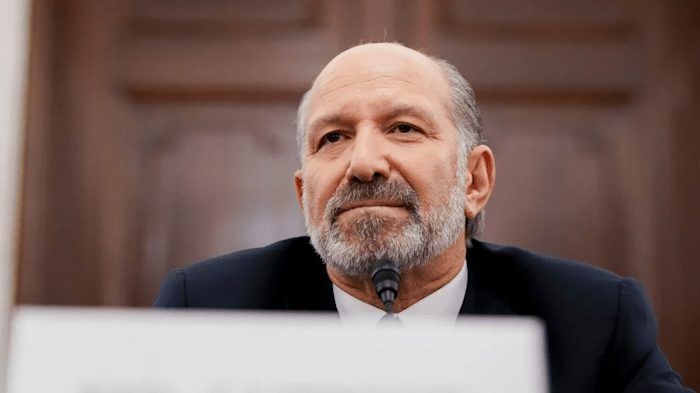
Lutnick claims Canada pulled out of trade talks due to the Quebec election, Alberta refe

Lutnick claims Canada pulled out of trade talks due to the Quebec election, Alberta refe

OTTAWA — United States Commerce Secretary Howard Lutnick said Canada walked away from a trade agreement with the U.S. due to “political purposes” that involved Quebec’s upcoming provincial election and Alberta’s referendum.

“It was manufactured,” said Lutnick, during a press conference in Washington on Thursday. “So there’s the sovereignty party trying to run, and they’re in the lead in Quebec and so this was Mark Carney manufacturing something that would try to keep them from winning, and then you have Alberta has an independence resolution.”

Lutnick’s and the US version of events seems far more credible than the Carney con.

Share

Most Canadians support suspension of U.S. trade talks, poll suggests

Most Canadians support suspension of U.S. trade talks, poll suggests

OTTAWA — A majority of Canadians support Prime Minister Mark Carney’s decision to walk away from trade talks with the U.S., a new poll suggests.

Results of the Abacus Data poll also suggest a divide among Conservative voters, underscoring the challenges facing Conservative Leader Pierre Poilievre amid the ongoing Canada-U.S. trade turmoil.

Released exclusively to the Star, the survey asked respondents whether they believe Canada made the right call in suspending the trade talks on Friday, or if it should have accepted the terms offered by U.S. President Donald Trump’s administration.

Share

The art of inflicting pain: How to select targets for Canada’s counter-tariffs

The art of inflicting pain: How to select targets for Canada’s counter-tariffs

Like a fox trying to bring down a moose, Canada’s retaliation against the latest U.S. tariffs is a classic case of asymmetrical warfare.

That’s because the U.S. economy is about 12 times larger than Canada’s, says economist Trevor Tombe.

“It’s incredibly hard for a small country to move the needle in aggregate in the United States. That’s why it’s important to zoom in on specific states where possible. But even in these heavily affected states, the effects are small,” he said.

Share

Carney is delusional if he thinks he can beat Trump in a trade war

Carney is delusional if he thinks he can beat Trump in a trade war

Donald Trump’s threat to impose 50 per cent tariffs on certain Canadian goods, including alcohol, clothing and hockey sticks, became a reality earlier this month. The specific details of why the negotiations unravelled are still unclear, with both sides unsurprisingly pointing fingers at one another for being the culprit.

Yet, one thing has become surprisingly clear. Mark Carney, the Canadian prime minister, is delusional enough to believe his country will come out of this trade war from a position of strength. “We’re stronger now than when the United States started this trade war,” Carney told reporters at a press conference the day after negotiations fell apart.

Share