Who watches the robodogs?

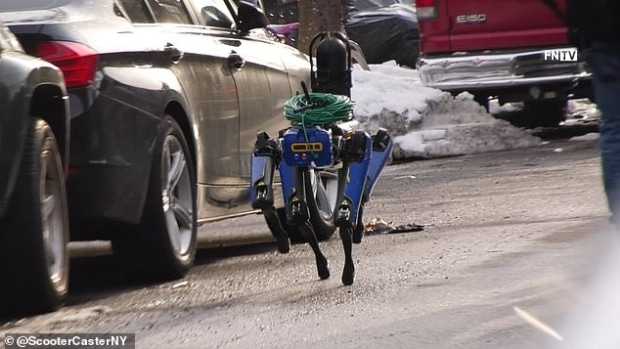
After a couple of years in the doghouse, the policing technology nicknamed Digidog is returning to the mean streets of New York. Withdrawn by former New York City Mayor Bill de Blasio in 2021 after protests by civil liberties groups, the four-legged robotic friend, made by Boston Dynamics, is being brought back by current Mayor Eric Adams, alongside a Knightscope K5 security robot and a device that fires a GPS tracker onto a fleeing vehicle.

Share

Why a fake Pope picture could herald the end of humanity

Silicon Valley heavyweights clash over the risks of super-powerful AI

For a moment the internet was fooled. An image of Pope Francis in a gleaming white, papal puffer jacket spread like wildfire across the web.

Yet the likeness of the unusually dapper 86-year-old head of the Vatican was a fake. The phoney picture had been created as a joke using artificial intelligence technology, but was realistic enough to trick the untrained eye.

Share

California Considers Union-Backed Bill Requiring Driverless Trucks To Have a Driver in Them

California legislators and their union allies are pushing a bill that would preemptively ban the use of autonomous trucks on California’s roads that don’t have a human safety operator.

Working its way through the Legislature is A.B. 316, which would require that vehicles weighing 10,001 pounds or more have a human in the cab.

Sponsored by Assemblymember Cecilia Aguiar-Curry (D–Winters), the bill has the enthusiastic support of unionized truck drivers who are explicit about their desire to protect jobs as well as public safety.

Share

It sounds like science fiction but it’s not: AI can financially destroy your business

Everyone seems to be worried about the potential impact of artificial intelligence (AI) these days. Even technology leaders including Elon Musk and the Apple co-founder Steve Wozniak have signed a public petition urging OpenAI, the makers of the conversational chatbot ChatGPT, to suspend development for six months so it can be “rigorously audited and overseen by independent outside experts”.

Share

Techno-Hell: AI Firm Scrapes 30 Billion Social Media Photos, Hands Them to Law Enforcement

One of the most notorious privacy-breaching tech companies in operation, Clearview AI, has, according to its CEO, scraped 30 billion social media photos, packaged and curated them, and passed them along to the surveillance state authorities to do with what they will (in the dark, with no oversight, naturally, as the Founders warned such authorities would if left unchecked).

Share

Can We No Longer Believe Anything We See?

Seeing has not been believing for a very long time. Photos have been faked and manipulated for nearly as long as photography has existed.

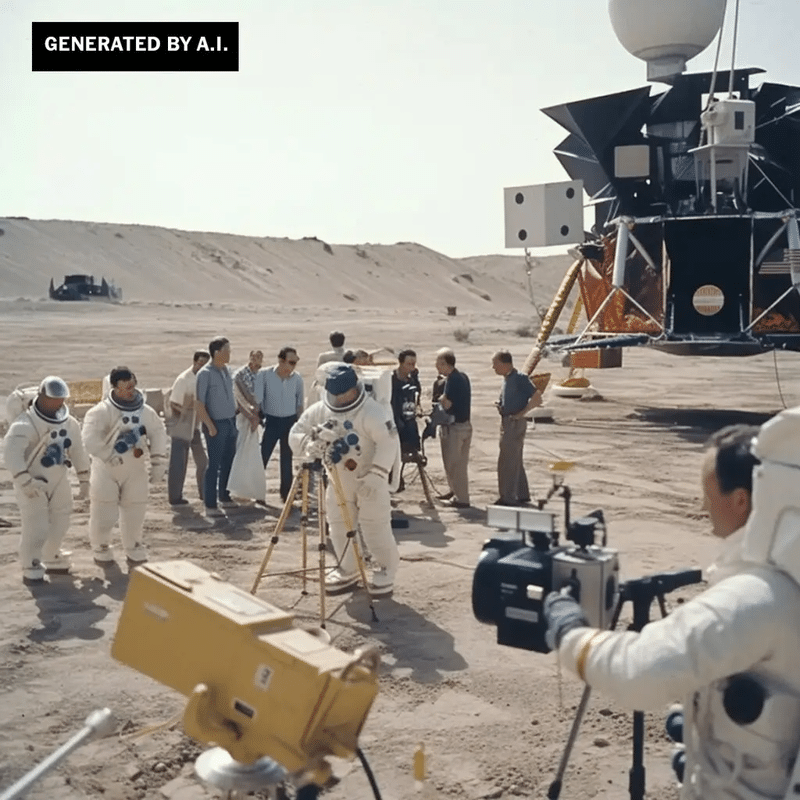
Now, not even reality is required for photographs to look authentic — just artificial intelligence responding to a prompt. Even experts sometimes struggle to tell if one is real or not. Can you?

The rapid advent of artificial intelligence has set off alarms that the technology used to trick people is advancing far faster than the technology that can identify the tricks. Tech companies, researchers, photo agencies and news organizations are scrambling to catch up, trying to establish standards for content provenance and ownership.

Share

Can Elon Musk’s Neuralink tech really read your mind

Brain implant devices could have transformative Impacts on human health. But what about their boasted sci-fi capabilities?

ʺThe future is going to be weird,ʺ Elon Musk said in 2020, as he explained potential uses of the brain implants developed by his neurotechnology company Neuralink.

Over the past seven years, the company has been developing a computer chip designed to be implanted into the brain, where it monitors the acitivity of thousands of neurons.

The chip — officially considered a “brain-computer interface” (BCI) — consists of a tiny probe containing more than 3,000 electrodes attached to flexible threads thinner than a human hair.

Share

Don’t be afraid of AI – it’s going to change your life

Whether its picking movies or providing mental health support, the latest tech is the biggest step forward since the printing press

It’s a battle that’s fought every Saturday evening, in homes across the land: what film will be an enjoyable watch for the whole family? The debate can rage for hours, frequently leads to tears, and more often that not, the screen stays silent.

No longer, however. Fancy something similar to, but different from, The Lord of the Rings? Now you only have to turn to ChatGPT for a ream of insightful suggestions. One colleague tried it recently with her children aged six, nine and 12 and her 44-year-old husband. “Something like Narnia” they requested. And lo, the chatbot suggested The Golden Compass, an adaptation of Philip Pullman’s Northern Lights, starring Nicole Kidman. That doesn’t say much for ChatGPT’s taste in movies – the film has a fairly dire 43 per cent rating on Rotten Tomatoes – but the recommendation turned out to be a good one. Arguments miraculously averted, popcorn happily consumed. Technology is the stuff of small miracles.
Share

Beware the AI voice thieves

After years of blissful indifference, finally I’m scared of AI. I’ve been complacent, slept soundly beside my husband as he stares and mutters, sleepless with anxiety about robots. But now I’m frightened too. What happened was this.

A few weeks ago a friend received a phone call from her son, who lives in another part of the country. ‘Mum, I’ve had an accident,’ said the son’s voice. She could hear how upset he was. Her heart began to pound. ‘Are you OK? What happened?’ she said.

Share

AI is the biggest threat to mankind since the Manhattan Project

Like the creation of the atomic bomb, artificial intelligence will change everything – the problem is we just don’t know how

At 5:29am on July 16 1945, the world entered the nuclear age. Deep in the New Mexico desert, scientists watched the first test of “the gadget”: a nuclear bomb with a 13lb radioactive core. This was “Trinity”, the climax of the Manhattan Project, one of the most expensive research and development projects ever undertaken. The men who had birthed this atomic weapon watched through protective goggles, shielded in bunkers 10km away from where the gadget had been hoisted up a 100ft tower to mimic the effect of being dropped from a bomber.

Share