Is AI coming for your job? … Probably

Automation is coming, and this time it’s for the white collar workers.

Artificial intelligence will likely impact every profession, experts tell the Star, and office workers are first in line. But don’t go looking for a new area of employment just yet.

The rise of powerful generative AI programs like ChatGPT and Midjourney means robots can now write sonnets, draw portraits, code programs and much more in seconds, far outpacing humans in certain cognitive tasks.

Share

The debate over whether AI will destroy us is dividing Silicon Valley

At a congressional hearing this week, OpenAI CEO Sam Altman delivered a stark reminder of the dangers of the technology his company has helped push out to the public.

He warned of potential disinformation campaigns and manipulation that could be caused by technologies like the company’s ChatGPT chatbot, and called for regulation.

AI could “cause significant harm to the world,” he said.

Share

BuzzFeed plans to generate most of its articles from AI

BuzzFeed intends to use AI to generate headlines, quizzes and identity-based content to help it reach multicultural audiences in an “authentic voice”, an investor call revealed. During a conference with potential investors on May 11th, BuzzFeed CEO Jonah Peretti argued that AI was an “exciting new creativity tool” that could be used for “imagination, storytelling and entertainment”.

Share

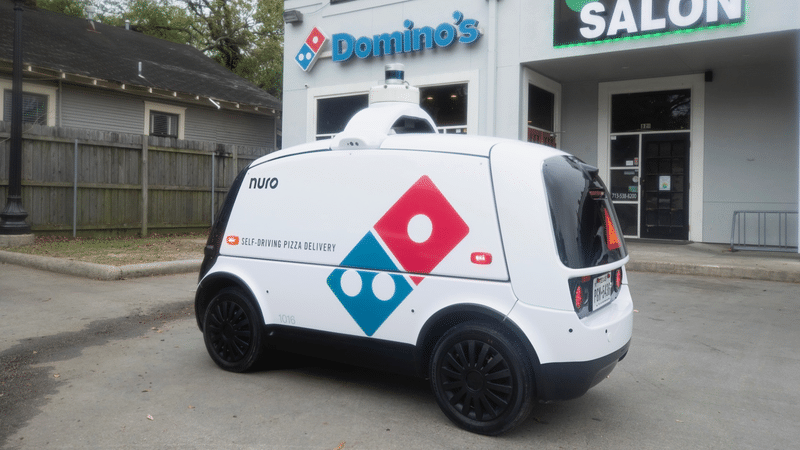
The grand folly of self-driving cars

Autonomous vehicles are wreaking havoc. So why are our elites so committed to their rollout?

On Christmas Eve 1801, people in Camborne in Cornwall were treated to an extraordinary sight. Through the market town and up a hill rolled a carriage that was powered entirely by itself, for almost a mile. This was the first ‘self-driving’ vehicle, where the source of the propulsion was on board. No one had ever seen anything like it.

Share

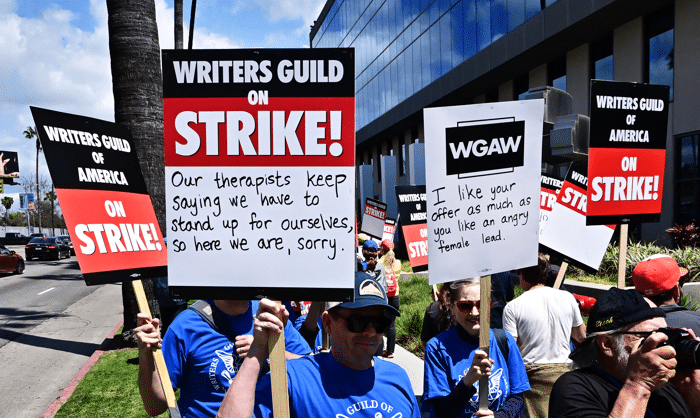
Hollywood writers will lose their war on AI

Writers’ strikes are expensive bad news for almost everyone

It’s a cliché of publishing that men over the age of forty only read military history. In my case it’s not entirely true: I still occasionally squeeze in the odd novel, some politics, even poetry if I’ve drunk too much sweet wine. But it’s true enough that my mind is probably over-furnished with historical military examples, metaphors and allusions. And for the last week I’ve been trying to find the correct analogy, from the annals of war, to characterize the battle recently joined by the Writers Guild of America.

Share

This AI hoax should terrify woke journalists

If a chatbot can churn out hard-hitting think-pieces about why everything on Earth is racist, they’ll soon be out of a job

Last week The Irish Times fell victim to a cruel hoax. On its website it published an opinion column which argued that wearing fake tan is racist. The column attracted a huge volume of traffic, swiftly becoming the second most-read piece on the site. It then emerged, however, that the article had been submitted by a pseudonymous prankster, who reportedly created it using AI.

Share

You Are Not Destined to Live in Quiet Times

Humanity’s third major technological revolution is leading us into a future more promising and also more dangerous than any since the dawn of history. It’s coming faster than you think.

The COVID pandemic and the rise of AI have something in common. Between them, they have upended one of the most consequential debates among American tech analysts, and largely refuted the claim that progress in America was coming to an end—that the Adams curve was flattening out as a Great Stagnation cooled the dynamism of American life.

The case for stagnation was a strong one. Current technologies, advocates warned, were providing diminishing returns, and productivity growth in American life was slowing. The regulatory burden on innovation in the United States inexorably grew. Compared with the optimism that accompanied earlier innovations like electricity, indoor plumbing, the internal combustion engine, antibiotics, refrigeration, and mass communications, Americans in the internet age seemed noticeably more risk averse and pessimistic about the future.

Share

MEPs to vote on proposed ban on ‘Big Brother’ AI facial recognition on streets

Moves to ban live “Big Brother” real time facial recognition technology from being deployed across the streets of the EU or by border officials will be tested in a key vote at the European parliament on Thursday.

The amendment is part of a package of proposals for the world’s first artificial intelligence laws, which could result in firms being fined up to €10m (£8.7m) or removed from trading within the EU for breaches of the rules.

Share

Hollywood Learns The Downsides Of Mass Manufacturing Leftist Drivel With AI

You’ve probably heard by now that the Writers Guild of America (WGA) is on strike. According to the labor union and its affiliates — representing just fewer than 12,000 writers across traditional and digital media — the Alliance of Motion Picture and Television Producers (AMPTP), the group representing corporate studios and streaming services, would not grant union writers “a new contract with fair pay that reflects the value of our contribution to company success.”

Share

Nolte: Get Ready for Movies and TV Written by Artificial Intelligence

One of the primary motives behind the ongoing Hollywood writer’s strike is a concern over artificial intelligence (AI) replacing writers.

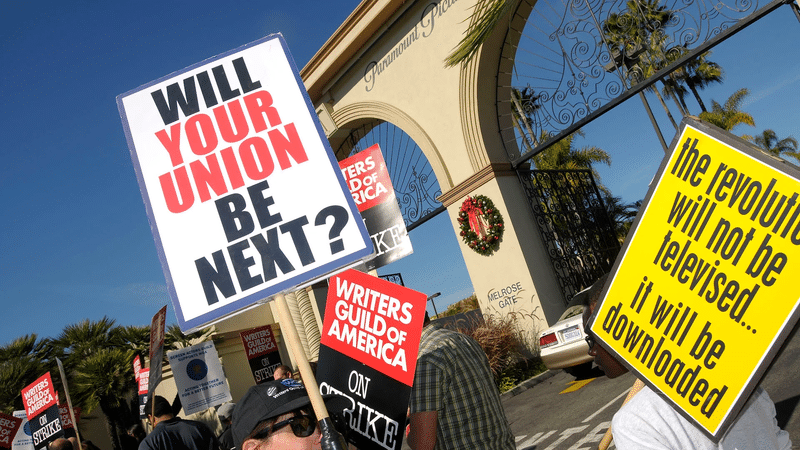
For the first time in 15 years, some 11,000 Writers Guild of America (WGA) members have walked off the job, which stops anything in the entertainment business having to do with writing. No guild member can write anything. Even if a WGA member is directing a movie or TV show and wants to change dialogue, he can’t. Everything has stopped, especially the late-night shows that can’t survive without up-to-the-minute comedy bits.

Share

This historic writers’ strike matters for everyone – not just Hollywood

There is nothing particularly novel about thinking to yourself, “You know, my job used to be pretty decent. Now, I’m working harder and the money is getting scarcer. What happened?” You might think this, in 2023, as a college professor or a cab driver or a journalist or a factory worker. This is America – our entire economy is built on making millions of jobs worse, in order to make a few people very rich.

What would be remarkable is if – when you realized that your once-good job was being made worse in order to satisfy the profit hunger of some faraway investment banker – you were able to actually do something about it. That, in our nation, would be news. That would be something for everyone to cheer for. The plain old workers standing up against enormous companies to stop the process that is turning their careers into execrable “gigs”. Is it a fairy tale? No, my friends. Welcome to the Great Writers Strike of 2023.

Win for the robots I’m betting.

Share

‘We’ve discovered the secret of immortality. The bad news is it’s not for us’: why the godfather of AI fears for humanity

The first thing Geoffrey Hinton says when we start talking, and the last thing he repeats before I turn off my recorder, is that he left Google, his employer of the past decade, on good terms. “I have no objection to what Google has done or is doing, but obviously the media would love to spin me as ‘a disgruntled Google employee’. It’s not like that.”

It’s an important clarification to make, because it’s easy to conclude the opposite. After all, when most people calmly describe their former employer as being one of a small group of companies charting a course that is alarmingly likely to wipe out humanity itself, they do so with a sense of opprobrium. But to listen to Hinton, we’re about to sleepwalk towards an existential threat to civilisation without anyone involved acting maliciously at all.

Share

China Wants Killer Robots to Fight the Next War

War grips the world and the most powerful nations on earth go to battle once more. This time, however, it is machines that do the killing, operating free from all human oversight and accountability.

It’s a grim picture of future conflicts, but one that the Chinese Communist Party (CCP) is nevertheless working to make a reality.

The CCP is investing in artificial intelligence (AI)-enabled platforms that it hopes will one day conduct lethal missions in wartime, wholly without human input or control.

Share

The Next Fear on A.I.: Hollywood’s Killer Robots Become the Military’s Tools

U.S. national security officials are warning about the potential for the new technology to upend war, cyber conflict and — in the most extreme case — the use of nuclear weapons.

When President Biden announced sharp restrictions in October on selling the most advanced computer chips to China, he sold it in part as a way of giving American industry a chance to restore its competitiveness.

But at the Pentagon and the National Security Council, there was a second agenda: arms control.

If the Chinese military cannot get the chips, the theory goes, it may slow its effort to develop weapons driven by artificial intelligence. That would give the White House, and the world, time to figure out some rules for the use of artificial intelligence in sensors, missiles and cyberweapons, and ultimately to guard against some of the nightmares conjured by Hollywood — autonomous killer robots and computers that lock out their human creators.

Share