
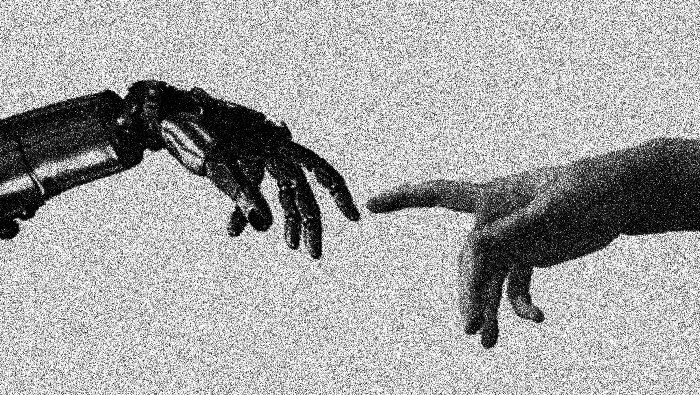
“By the time you’re done hiring a no work history minimum wage employee, you’re out of pocket about $54,000″
“By the time you’re done hiring a no work history minimum wage employee, you’re out of pocket about $54,000″

On the streets of San Francisco, the updated version of Tesla’s driver-assistance software still took the wheel in places it wasn’t designed to handle, including blowing through stop signs
Last weekend, my Tesla Model Y received an over-the-air update to make its driver-assistance software safer. In my first test drive of the updated Tesla, it blew through two stop signs without even slowing down.
In December, Tesla issued its largest-ever recall, affecting almost all of its 2 million cars. It is like the software updates you get on your phone, except this was supposed to prevent drivers from misusing Tesla’s Autopilot software.
The Chinese regime has unveiled plans to mass produce humanoid robots in an apparent effort to insulate itself from reliance on foreign powers by replacing Chinese workers with machines.
The Chinese Communist Party’s (CCP) Ministry of Industry and Information Technology unveiled its plan to mass-produce humanoid robots in a November guidance document. The sweeping ramifications of the policy are still being uncovered.
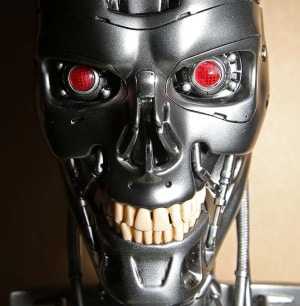 A Tesla engineer was attacked by a robot during a brutal and bloody malfunction at the company’s Giga Texas factory near Austin.
Two witnesses watched in horror as their fellow employee was attacked by the machine designed to grab and move freshly cast aluminum car parts.
The robot had pinned the man, who was then programming software for two disabled Tesla robots nearby, before sinking its metal claws into the worker’s back and arm, leaving a ‘trail of blood’ along the factory surface.
h/t Mauser

Thousands of child abuse images have been discovered in a database for artificial intelligence systems, raising fears that AI tools have been “trained” on the illegal images.
Researchers have identified more than 3,000 cases of child sexual abuse material in a vast trove of images designed to create AI photo generation software.
The free database, known as “LAION-5b”, has been used to develop AI software – including a version of Stable Diffusion, a popular image generator.

OpenAI has suspended the account of TikTok parent ByteDance following a report that the China-owned firm was “secretly” using its “GPT” AI technology to build its own rival chatbot service.
ByteDance, whose ties to the Chinese government have prompted intense federal scrutiny of TikTok’s operations in the US, has reportedly relied on OpenAI’s application programming interface, or API, “during nearly every phase of development” of its AI product, The Verge reported, citing internal company documents.
Sports Illustrated was once the benchmark for sports content but today the site has been accused of publishing AI-generated content under the names of authors who are also AI-generated. Case in point, Drew Ortiz who had a photo and an author biography on the site.
We have #TwoTierPolicing & Two-Tier Britain, we now have Two-Tier Artificial Intelligence.
You can laugh at Jesus, but not Mohammed. pic.twitter.com/MDycpi4Ofx
— David Atherton (@DaveAtherton20) November 27, 2023
AI is a new front in our civilisational war
 The blink-if-you-missed-it four-day drama at the tech firm OpenAI requires deep attention. On the surface it looks like power shenanigans; underneath lies a tale of humanity’s future and geopolitics.
The strange saga began a week ago, when the board of the nonprofit decided to fire its AI guru and cultish leader, Sam Altman. But when the 700+ staffers of OpenAI wrote an open letter saying that they too would go with the ousted CEO, he was swiftly reinstated.

“… Open AI researchers warned the board of directors about a powerful AI breakthrough that could pose threats to humanity, before the firing and rehiring of its CEO Sam Altman.
Several staff researchers sent a letter to the OpenAI board, warning that the progress made on Project Q*, pronounced as Q-star, had the potential to endanger humanity, two sources familiar with Altman’s ouster told Reuters.
The previously unreported letter ultimately led to the removal of Altman, the creator of ChatGPT, and the ensuing chaotic five days within the startup company.”

After Dwayne Ouelette took over the Canadian Tire in North Bay, Ont., last year, he decided to buck the trend and ditch the store’s four self-checkout machines — which had been there for a decade.
“I’m not comfortable using them and I don’t think some of my customers are comfortable [either],” said Ouelette, who removed the machines in July and replaced them with cashiers.
“I’d rather my customers see my cashiers and if there’s any questions or concerns, at least there’s somebody they can talk to.”
My local Shopper’s Drug Mart drove me away with their totalitarian devotion to self-checkout at the expense of customer need.

Anyone who doubts how realistic robots are becoming has not visited YouTube recently.
About twenty years ago, colleges and universities began chasing men away. In part due to the U.S. civil rights law called Title IX, in part due to the pendulum swinging back from male dominance, and in part due to a “feelings are paramount” protocol, some women’s (hostile?) attitudes towards men began taking over campuses. Many male students sensed the change and asked rhetorically, “Who needs it?” They left (and continue to leave) brick-and-mortar schools in droves for online and professional training. In 2021, The Wall Street Journal noted that U.S. colleges and universities had 1.5 million fewer students on campus than they had had five years prior. Men accounted for more than 70 percent of that enrollment drop! Inside Higher Education made a similar observation, noting that “it’s clear that men are disappearing from college and university campuses — especially community colleges and large public universities — at rates never seen before,” and offering one of the reasons as “campus climates and services not tailored to men.”

AI is everywhere these days — even in wars. Artificial intelligence applications have greatly improved this year, and almost anyone can now use standard AI generators to create images that look real, at least at first glance.
Users must “feed” tools such as Midjourney or Dall-E with prompts, including specifications and information, to do this. The tools then convert the written prompts into images.

Former Hollywood executive Jeffrey Katzenberg says artificial intelligence (AI) will slash 90 percent of animation jobs in just three years.
Yep, a whole lot of leftists who hate us are about to lose their jobs.
Does anyone have a violin I can borrow?
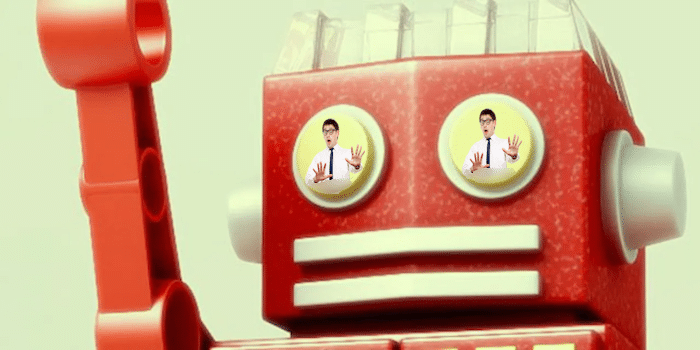
A man was crushed to death by a robot in South Korea after it failed to differentiate him from a box of vegetables.
The victim, a robotics company worker in his 40s, was inspecting the machine’s sensor at a distribution centre for agricultural produce in South Gyeongsang in the early hours of this morning.
The machine, which was lifting boxes of peppers onto a pallet, grabbed the man with its arm and pushed him against the conveyer belt, crushing his face and chest.
