
Not a good day for Cruise, the autonomous vehicle company run by General Motors. Today California regulators announced they were shutting down the company’s ability to operate the driverless cars as taxis in San Francisco.
Not a good day for Cruise, the autonomous vehicle company run by General Motors. Today California regulators announced they were shutting down the company’s ability to operate the driverless cars as taxis in San Francisco.
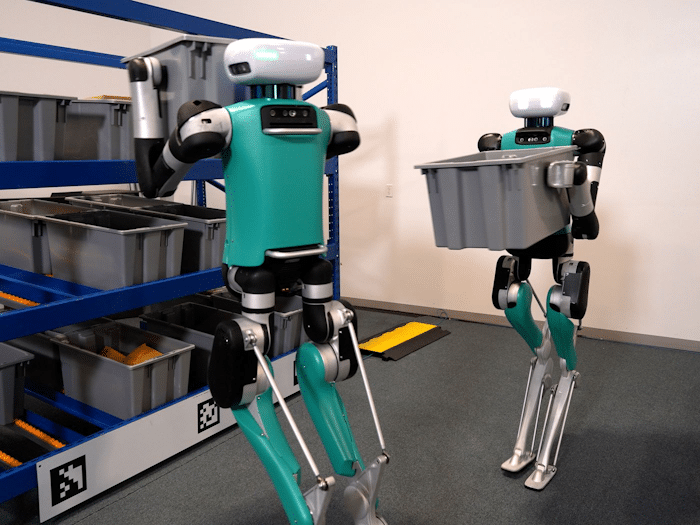
Amazon is experimenting with a humanoid robot as the technology company increasingly seeks to automate its warehouses.
It has started testing Digit, a two-legged robot that can grasp and lift items, at facilities this week. The device is first being used to shift empty tote boxes.
The company’s ambitious drive to integrate robotics across its sprawling operation has sparked fears about the effect on its workforce of almost 1.5 million humans.
Inevitable.
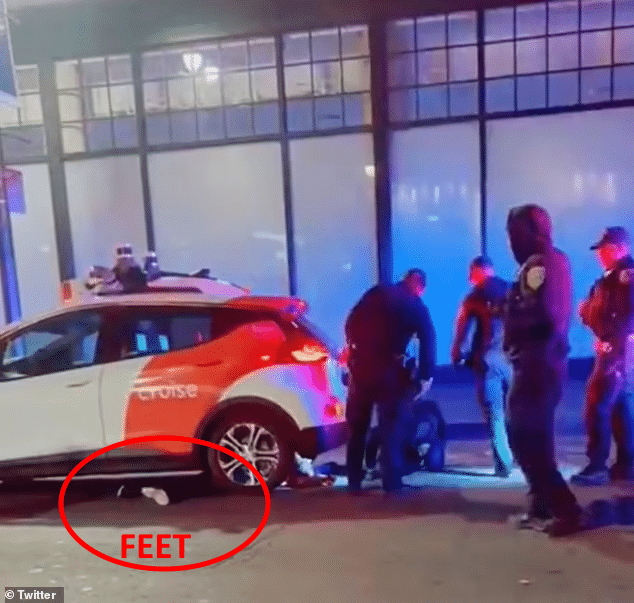
A California woman is being treated for ‘multiple traumatic injuries’ after being hit by a driver at a San Francisco intersection before becoming trapped underneath a Cruise driverless vehicle for 30 minutes.
The woman, who has not yet been named, was strolling through downtown San Francisco when she was hit by a sedan near the corner of Fifth and Market streets around 9:30pm on Monday night.
Footage taken by the Cruise vehicle and viewed by NBC, revealed how the car hit the woman in the left lane, throwing her into the path of the Cruise taxi which then ran her over. The sedan driver then fled the scene.

The AI language model can now see and speak
This week, OpenAI announced that ChatGPT can now “see and speak,” broadening its interactive range. “Settl[ing] a dinner table debate” and “request[ing] a bedtime story for your family” are among the list of potential use cases suggested. OpenAI seems to be positioning ChatGPT to be more than just a tool — perhaps an AI companion.
 Artificial intelligence may be used for good — like automizing monotonous tasks, protecting your home, or even providing harmless entertainment — but it can also generate massive amounts of child pornography in a matter of minutes.

Artificial-intelligence pioneers are fighting over which of the technology’s dangers is the scariest.
One camp, which includes some of the top executives building advanced AI systems, argues that its creations could lead to catastrophe. In the other camp are scientists who say concern should focus primarily on how AI is being implemented right now and how it could cause harm in our daily lives.

A surge in AI-generated mushroom foraging books on Amazon has raised alarms among experts, who warn that such guides, filled with misinformation about poisonous mushrooms, could pose life-threatening risks to consumers.
Hundreds of driverless cabs can now be hired in San Francisco but activists are trying to sabotage them, arguing the city should invest more in public transport
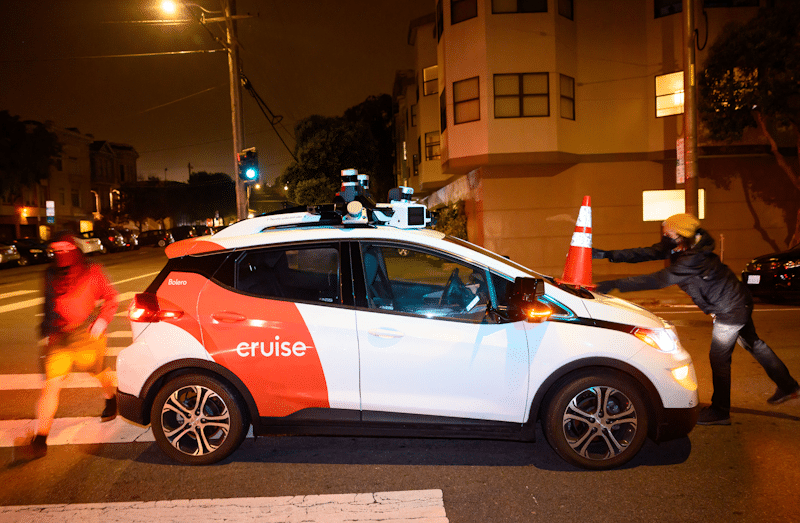
Under the cover of darkness, masked vigilantes stalk the streets of San Francisco, waiting for a victim to emerge through the evening fog.
Armed with a traffic cone, the assailants pounce, placing the apparently harmless item on the bonnet of a strange-looking vehicle covered in cameras, bringing it to a dead stop.
My heartbeat quickens just a little as the cab approaches. It’s a bizarre sight, one that I thought I wouldn’t see in my lifetime.
The cab has no driver. It stops in front of me and invites me to unlock its door with my phone – before whisking me into the night.
But as I am about to get in, a passer-by approaches.
“They’re unsafe,” he tells me. He says he saw someone nearly get run over by a robotaxi – and warns me to be careful.
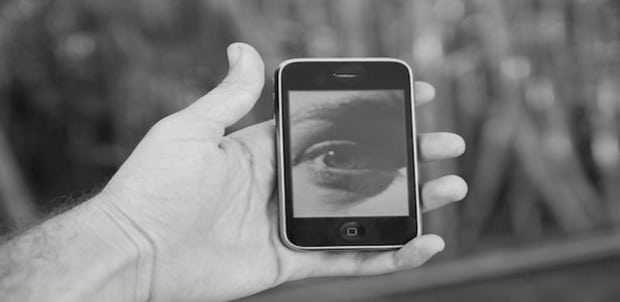
When the government sets about to marry its limitless appetite for social control with the seemingly limitless computing power of artificial intelligence, the end result is destined to be Orwell’s “thoughtcrime” – a concept that was once exclusively in the domain of speculative fiction — becoming reality. Life imitates art, it seems.
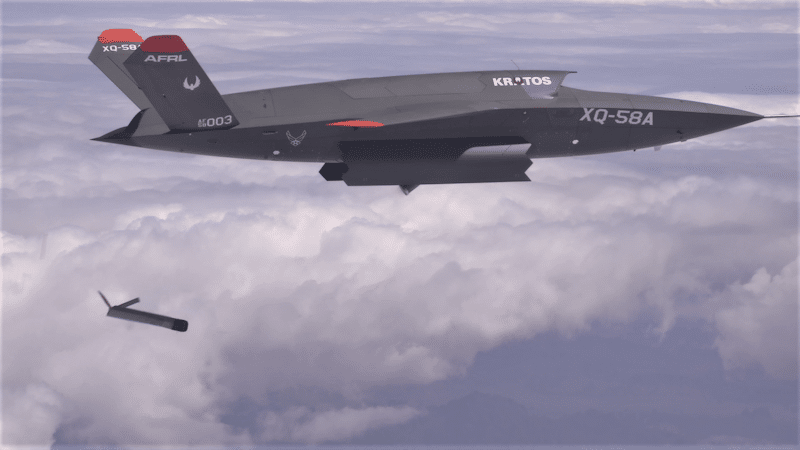
It is powered into flight by a rocket engine. It can fly a distance equal to the width of China. It has a stealthy design and is capable of carrying missiles that can hit enemy targets far beyond its visual range.
But what really distinguishes the Air Force’s pilotless XQ-58A Valkyrie experimental aircraft is that it is run by artificial intelligence, putting it at the forefront of efforts by the U.S. military to harness the capacities of an emerging technology whose vast potential benefits are tempered by deep concerns about how much autonomy to grant to a lethal weapon.
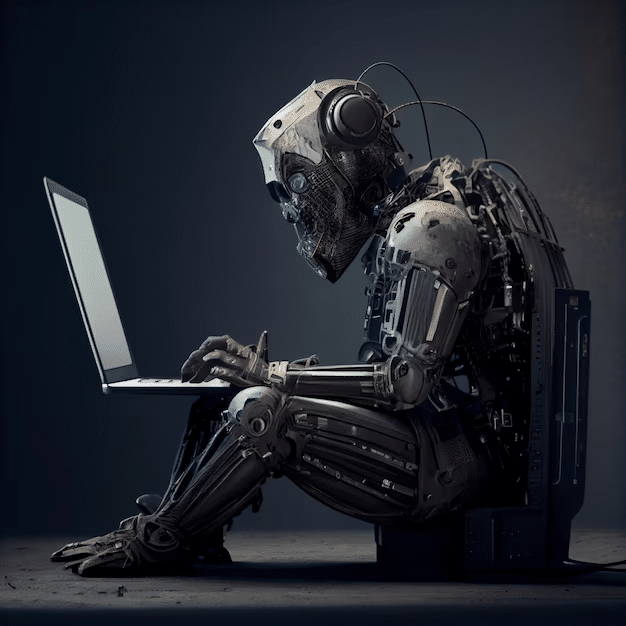
Artificial intelligence can “listen” to keystrokes and steal passwords, according to new research.
An Aug. 3 research paper from the UK, titled “A Practical Deep Learning-Based Acoustic Side Channel Attack on Keyboards,” examines how hackers could use artificial intelligence (AI) to figure out passwords by “listening” to keystrokes. AI achieved over 90 percent accuracy in determining passwords, and was even able to adjust for variations such as the weight of the finger pressing on a key. This raises new concerns for the already severe risks associated with AI.
A federal judge has ruled that art that was wholly created by artificial intelligence technology is not protected by copyright law — a decision that could have far-reaching implications for Hollywood as studios continue to adopt AI as a creative tool.

A bespectacled Person of Color™ appeared on Social Justice™ paragon Democracy Now! recently to share with the audience that artificial intelligence is — and you’ll never guess what’s coming next — racist!
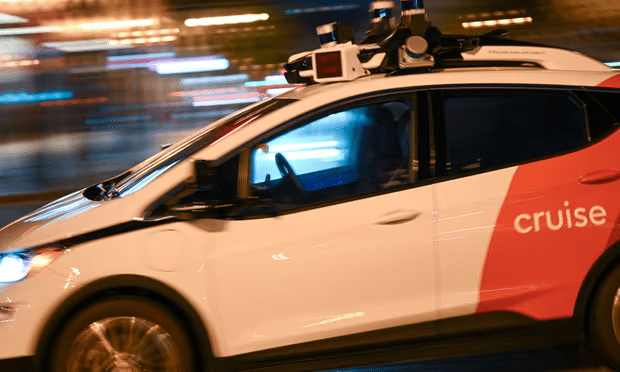
… The development comes just over a week after California regulators allowed Cruise and the Google spinoff Waymo to operate autonomous robotaxis throughout San Francisco at all hours, despite safety worries spurred by recurring problems with unexpected stops and other erratic behavior.
“The DMV is investigating recent concerning incidents involving Cruise vehicles in San Francisco,” the DMV said on Saturday in a statement to the Associated Press. “Cruise has agreed to a 50% reduction and will have no more than 50 driverless vehicles in operation during the day and 150 driverless vehicles in operation at night.”
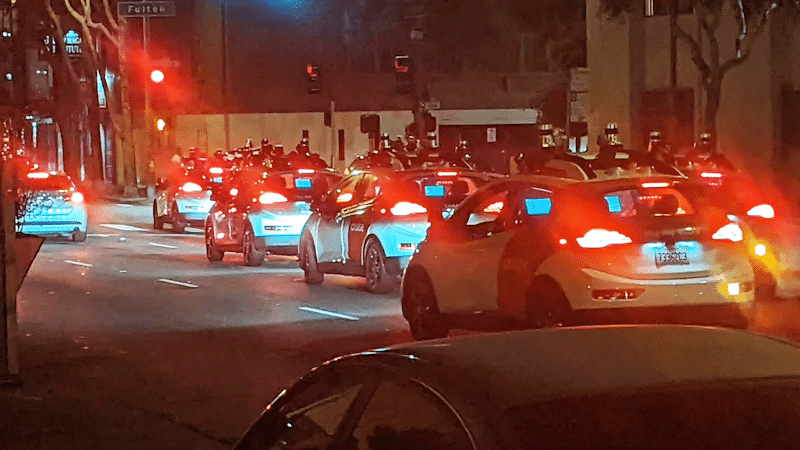
Robotaxi breakdowns cause mayhem in San Francisco days after expansion vote
