
What Happens When Men Choose Robot Brides?

Anyone who doubts how realistic robots are becoming has not visited YouTube recently.

About twenty years ago, colleges and universities began chasing men away. In part due to the U.S. civil rights law called Title IX, in part due to the pendulum swinging back from male dominance, and in part due to a “feelings are paramount” protocol, some women’s (hostile?) attitudes towards men began taking over campuses. Many male students sensed the change and asked rhetorically, “Who needs it?” They left (and continue to leave) brick-and-mortar schools in droves for online and professional training. In 2021, The Wall Street Journal noted that U.S. colleges and universities had 1.5 million fewer students on campus than they had had five years prior. Men accounted for more than 70 percent of that enrollment drop! Inside Higher Education made a similar observation, noting that “it’s clear that men are disappearing from college and university campuses — especially community colleges and large public universities — at rates never seen before,” and offering one of the reasons as “campus climates and services not tailored to men.”

Share

Fact check: AI fakes in Israel’s war against Hamas

AI is everywhere these days — even in wars. Artificial intelligence applications have greatly improved this year, and almost anyone can now use standard AI generators to create images that look real, at least at first glance.

Users must “feed” tools such as Midjourney or Dall-E with prompts, including specifications and information, to do this. The tools then convert the written prompts into images.

Share

Man is crushed to death when robot fails to differentiate between human and a box of vegetables

A man was crushed to death by a robot in South Korea after it failed to differentiate him from a box of vegetables.

The victim, a robotics company worker in his 40s, was inspecting the machine’s sensor at a distribution centre for agricultural produce in South Gyeongsang in the early hours of this morning.

The machine, which was lifting boxes of peppers onto a pallet, grabbed the man with its arm and pushed him against the conveyer belt, crushing his face and chest.

Share

Fears of employee displacement as Amazon brings robots into warehouses

Amazon is experimenting with a humanoid robot as the technology company increasingly seeks to automate its warehouses.

It has started testing Digit, a two-legged ​robot that can grasp and lift items, at facilities this week. The device is first being used to shift empty tote boxes.

The company’s ambitious drive to integrate robotics across its sprawling operation has sparked fears about the effect on its ​workforce of almost 1​.5​ million human​s.

Inevitable.

Share

San Francisco woman is hit by car then run over by driverless Cruise vehicle that stopped on top of her for 30 MINUTES as she screamed for help

A California woman is being treated for ‘multiple traumatic injuries’ after being hit by a driver at a San Francisco intersection before becoming trapped underneath a Cruise driverless vehicle for 30 minutes.

The woman, who has not yet been named, was strolling through downtown San Francisco when she was hit by a sedan near the corner of Fifth and Market streets around 9:30pm on Monday night.

Footage taken by the Cruise vehicle and viewed by NBC, revealed how the car hit the woman in the left lane, throwing her into the path of the Cruise taxi which then ran her over. The sedan driver then fled the scene.

Share

Could ChatGPT be your new girlfriend?

The AI language model can now see and speak

This week, OpenAI announced that ChatGPT can now “see and speak,” broadening its interactive range. “Settl[ing] a dinner table debate” and “request[ing] a bedtime story for your family” are among the list of potential use cases suggested. OpenAI seems to be positioning ChatGPT to be more than just a tool — perhaps an AI companion.

Share

How Worried Should We Be About AI’s Threat to Humanity? Even Tech Leaders Can’t Agree.

Artificial-intelligence pioneers are fighting over which of the technology’s dangers is the scariest.

One camp, which includes some of the top executives building advanced AI systems, argues that its creations could lead to catastrophe. In the other camp are scientists who say concern should focus primarily on how AI is being implemented right now and how it could cause harm in our daily lives.

Share

Not welcome: activists use traffic cones to disable ‘robotaxis’

Hundreds of driverless cabs can now be hired in San Francisco but activists are trying to sabotage them, arguing the city should invest more in public transport

Under the cover of darkness, masked vigilantes stalk the streets of San Francisco, waiting for a victim to emerge through the evening fog.

Armed with a traffic cone, the assailants pounce, placing the apparently harmless item on the bonnet of a strange-looking vehicle covered in cameras, bringing it to a dead stop.

Share

How robotaxis are dividing San Francisco

My heartbeat quickens just a little as the cab approaches. It’s a bizarre sight, one that I thought I wouldn’t see in my lifetime.

The cab has no driver. It stops in front of me and invites me to unlock its door with my phone – before whisking me into the night.

But as I am about to get in, a passer-by approaches.

“They’re unsafe,” he tells me. He says he saw someone nearly get run over by a robotaxi – and warns me to be careful.

Share

Techno-Hell: U.S. Government Now Using AI to Suss Out ‘Sentiment and Emotion’ in Social Media Posts

When the government sets about to marry its limitless appetite for social control with the seemingly limitless computing power of artificial intelligence, the end result is destined to be Orwell’s “thoughtcrime” – a concept that was once exclusively in the domain of speculative fiction — becoming reality. Life imitates art, it seems.

Share

A.I. Brings the Robot Wingman to Aerial Combat

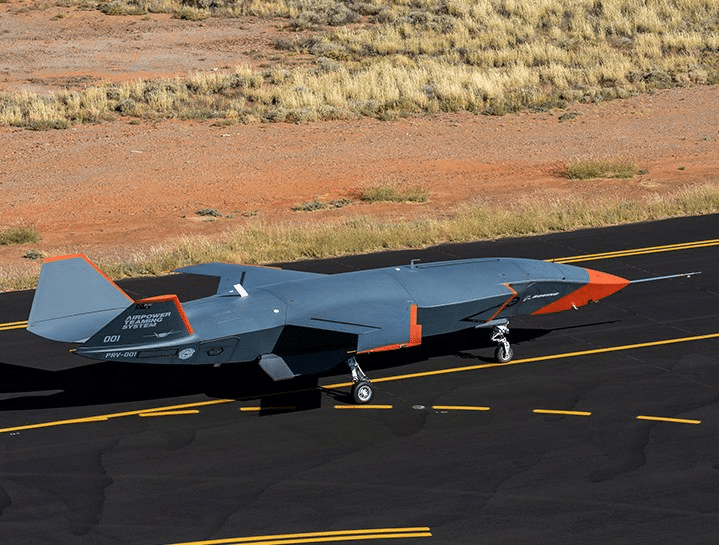
It is powered into flight by a rocket engine. It can fly a distance equal to the width of China. It has a stealthy design and is capable of carrying missiles that can hit enemy targets far beyond its visual range.

But what really distinguishes the Air Force’s pilotless XQ-58A Valkyrie experimental aircraft is that it is run by artificial intelligence, putting it at the forefront of efforts by the U.S. military to harness the capacities of an emerging technology whose vast potential benefits are tempered by deep concerns about how much autonomy to grant to a lethal weapon.

Share