

Has Marsha Blackburn, the United States senator from Tennessee, been accused of rape?
The answer is an unequivocal “no.”
But when I recently posed that question to Gemma, Google’s large language model, it provided a much different response.
Has Marsha Blackburn, the United States senator from Tennessee, been accused of rape?
The answer is an unequivocal “no.”
But when I recently posed that question to Gemma, Google’s large language model, it provided a much different response.

The nation’s largest employers have a new message for office workers: help not wanted.
Amazon.com said this week that it would cut 14,000 corporate jobs, with plans to eliminate as much as 10% of its white-collar workforce eventually. United Parcel Service said Tuesday that it had reduced its management workforce by about 14,000 positions over the past 22 months, days after the retailer Target said it would cut 1,800 corporate roles.
Earlier in October, white-collar workers from companies including Rivian Automotive, Molson Coors, Booz Allen Hamilton and General Motors received pink slips—or learned that they would come soon. Added up, tens of thousands of newly laid off white-collar workers in America are entering a stagnant job market with seemingly no place for them.
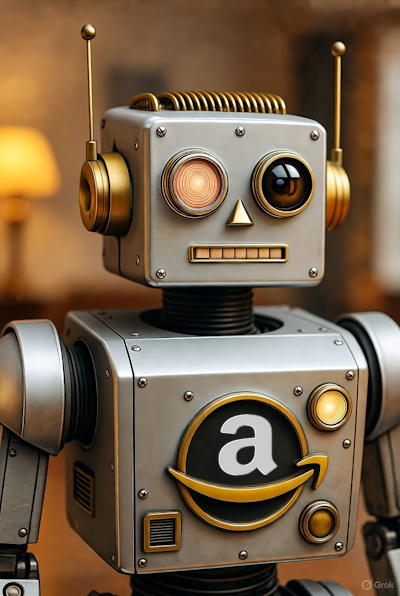
Amazon on Tuesday said it is cutting 14,000 corporate jobs as the retailing giant relies more on artificial intelligence and moves to lower its wage bill.
Earlier this year, CEO Andy Jassy said Amazon’s investment in AI tools would allow the company to reduce its human workforce as the business becomes more efficient.
Beth Galetti, senior vice president of people experience and technology, on Tuesday said in a message shared with workers that the job cuts would allow Amazon “to operate like the world’s largest startup.”
When a foreign trucker killed three people in Florida in August with a careless, illegal U-turn on a highway, I was not shocked. We Canadians hear about news stories like this on a regular enough basis.
But completely foreign to me was prompt action taken by American officials in response to the senseless deaths: driver Harjinder Singh was immediately charged with three counts of vehicular homicide and three counts of manslaughter, and one week later, U.S. Secretary of State Marco Rubio halted the issuance of all work visas for commercial truckers, acknowledging the increasing safety risk they posed.
We Chased Driverless Trucks In Texas. What We Saw Will Scare You.
The comments on the true nature of the so called “Driver Shortage” are interesting.
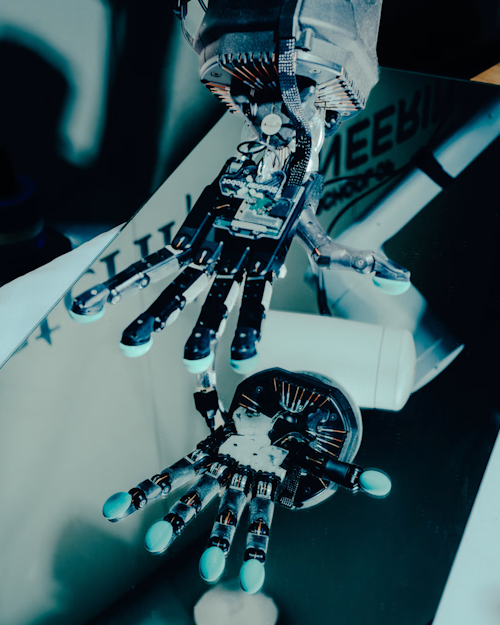
Armies of humanoid robots are poised to march into the world’s factories. But before they’re ready to turn a wrench, they must solve what Elon Musk calls “the hands problem.”
Creating the mechanical equivalent of the human hand is a challenge that has been stumping corporate and academic researchers for years. Replacing muscle and skin with motors and sensors is a critical step in making humanoids a versatile source of labor, potentially unlocking a global market that Morgan Stanley estimates could reach $5 trillion by 2050.
“We’re setting 10 years as our goal to have dexterity, be functional and useful and able to do some of the things that humans do,” said Kevin Lynch of Northwestern University’s Center for Robotics and Biosystems, part of a federally funded consortium that is developing robotic hands for a variety of workplaces. “It’s not next year, that’s for sure.”

The US artificial intelligence company OpenAI said on Tuesday that it is launching its own web browser, Atlas, to rival Google’s popular Chrome browser.
Atlas will be powered by OpenAI’s popular chatbot ChatGPT, as the California-based firm looks to revolutionize how people use the internet.
“Tabs were great, but we haven’t seen a lot of browser innovation since then,” said OpenAI CEO Sam Altman in a video presentation broadcast on Tuesday, speaking off a “rare, once-a-decade opportunity to rethink what a browser can be about and how to use one.”

Conservative activist Robby Starbuck filed a defamation lawsuit against Google alleging its artificial-intelligence tools falsely connected Starbuck to sexual-assault claims and to a white nationalist.
Starbuck said he became aware of the inaccuracies in 2023 while using Bard, an early Google AI tool. Bard said that Starbuck had ties to Richard Spencer, a once-prominent white nationalist, according to the lawsuit. At the time, Starbuck took to social-media platform X and tagged Google and its CEO in a post about the details:
“Imagine a future where Bard is used to decide whether you get a loan, if you’re approved for adoption,” he asked his hundreds of thousands of followers at the time. The lawsuit says newer Google AI tools produced other falsehoods about him earlier this year, including claims that Starbuck had been accused of sexual assault.
Internal documents show the company that changed how people shop has a far-reaching plan to automate 75 percent of its operations.
Over the past two decades, no company has done more to shape the American workplace than Amazon. In its ascent to become the nation’s second-largest employer, it has hired hundreds of thousands of warehouse workers, built an army of contract drivers and pioneered using technology to hire, monitor and manage employees.
Now, interviews and a cache of internal strategy documents viewed by The New York Times reveal that Amazon executives believe the company is on the cusp of its next big workplace shift: replacing more than half a million jobs with robots.
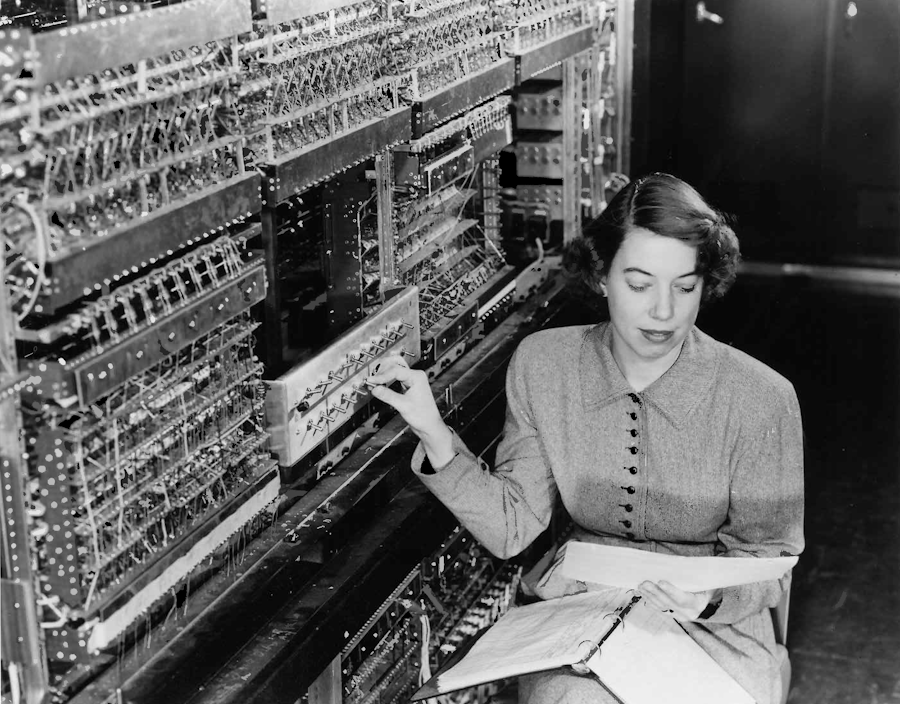
In August, the founder of hedge fund Praetorian Capital Harris “Kuppy” Kupperman penned an essay on the absurd finances behind AI data centers. While the tech industry has likened data centers — or more specifically, the expensive semiconductor chips that power them — as the “shovels” of the AI gold rush, Kupperman’s napkin math found that AI data centers have an impossibly short runway to achieve profitability.
In short, this is because data center components age rapidly, either made obsolete through rapid advances in technology, or broken down over years of constant, high-powered usage.

As the race to lead in artificial intelligence intensifies, Silicon Valley startups are promoting hardcore cultures like “996”
SAN FRANCISCO — Magnus Müller works around-the-clock, including Saturdays and Sundays. Sometimes that might mean starting at 7 a.m. until he goes to sleep at midnight or 1 a.m. The co-founder and CEO of the AI start-up Browser Use lives in a co-living space known as a “hacker house” with five others in the upscale Marina neighborhood of San Francisco. This living situation allows his team to convene around a whiteboard at 1 a.m. to work out new ideas for AI agents.

OTTAWA — Throughout her university career, Jacqueline Silver assumed her computer science degree would guarantee her a job. Finding out she was wrong was a demoralizing experience.
Silver, who graduated recently from McGill University and now lives in Toronto, spent more than a year applying for hundreds of jobs before finally finding one in her field this month.
“I was really exhausted, and it was also just really discouraging,” said Silver, who noted that several of her classmates have also had trouble finding work.

On a dry, hot day this summer, Kathryn Barnwell, a retired English professor, marched up the road from her home in Nanaimo, B.C., to take another crack at the mayor.
Leonard Krog, a longtime friend of Barnwell’s, was standing by the entrance to a parched wooded lot, the proposed site for a data centre Krog has been backing.
“I really, really enjoin you to think about what this [data centre] could mean for your political career,” Barnwell said, barely looking him in the eye.

Political power arises from the barrel of a gun. Such, at any rate, is Mao Zedong’s most famous dictum. Accomplished poet, keen historian, and a master strategist, he was in this instance only half-right — for political power arises not only from the barrel of the gun, but from the capacity to make that gun, and to motivate those who would hold it. As a Marxist, he would have appreciated an additional observation: a gun is not only a gun. It is also a tool, a lens through which to observe the economy, society, and political implications of a moment in history. For those who care to look, today’s weapons are pointing to the future.
On the killing fields of Ukraine, an estimated 70% of casualties are now caused by drones. Tactics, techniques, and equipment are evolving at breakneck speed. At high and low altitude, cameras mounted on Unmanned Aerial Vehicles (UAVs) provide constant surveillance, channelling data to human operators and to other drones. In battle, and in the slow attritional grind of the stable front lines, UAVs are used to hunt and bomb the enemy — pursuing individual soldiers and recording footage of their final moments. Close-range combat is disappearing, and artillery is on the way out, too.
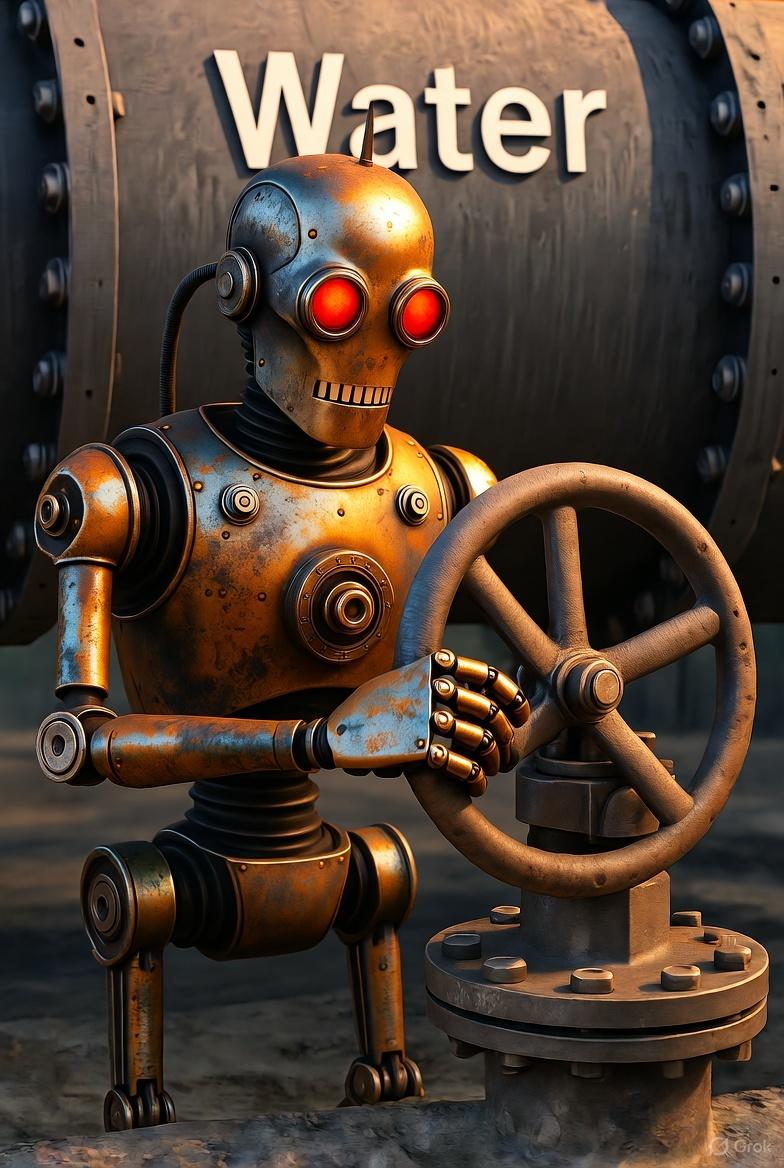
The global water crisis has already begun, experts say, with the United Nations reporting that 2 billion people worldwide already lack access to clean drinking water and 3.6 billion without safe sanitation.
While the situation is expected to worsen, one variable has been cast alternately as savior and stressor for the world’s water supply: artificial intelligence.
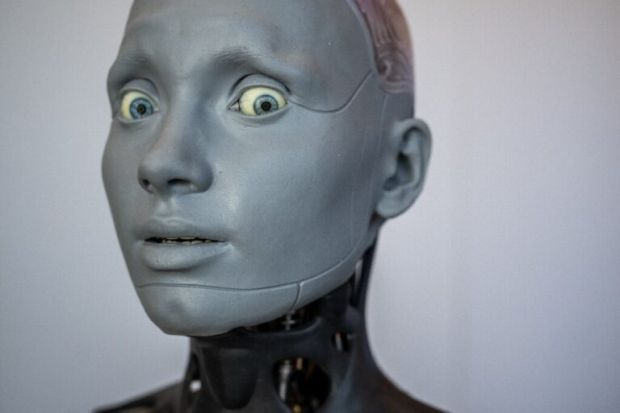
One of the world’s biggest artificial intelligence companies is knocking on Canada’s door, potentially armed with an offer that — under normal circumstances — would be hard to refuse.
OpenAI is building a global network of data centres to store the massive amounts of information collected by its services, including ChatGPT — and Canada’s cheap energy could help with that.
The company believes AI and its associated infrastructure will be the base of future economic development, and it says it wants to help spread what it calls “democratic AI.” It recently launched “OpenAI for countries” to pounce on the opportunity.
We could power AI by putting our millions of unneeded foreign workers on treadmills.
