The RCMP, the spy and the betrayal of national chief George Manuel

The secret agent was code numbered A-828 – Susannah of the Mounties

The secret agent was code numbered A-828.

Intelligence reports say the person was a “reliable source who is well acquainted with National Indian Brotherhood members.” An informer. And not just any informer. “Reliable” meant the person was a proven asset. So who were they?

A-828 was a spy for the RCMP Security Service, an infiltrator who in the 1970s penetrated the Assembly of First Nations’ predecessor while internationally respected Secwépemc leader George Manuel was national chief. From inside NIB, the spy leaked details about Manuel’s movements, private conversations, sensitive political plans, divisions in his office and more.

Share

Chief tells senators Kamloops residential school ‘graves’ scam search could take decades

Sacred fake graves money dance

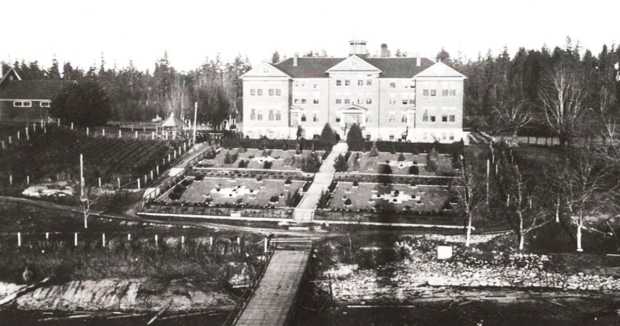
A search for alleged unmarked graves at the former Kamloops Indian Residential School site could take decades before yielding answers, the chief of the Tk’emlúps te Secwépemc First Nation told a Senate committee, while acknowledging no remains have yet been recovered nearly five years after the initial claim.

I am sick of these scammers.

Share

Bronwyn Eyre: The ‘Gladue principle’ has caused immense harm to Indigenous women

A recent Investigative Journalism Bureau article, which appeared in the National Post, reiterated what we have long known: in Canada, Indigenous women are killed at a much higher rate — tragically, six-times higher — than non-Indigenous women.

The article quoted experts who blame the Canadian justice system for failing Indigenous women. They note that those found guilty of their abuse or murder generally face less serious sentences than perpetrators of crimes committed against non-Indigenous women.

Share

Carney says apology needed for Indigenous spying program

The prime minister said there should be a public apology for a spying operation targeting hundreds of Indigenous people that had the support of the federal government.

“Yes, there should be an apology,” Mark Carney said during a news conference in Halifax on Thursday. “It’s a reprehensible practice. Never should’ve happened.”

Carney was responding to reporting from CBC Indigenous, which revealed extensive RCMP surveillance activities dating back to the late 1960s against Indigenous leaders and organizations.


He panders as much as Junior.

Share

Union of B.C. Indian Chiefs targeted by RCMP spies in 1970s ‘Native extremism’ program

Newly released RCMP Security Service files reveal that it amassed more than 900 pages of intelligence on the Union of B.C. Indian Chiefs (UBCIC) over more than a decade.

The files are among those obtained by CBC Indigenous through multiple Access to Information requests. They reveal how Canada’s Cold War-era domestic intelligence agency kept close tabs on hundreds of individuals and 30 Indigenous political organizations, under an umbrella concern about “Native extremism” through the late ’60s to early ’80s.

Share

RCMP commissioner regrets Indigenous spying program that spanned over a decade

The RCMP’s commissioner says he expresses sincere regret for an extensive spying program that targeted hundreds of Indigenous people.

It’s the first time Mike Duheme acknowledged reporting by CBC Indigenous concerning RCMP surveillance activities dating back to the late 1960s against Indigenous leaders and organizations.

“We recognize the serious concerns that this history continues to raise for Indigenous Peoples, families and communities across Canada,” Duheme wrote in a statement published Wednesday.

Share

Warren Mirko: Indigenous ways of knowing? You wouldn’t understand

Canada is rapidly abandoning a principle that has shaped western democracies since the Enlightenment: the idea that no person or group has privileged access to sacred or divine knowledge unavailable to everyone else.

Now, this principle is being threatened by Canada’s increasing embrace of “Indigenous Knowledge”— whereby knowledge is treated as collectively owned and restricted by ancestry rather than something open to examination and shared across society.

Share

Waterloo parent challenges mandatory land acknowledgements in court battle over school board policy

A Waterloo parent is taking a school board to court over its policy requiring mandatory land acknowledgements at council meetings, arguing the rule violates freedom of conscience and silences debate.

The Justice Centre for Constitutional Freedoms is backing Geoffrey Horsman in a judicial review against the Waterloo Region District School Board, with cross-examinations scheduled for Wednesday.

Incognito

Share

How RCMP spies infiltrated the 1970s Indigenous rights movement

Coming this fall to CBC: Undercover Constable!

The Mounties called it the “Native extremism program.” Today, it sounds like a spy novel.

Intelligence dossiers stuffed with documents. Wiretaps. Paid informants. Covert operatives with code numbers like “A-828.” A Red Power dissident photo album. Surreptitious surveillance at homes, offices, airports and bars.

But it wasn’t fiction.

Share

Dwight Newman: Government’s Musqueam deal doesn’t protect private property in Vancouver

But it doesn’t seize private land and give it to the Musqueam, either

The recent agreement between the Government of Canada and the Musqueam Nation in B.C. recognizing Musqueam rights and title “within” much of Metro Vancouver has elusive qualities. Those discussing it have struggled to know what to make of it and have ended up with some polarized depictions of it.

Both sides’ versions have problems.

Share

King expressed ‘concern’ over Alberta separatists, say First Nations chiefs

King Charles: I’m an Indian Too!

King Charles III “expressed his concern” over the Alberta separatist movement while meeting Indigenous leaders at Buckingham Palace, according to a delegation of First Nations chiefs that travelled to London.

Grand Chief Joey Pete of the Confederacy of Treaty Six First Nations said he and other leaders made the King aware of the “threat” the movement represented to agreements signed by First Nations and the Crown more than a century ago.

He added that the King was “very interested in what we had to say” and had “committed to learning more”.

Share

LILLEY: Private property versus Aboriginal title just got more complicated

Homeowners in the Vancouver area should know that the title to their land hasn’t been taken away from them by the Mark Carney government. That said, an expert in constitutional law and Indigenous rights said he understands why people are anxious when they hear about the recently signed agreement between Ottawa and the Musqueam Indian Band in the Vancouver area.

Share

How B.C.’s conflicting Indigenous land claims are a problem 150 years in the making

Shortly after British settlers established the Colony of Vancouver Island in 1849, governor James Douglas signed a flurry of treaties with the region’s First Nations to secure lands for fur trapping, mining and other activities.

Known as the Douglas Treaties, the 14 agreements between 1850 and 1854 might have seemed at the time like a template for future arrangements with British Columbia’s Indigenous peoples, who occupied lands stretching from modern-day Vancouver to the northern border with Yukon. Instead, the province stopped signing such agreements — a result of the Hudson’s Bay Company’s refusal to continue funding negotiations — and reached virtually no other treaties for the next 150 years.

Share

BLACKED OUT: Ottawa censors files on $12.1 million spent searching for alleged Kamloops residential school graves

The federal Department of Crown-Indigenous Relations has redacted nearly all details from internal reports describing how a B.C. First Nation spent millions in taxpayer funding intended to locate alleged graves of children at the former Kamloops Indian Residential School.

Blacklock’s Reporter says documents released under the Access to Information Act show the department labelled the reports “confidential,” concealing details about work undertaken by the Tk’emlups te Secwepemc First Nation after Ottawa provided $12.1 million to support searches tied to claims that 215 children were buried on the site.

Share