Are We Letting Putin Win?

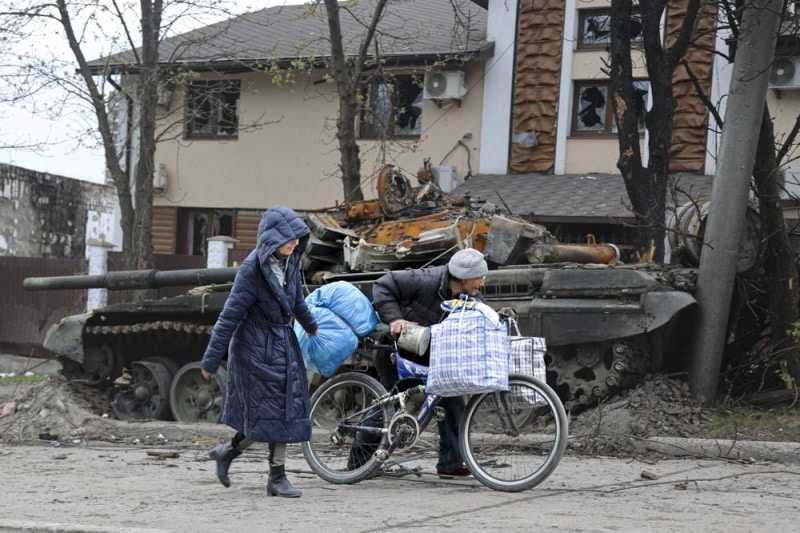
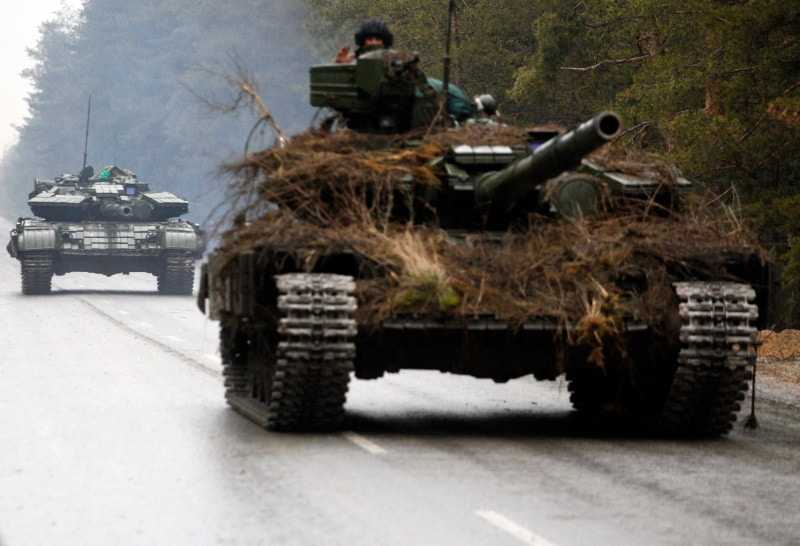
Last month, Russian army tanks entered Mariupol, a peaceful city of 431,000 inhabitants, which has since been bombarded for weeks. Tens of thousands of people left the city; those still there have taken refuge in cellars, often with no food, water or electricity. No one knows how many civilians are still alive in the city.

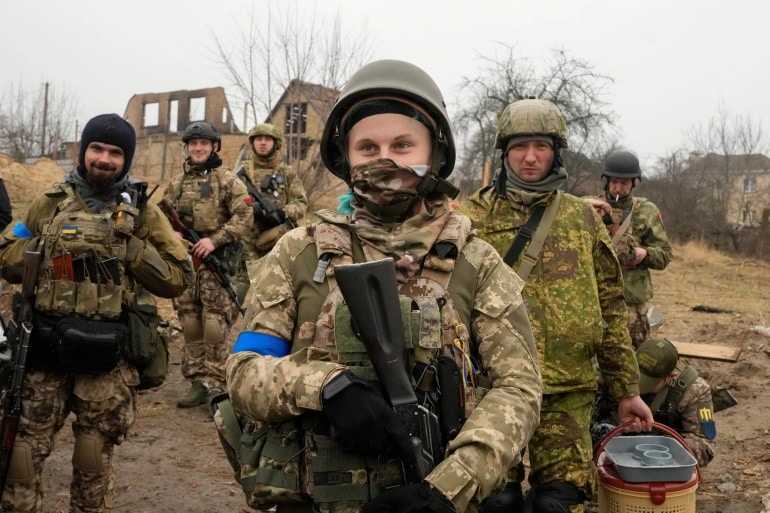
Russian President Vladimir Putin called in Chechen militias, accused of crimes against humanity, and sent by Ramzan Kadyrov, head of the Russian Federation’s Chechen Republic. Putin seems to be about to deliver an even more brutal assault. Schools, hospitals, supermarkets, retirement homes — Russia has spared nothing. A theater where children were gathered — and the Ukrainians had written the word “children”, hoping that the Russian soldiers would at least spare them — was reduced to ashes. Ukrainian officials estimated that 300 people were killed there. People trying to rescue them also were shelled. A small contingent of Ukrainian soldiers is still heroically resisting Russian forces in what remains of the destroyed city. Is anyone coming to their rescue?

(Link fixed)

Share

Putin tries to claim Mariupol win but won’t storm holdout

KYIV, Ukraine (AP) — Russian President Vladimir Putin tried to claim victory in the strategic port of Mariupol on Thursday, even as he ordered his troops not to storm the last pocket of Ukrainian resistance in the war’s iconic battleground.

Russian troops have besieged the southeastern city since the early days of the conflict and largely pulverized it — and top officials have repeatedly indicated it was about to fall, but Ukrainian forces stubbornly held on. In recent weeks, they holed up in a sprawling steel plant, and Russian forces pounded the industrial site and repeatedly issued ultimatums ordering the defenders to surrender.

“The completion of combat work to liberate Mariupol is a success,” Putin said. “Putting such an important center in the south as Mariupol under control is a success.”

Stung by criticism, Germany says it is open to sending Ukraine heavy weapons

TALLINN, April 21 (Reuters) – Germany is examining what extra maintenance and ammunition its stock of ageing Marder armoured infantry fighting vehicles will need for Ukraine to use them, Foreign Minister Annalena Baerbock said.

On the second day of a tour of Baltic states, Baerbock addressed criticism by allies and commentators of Germany’s apparent foot-dragging on delivering the weaponry Kyiv says it needs to fend off Russian attacks.

Share

America’s Interest in Ukrainian Victory

A Russian defeat could reshape the security landscape to U.S. advantage in Europe and beyond.

On April 8, European Commission president Ursula von der Leyen declared during a visit to Kiev that “Ukraine belongs in the European family,” offering to fast-track Ukraine for EU membership. This dramatic U-turn was comparable in scope with German chancellor Olaf Scholz’s repudiation of the last three decades of Germany’s Russia policy in his February 27 speech to the Bundestag. Meantime, others in Europe, especially Poland, Romania, and the Baltic States, have been relentless in their effort to supply Ukraine with weapons, both from their own stocks and those of other NATO allies. Most importantly, U.S. assistance to Ukraine has been expanding. For the first time in three decades, NATO is speaking with one voice in response to the Russian threat.

Share

Russia’s latest military failures polarise society even more

War critics grow increasingly vocal while state media fuels hatred for the west

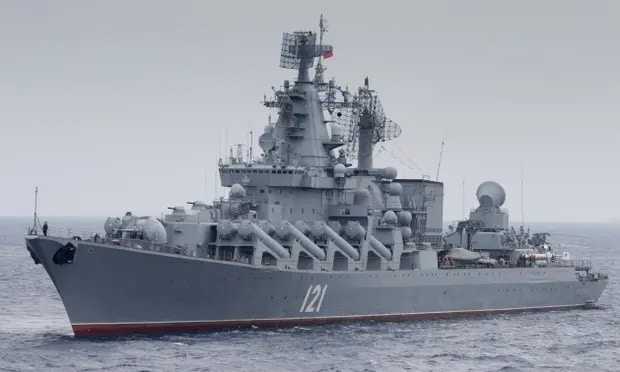
Even Vladimir Soloviev, a state TV host, was having trouble swallowing the loss of Russia’s flagship cruiser Moskva last week as he took aim at a rare target: the Russian military.

“You just tell me how you were able to lose it,” he said in an extended temper tantrum on his talkshow, one of Russia’s most popular. “Tell me, what the hell were you doing in that particular area of the Black Sea at that moment?”

Share

Russia deploys up to 20,000 mercenaries in battle for Ukraine’s Donbas region

Russia has deployed up to 20,000 mercenaries from Syria, Libya and elsewhere in its new offensive in Ukraine’s Donbas region, sent into battle with no heavy equipment or armoured vehicles, according to a European official.

The official said the estimates of mercenary involvement on the ground in eastern Ukraine range from 10,000 to 20,000 and that it was hard to break down that figure between Syrians, Libyans and other fighters recruited by the Russian mercenary company, the Wagner Group.

Share

Freeland, allies walk out of G20 meeting over Russian participation

Queen of Ukraine!

Canadian officials, including Deputy Prime Minister and Finance Minister Chrystia Freeland, joined allies in staging a walkout of a G20 meeting in Washington, D.C. on Wednesday in protest of Russia’s involvement.

At Wednesday’s G20 Finance Ministers and Central Bank Governors’ Meeting, Freeland said she and “a number of our democratic partners” got up and left the meeting when Russia sought to intervene.

Share

The war in Ukraine is changing — and the West now faces a stark choice

Is the goal to ensure the survival of a Ukrainian state? Or is it to defeat Russia?

The inevitable fall of Mariupol — Ukraine’s long-suffering eastern port on the Sea of Azov, now besieged, pounded to dust and soaked in the blood of its residents — will carry with it a heavy symbolism, the kind observers say western allies need to reflect upon urgently.

Already, it has the potential to change the trajectory of war. Ukrainian President Volodomyr Zelensky warned this week that peace talks will end if Moscow “eliminates” the city’s defenders.


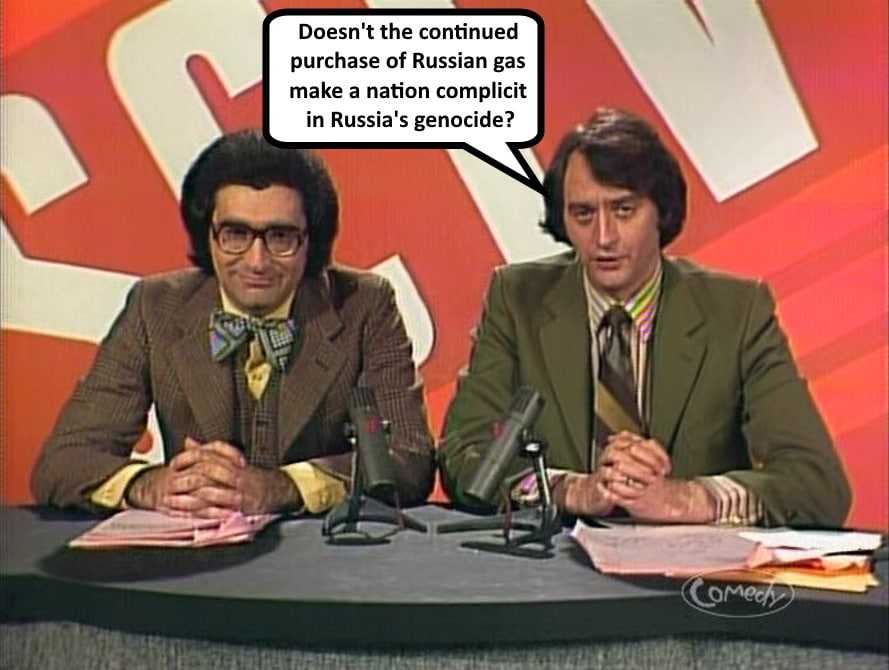
We accuse Russia of genocide while our Euro allies suck up huge quantities of Russian gas. If this is “RealPolitik” then get ready Ukraine because Yalta Redux here we come.

The goal for Trudeau is to use the conflict to advance his inhuman green-scam agenda. Freeland wants to be national heroine of Ukraine while Europe just wants Russian gas.

Share

John Ivison: It’s time for Canada to be more than a covert friend to Ukraine

If the government is wielding covert influence, it is not sharing that information with its MPs or senior bureaucrats, who complain privately about a tentative, opaque and ponderous policy

Ukraine is set to convene with its closest allies to discuss future security guarantees in the event of a diplomatic settlement in the war with Russia, according to President Volodymyr Zelenskyy.

But Canada will not be at the table — much to the chagrin of some senior diplomats who want to see a more energetic response from Ottawa.

Share

For Russia and the West, the Moskva’s Sinking Is Truly Historic

In 2019, the commander in chief of the Russian Navy, Admiral Nikolai Yevmenov, was invited to Japan by Admiral Hiroshi Yamamura. The caption in the photo-op, posted on social media by the Japanese Maritime Self-Defense Force, was relatively benign, simply stating that “ADM YAMAMURA Hiroshi, Chief of Maritime staff, invited officially ADM Nikolay Yevmenov, commander-in-chief of the Russian Navy. They discussed about the current situation and the Japan-Russia defense exchange, promoted mutual understanding.”

Share

Tough Guy Trudeau imposes sanctions on Vladimir Putin’s daughters

The government has announced a round of new sanctions targeting individuals with ties to the Russian government — including President Vladimir Putin’s daughters.

Katerina Tikhonova and Maria Vorontsova, Putin’s adult daughters, are among 14 individuals being added to Canada’s sanctions list as Russian forces step up attacks in their battle for control of Eastern Ukraine.

Share

Police scout for pro-Russia collaborators in eastern Ukraine

Officers in Donetsk say spies pass on coordinates or photographs of targets via Telegram in exchange for cash

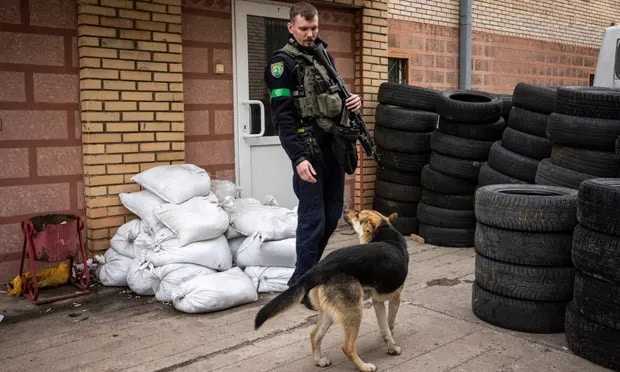
Oleksandr Malish, the patrol police chief for the cities of Kramatorsk and Slovyansk in the Donetsk region, is reluctant to call people suspected of collaborating with Russia Ukrainians.

“I cannot even call these people Ukrainians, even though they have Ukrainian passports and were born here and lived here all their lives,” said Malish. “These are not professional spies who were trained in Moscow and sent here.”

Share

‘No One Prepared Them For War’: Russian War Widow Talks About Her Husband’s Deployment To Ukraine

It was late December 2021 when Igor Ivkin, a 19-year-old contract soldier from Pskov, a city in northwestern Russia, was sent to the Ukrainian border as part of a massive military buildup ordered by Russian President Vladimir Putin.

But after spending more than a month posted with his unit along the border in winter conditions, Ivkin received some good news on February 7: His 23-year-old wife, Yulia Ivkina, had given birth to their daughter, Ksenia.

Share

German police probe displays of support for Russian invasion of Ukraine

Police in several states across Germany have opened investigations into public displays of support for the Russian invasion of Ukraine, the RND newspaper group reported on Monday.

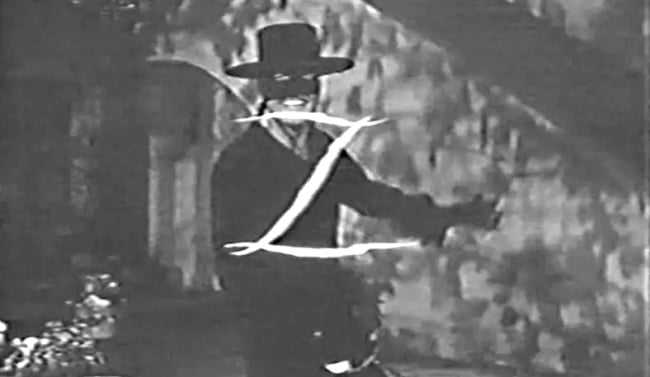
More than 140 investigations have been launched, most looking into the use of the “Z” symbol that has been seen in several protests in Germany alongside Russian flags.

The symbol has been associated with Russia’s invasion after many of the vehicles that Russian forces drove into Ukraine had the letter painted on their side.

Share