Collaborators with Russian forces are fleeing, say Ukrainian officials

Ukrainian citizens accused of collaborating with occupying Russian forces in Kharkiv province and the neighbouring Donbas region are fleeing from recently liberated areas and queueing to cross into Russia at the border, Ukrainian officials have said.

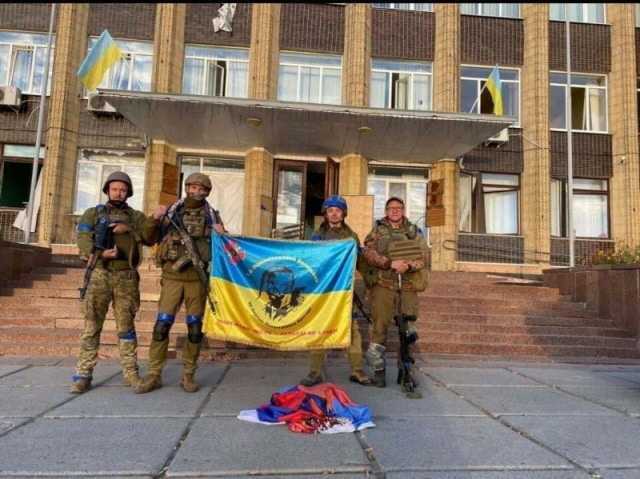
“The ‘commandant’s offices’, ‘prosecutor’s offices’, occupiers and gauleiters are leaving,” the governor of Luhansk province, Serhiy Haidai, wrote on Telegram. “The Ukrainian flag, which our guerrillas raised last night over the administration building in Kreminna, remains intact as the Russians now seem to have understood everything so they don’t dare to take it down. Russians and their collaborators are fleeing from Luhansk region, heading towards Russia”. Luhansk makes up the Donbas region with Donetsk to the south.

Share

These Maps And Videos Show How Ukraine’s ‘Blitzkrieg’ Offensive Shocked Russia

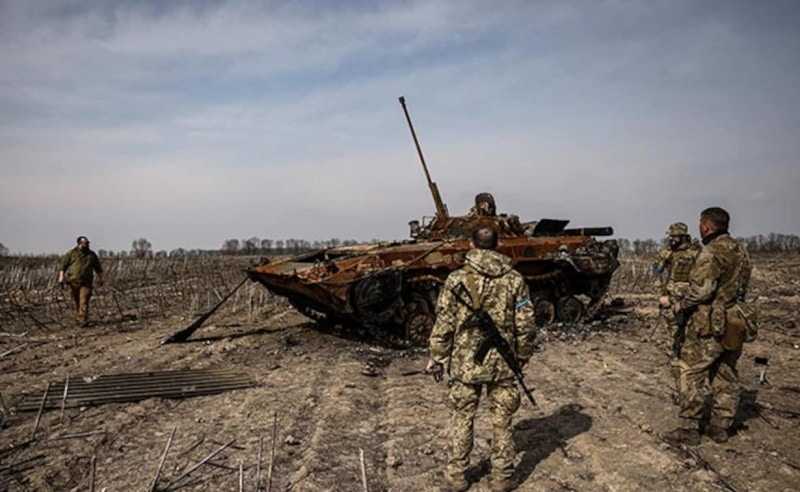
In one week in September, Ukrainian forces liberated 1,100 square miles in Northeastern Ukraine. This is more than Russia’s military managed to seize in months of costly attritional warfare in the Donbas region. Further withdrawals announced by Russia’s Defense Ministry may result in over 3,200 square miles falling back under Ukrainian control.

Lurking in the shadow of Ukraine’s heavily advertised counteroffensive in Kherson, the Kharkiv campaign took Russian forces by surprise. It became a textbook example of a fast-paced breakthrough and exploitation operation – the very sort of campaign Russian armored units mostly failed to achieve at the beginning of the war.

Share

Russian state TV utters the unspeakable: ‘Ukraine cannot be defeated’

Western-leaning politician allowed to voice rare criticism in what may be ploy to prepare the Russian people for possibility of peace talks

A war commentator invited on to Russian state television told viewers that Vladimir Putin has been misled by advisers and said Ukraine cannot be defeated, in what appeared to be a rare example of sanctioned criticism.

Boris Nadezhdin, a Western-leaning politician appearing for the first time in months, called for peace talks as he made a surprise appearance on state-controlled NTV over the weekend.

Mr Nadezhdin, who for years played the token liberal on state television, said: “We’re not at the point where we have to understand – it’s absolutely impossible to defeat Ukraine, using the resources and colonial war methods that Russia is using to win this war.

Share

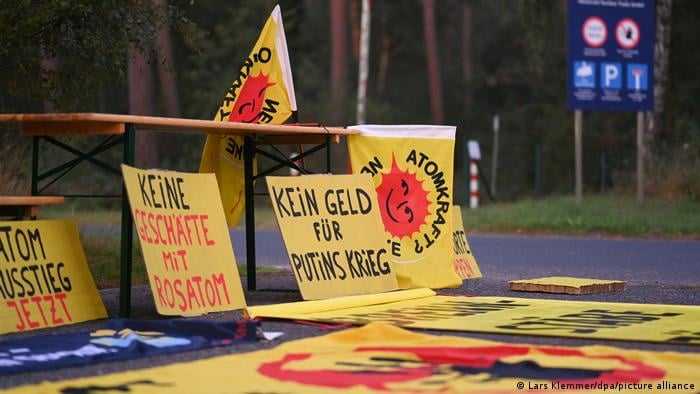
Germany: Activists protest on-going purchase of Russian uranium

Environmental activists on Monday protested in front of a fuel element factory in Germany where a Russian uranium shipment was set to arrive.

The Russian ship Mikhail Dudin was expected to arrive at the Rotterdam port Sunday evening, and the uranium was to be transported by truck on Monday to a plant in Lingen, near the German-Dutch border.

Protesters demanded an “immediate stop to nuclear deals with Russia,” according to a statement published by a citizen initiative.

Have these guys signed a non-aggression pact we’re not aware of?

Share

Why Ukraine’s counter-offensive is working

The Kremlin is being fed fake news from the front

“You better stay out of our country. The more Russians you send to Ukraine, the more of them we will kill, and the more death you will bring back to your homes.” Nataliya Zubar, native of Ukraine’s second city, Kharkiv, and documenter of Russian war crimes, is giving me her message to Moscow, which over the last 48 hours has seen the Ukrainian army smash through much of the territory it conquered in the north-eastern Kharkiv Oblast

Share

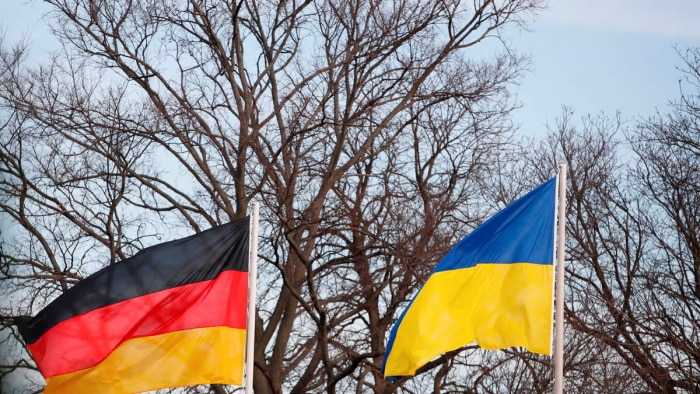
Disillusioned Poles lose patience with ‘dithering’ Germany

Germany’s “dithering and inaction” since the Russian invasion of Ukraine is prompting other European states to question its value as an ally, the Polish prime minister has said.

While Berlin has pledged at least €1.2 billion worth of military aid — more in absolute terms than any other country except the United States, Britain and Poland — Kyiv and some of its more gung-ho backers are dissatisfied with the slow pace of deliveries.

Share

Ukraine war: What will Russia’s losses mean for Putin?

You can normally expect Russian state TV’s flagship weekly news programme to trumpet Kremlin successes.

But yesterday’s edition opened with a rare admission.

“On the frontlines of the special operation [in Ukraine], this has been the toughest week so far,” declared sombre-looking anchor Dmitry Kiselev.

“It was particularly tough along the Kharkiv front, where following an onslaught by enemy forces that outnumbered ours, [Russian] troops were forced to leave towns they had previously liberated.”

Share

Russian soldiers ‘literally running’ for their lives as chain of command collapses

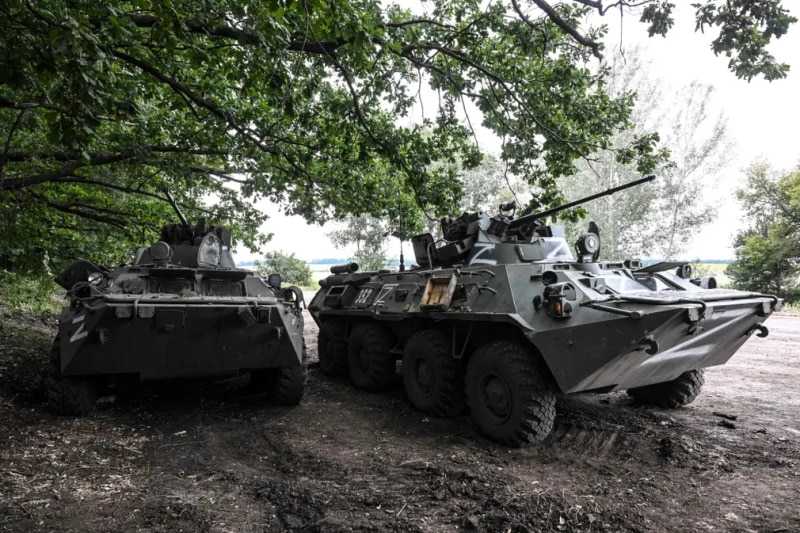
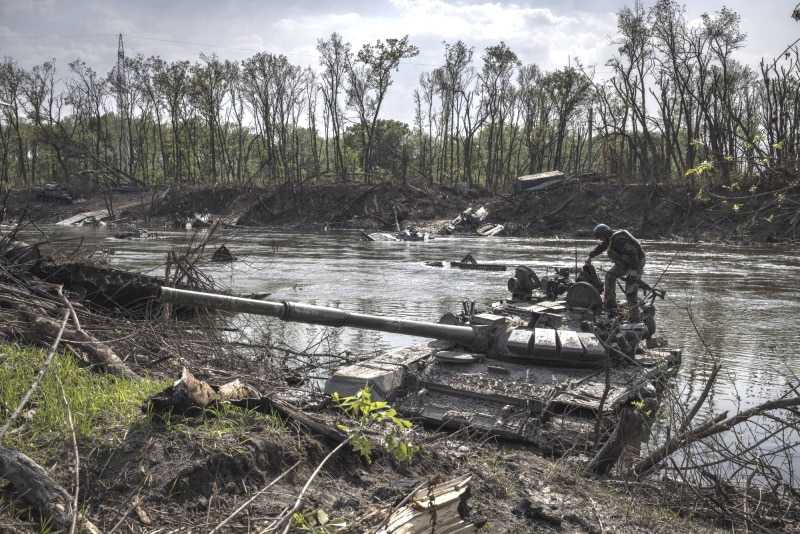
Panicked Russian soldiers are abandoning their tanks, weapons and even clothes as they “literally run from their positions” in the face of a shock Ukrainian offensive, soldiers have told The Telegraph.

A Ukrainian intelligence unit on the front line said the Russian chain of command was broken and soldiers were fleeing without putting up a fight, many of them changing into civilian clothes to avoid detection.

Share

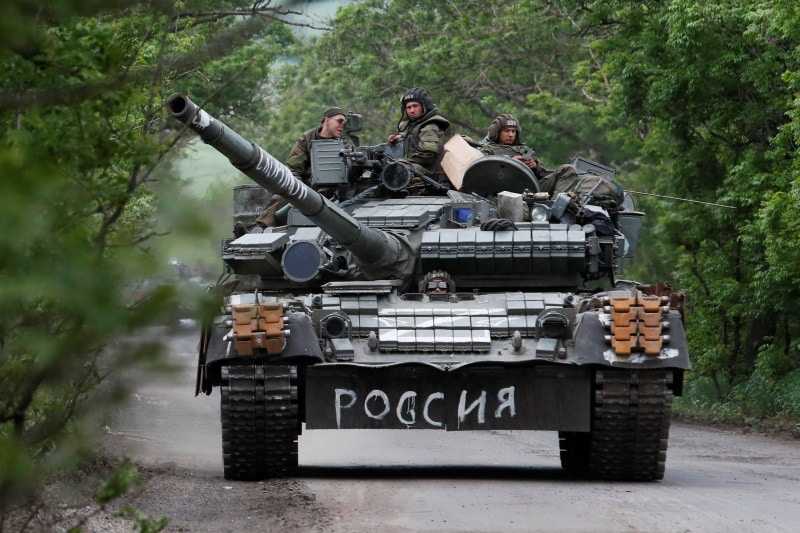
Threat From Above: Drones Are Dropping Grenades on Russian Tanks

Enterprising Ukrainian soldiers are using modified World War II-era hand grenades dropped from mini-drones, an innovative tactic that is reportedly damaging and destroying advancing Russian armored vehicles.

Interestingly, the grenades themselves were originally made in the Soviet Union to use against German tanks toward the end of World War II.

“The Russians invented a hand grenade. It was a shaped hand grenade that you could throw at a tank. And if you hit it, you could knock a tank out. And that was a result of them not being able to knock out German tanks with the stuff they had,” Mike Mears, former director of human capital at the CIA, told The National Interest in an interview.

Share

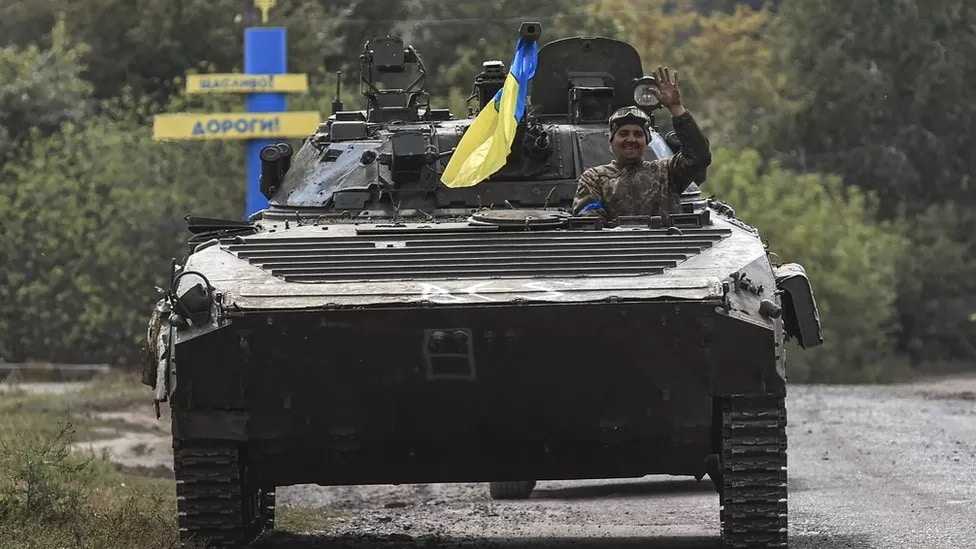
Kharkiv offensive: Ukrainian army says it has tripled retaken area

Ukraine’s military says its forces have retaken over 3,000 sq km (1,158 sq miles) during a rapid counter-offensive in eastern Ukraine.

The remarkable advance, if confirmed, means Kyiv’s forces have tripled their stated gains in little over 48 hours.

On Thursday evening, President Zelensky put the figure at 1,000 sq km, and then 2,000 sq km on Saturday evening.

The BBC cannot verify the Ukrainian figures, and journalists have been denied access to the frontlines.

A successful offensive means continued western aid. Banning access by the press is not a good look however.

Share

Russian grip on northeast Ukraine collapses after Kyiv severs supply line

KYIV/HRAKOVE, Ukraine, Sept 10 (Reuters) – Moscow abandoned its main bastion in northeastern Ukraine on Saturday, in a sudden collapse of one of the war’s principal front lines after surging Ukrainian forces threatened to encircle the area in a shock advance.

The swift fall of Izium in Kharkiv province was Moscow’s worst defeat since its troops were forced back from the capital Kyiv in March, and could prove a decisive turning point in the six-month-old war, with thousands of Russian soldiers abandoning ammunition stockpiles and equipment as they fled.

Share

Be My Brother, or I Will Kill You

Vladimir Putin’s regime seeks to make “friendship” between Russia and Ukraine a supreme bond—rejection of which can only be punished by death.

In 1960, Vasily Grossman submitted the manuscript of his masterwork Life and Fate to the review Znamya. The editor-in-chief, Vadim Kojevnikov, read it but, appalled, passed it to KGB headquarters in Moscow’s Lubyanka building. The work was immediately confiscated, one might even say kidnapped. The lesson of this massive book (1,200 pages) was unbearable for Soviet power: Grossman, who had been at Stalingrad, explains that Nazism and Communism are two warring brothers, who fight so much because they converge on the essential. Their rivalry is essentially mimetic; today, we know of Stalin’s fascination with Hitler—his admired as much as abhorred double—and that, later, Stalin also fascinated the Führer, as the Red Army pushed back the Wehrmacht and invaded eastern Prussia. The fanaticism of race was fully the equal of the fanaticism of class, each a source of mass murder. This was proven by the German-Soviet Pact of 1939, which included, among its secret clauses, the dividing up of Poland and the Baltic States, as well as the USSR’s massive delivery of petroleum, grains, and minerals to Nazi Germany. As Grossman spelled out in his last novel, Everything Flows, those who saw themselves as enemies were indeed twins, but the crushing of the Third Reich by the USSR, and especially by the Allies, has long dissimulated this terrible truth. “Anti-fascism” became a leitmotif of all Moscow leaders: any enemy of Russia must be fascist.
Share

Zelenskiy to appeal directly to U.S. defense companies

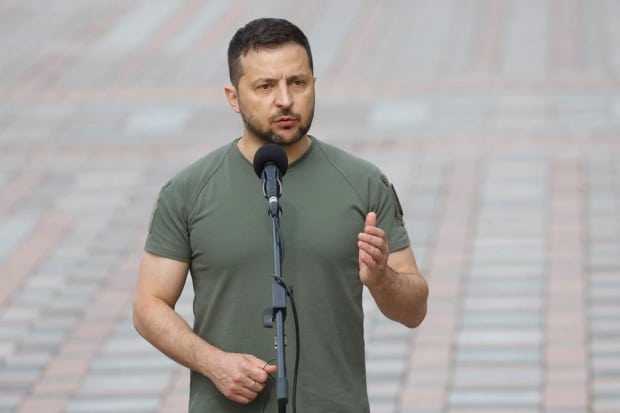
WASHINGTON, Sept 9 (Reuters) – Ukrainian President Volodymyr Zelenskiy is scheduled to speak to U.S. arms makers and military leaders on Sept. 21, when he is expected to make an appeal for more weapons for his country’s defense against Russia, according to an advance notice of the speech seen by Reuters.

Zelenskiy was set to speak by video link before a conference hosted by the National Defense Industrial Association in Austin, Texas, in his first-ever speech to the U.S. defense industry.

Share

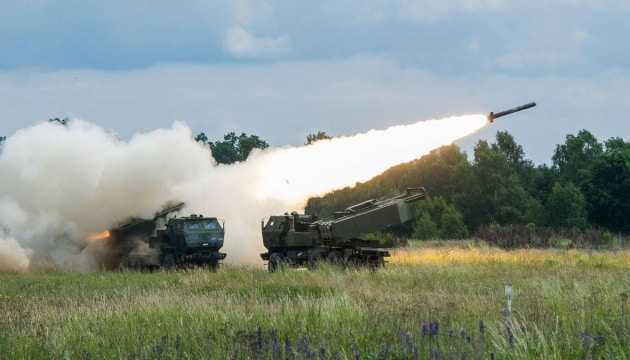
As Ukraine pleads for more weapons, allies warn the cupboards are almost bare

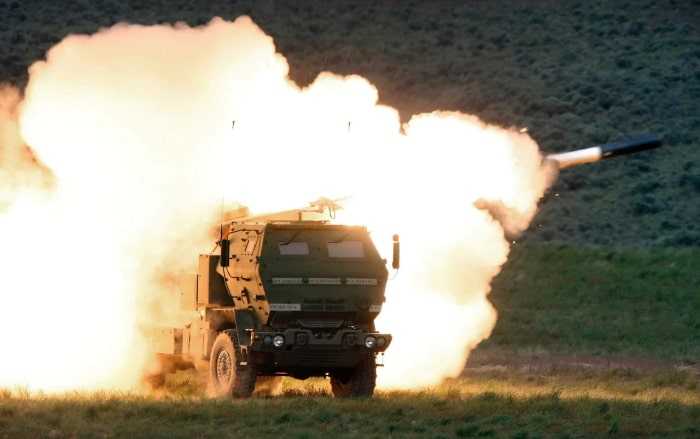
It may appear at times that the U.S. can call on a bottomless pit of military stores to supply Ukraine. Increasingly, however, western allies are balking at taking any more equipment out of their inventories to support the eastern European country’s war against Russia.

It’s an untidy, uncomfortable aspect of alliance politics that was acknowledged publicly on Friday by the secretary general of NATO.

“Some allies are now raising the issue of whether these stocks are depleted too much,” Jens Stoltenberg said after his meeting in Brussels with U.S. Secretary of State Antony Blinken.

Share

Team Putin Admits Their Worst Case Scenario Is Coming True

In the beginning of Russia’s invasion of Ukraine, the Kremlin’s top propagandists predicted a swift victory and derided the Ukrainian military as an unwilling bunch of incompetents. As the war dragged on, they continued to claim that Volodymyr Zelensky’s government was about to fall. Faced with Ukraine’s mounting counteroffensive, which is rapidly achieving impressive gains, Russian propagandists are now describing an enormous horde, armed with the best Western weaponry and swimming in foreign specialists.

Share