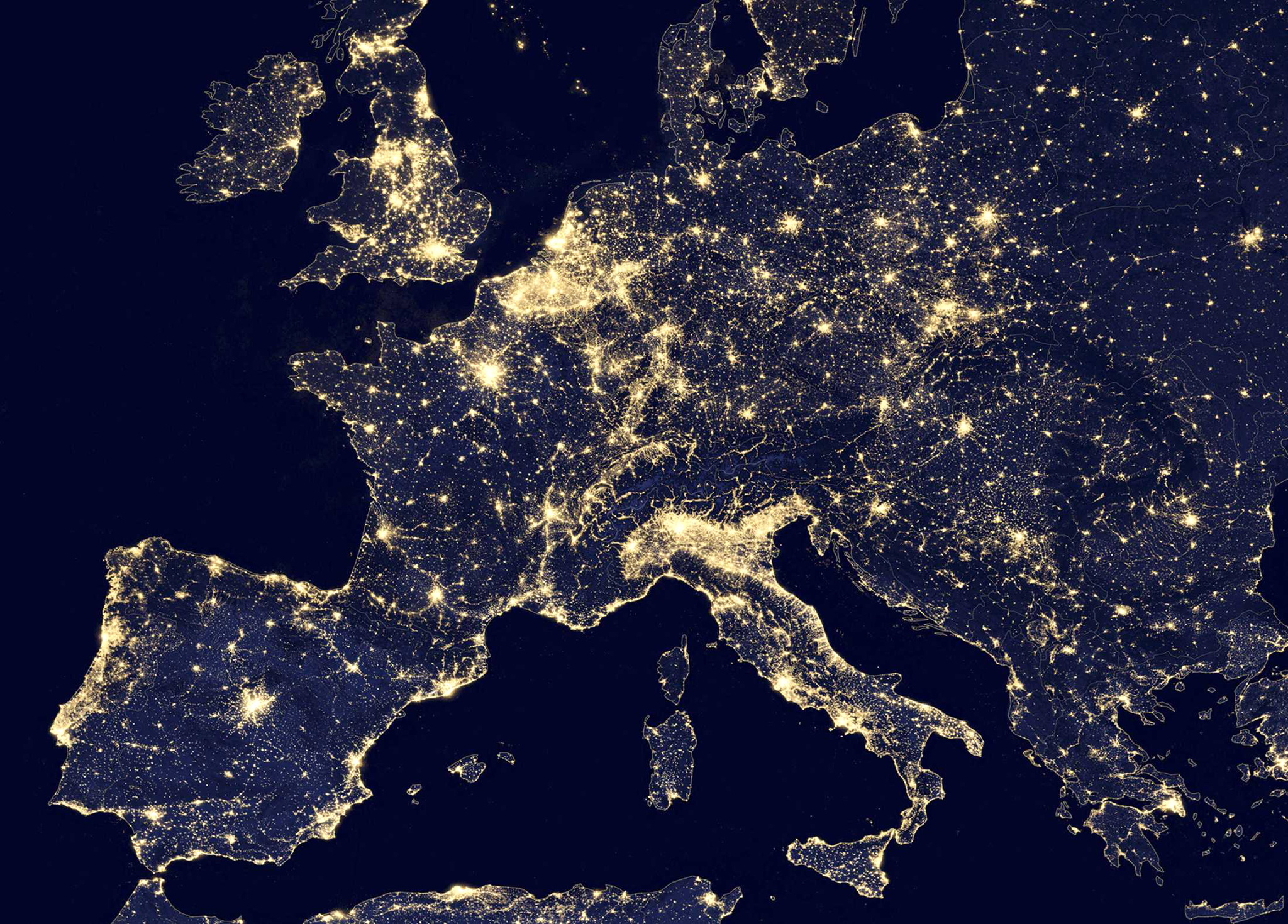
Europe Is Losing the Energy War

Wars are fought on many fronts. So far, Russian president Vladimir Putin is winning the energy war. High energy prices, triggered by supply disruptions, have neutered Western sanctions. Russia’s current account balance stands at record highs. Meantime, the same forces are de-industrializing Europe right before our eyes. Industry after industry is throttling back, shutting down, or considering doing so if the energy chaos continues. Britain is staring at the potential shutdown of 60 percent of its manufacturers. Germany and most of Europe are on the same track.

Discussions of how to rebuild Ukraine when the ground war eventually ends are prevalent, but the question of the decade will be how to rebuild Europe’s industrial infrastructure. Industrial facilities and supply chains that use and produce energy can’t easily be restarted once stopped. That’s one lesson, at least, that policymakers should have taken from the Covid lockdowns.

Share

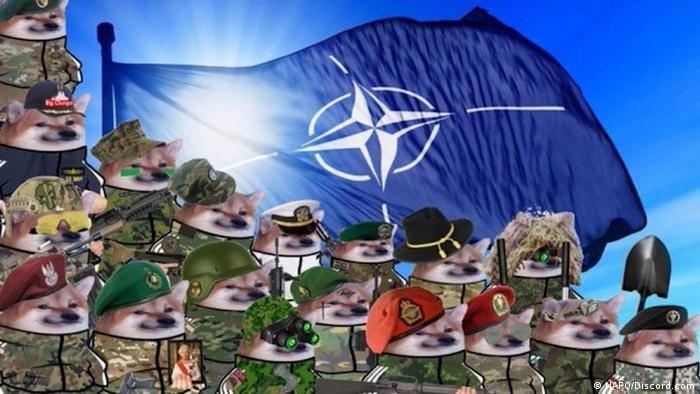
#NAFO: Ukraine’s info warriors battling Russian trolls

NAFO – The North Atlantic Fella Organization

A single tweet in May launched an online movement that has become the kryptonite of the pro-Russian trolls that have long ruled corners of the internet.

“For many years, Russia has been waging a serious information war globally,” said Ivana Stradner, a NAFO member, advisor to the Foundation for Defense of Democracies, and writer for the Kyiv Post newspaper.

At the start of the Ukraine war in February, the West had done little to counter Russia’s fake news with “offensive information operations,” she added.

Share

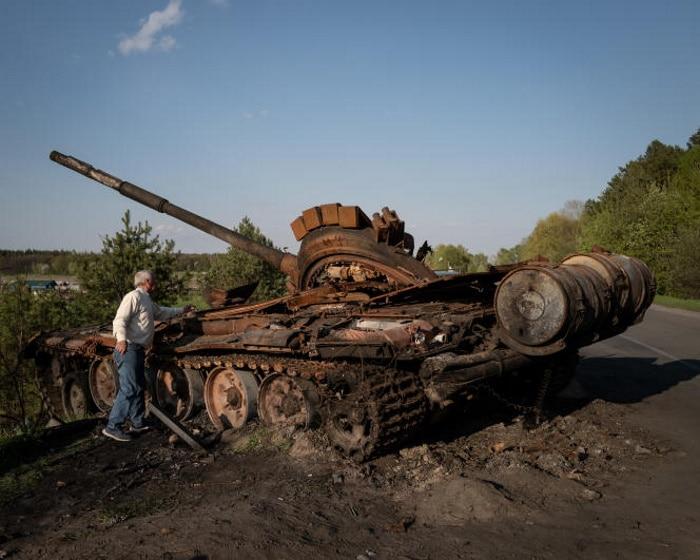
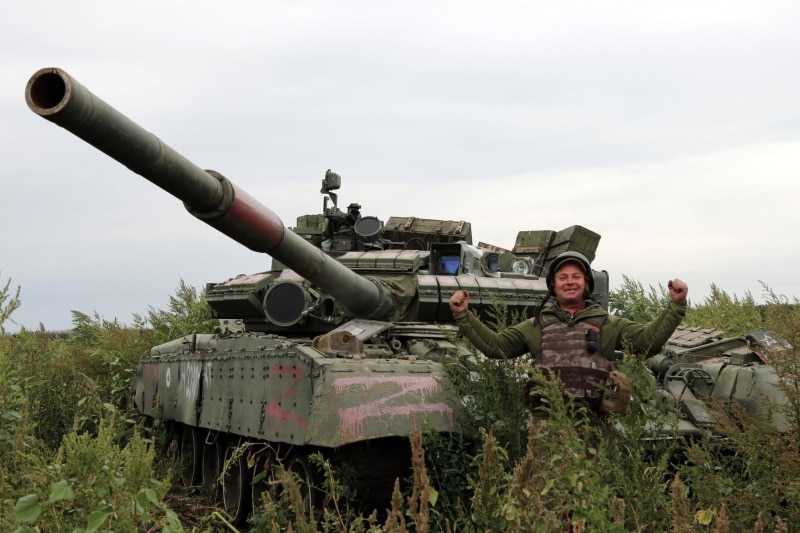
Russia’s underperforming military capability may be key to its downfall

Viewed purely in terms of the size of their formations and equipment, Russian ground forces in Ukraine still pose a serious threat on a number of axes. In practice, however, it is highly unlikely the Russian military can recover from its increasingly terminal trajectory on the battlefield, though its defeat will take time and bitter fighting. To understand why, it is necessary to examine the force beyond its equipment and personnel.

The US assesses military capability through the abbreviation DOTMLPF. That senior US officers regularly try to roll this off the tongue as an acronym may exemplify military absurdity, but the abbreviation is somewhat redeemed by being fairly comprehensive. It stands for: doctrine, organisation, training, materiel, leadership and education, personnel and facilities. Looking at the Russian military across these categories reveals why it is underperforming its potential and struggling to regenerate.


Corruption, poor morale in a conscript army that either doesn’t know or believe why or for what it’s fighting, antiquated and or poorly designed equipment.

That’s a lot of crap to surmount.

Will the Russians be able to recover as they did in WW II? The Finns walloped them early but then succumbed to sheer weight of numbers.

They eventually defeated the Germans with a horrific sacrifice of men and machines but they cannot rely on vast reserves of manpower or lend lease to bail them out as in WW II.

Share

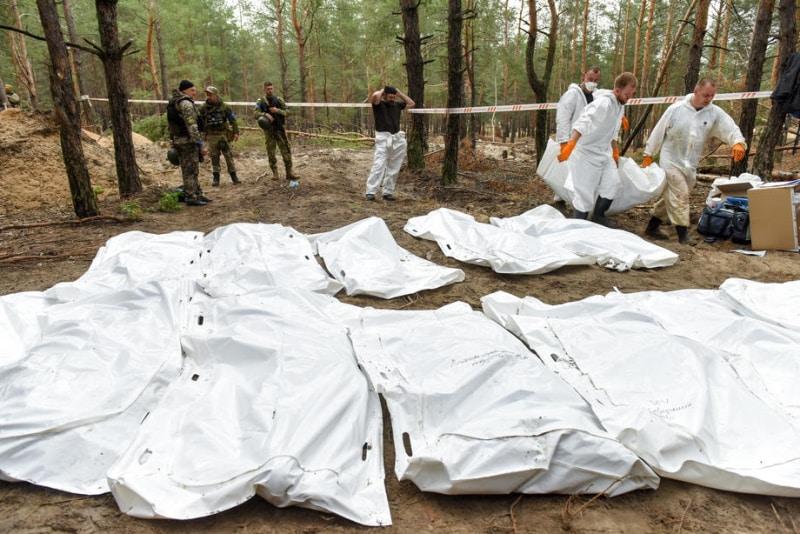
Izium: after Russian retreat, horrors of Russian occupation are revealed

Standing in the gloom, Maksim Maksimov pointed to the spot where he was tortured with electric shocks. Russian soldiers took him from his cell in the basement of Izium’s police station. They sat him on an office chair and attached a zig-zag crocodile clip to his finger. It was connected by cable to an old-fashioned Soviet military field telephone.

And then it began. A soldier cranked the handle, turning it faster and faster. This sent an excruciating pulse through Maksimov’s body. “I collapsed. They pulled me upright. There was a hood on my head. I couldn’t see anything. My legs went numb. I was unable to hear in my left ear,” he recalled. “Then they did it again. I passed out. I came round 40 minutes later back in my cell.”

Share

The Aftermath of the Invasion: Travelling to Irpin and Bucha

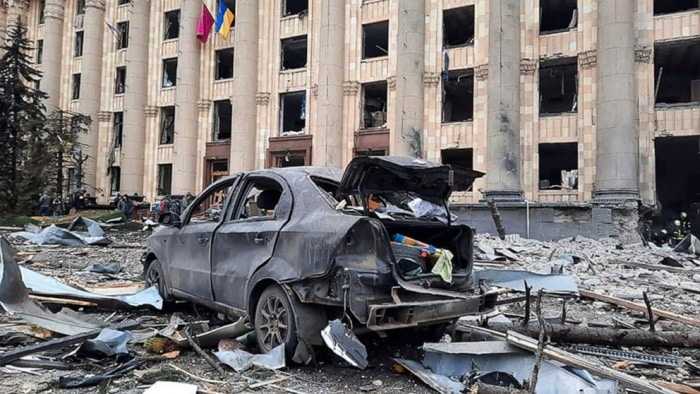
Spring of 2022 was a challenging period for Ukraine, particularly for those territories that were invaded by the Russian army. It was a time of uncertainty. Striking from Belarus, the invading forces came dangerously close to the capital. They moved more slowly than anticipated, meeting heavy resistance every step of the way. Still, they were greater in number, and the Ukrainian military was not as prepared as it should have been, given the threat dating back to 2014. Russian casualties did not stop their convoys from moving south. One by one, small towns and villages were occupied. Kyiv, however, proved to be a much tougher target; Russians were stopped a few kilometres away from the city’s outskirts.

Share

Pawnbrokers, winners of Germany’s growing economic crisis

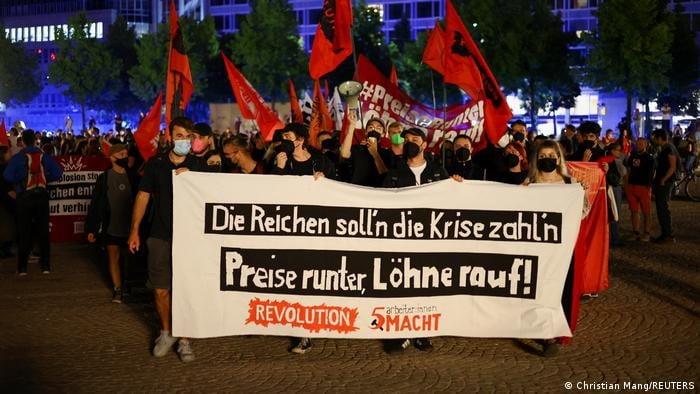
German Commies Protest Cost Of Living

Anybody who wants to know how the Germany economy is running need only count the number of customers Nikolaus Bode has.

The formula for working this out is fairly simple. If the pawnbroker in the small western city of Siegburg is not very busy, the whole country is doing well. But if people are breaking down his doors, that indicates some kind of crisis.

In September this year, Bode is so busy he can hardly think. That means Germany’s in a mess. “A pawnbroker is an indicator,” Bode told DW. “People come here when there is a lot of unemployment or severe economic problems.”

Share

Ukraine war: Russian retreat exposes military weaknesses

“You have no idea how tired I am to say hello to someone in the morning and then have to identify his remains later the same day,” one Russian officer serving as a marine in Ukraine reportedly confided over the phone to a former colleague back home, who published it on his Telegram channel.

“Just yesterday two of my sniper groups were destroyed by a tank. Three men died instantly, the fourth one fought for his life for an hour and a half, another one in critical condition was taken to hospital. We have hardly any men left and we are holding a front line dozens of kilometres long.”

Share

Is China reexporting Russian gas to Europe?

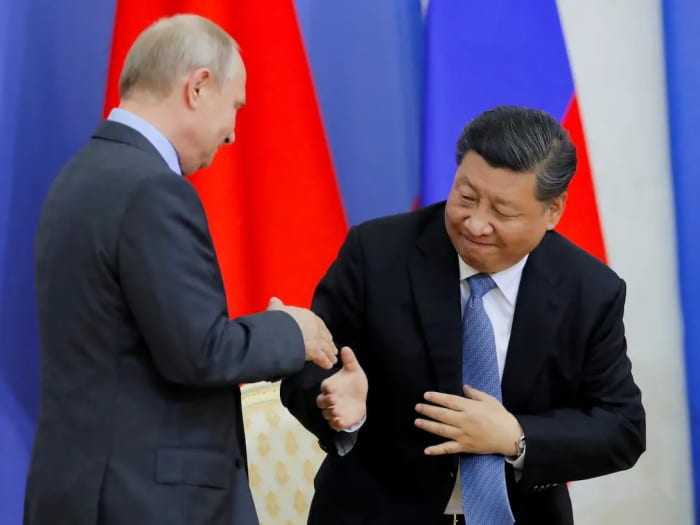
Secret handshake?

As China and Russia meet to consider wider issues, reports indicate that exports of Russian gas are finding their way into Europe – via China.

“The global liquefied natural gas (LNG) market is increasingly well-integrated, and regional demand shifts can help balance otherwise tight markets. This redirection of flows serves the interests of all parties involved,” Nicholas Kumleben, director of energy research at macroeconomic advisory firm Greenmantle, told DW.

Share

Ukraine’s military recruits need training. Only one of Europe’s giants is pulling its weight

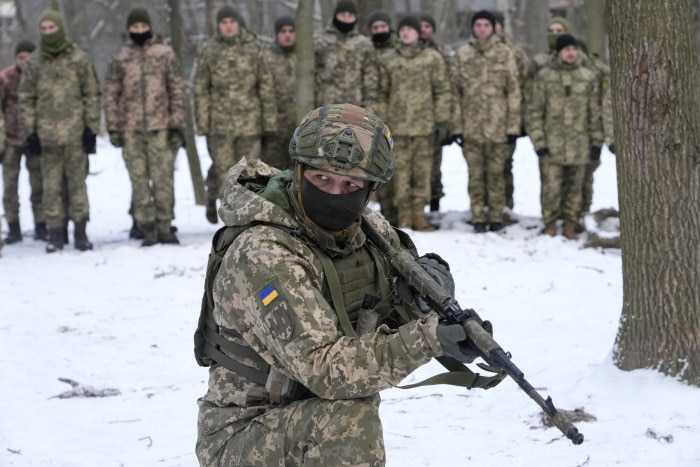
LONDON — They come to the U.K. in their thousands — Ukrainians from every walk of life, in urgent need of military training to protect their homeland.

From lawyers to bricklayers, they are flown in from across Ukraine. The aim is to turn the new recruits into soldiers in just five weeks, providing basic military skills — infantry tactics; weapons handling; patroling; first aid; evacuation — before they return to fight on the frontline.

Since June, the U.K. has trained nearly 5,000 Ukrainian early recruits under Operation Interflex, a program that aims to support 10,000 new soldiers within a year across a network of British training camps. Interflex is the successor to a longer-running British program, Operation Orbital, which trained up more than 22,000 Ukrainians between 2015 — shortly after Russia’s initial occupation of Crimea — and May of this year.

Share

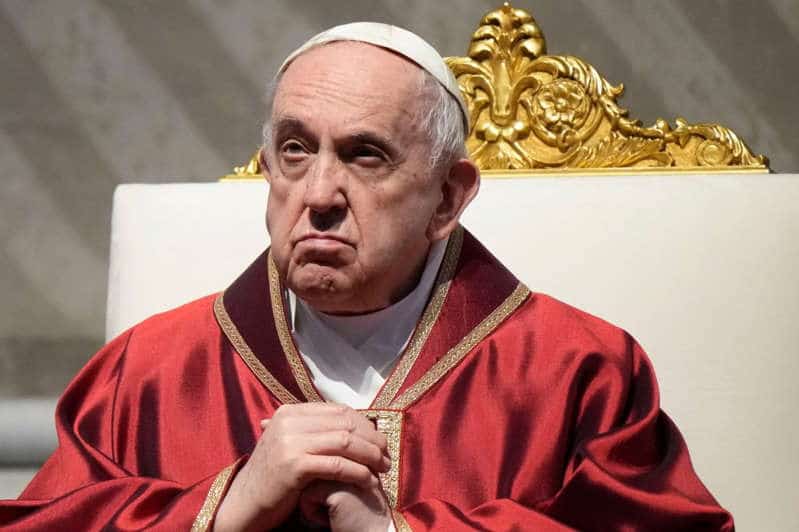
Pope Francis Says Arming Ukraine Can Be ‘Morally Acceptable.’

ROME — After Russia’s invasion of Ukraine, Pope Francis initially appeared to uphold the Vatican’s longstanding policy of not taking sides, before eventually changing tack and saying explicitly that Russia was the aggressor in the war.

Now, Francis has weighed in on a morally thorny issue, saying on Thursday that it is acceptable for countries to provide weapons to Ukraine so that the country can defend itself.
Self-defense in the face of aggression is “not only lawful but also an expression of love of country,” Francis said.

Share

Europe’s Energy Crisis

Europe is facing a growing energy crisis. Individuals and industries are being battered by rising energy costs. On August 31, Russia shut down the Nord Stream 1 gas pipeline to Germany for initially what was supposed to be 72 hours, but followed by an announcement of “technical difficulties” that would prevent a resumption. Russian energy giant Gazprom also announced that natural gas supplies to French energy company Engie SA would be immediately reduced. These actions have created significant uncertainty and the threat of much higher energy prices in Europe as the cold winter season approaches.
In the Netherlands last month, I had the opportunity to discuss the skyrocketing energy costs. Monthly utility bills of 400 to 600 euros are not unusual. One company said it was spending four times the amount for natural gas than a year ago. The company indicated because of these higher costs, it would be cutting its production by 50% this winter. Most European Union countries are experiencing an eight-fold increase in energy prices.

Share

Wagner Group tells recruits: Don’t have sex with locals or livestock

Prisoners warned they will be executed if they arrive in Ukraine and refuse to fight

The head of a notorious pro-Kremlin mercenary group has told inmates at a Russian prison that they will be set free if they survive a six-month tour of duty in Ukraine, but executed if they try to desert.

The offer was made to convicts at a prison camp in central Russia by Yevgeny Prigozhin, a wealthy tycoon who runs the Wagner Group private military contractor. The group’s fighters have been accused of war crimes in Ukraine and Syria.

Share

Wagner Group: Head of Russian mercenary group filmed recruiting in prison

Putin’s Dozen just doesn’t cut it.

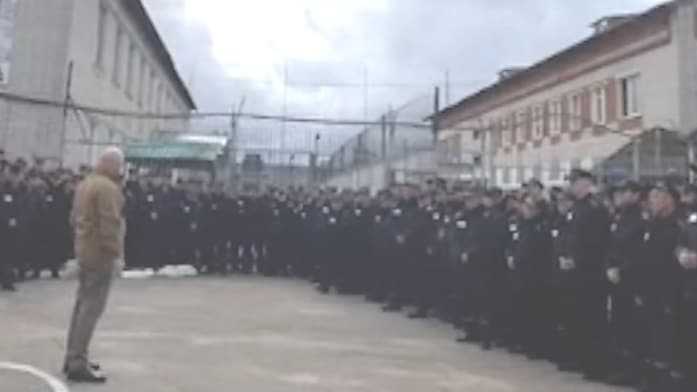
The founder of Russia’s shadowy Wagner mercenary group has appeared in leaked footage attempting to recruit prisoners to fight in Ukraine.

In filmed footage, verified by the BBC, Yevgeniy Prigozhin can be seen addressing a large group of detainees.

Mr Prigozhin told prisoners their sentences would be commuted in exchange for service with his group.

The video would confirm long-running speculation that Russia hopes to boost its forces by recruiting convicts.

Share

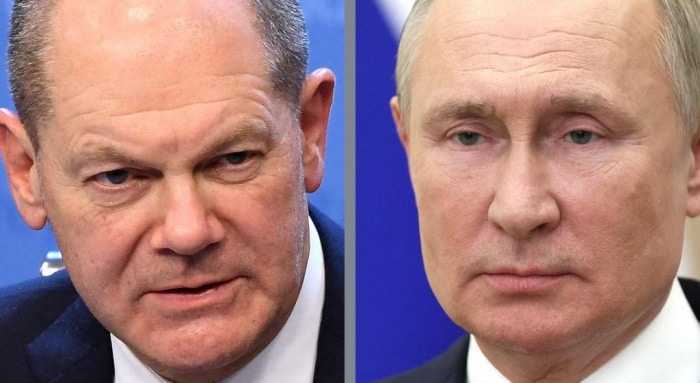
Ukraine war: Olaf Scholz says Vladimir Putin does not see war as mistake

Russian President Vladimir Putin does not realise the invasion of Ukraine is a mistake, German chancellor Olaf Scholz has said, after the leaders spoke on the phone on Tuesday.

Speaking to reporters on Wednesday, Mr Scholz said he urged Mr Putin to withdraw troops and re-enter talks with Ukraine during the 90-minute call.

He called for Russia to respect the sovereignty of Ukraine.

The chancellor has come under pressure to increase military support for Kyiv.

Mr Scholz said the withdrawal of Russian troops from Ukraine would be the only way for “peace to have a chance in the region”.

Share