
This isn’t just another byelection in Toronto — it might reveal the future for Justin Trudeau and Pierre Poilievre. Here’s what’s at stake

It’s a fascinating political petri dish under the microscope by parties, pollsters and pundits alike.

Candidates and campaign volunteers will tell you what really matters to voters in the Toronto-St. Paul’s federal byelection is: housing, the high cost of groceries and staples, or how to tackle acts of rising antisemitism in a midtown riding that has the fifth largest Jewish population in the country.

But ask voters on the street, and they’ll tell you what really matters is Justin Trudeau and Pierre Poilievre.


They’re trying to spin that a win for the Libs in next week’s byelection is simultaneously a national endorsement of the worst Prime Minister ever and a repudiation of Poilievre.

But it’s an ultra safe riding in the heart of Canada’s most progressively stupid city.

The only story will be a loss for Junior’s candidate.

Share

A careful détente kept the war in Gaza from fracturing Toronto council. A move to create ‘bubble zones’ threatened that peace

As last month’s Toronto city council meeting stretched late into the evening, a debate began that the mayor and some of her council allies had been trying to avoid.

For months, some city councils, Queen’s Park and Parliament have seen fierce clashes over how to respond to the Israel-Hamas war, and an escalating death toll in Gaza.

Councillors and city hall insiders tell the Star there has been a focus on private, sometimes difficult conversations and behind-the-scenes advocacy over how best to deal with local issues, from the safety concerns of the city’s Jewish community to the Charter rights of pro-Palestinian protesters, with the mayor trying to stick to the middle ground and avoid a blowout that would both be unhelpful to the business of city hall, and irresponsibly sow further division in an already tense city.

Share

Meet Olivia Chow’s Muslim Anti-Semite

Hmmm

Share

Who are these people? They supposedly worked for a Toronto police board member’s companies

Nadine Spencer – Police Services Board Member & Fantasist

Until recently, a black-and-white photo of a woman holding her face in her hands was used to depict Mary Ellen Steinam — also known as Ellen Steinam — across social media and on the website of a marketing company founded by Toronto Police Service Board member Nadine Spencer.

Steinam worked as chief operating officer of Spencer’s company BrandEQ for more than a decade, according to her LinkedIn page. Her profile said she was based in New York and had previously held other prominent marketing jobs at Nestle and Saatchi & Saatchi as far back as 1994.

On Facebook and X, she shared posts and photos of Spencer — cheering on her boss and BrandEQ.

This is what happens when DEI racism trumps common sense.

Share

Olivia “Doom Loop” Chow wants to bring Toronto’s downtown back to life

Olivia Chow is on a mission to keep Toronto’s financial district alive.

Since the fall, the mayor has been meeting with the CEOs of some of Canada’s largest banks — CIBC, TD, RBC and BMO — to discuss, among other issues, how to get Torontonians back in the office at least four days a week, if not five — and they’re calling on her to set the example.

“Well, it’s important to make sure our financial district is vibrant,” Chow told the Star in an interview. She said she is concerned about Toronto becoming “a ghost town” like other cities in the U.S. grappling with so-called “doom loops” that have seen an uptick in local crime and homelessness. “That’s not healthy.”

“Gardiner commute times have increased 250% sure boss I’ll head back to the office” said no one ever.

Share

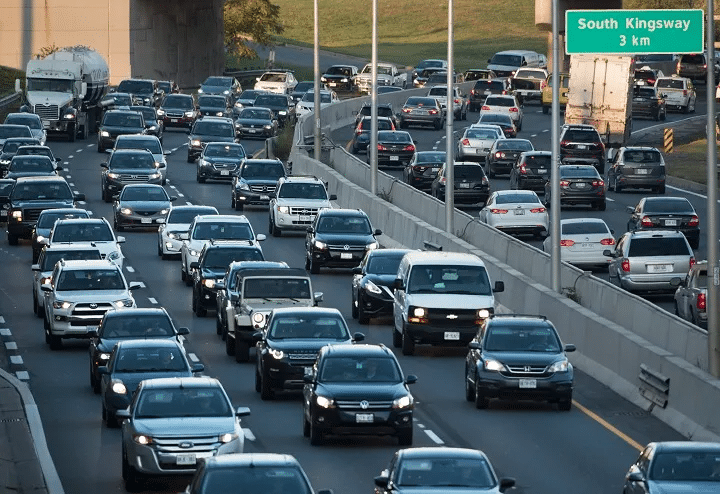
Gardiner gridlock has become horror show, now we have data to prove it

… Trips now take up to 250% longer during morning rush hour than before the construction. Afternoon rush hour is taking 230% longer. Commercial drivers are spending 80% more time on the roads. And travel times are up 43% on the main parallel routes.

These numbers are staggering, but sadly not surprising.

I don’t go downtown anymore. City Hall wins.

Share

WARMINGTON: Parents outraged as woman smokes crack, injects drugs in front of school

WARNING: This column includes social media postings containing graphic images and offensive language

It isn’t as if no one saw this coming.

Share

Union prez not optimistic TTC strike can be averted by Friday … Homeless hardest hit

While the two sides in the TTC contract talks are still at the bargaining table, the president of ATU Local 113 is not optimistic a deal can be reached before the looming Friday strike deadline.

“We’re still bargaining but we have an impasse regarding job security and wages and benefits,” Marvin Alfred said Wednesday morning.

Share

Half of GTA residents would consider moving to more affordable Canadian real estate market: survey

About half of GTA residents say they would consider leaving to buy property in one of Canada’s more affordable cities, according to a new Royal LePage survey.

The online poll, which surveyed 900 Canadians aged 18 and older living in the country’s three largest urban centres, found that about 50 per cent of respondents would consider buying a property in one of Canada’s most affordable cities “if they were able to find a job or work remotely.”

Among renters, about 60 per cent said they would be willing to relocate while only about 45 per cent of current homeowners said they would consider it.

Share

LEDREW: Canadians are over-governed and it’s costing us dearly

Really, Toronto? Is this the best that you can do?

After months of agonizing traffic paralysis, and untold millions wasted (literally untold, due to secrecy and Toronto’s incompetent system of awarding contracts –only contracting bosses get rich in Toronto), city council finally asks staff to take a month or two to see whether it can speed the work up to save the city from strangling itself.


This should kill off the downtown and let’s face it that is the goal.

Some have suggested that the Gardner debacle will give a boost to TTC ridership.

No. I will simply avoid Downtown Toronto rather than ride the Homeless Junkie Choo-Choo.

Share

COAT OF SECRECY: City bureaucrats wanted public in dark about symbol’s removal

“We want to be proactive and transparent about sharing this good news story about how the city is righting wrongs and furthering reconciliation. If we don’t, there is risk that it will look like we are trying hide this.”

That advice was given in October by Kristin McKinnon, of the city’s communications division, to a group of municipal staff planning to remove the Etobicoke coat of arms and other historic symbols from city property.That advice was given in October by Kristin McKinnon, of the city’s communications division, to a group of municipal staff planning to remove the Etobicoke coat of arms and other historic symbols from city property.

Share

Dan Harrison was supposed to be a shining example of public housing done right. So why did it go so wrong?

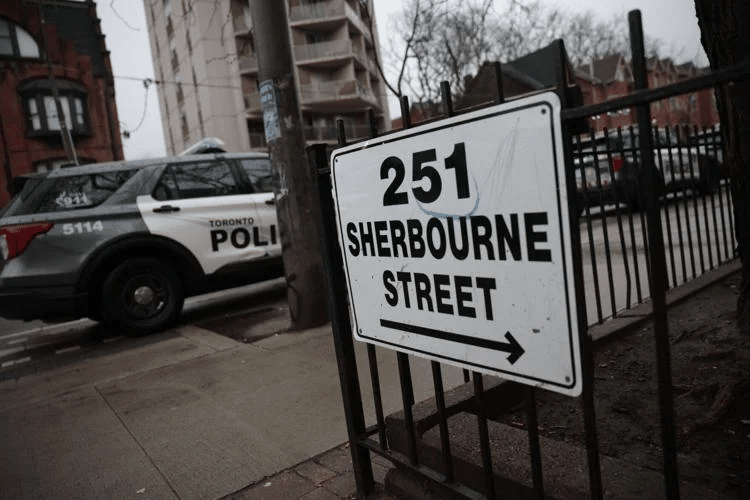
It was a bulldozers-versus-crowd standoff in downtown Toronto, with heavy machinery ready to demolish a row of Victorian houses at Sherbourne and Dundas to make way for a highrise — but dozens of protesters stood in the way.

The tower plan in Moss Park had ignited frustration. Some were upset by its height, while others saw it as growth that threatened to displace low-income tenants renting apartments or rooms in the old houses. Leading the charge of about 80 protesters that day in 1973 was famed urbanist Jane Jacobs, who spurred the crowd to bring the safety fence down.

“They can’t do this if the hoardings are down,” Jacobs cried out before the crowd brought the barrier to the ground, according to archival materials. “Here, give me a hand.”

Part 1 is here.

Share

Bullet holes, drug dealer takeovers, mould and struggling tenants. What it’s like living in one deeply troubled Toronto public housing complex

When strangers pound at the door of her downtown Toronto apartment, Janice Bellmore has learned to keep calm, make sure her lock is secured, and turn up the TV to drown out the noise. Calling security, in the complex she’s lived in for two decades, often feels futile.

It’s not unusual for unfamiliar faces to roam her building — a weathered concrete and brick apartment, with rusting metal railings looking over a wide courtyard connecting it to hundreds of other homes. In many cases, the people who enter this sprawling complex are desperate to find potent street drugs, tenants say. And it’s a reliable place to look, as vulnerable tenants having their units taken over by dealers is a chronic problem.

Share