New lawful access bill would give police, CSIS more powers to track suspects online

The Liberal government has introduced a new lawful access bill that it says will help police and security services track and identify people who may be using tools like social media or artificial intelligence to commit crimes or threaten national security.

This legislation is the government’s most recent crack at broadening the access law enforcement agencies have after Bill C-2, introduced last spring, raised concerns with civil liberties groups that the powers went too far.


Share

Who should be more scared you or Zuckerberg?

Who should be more scared you or Zuckerberg?

Sex acts and toilet visits are among the things shared unknowingly via Meta’s smart glasses, according to a review by Svenska Dagbladet and Göteborgs-Posten.

h/t Patti Jo

Share

Electric car drivers ‘spied on by government’ through phones

Millions of electric car drivers in Britain were spied on by the government through their mobile phones as part of a “bizarre nanny state” plan, it can be revealed.

Customers of O2, as well as other operators including Tesco Mobile, were monitored on the government’s behalf if their mobile internet history and app records showed they visited a site related to electric vehicles (EVs) once a month on at least two occasions.

Department for Transport officials commissioned O2 to spy on 25 million devices as part of a £600,000 study intended to produce a “comprehensive evaluation and understanding of the uptake and usage of electric vehicles”.

Share

It’s the end of personal privacy. ‘There’s nowhere to hide anymore’

By the time the Class of 2026 convenes this spring, the world will already know all sorts of personal details about these mostly 25-and-under university and college grads, things no one would have even thought to ask about the generations that preceded them.

Parents began trumpeting their arrivals on social media beginning in 2004, with baby steps and kindergarten performances chronicled on Facebook and, later, Instagram. Security cameras captured their first toddle into a grocery store. Today, they, and the rest of us, can be photographed and videoed without consent or even knowledge, from any one of the more than 12 million CCTV cameras or 30 million smartphones in use in Canada.

Share

Josh Dehaas: We don’t need thought police in Ontario

Durham Region, outside Toronto, is the latest Ontario municipality to create a program for recording “non-criminal hate incidents” (NCHIs) such as (to quote the website) telling offensive jokes, destroying religious texts or sending discriminatory text messages.

The new Community-Based Hate Reporting program includes a form where people are encouraged to report such “hateful” incidents — anonymously if they wish — so that they can be connected with taxpayer-funded security or counselling, so that the region can better track hate incidents, and so that police can be informed. Waterloo Region, Ottawa, Chatham-Kent, Hamilton and Muskoka already have similar reporting tools.

Share

Former Chilliwack school trustee Barry Neufeld ordered to pay $750K for violating Human Rights Code

Former Chilliwack school trustee Barry Neufeld has been ordered to pay $750,000 by the B.C. Human Rights Tribunal for violating the Human Rights Code with “heated public speech” exposing LGBTQ people to hatred or contempt. The tribunal issued its final decision this week, issuing two sets of costs orders in the matter of the BCTF (on behalf of) the Chilliwack Teachers’ Association v. Neufeld, one ordering the payment of $750,000 in costs to the CTA, and a concurrent order of $10,000 for improper conduct during the lengthy process.

Share

WARMINGTON: Is Durham Region’s hate reporting program just fancy snitch line?

Durham Region has created its own “hate police” department.

While those on patrol won’t be carrying a badge or a gun, have the power to arrest or charge anyone or have any connection to Durham Regional Police, they seem to be planning to collect, document and store information about residents in the region in their quest to help victims of discrimination or bigotry.

Share

The machines that will predict the criminals of the future

The Ministry of Justice will deploy machine learning to identify at-risk children for early intervention and to help prevent them falling into a life of crime

Artificial intelligence (AI) could be used to predict the criminals of the future under government plans to identify children who need targeted interventions to stop them falling into a life of crime.

A programme launched by the Ministry of Justice last week will aim to develop a system that can alert schools, health staff, police and other professionals to individuals most likely to be drawn into crime.

It will identify children most likely to be drawn to crime by using existing data that is currently siloed between different government departments and authorities.


Oh yea this sounds dandy.

Share

Amazon’s Ring axes deal with police tech provider after heated Super Bowl ad backlash: ‘surveillance state’

Amazon’s Ring says it is canceling its video doorbell partnership with police tech provider Flock Safety — following severe backlash over a Super Bowl ad that depicted a “surveillance state,” in the eyes of some critics.

The commercial touted the ability of Ring doorbells to reunite families with their lost dogs using a feature called “Search Party.” Owners can upload images of their lost pets to the app, which will launch the feature and use AI to scan neighborhood Ring cameras for matching images.

No one thought this through? No one said “wait a minute”?

Share

Welcome to the ‘EUSSR’: Unpopular European Regimes Grasping for Power Crack Down on Dissent

Governing elites in Europe, in what increasingly appears to be the EUSSR (European Union of Soviet Socialist Republics) race to the bottom, have been growing ever more unpopular. Disapproval ratings are skyrocketing. In France, 77% of the public disapprove of President Emmanuel Macron. In Britain, 68% disapprove of Prime Minister Keir Starmer. In Germany, 64% disapprove of Chancellor Friedrich Merz, and in Spain, 61% have had it up to here with Prime Minister Pedro Sanchez.

Share

Any new online harms bill must stick to protecting kids – not policing speech

If regulating social media to protect children from online harms was a simple matter, the nation’s Culture and Identity Minister, Marc Miller, wouldn’t be vowing to “act swiftly” almost five years after the Liberals tabled their first effort at an online harms bill.

That initial legislation, titled Bill C-36, came two years after then-public safety minister Ralph Goodale first raised the issue. That triggered a year of public consultations before the government rolled out legislation that died when the 2021 election was called.

Share

Who Funds the Defunders? A Closer Look at the Global Disinformation Index

Shortly before Christmas, the U.S. State Department slapped visa sanctions on five individuals whom it described as being agents of a “global censorship-industrial complex” bent on restricting the freedom of speech of Americans. The headliner of the sanctions list was, of course, Thierry Breton, the former EU internal market commissioner, who spearheaded efforts to enforce the EU’s Digital Services Act (DSA) during the last years of his tenure in the Commission. But the directors of three organizations allegedly involved in censorship activities were also sanctioned: HateAid, the Global Disinformation Index, and the Center for Countering Digital Hate.

Share

How Hate-Speech Laws Destroy the West

Imagine this: You have a group of friends over for dinner. You are sitting around the table having a nice conversation about current events. You mention that you don’t like it when immigrants take advantage of social welfare instead of getting a job; you explain that your taxes would be lower if immigrants weren’t so lazy.

Now imagine this: Your teenage daughter has found herself a boyfriend, and you sit her down to have a conversation about the potential consequences of being intimate with him. Your daughter dismisses your concerns by saying that she can always get an abortion, whereupon you reply that abortions are immoral.

Would you be surprised if, in either of these cases, the police came to your house and arrested you for illegal speech?

Share

Britain is becoming a surveillance state, but no one seems to care

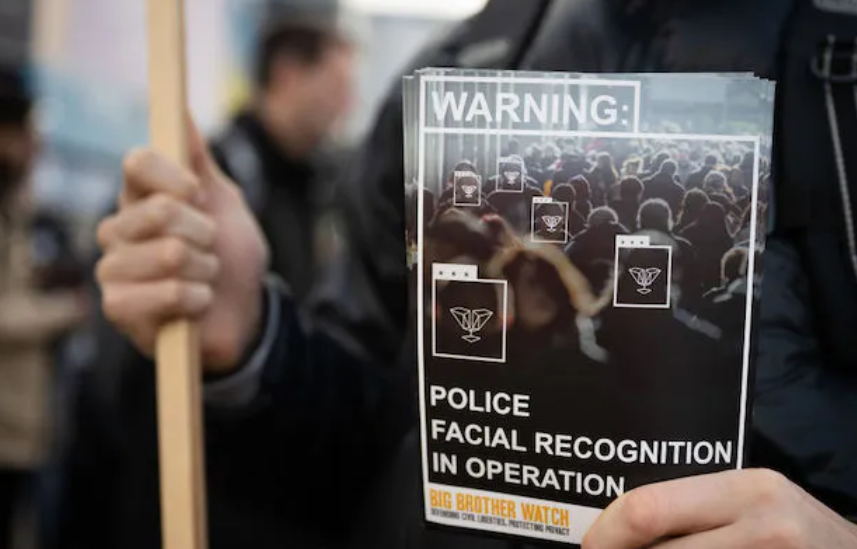
Shabana Mahmood’s announcement that facial recognition is to be rolled out across the nation is no vague statement of aspiration. Part of wider policing reforms and backed by the promise of fifty more camera-topped vans, the Home Secretary’s announcement signals the government’s determination to make mass surveillance part of daily life. Combined with the current consultation on facial recognition, it also confirms that Britain is becoming a surveillance state without any real thought or debate.

Share