‘Dystopian world’: Singapore patrol robots stoke fears of surveillance state

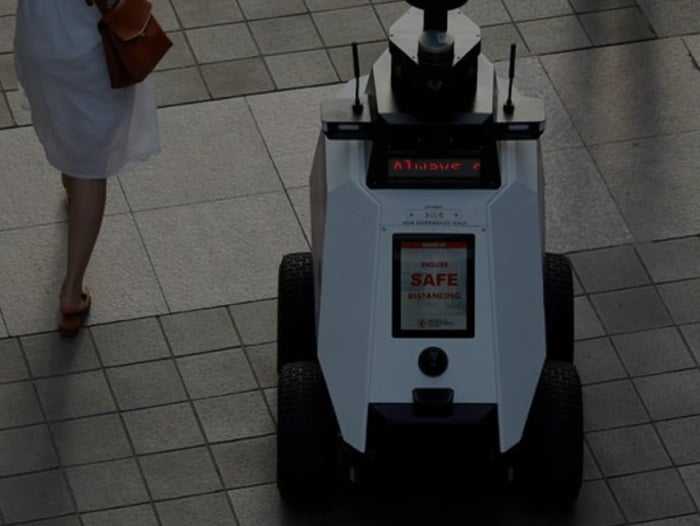
Singapore has trialled patrol robots that blast warnings at people engaging in “undesirable social behaviour”, adding to an arsenal of surveillance technology in the tightly controlled city-state that is fuelling privacy concerns.

From vast numbers of CCTV cameras to trials of lampposts kitted out with facial recognition tech, Singapore is seeing an explosion of tools to track its inhabitants.

Share

Leak reveals US gov’t has served Google with ‘keyword warrants’ to identify anyone searching certain names, addresses, and phone numbers

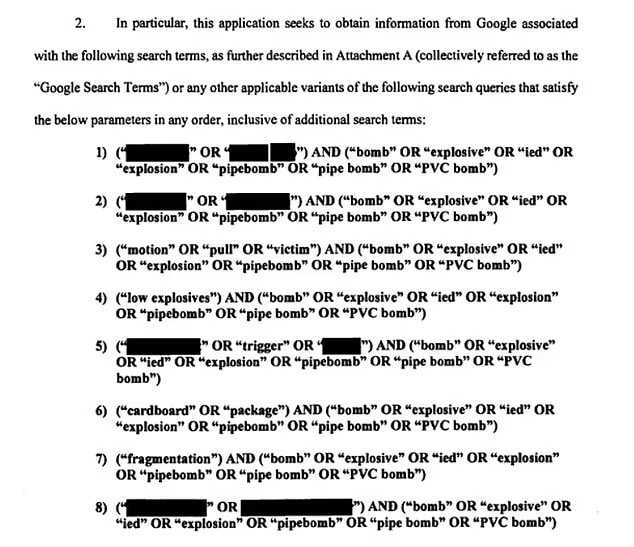
The U.S. government is using ‘keyword warrants’ to uncover the identity of anyone who searches Google and other search engines for certain search terms that may be related to a crime, according to a new report.

The controversial practice, which is already drawing civil liberties concerns about sweeping government overreach, was revealed on Tuesday in ‘accidentally unsealed’ court documents obtained by Forbes.

Keyword warrants — which have been secretly employed for at least several years — are drawing backlash as many argue they violate an individual’s constitutional protections against unreasonable search and seizure.

Share

Canadian government’s proposed online harms legislation threatens our human rights

The Canadian government is considering new rules to regulate how social media platforms moderate potentially harmful user-generated content. Already, the proposed legislation has been criticized by internet scholars — across the political spectrum — as some of the worst in the world.

Oddly, the proposed legislation reads like a list of the most widely condemned policy ideas globally. Elsewhere, these ideas have been vigorously protested by human rights organizations and struck down as unconstitutional. No doubt, the federal government’s proposed legislation presents a serious threat to human rights in Canada.

Share

Group Calls on Government to Reconsider Its ‘Fundamentally Flawed’ Approach to Combating Harmful Online Content

An expansive federal law proposal to combat harmful online content is not only “fundamentally flawed” but also violates Canadians’ freedom of expression and privacy rights, warn internet law experts, who are calling on the Liberals to overhaul their approach.

The main problem with the so-called “online harms” proposal lies in its ability to filter content and block websites, which endangers the “survival of a free and open internet in Canada and beyond,” reads a submission to the Department of Canadian Heritage by the Samuelson-Glushko Canadian Internet Policy and Public Interest Clinic (CIPPIC) at the University of Ottawa’s Faculty of Law.

Share

Liberals expected to tackle online hate, conversion therapy in next government’s first 100 days

Aside from COVID-19, the digital world will be a major focus of Parliament once it resumes this fall, with several significant pieces of legislation expected to be introduced — or reintroduced — by the government.

The Liberals have promised to table several major bills within the government’s first 100 days, with the clock beginning to tick following the new cabinet’s swearing-in, expected to be in October.

Among the bills is legislation to establish a regulatory system for social media platforms to combat harmful online content, and making digital giants pay news outlets for their work.

Share

Poll shows Canadians trust the Internet and know what’s fake news

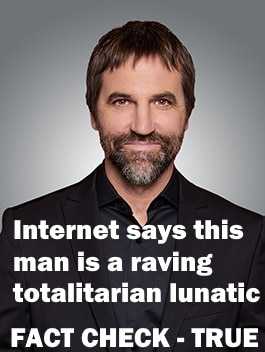
Heritage Minister Steven Guilbeault’s department has proposed “concrete action” to police news and information on the internet.

Despite Liberal attempts to censor the Internet, the vast majority of Canadians think online information is reliable and people can tell when its not, says the feds own internal polling.

Blacklock’s Reporter said Heritage Minister Steven Guilbeault’s department has proposed “concrete action” to police news and information on the Internet.

“A majority, 80%, believe the online content they consume is factual and truthful,” said a pollsters’ report.

Share

Scan QR-code menus with a side of caution, say privacy experts

Restaurant patrons who’ve grown accustomed during the pandemic to whipping out their phones to access menus using QR codes should understand the implications for their personal data, say privacy and cyber-security experts.

That’s especially important given some restaurant owners are finding electronic menus efficient and cost effective, and that they may hold onto the practice even after COVID-19 is more contained.

Share

New study finds internet freedom is rapidly declining worldwide

Internet freedom has declined for the 11th consecutive year globally, according to an annual report released this week.

The study from Washington-based democracy watchdog organization Freedom House analyzed 70 countries that account for 88 percent of internet users worldwide and measured indicators such as accessibility and content. Both a lack of internet regulation and excessive restraints to online material contributed to this year’s decline, the group said.

Share

How 9/11 created the surveillance state

We were promised an era of heroism — so where did it all go wrong?

When the dotcom bubble burst in March of 2000, it was a minor ripple in a sea of American optimism. The headline on a 1999 Pew poll captured the pre-millennium spirit: “Optimism Reigns, Technology Plays Key Role.” The crash was only a temporary setback, the price for getting too far out ahead of the wave of unstoppable progress.

Meanwhile, the members of an al Qaeda cell were plotting.

Share

LAPD officers told to collect social media data on every civilian they stop

The Los Angeles police department (LAPD) has directed its officers to collect the social media information of every civilian they interview, including individuals who are not arrested or accused of a crime, according to records shared with the Guardian.

Copies of the “field interview cards” that police complete when they question civilians reveal that LAPD officers are instructed to record a civilian’s Facebook, Instagram, Twitter and other social media accounts, alongside basic biographical information. An internal memo further shows that the police chief, Michel Moore, told employees that it was critical to collect the data for use in “investigations, arrests, and prosecutions”, and warned that supervisors would review cards to ensure they were complete.

And… Facebook pays contractors to read your ‘encrypted’ WhatsApp messages, shares info with prosecutors – reports

Share

Federal government using social-media giants to censor Americans

Ask questions or post content about COVID-19 that runs counter to the Biden administration’s narrative and find yourself censored on social media.

That’s precisely what data analyst and digital strategist Justin Hart says happened to him. And so last week the Liberty Justice Center, a public-interest law firm, filed a suit on his behalf in California against Facebook, Twitter, President Joe Biden and United States Surgeon General Vivek Murthy for violating his First Amendment right to free speech.

Share

UK: The Government Censorship Unit you’ve never heard of

The “Counter Disinformation Cell” is monitoring your online statements

Stories about censorship usually focus on the individuals prevented from publishing or saying something. But if we are to defend free expression from the new era of digital censorship, we need to focus much more closely on the censors themselves.

Few corporate actors are more powerful than social media companies and under the duress of political pressure, the power that they exercise over online discourse is slowly being melded to that of the state. Online speech standards based on maintaining corporate reputations have increasingly bent to political pressures and moral panics in recent years, often causing waves of online censorship in their wake.

Share

Hosts of private at home parties in York Region will have to keep a list of guest contact info

TORONTO — Hosts of private social gatherings in York Region will now need to keep a list of their guests for contact tracing as part of two new public health measures put in place ahead of the long weekend.

In a news release issued Friday afternoon, officials said the region’s Medical Officer of Health Dr. Karim Kurji made two changes to COVID-19 measures to help curb the spread of COVID-19 amid a fourth wave of the pandemic.

The most notable is the addition of a new measure requiring anyone hosting a social gathering in a private residence or a commercial facility to keep a list of names and contact information for all attendees. The hosts must also be able to provide the list to public health officials within 24 hours of a request.

I’m sure it’s only a temporary measure like income tax.

Share

Free speech can’t be filtered through a bureaucratic superstructure

The government wants you to believe it’s targeting hate speech, when in reality it’s targeting free speech

Free speech ensures that Canadians have the right to tell governments when they’re wrong. While this may be unpleasant for governments, it is absolutely vital in a democratic society.

Rather than strengthening Canadians’ rights, the Trudeau government wants to filter free speech through the lens of a bureaucratic superstructure. There can be no doubt that there are bad things on the internet. Child pornography, hate speech, and other such crimes are detestable. But these crimes are already labelled as such through the criminal code with lengthy prison sentences for those who are convicted.

Share