More Cows Needed to Reverse Climate Change, Experts Say

In a little-noticed presentation on Dec. 9, 2023, at COP28 in Dubai, a panel of soil experts presented the case for cows as climate allies, not gas-spewing destroyers. The event, titled “Conscious Livestock Rearing and Soil Health,” discussed “animal rearing’s impact on soil health, and its place as a part of the climate solution.” Contrary to the anti-cow cacophony of the climate crisis crowd, these experts explained the vital role ruminants like cows play in nourishing and rebuilding precious soils. It turns out, grazing cows sequester massive amounts of carbon.

Share

John Ivison: The moral preening of Steven Guilbeault grows as insufferable as bicycling in January

Progressive politicians hoping to triumph over right-leaning political adversaries can only succeed if they can do a better job of bridging their lofty goals with people’s day-to-day struggles.

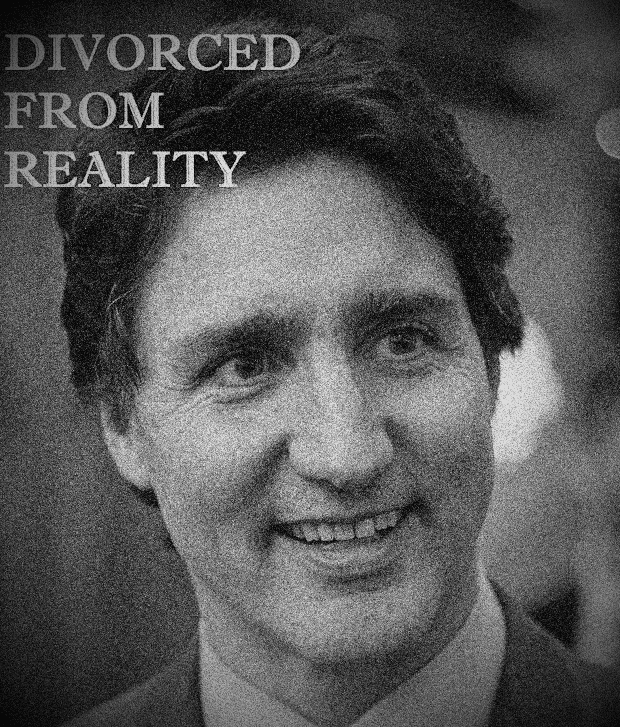
Who said so? Justin Trudeau, that’s who. The prime minister told a roomful of progressives at a conference in Montreal last fall that politicians who don’t respond to issues affecting the daily lives of citizens are not going to connect with them.

Share

Liberals polish Canada’s carbon tax turd

Liberals rebrand Canada’s carbon tax rebate

The federal government is rebranding the carbon tax rebate.

Previously known as the Climate Action Incentive Payment, the Liberals are now calling it the “Canada Carbon Rebate.”

The news of the new name for the existing rebate program was first broken via a Finance Canada press release touting the amount Canadians will be reimbursed this year. It was subsequently announced by a series of ministers in Ottawa on Wednesday.

h/t Mauser

Share

Anthony Furey: Guilbeault’s Talk of Halting Roads Investment Makes It Clear His Policies Can’t Be Taken Seriously

While Prime Minister Justin Trudeau has rightly been criticized for going overboard with climate activism zealotry, Environment and Climate Change Minister Steven Guilbeauilt’s latest remarks on climate, electric vehicles, and public roads are on a totally different level.

As Calgary Herald columnist Don Braid put it, Guilbeault’s remarks are “so far out on the crazy edge of climate activism that it was easy to confuse his own Twitter account with the one that parodies him every day.”

Share

NDP to introduce bill calling for stupid thing

NDP to introduce bill calling for ban of coal exports as Canadian output booms

Canadian exports of the kind of coal used to make electricity hit an eight-year high in 2022, even as the Liberals have promised to work on banning exports completely by the end of the decade.

The Liberals made the promise during the 2021 election and it was listed in Environment Minister Steven Guilbeault’s mandate letter that December.

Share

Guilbeault wants municipalities to stop building roads; urges people to walk

The road to hell will truly be paved with ill-intent — or not at all — if a leading Liberal cabinet minister has his way.

It’s not enough to ban internal combustion engines, keep oil and gas in the ground and force all Canadians to drive electric vehicles. Now federal Environment Minister Steven Guilbeault wants governments at all levels to stop building the roads to drive them on.

Share

In giving billions to electric car makers, Canada is blinded by economic delusion

Canada’s electric vehicle manufacturing subsidies are not “investment” – they are economic illusions. There has been over $40-billion worth of Canadian federal and provincial handout announcements, including up to $15-billion for Stellantis and LG, up to $16.3-billion for Volkswagen, $7.3-billion for Northvolt, and a continuing race to give billions to Honda and others. As Dutch, South Korean, German, Swedish, and Japanese companies build their value chains using Canadian taxpayers’ dollars, what’s in it for Canada?

Share

Belgium central bank chief: Tell the truth about the real costs of “greening” the economy and the loss of wealth that will follow

The head of Belgium’s central bank urged EU lawmakers to tell the truth about the real costs of “greening” the economy and the loss of wealth that will follow ― because they will face public anger if they don’t.

“This transition is not going to make us collectively richer,” Pierre Wunsch told the European Parliament in Brussels. “We should be more candid … don’t lure people into thinking that greening carries positive opportunities that could augment GDP and create millions of well-paid jobs.”

Share

Report Says Green Transition is Crumbling—But Will Eurocrats Let Go of Their Pet Project?

National governments are in gradual retreat from their “hard promises” to wean their economies off fossil fuels, according to a new report. Since the 2010s the failures of green technologies to become economically viable have prompted nations to dilute or postpone established environmental targets, says British journalist Ross Clark in “The Retreat from Net Zero,” commissioned by research group Net Zero Watch.

Share

The way you park could be making illegal alien benefit shoppers homeless say experts who really just want to ban private cars.

Could the way Canadians park vehicles be part of the housing crisis?

It’s no secret that Canada is facing a major housing shortage. But could the sheer amount of space used for parking vehicles be part of the problem?

A recent Re/Max report looking at participation in the housing market said the “vast majority” of lower-priced properties in the Greater Toronto Area are parking spaces, and that most of the 250 ‘properties’ listed for sale under the $400,000 price point are parking spaces, lockers and vacant land.

For housing advocates, it touched on a longtime frustration

Share

The renewables bubble has burst

It wasn’t so long ago that Orsted was being held up as an example of how oil and gas companies should handle the transition to clean energy. In 2009 the then-DONG (Danish Oil and Natural Gas) announced that it was going to turn around it business so that instead of earning 85 per cent of its money from oil and gas it was going to earn 85 per cent of it from renewables. It was an early mover in offshore wind – and, at least for some years, shareholders were richly rewarded. The share price marched upwards from around £19 in 2014 to a peak at £100 in early 2021. Increasing your money fivefold and saving the planet at the same time – you can hardly argue with that.

Share

Feds Gave Over $144 Million to International Organizations for Climate Change Programs

The federal government has given over $144 million to international organizations, including the United Nations, for the “purpose of fighting climate change” since 2017.

“Canada’s International Climate Finance Program aims to support low and middle-income countries already affected by climate change in their transition to sustainable, low-carbon, climate-resilient, nature-positive and inclusive development,” states part of Environment and Climate Change Canada’s (ECCC) Jan. 29 response to Conservative MP Cheryl Gallant’s Inquiry of Ministry.

Share

Ottawa’s EV timeline is way too optimistic

The federal government recently finalized regulations for its “zero-emissions vehicle” mandate. The mandate requires sellers of light vehicles (passenger cars and light trucks) to sell a rising minimum of zero-emissions vehicles — basically, electric vehicles or EVs — every year, culminating with 100 per cent EVs in 2035, just 11 years from now. Reasonable forecasts of production and sales make clear that Ottawa’s timeline is unrealistic.

There cannot be optimism for an idea doomed to fail from the start.

Share

ANALYSIS: Charging, Resale Among Added Hurdles Slowing EV Adoption

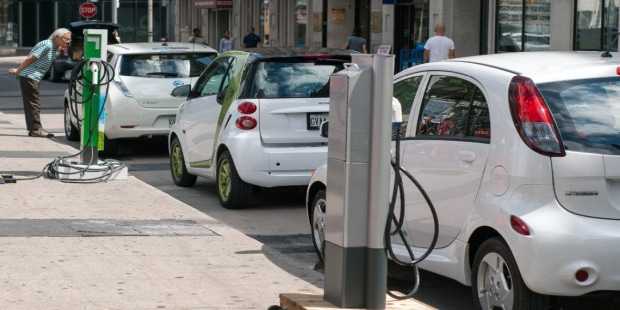
The near-term challenges of mass electric vehicle (EV) adoption inevitably begin with price, but a recent cold snap has re-emphasized battery and charging snags. In addition, as prices for new EVs trend down, new buyers also have to consider potentially lower resale values.

Tom Narayan, lead equity analyst covering global autos at RBC Capital Markets, told BNN Bloomberg on Jan. 31 that the EV market is going through a bit of a slowdown.

Share

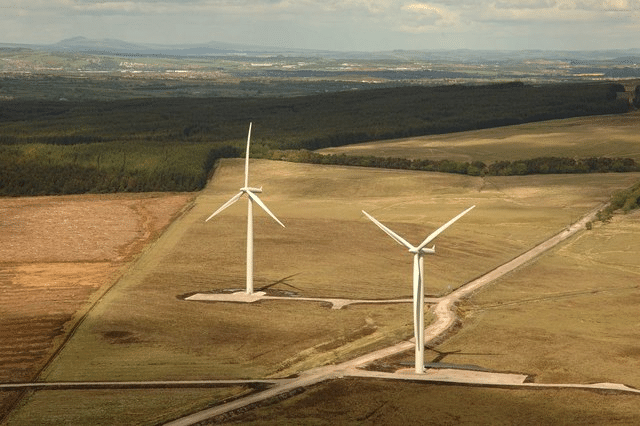
Alberta’s 4,481 Megawatts of Wind Power Produced Only 3 MW Monday Night, 2 Tuesday Morning

Where are we going? Lower! That was the trend for wind power production in Alberta on Monday, Feb. 5, as the 4,481 megawatts of nameplate wind power generation capacity fell to just three megawatts output. That’s less than 0.1 percent, or less than 1 one-thousandth of nameplate capacity. If you want to get really technical, it’s actually 0.07 percent, or 7 ten-thousandths of nameplate capacity.

That’s according to minute-by-minute data from the Alberta Electric System Operator (AESO).

Share