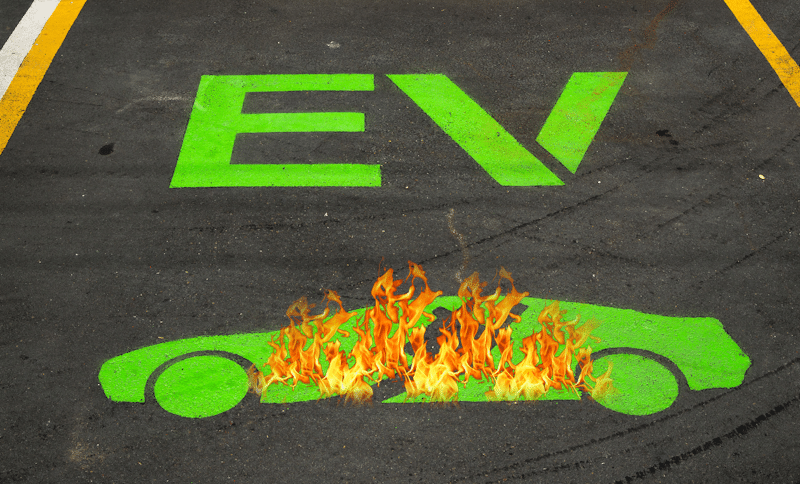

Honda deal is good publicity for Liberals, but who will buy all those EVs?

The largest deal in Canadian history. That’s how Premier Doug Ford has described a recently inked agreement between Ontario, Ottawa and auto giant Honda, officially announced Thursday.

Under the terms of the agreement, Honda will pump billions into building an electric vehicle assembly plant. For the automaker, the plant would be the first of its kind in Ontario; for the province, the third after automakers Stellantis and Volkswagen inked similar agreements last year. In touting the virtues of the agreement with Honda, the Premier said, “everyone’s going to benefit.”

But that’s not true. Not everyone. The move saddles Canadians with a product for which enthusiasm is tepid at best.

Share

Honda to get up to $5B in govt help for EV battery, assembly plants

Honda is set to build an electric vehicle battery plant next to its Alliston, Ont., assembly plant, which it is retooling to produce fully electric vehicles, all part of a $15-billion project that is expected to include up to $5 billion in public money.

The two plants are expected to create 1,000 jobs on top of retaining the existing 4,200 jobs at the assembly plant.

Share

Guilbeault defends ‘partnership’ with Chinese Communist Party environment council

Environment Minister Steven Guilbeault has defended his “partnership” with the Chinese Communist Party’s (CCP) environmental board.

In August 2023, the federal Conservative Party demanded Guilbeault cut ties with the China Council for International Cooperation on Environment and Development (CCICED), which is chaired by Ding Xuexiang, the former chief of staff to President Xi Jinping.

Share

Honda Nears Deal With Canada to Boost Electric Vehicle Capacity

…The deal, expected to be announced within a week, involves a multibillion-dollar commitment by Honda for new facilities to process cathode active materials, build batteries, and assemble battery-powered vehicles — making southern Ontario a key hub of company’s EV manufacturing plans in North America. The Canadian government would subsidize a portion of the capital cost.

…The Honda investment comes at an anxious moment for the auto sector, with consumer adoption of electric vehicles playing out slowly in some regions because of high prices and a shortage of charging stations. Tesla Inc. is cutting more than 10% of its global workforce, Chinese producer BYD Co. reported a sharp drop in deliveries of electric vehicles in the first quarter, and other automakers have delayed EV investments.

Count on the Trudeau government to be wrong and wasteful.

h/t Mauser

Share

Despite best efforts, Justin Trudeau can’t direct attention away from the carbon tax

Governments often use budgets to change the channel from what their opponents want to talk about to what they want to talk about.

The Trudeau government is no exception. It clearly hopes this week’s federal budget will dampen all the negative chatter about carbon pricing and get people focused on the great plans it has for solving the housing crisis and making life “fairer” for young Canadians.

But here’s a snag: changing the channel is a lot harder when your buddy on the couch grabs the remote and insists on switching back to the programming you want to get away from.

Trudeau has a solution to the housing crisis he created? Bullshit.

Share

Europe is revolting against the tyranny of electric cars

The rest of Europe, Remainers like to tell us, is forging ahead into a glorious green future while Brexit Britain is stalling, the government backsliding one by one on its net zero commitments.

It is hard to square that narrative with what’s really going on across the channel. In March, according to data from the European Automobile Manufacturers’ Association, registrations of new electric vehicles plummeted by 11.3 per cent. In Germany – the grown up country that’s supposed to show childish Britain how it’s done – the drop was even more precipitous at 28.9 per cent.

Share

Bjorn Lomborg: Why solar and wind power aren’t winning

We are constantly being told that solar and wind are now the cheapest forms of electricity. Yet governments around the world felt they had to spend US$1.8 trillion on the green transition last year.

Wind and solar only produce power when the sun is shining or the wind is blowing. When they are not, electricity from these sources is infinitely expensive and back-ups are needed. This is why fossil fuels still account for two-thirds of global electricity and why, on current trends, we are a century away from eliminating their use in electricity generation.

Share

Katherine Brodsky: Owning an electric vehicle is madness and I regret ever buying one

Recently, all EV owners in my building received notice that we would no longer be allowed to plug in at all

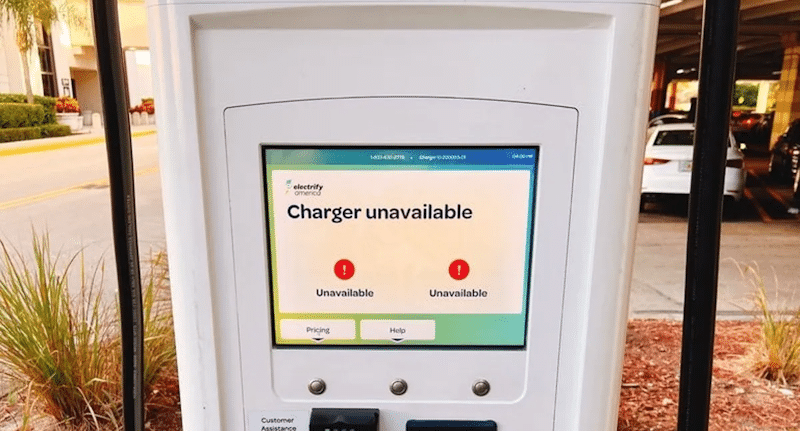
Canadians have repeatedly been told that electric vehicles (EVs) are the future. The Trudeau government has even mandated that all new vehicles sold in Canada must be electric by 2035 (and 60 per cent by 2030, which is just around the corner). There’s only one problem: to loosely quote Jerry Maguire, “Show me the infrastructure.”

h/t Mauser & DS

Share

GUNTER: Trudeau ignoring potential value of gas exports

Markus Krebber, the head of Germany energy giant RWE, warned that the effects of Germany’s current energy crisis could permanently damage the ability of German industry to grow at full scale.

Think about that. German Chancellor Olaf Scholz came to Canada six months after Russia cut off half of Germany’s gas supply looking for LNG (liquified natural gas) supplies from us. We could have helped an ally save their economy, yet our “green” fanatic prime minister refused.

Share

Majority of London councils did not consider economic cost of 20mph speed limits

London councils did not consider the economic cost of implementing 20mph speed limits across the capital, The Telegraph can reveal.

Eleven boroughs in the capital have blanket 20mph speed limits across all of their roads, a move made in the hope of reducing the number of deaths and serious injuries among pedestrians and cyclists.

Transport for London (TfL) says that every year 1,000 people are injured or killed by drivers exceeding the speed limit.

Share

Why a Liberal Premier Wants to Pause a Carbon Tax Increase

When Canadians debate the place of the country’s oil industry in a carbon-constrained future, the conversation usually focuses on Alberta and, to a lesser extent, Saskatchewan. Often overlooked is Newfoundland and Labrador, where offshore drilling accounts for 5 percent of all of Canada’s oil production and just under a quarter of its light oil.

Oil also contributes indirectly to the province’s economy. While statistics are fuzzy, a large percentage of the fly-in, fly-out workers in Alberta’s oil sands are Newfoundlanders.

I met this week with Andrew Furey, the premier of Newfoundland and Labrador, in his office at the legislature that has a commanding view of St. John’s. Mr. Furey, who became premier in 2020, has a number of distinctions. He is the only Liberal premier in the country at the moment, he is an orthopedic surgeon who still practices the minimum number of days necessary to maintain his medical license, and he is a founder of a group that provides medical aid to Haiti.

Share