Climate Lunatic tells oil, gas companies to cut emissions by one-third under planned cap

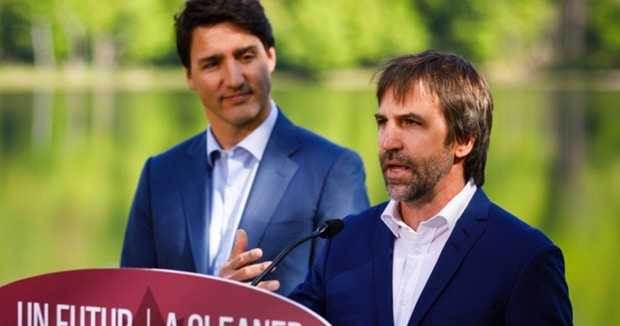
OTTAWA – Oil and gas producers in Canada will be required to cut greenhouse gas emissions by about one-third over the next eight years under new regulations being published today by Environment Minister Steven Guilbeault.

The regulations, still only in draft format and about two years behind schedule, could further strain relations between Ottawa and the Alberta government which recently launched a $7-million advertising campaign to “scrap the cap.”

Share

MEOW!: Cats next on Guilbeault hit list

Claws out!

The Department of Environment, led by Minister Steven Guilbeault, has highlighted household cats as a significant ecological threat to birds in Canadian cities.

Blacklock’s Reporter says a recent report, Green Cities: Benefits For All, raised concerns about tens of thousands of pet cats roaming urban areas and hunting migratory birds, which rely on city greenspaces for food and shelter.

Share

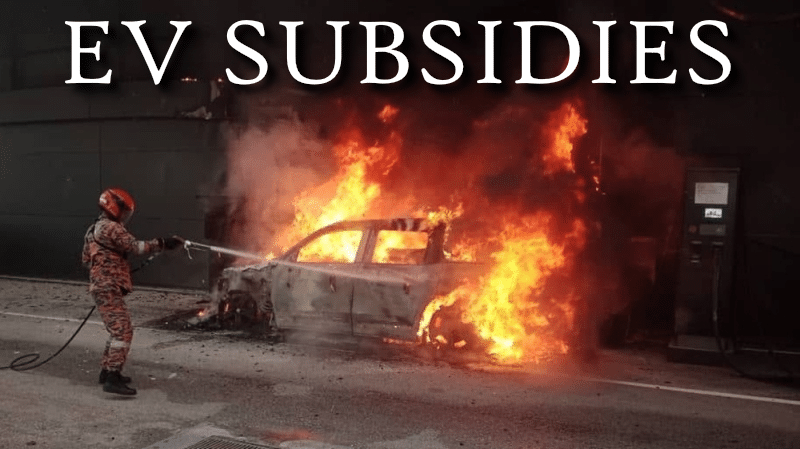
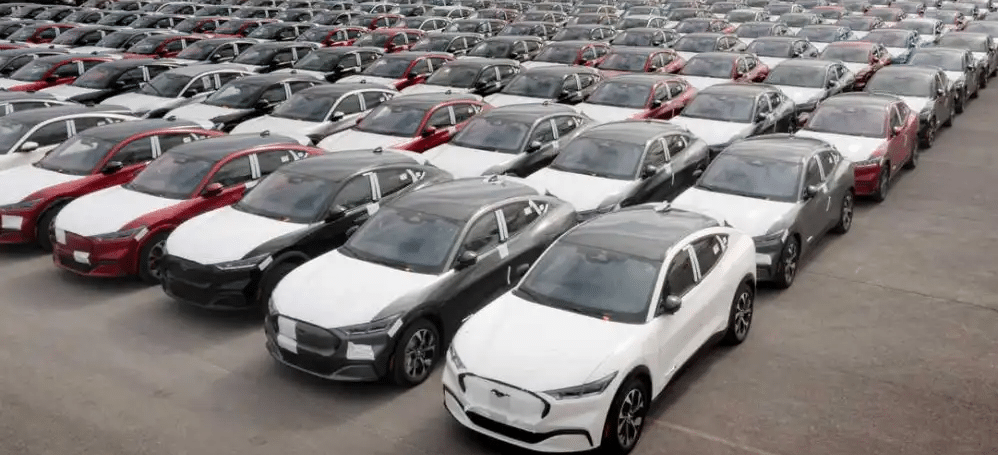
GUNTER: Billions spent on EVs with little to show for it

In the past six years, the federal government alone has spent or committed to spend over $50 billion on electric vehicle (EV) production and sales. Provincial governments (mostly Ontario and Quebec) have committed another $20 billion-plus.

That’s not just for ultra-expensive EV battery plants, but also subsidies to EV buyers, plus money for EV infrastructure, such as charging stations and home chargers.

Share

Britons urged to eat less meat to hit latest net zero target

meat and guns

Britain must cut its meat and dairy consumption by up to 50pc to meet the latest net zero targets, the Government’s climate watchdog has said.

The Climate Change Committee said in an ideal scenario, meat and dairy consumption should halve by 2050 and products be substituted with plant-based options.

The proposals are part of new net zero targets that have been recommended to Ed Miliband, the Energy Secretary.

Share

GREEN: Trudeau’s regulations threaten Ontario’s ability to meet electricity demand

A new report from Ontario’s Independent Electricity System Operator(IESO) suggests that electric vehicles and artificial intelligence facilities will drive a massive increase in demand for electricity in Ontario’s not-too-distant future.

The IESO estimates that overall electricity demand will grow by a projected 75% by 2050, which is higher than the 60% increase previously forecasted. The IESO attributes that growth in demand to a number of factors including industrial electric vehicle (EV) production and data centres (increasingly AI-driven).

Share

Premiers should take Trudeau’s carbon tax back to court

The cracks in the legal rationale for the federal carbon tax are growing. New Brunswick’s outgoing Premier Blaine Higgs was right to keep chipping away at them.

Federal carbon tax “carve-outs violate the Supreme Court’s ruling,” New Brunswick’s Progressive Conservative Party said when Higgs announced he would launch a new legal challenge against the tax.

Share

Bjorn Lomborg: Twenty years of scare stories in the name of climate alarmism

Looking back on more than 20 years of climate agitation, two themes emerge: campaigners’ stubborn unwillingness to acknowledge any inconvenient science and the continual cycling of scare stories, first elevated and then dropped by the wayside. The one constant: a fixation on frightening the public that has led to bad climate policies.

Share

Elite Democrats tried to force electric cars on American drivers. Now the rebellion is growing

A strong case can be made that the worst thing that ever happened to the electric vehicle industry was Joe Biden. His strongarm tactics to force Americans to buy battery-operated cars have only stiffened consumer resolve not to purchase them. EV sales had been robust before Biden entered the White House, but the boomlet stalled as conservative voters rebelled and even ridiculed EVs as “Biden cars”.

While EVs have become popular in blue states like New York and California – where more than one-third of the sales have occurred – Red Staters have turned a thumbs down to these cars of the future.

Share

Battery electric vehicles make up just 1% of Canadian fleet amid feasibility concerns over 2035 gas ban

New data from Statistics Canada reveals that battery electric vehicles (BEVs) account for only 1.3% of the 25.7 million road vehicles in the country, casting doubt on the federal government’s ambitious mandate to eliminate new gasoline and diesel vehicle sales by 2035.

Blacklock’s Reporter says the Vehicle Registrations 2023 report, released Monday, shows that gasoline-powered light-duty vehicles still dominate the roads, representing 93% of the national fleet.

Share

Complete halt’: Auto parts workers struggle as the EV transition loses momentum

Electric vehicles were supposed to revitalize the auto industry but for these workers — unemployed as their factories close and new jobs fail to materialize — it hasn’t panned out that way

Some of Jody Schneider’s doubts about the electric vehicle transition started when she lost her job because of the EV transition. Until last year, she and 150 others built front and rear suspensions for muscle cars produced at an auto assembly plant in Brampton, Ont.

But they all lost their jobs when the plant closed near the end of 2023 for an 18-month retooling so it can produce battery electric, plug-in hybrids or internal combustion engine vehicles.

Share

Electric Vehicles: Fiat’s Agony

China’s EV Invasion

At 21, Gianluca Rindone got his first job making bodies for Fiat’s Maserati cars alongside his father, a Sicilian who had been lured to Turin’s auto boom in the 1970s. He thought it would be a lifelong career but after three decades Rindone has been furloughed, falling victim to the carmaker’s decision to suspend production at its last Turin factory . . .

Share

Report: Hundreds of Cars Seized by Green-Posturing London Mayor

Newly released figures reveal that almost 1,500 cars were snatched last year on the orders of the Mayor of London’s office, as part of its Ultra-low Emissions Zone (ULEZ), the largest in the world, incorporating all London boroughs.

Under Sadiq Khan, a total of 1,429 cars were removed from their owners in the 12-month period ending in July 2024. Around half (761) of the vehicles were subsequently auctioned, raising £710,000.

Share

McTEAGUE: Ottawa’s intentional destruction of western wealth

At this point, everyone in Canada has heard about the Carbon Tax and had a chance to experience its negative effects. But less has been said about another harmful policy dreamed up by the Trudeau government — the Emissions Cap on the oil and gas sector. Just like the Carbon Tax, the Emissions Cap is part of Trudeau’s larger program to try and achieve “Net Zero” greenhouse gas (GHG) emissions by 2050, which will have no positive impact on the environment, but which will be ruinous to Canada’s natural resource sector and to the national economy.

Share

The Folly of Electrifying America’s Military Forces

Have you seen the viral video of Swedish climate activist Greta Thunberg calling for “vegan grenades,” “battery-powered fighter jets,” “biodegradable missiles”?

It’s a deep-fake parody, a satire. But, sad to say, it’s not that far from reality in the minds of some U.S. military policymakers.


View this post on Instagram


A post shared by West Coast Proud (@westcoastisproud)

Share

Busted solar panels are an early example of a looming problem

In a sprawling industrial building in Brooks, Alta., about two hours east of Calgary, is a former pheasant hatchery that’s now stacked waist-high with thousands of dusty, damaged solar panels.

Dan Carrocci, who’s worked in renewable energy construction for more than a decade, has long been troubled by the lack of end-of-life options for this infrastructure and is stockpiling the old panels in hopes of developing a commercially viable means of recycling them.

I’m surprised CBC ran this.

Share