Canada’s electric vehicle strategy has failed, and there are lessons to learn

We must face an uncomfortable truth: Canada’s automotive and EV manufacturing strategy, touted as a generational opportunity to drive economic growth, jobs and environmental leadership, has failed quickly and dramatically.

The federal and Quebec governments made a bad $4.6-billion dollar bet on Northvolt, a Swedish EV battery manufacturer, which has entered bankruptcy less than two years since a $7-billion investment announcement. The $270-million invested by Quebec in Northvolt’s parent company in Sweden is now “lost,” confirmed the provincial government in March.

Share

St. Thomas VW plant facing EV sector ‘headwinds,’ delays possible: Analysts

The bankruptcy of a Volkswagen partner in electric vehicle battery production will not threaten the automaker’s St. Thomas investment, industry experts say.

The development does, however, demonstrate increasing volatility in the EV sector during this high-tariff automotive environment, and the $7-billion PowerCo EV battery plant in Southwestern Ontario may face future delays, they said.

h/t Mauser

Share

Honda to postpone plans for EV plant in Canada for at least 2 years

Japan’s Honda Motor Co. forecast a 59 per cent profit decrease in the current financial year and said it would put on hold a plan to build an EV supply chain in Canada, amid the uncertainty stemming from U.S. President Donald Trump’s tariffs.

Honda’s forecast is the latest signal of the difficulty car makers are having navigating Trump’s tariffs on foreign-made automobiles at the same time the industry is being hit by the rise of Chinese EV producers.

Share

Net zero drive casts shadow over barbaric Congo conflict

Staying late in the shop that night cost Jean-Claude Amani his leg – but it may have saved his life. Then again, had he closed up a little sooner, maybe none of it would have happened at all.

It was about an hour after dusk, the end of the first working week of last month. The rain that had fallen earlier was clearing, although lightning still occasionally illuminated the outline of Mount Nyiragongo, the smouldering volcano that has long imperilled the millions living near its foothills in the east of the Democratic Republic of the Congo.

Share

KLEIN: Major corporations walk away from net-zero, so should government

Let’s get something straight off the top: I’m not suggesting we abandon our climate goals — we need to adjust them. Adjust. That’s the key word, because right now, across all levels of government in Canada, we are charging ahead with unrealistic climate policies that don’t line up with economic reality or practical science. And if we don’t course-correct soon, we’ll keep driving investment and opportunity out of this country.

Share

‘Cheap’ solar and wind is a lie, green countries pay more!

Ask families in Germany and the UK what happens when more and more supposedly “cheap” solar and wind power is added to the national power mix, and they can tell you by looking at their utility bills: It gets far more expensive.

The idea that power should get cheaper as we get more green energy is only true if we exclusively used electricity when the sun is shining and the wind is blowing.

Share

Why the Spain blackout is being framed as preview of Canada’s future

At the precise moment that Canada was handing electoral victory to one of the world’s most vocal boosters of green energy, 60 million Europeans were plunged into a catastrophic blackout caused in part by green technology.

And in Alberta, at least, last week’s blackout in Spain and Portugal is being cited as a preview of coming attractions if the green visions of Prime Minister Mark Carney come to pass. “Albertans would be left to freeze in the dark,” said Alberta Premier Danielle Smith.

On April 28, the conjoined power grids of Spain and Portugal plunged into complete shutdown, leaving both nations without electrical power for 10 hours. Grid operators were ultimately forced to reboot the system from a cold start; the “nightmare scenario” according to an analysis out of University College Dublin .

Share

New Liberal government should scrap EV tariffs on China to help trade, climate goals, say critics


As Prime Minister Mark Carney is set to meet with U.S. President Donald Trump on Tuesday, the federal government has its work cut out for it following a tumultuous few months in domestic politics — not just on the tariff front with the U.S., but also with the world’s second-largest economy.

In the fall, Canada followed in the footsteps of then-U.S. president Joe Biden in implementing an additional 100 per cent surtax on Chinese-made electric vehicles — a move critics say makes less sense now considering the fractured relationship with our southern neighbours, our climate goals and China’s counter-tariffs on Canadian canola farmers.


China is Happy, Carney is Happy, Carney’s Cronies are Happy, Canada’s China Class is Happy, Net Zero Loons are Happy and Danielle Smith is Canola Happy!

Orange Man Bad.

Share

Jamie Sarkonak: Alberta is right to challenge Ottawa’s clean-electricity overstep

If more provinces stood up for themselves when the feds started encroaching, we’d be a lot better off as a country. That in mind, it was good to see Alberta announce on Thursday that it would be challenging the federal Clean Electricity Regulations, which became law in December.

The new rules aim to net-zeroify the entire Canadian grid by 2050, banning carbon emissions by new units with at least 25 MW of electrical generation capacity over a preset “technology-neutral annual emissions limit” by 2035; the ban will also cover existing units by 2050 at the latest. It’s expected to cost the country $40 billion from now until 2050 — and it’s justified because magic math in Ottawa pegs the benefits to society in that time will be worth $55 billion.

Share

EV Bus Maker Lion Electric likely to be liquidated, court-appointed monitor says

The court-appointed monitor for Lion Electric says the vehicle maker is very likely to be liquidated after the Quebec government refused to invest more public funds in the company.

Jean-Francois Nadon, a representative of Deloitte, said in a court hearing this morning that government aid would have been a condition of any sale of the struggling company.

Nadon says Deloitte sought offers over the weekend from companies interested in liquidating Lion Electric, and is hoping to finalize a transaction by next Monday.

Share

Federal report raises doubts over electric bus viability in Canadian winters

Electric transit buses may not be ready for prime time in Canada’s harsh climate, according to new findings from the National Research Council, which reveal that many vehicles need diesel heaters just to maintain performance during winter.

Blacklock’s Reporter says the study, released four years after then-Infrastructure Minister Catherine McKenna announced a $2.8 billion plan to spend on zero-emission transit, questions whether electric buses can reliably replace diesel ones in daily Canadian operations.

Share

Blackouts are coming for Britain

Social trust will vanish in the dark

It was around 7pm when we heard that the lights were back on in Porto, 200 miles to the north of the small Portuguese village where I was visiting friends. The blackout would only last a few hours longer. At that moment we were at the checkout of an unlit supermarket in a nearby town, having scoured the shelves by the light of our phones. Our shopping baskets revealed that we were not seasoned preppers. They contained 40 litres of bottled water, along with tins of beans, peas and tuna. We also stocked up on red wine and chocolate; morale had to be maintained, after all.

Earlier that day, a power cut originating in Spain had swept across the Iberian Peninsula and part of France. Traffic lights went down and trains stopped in their tracks, above and below ground. Given that the blackout lasted less than 12 hours, our response in hindsight appears slightly hysterical. But until that update at the supermarket, which we couldn’t verify in any case, we had no way of knowing it would be over so quickly. We had no mobile reception or Internet access of any kind, and so we couldn’t communicate with anyone outside the village.

Share

Star hopes Carney will destroy economy with Net Zero Lunacy

Mark Carney championed this cause before he ran for office. What will he do now that he’s in power?

The brutal truth about our planet is hard to hear.

“The challenges currently posed by climate change pale in significance compared to what might come. … Climate change will threaten financial resilience and longer term prosperity. While there’s still time to act, the window is finite and it’s closing.”

This quote was not uttered by David Suzuki or put out by Greenpeace or even included in a report by the International Panel on Climate Change.
They’re words spoken by Prime Minister Mark Carney — 10 years ago when he was governor of the Bank of England.

Share

GREEN: Carney should pull the plug on Canada’s EV revolution

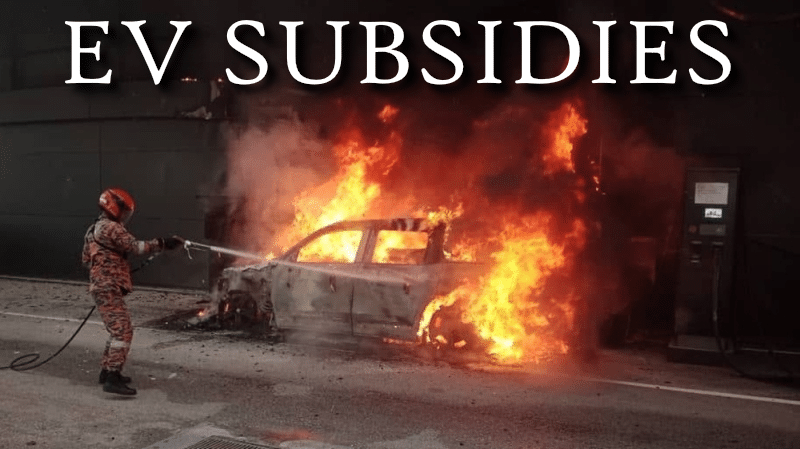
During his election victory speech, Prime Minister Mark Carney repeated one of his favourite campaign slogans and vowed to make Canada a “clean energy superpower.” So, Canadians can expect Ottawa to “invest” more taxpayer money in “clean energy” projects, including electric vehicles (EVs) — the revolutionary transportation technology that’s been ready to replace internal combustion since 1901, yet still requires subsidies.

Share