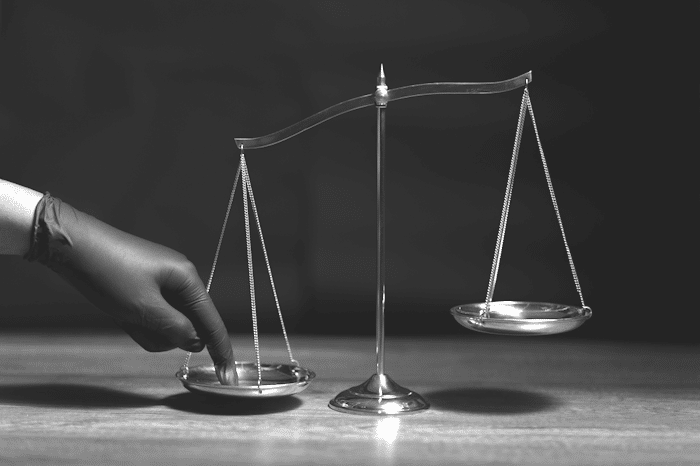

KLEIN: Is the criminal justice system now only a game of words?

A crime is a crime. That should not be controversial. Yet in Canada today, whether a law is enforced often depends less on the Criminal Code and more on political fashion, prosecutorial discretion, or judicial interpretation. That is not justice. That is chaos.

This is not about ideology. It is about the basic purpose of law. If Parliament passes laws that are routinely ignored, softened, or selectively enforced, then the law itself becomes meaningless. And when laws lose meaning, public order erodes. Canadians are seeing the consequences of that erosion every day.

Share

LILLEY: Liberal policies have destroyed Canada’s justice system

In Canada, we now have bail for people charged with sexual assault, kidnapping with a firearm and possession of an illegal firearm. We also have reduced sentences for repeat violent sexual offenders based on their race.

It’s an outrageous situation and both instances are due to bad Liberal justice policies.

Share

Jamie Sarkonak: It is a joke to say Liberal crime bill protects victims

In his bill designed to “keep kids safe from predators,” Justice Minister Sean Fraser has proposed that Canada get rid of the six-month minimum for rape of a child under 16 — and every other minimum on the books other than for murder and treason.

It’s one of several problematic provisions buried in the middle of Bill C-16, which Fraser jubilantly tabled Tuesday. And to be fair to him, the bill isn’t completely bad: it would criminalize deepfake and bestiality porn, would make child sextortion a crime that comes with a minimum of one year in jail, and would supposedly make charges a little harder to kill when a trial runs over deadline. Those changes are very welcome.

Share

John Ivison: Judges suing Ottawa for fatter salaries are shameless

Canada’s Superior Court judges are taking the federal government to the Federal Court , where one of the esteemed justices will rule on whether Ottawa owes all senior judges a $28,000 pay rise.

So, no conflict of interest there then.

More accurately, he or she will adjudicate on whether Ottawa behaved in a “constitutionally defective” manner when it ignored the recommendation of an independent commission to award a pay increase, on top of index-linked raises.

The judges’ association claims the case is not about the money — a clear indicator that it is absolutely about the money — but, rather, it is about protecting Canadian democracy.

Share

The Burning of Bethany Magee

What one more horrific attack reveals about violence, failure, and our fraying social compact.

I’m haunted by what happened to Bethany MaGee. Haunted by how, in the midst of something as ordinary as a subway journey, she found herself doused with gasoline and set ablaze. Haunted that she’s now in a burn unit fighting for her life. Haunted at the thought that, even if she survives, she’ll likely be scarred for life, not simply from the burns themselves, but from the emotional trauma.

Share

The U.K. Is Poised to Do Away With This Cornerstone of Western Jurisprudence

The right to be judged by a jury of one’s peers has long been a cornerstone of Western jurisprudence. It bars the government — the same government accusing you of a crime — from having total control by putting average citizens between the defendant and the state. It protects against authoritarian overreach and brings common sense and a reflection of community standards to the judicial process.

Share

Prosecutors outed a confidential informant. Now, a Toronto judge has tossed ‘very serious’ charges — and two people are in ‘grave danger’

An individual has had their “very serious” criminal charges thrown out by a Toronto judge and has been told to immediately go into witness protection after the Crown inadvertently revealed their relative is a confidential informant.

It’s an error by the prosecution that has put both individuals in “grave danger” of being killed, Superior Court Justice Kenneth Campbell wrote in his decision released earlier this month.


This will inspire confidence in the judicial system.

Share

Incarceration Works

Sergio Hyland seemed like the perfect advocate. Calling himself a “fierce, relentless, implacable abolitionist,” determined to end incarceration in the United States, Hyland had spent more than two decades behind bars before joining Pennsylvania’s Working Families Party as an anti-prison organizer. His criminal record only burnished his credentials: he had pled guilty to the 2001 killing of a 15-year-old and was later charged in connection with another homicide in 2002. Once he got out of prison in 2022, Hyland launched a website offering “speaking engagements” and “harm/de-escalation tactics” training, and he frequently appeared alongside Philadelphia’s progressive prosecutor, Larry Krasner. The two even shared a news release in April 2025 announcing the Working Families Party’s endorsement of Krasner, which the prosecutor was “honored to accept.” A week later, Hyland was arrested for murdering a 30-year-old mother of two. Police discovered a stockpile of illegal guns in his home. Now Krasner’s office will have to prosecute him.

Share

Ford government says it will require defendants to pay cash security deposits before they are released

The Ontario government says it will require defendants to pay cash security deposits before they are released from custody as part of a bill aimed at “tightening” bail requirements.

In a news release issued Monday morning, Attorney General Doug Downey said the current bail system is “broken” and that the bill will introduce repercussions for offenders.

“That’s why our government is advancing a comprehensive tough on crime bail strategy that will strengthen the rules, reinforce compliance, and keep violent and repeat offenders off the street,” Downey said at a news conference announcing the proposed change.

Share

“Ur homie dropped like a fly that day.”

Judge acquits Toronto teen who stabbed unarmed 18-year-old, mocked his death

During a fight between two groups in a North York parking lot in the early morning hours of July 8, 2022, a teenage boy swung at an unarmed man with a bottle, fatally stabbed him, and then later sent messages to the victim’s friend appearing to mock his death.

Three years later, a judge has acquitted him of manslaughter.

Share

Indigenous man caught with ‘killing machine’ of a rifle gets time served due to intergenerational trauma

More than 500 days in harsh pre-trial custody was enough punishment for a Mohawk man caught driving around Peterborough with a crack pipe in his lap and a “killing machine” of a rifle in the back seat, along with a flame thrower in the trunk, according to a recent sentence of time served from Ontario’s Court of Justice.

Jesse Garlow, a convicted drug trafficker who was under a firearms prohibition, had been in custody since June 7, 2024 when he was sentenced. Police initially pulled him over because the car he was driving was weaving.

Share

The Supreme Court used a far-fetched hypothetical to axe minimum sentences for child pornography

The members of Canada’s Supreme Court have such wonderful imaginations. They are able to look at the facts of a case – or a couple, as recently brought before them regarding prison sentences for accessing and possessing child pornography – and invent an entirely unrelated and far-fetched scenario in order to strike down a mandatory minimum sentence as unconstitutional. It’s an impressive exercise: one that risks undermining the legitimacy of the Court in the eyes of the public (or further undermining that legitimacy, depending on one’s perspective) with just one creative-writing assignment. Because if the Supreme Court can simply fabricate any scenario it wants, no matter how tenuously related to the actual case before it, and use that invented case to strike down law, then no law could possibly survive a Supreme Court challenge.

Share

Poilievre says he’d invoke notwithstanding clause to overturn ruling by pedophile empathetic SCC Judges

Conservative Leader Pierre Poilievre says if elected he’d use the notwithstanding clause to overturn Friday’s ruling from the Supreme Court striking down mandatory minimums for accessing or possessing child pornography.

Friday’s decision deeming those one-year prison sentences unconstitutional not only split the bench 5-4, but has received swift backlash from provincial and federal leaders.

Poilievre added to the mounting condemnation in an interview with CBC News.

Share