Power-of-sale listings more than double as mortgage lenders repossess homes from over-leveraged buyers

The Toronto area has seen a 112 per cent increase in power of sales over the last year as more homeowners struggle to pay their mortgage, leaving some lenders with no option but to take over the home and sell it.

In September across the GTA, there were 204 power-of-sale listings, more than double the 96 power of sales reported in September 2023, said Anza Malik, broker of record and co-founder of Valery Real estate Inc. Brokerage.

Share

Buying a home out of reach for many Canadians for the foreseeable future

Buying a house may remain out of reach for many Canadians for the foreseeable future, with mortgage costs unlikely to fall enough to offset lofty home prices and weak spending power, economists and real estate agents say.

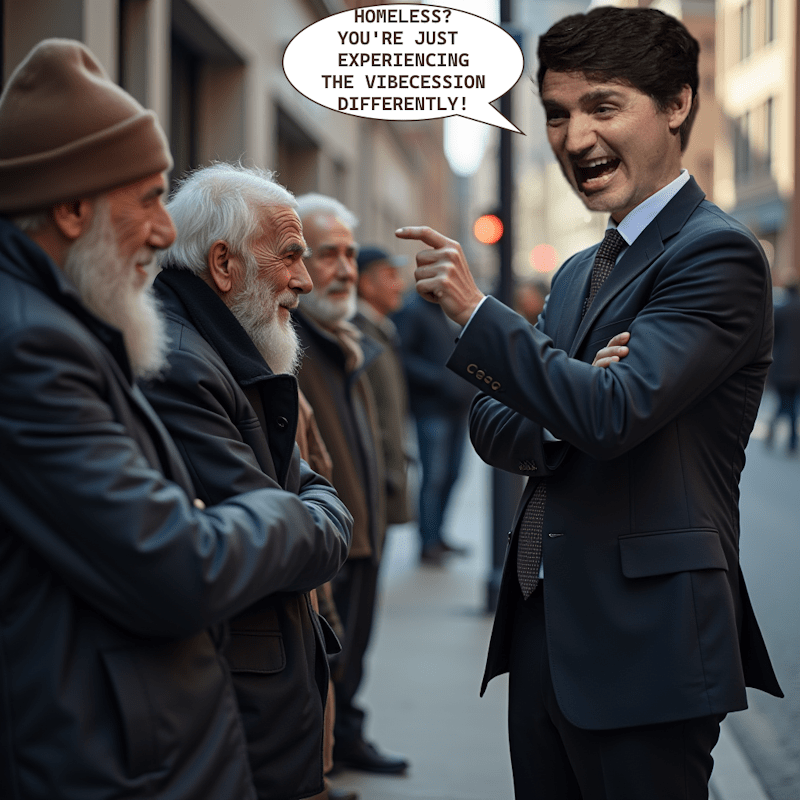
Even with expectations that the Bank of Canada will keep cutting interest rates in the coming months, the issue of home affordability — which has strangled Prime Minister Justin Trudeau’s poll numbers — is unlikely to fade before the next election.

The mandate for the Liberal minority government ends at the end of October 2025, but an election could come well before then, with the Conservative opposition spoiling to end Trudeau’s nine-year run at the top.


No Prime Minister in Canada’s history even approaches the harm done by Trudeau.

Housing affordability, the destruction of Canadian society from the LPC’S evil mass immigration scam, the criminalization of citizens, the unmitigated anti-white racism of its woke policies, Soviet style 5 Year Plan economy ruining green scams and of course the lies, the constant stream of lies about any matter large or small.

Share

Donald Wright: When it comes to where people want to live, Canada is a very small country

The first article of this series laid out the basic arithmetic of Canada’s current housing crisis—ill-advised levels of immigration far above Canada’s capacity to build sufficient housing to accommodate the consequent rapid increase in population—and pointed out that there remains an undiminished belief that the solution to this is to be found on the supply side, and that a set of policy changes will allow Canada to build significantly more houses in the next eight years than it has in the previous eight years.

Share

THOMAS: Fraser’s Follies will not ‘actually solve’ Canada’s housing crisis

Sean Fraser – almost certainly lying.

Back in May, the Liberal/NDP’s Housing Minster Sean Fraser was traipsing across the country saying he would “actually solve” the housing crisis in Canada by building 3.9 million homes by 2031.

That works out to about 488,000 new homes that Fraser expects to have built every year from 2024 to 2031 to “actually solve” the problem.

Share

Josh Dehaas: Japan convinced me Canadians don’t need to accept urban disorder

On Sunday morning, I had some time to kill in Calgary before a flight home to Toronto, so I grabbed a coffee and started looking for a park bench to sit and read my book. I soon realized that wasn’t going to happen. Every bench was occupied by one or more drug addicts. Over the course of an hour, I saw a man injecting drugs in between his toes, a guy smoking meth while glaring at me aggressively, and hordes of people doubled over from fentanyl. Of the couple hundred people I passed, about 75 were obviously on drugs. I decided to try to find brunch, but few businesses were open. Not surprising. Who’d want to do brunch in this post-apocalyptic environment?

Share

What if our housing crisis can’t be fixed?

It’s a puzzle. Whatever its answer, its consequences are likely to foment an upheaval in Canada that the coming defeat of Justin Trudeau’s Liberals and the election of a Conservative government should not be expected to forestall.

The puzzle, by the reckoning of urban planner, landscape architect, author and University of British Columbia professor Patrick Condon, can be put this way.

Share

Brampton residents rally against exploitative landlords

Brampton residents rallied on Sunday in front of city hall, calling for additional help from the federal and provincial government to combat exploitative landlords in the city.

Locals say illegal rooming houses are putting renters at risk and making neighbourhoods unsafe.

“I think the worst case scenario is loss of life,” said resident Kasia Devlin, who attended the rally.

Interesting make-up of the protestors.

Share

Housing’s link to migration doesn’t get a mention at B.C. mayors’ forum

Douglas Todd: Not a word was directed at Ottawa to lower its migration targets, even while mayors are not normally shy about asking senior governments to come to their aid

Hundreds of mayors, councillors and planners from across B.C. showed up this week at the annual conference of the Union of B.C. Municipalities for a keynote session on the housing crisis.

After being informed housing prices in Kamloops are now higher than in Calgary, they heard experts, advocates and development-industry officials talk about the “sacrifices” and “uncomfortable” truths B.C. residents, specifically taxpayers, must face to address unaffordability.

Share

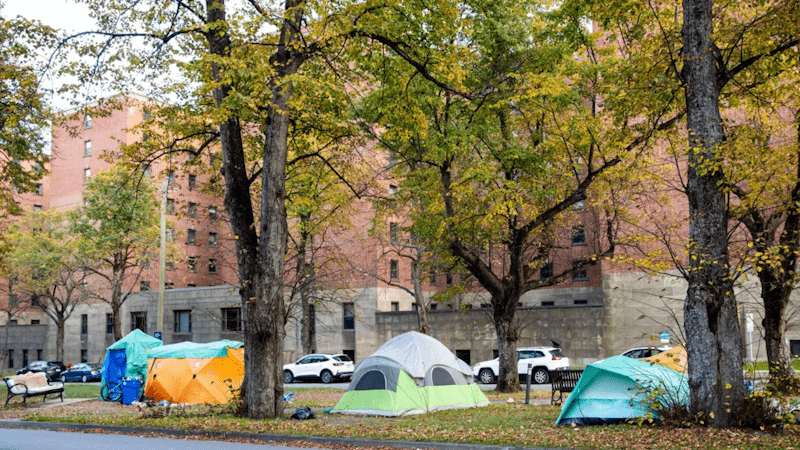
Homelessness and open drug use in downtown Ottawa bring a national crisis to Parliament’s doorstep

From a downtown Ottawa sidewalk, Kevin Aubin has been watching what he describes as alarming changes in the city’s downtown, several blocks south of Parliament Hill.

The veteran panhandler says that he is seeing an influx of troubling newcomers on Bank Street in Ottawa’s core, a main street similar to downtown areas of Granville Street in Vancouver, Yonge Street in Toronto or Water Street in St. John’s.

Share

Freeland allowing more 30-year mortgages, higher values for insured mortgages

OTTAWA — Finance Minister Chrystia Freeland announced Monday Canadians will be able to borrow for longer, while also increasing the maximum value for insured mortgages, potentially giving buyers more money in the housing market.

I don’t see this helping many people but I always get a laugh out of Liberals pretending they solved a huge problem while conveniently failing to acknowledge their disastrous immigration policy is responsible.

Share

New tiny village sparks uproar after neighbors make staggering claim

The residents of a tiny home village in Portland, Oregon are being blamed for a drastic increase in crimes in the neighborhood.

People living in University Park, a North Portland neighborhood, said that ever since the Peninsula Crossing Safe Rest Village appeared, crime rates have skyrocketed.

Portland police data supports this claim, according to KATU.

Share

Ontario food banks ‘cannot keep up’ as usage reaches 8-year high

Ontario food banks “cannot keep up” as usage has reached an eight-year high, a new report reveals.

Feed Ontario, a food bank network in the province, released new data Tuesday showing that 1,001,150 Ontarians visited a food bank at least once between April 1, 2023 and March 31, 2024, an increase of 25 per cent over the same time period in 2022-23.

Share

Metro Vancouver is the fourth-most dense region in North America

In light of the prevailing mythology that Canada is “empty,” it’s counter-intuitive to realize Canada’s cities are unusually crowded. And still unaffordable.

Wyndham Lewis once described Canada as a “monstrous, empty habitat”.

And the British writer is by no means the only one to say this country is vast, imposing and under-populated.

Given that Canada is geographically the second-largest country in the world, it’s understandable that many feel it is largely empty.

Share

Workers can’t find affordable housing. Their pension funds are part of the problem

Across Canada, a nurse earns between $28 and $50 an hour, which works out to a moderate to median annual household income of $58,240 to $104,000. At the Canadian standard definition of housing affordability – that housing takes up no more than 30 per cent of pre-tax household income – a single-parent nurse would be looking for a two- or three-bedroom home costing between $1,456 and $2,600 per month. But the average asking rent for a two-bedroom apartment rental in Vancouver is $3,666.

Share

Tasha Kheiriddin: Trudeau doesn’t want you to own a home — he wants to be your landlord

Everyone agrees that Canada faces a housing shortage. But it’s not a shortage of homes: it’s a shortage of homes people can afford. In Toronto, for example, there is currently a glut of condos on the market. Prices have fallen as investors offload properties: high interest rates mean their mortgage payments exceed the rents they can get.

Homes have become unaffordable because of the disconnect between wages and prices. Why? Because there’s a disconnect between wages and prices. The average price-to-earnings ratio in Canada more than doubled from 3.2 in 1980 to 6.7 in 2020. Vancouver currently has the highest price to earnings ratio , at 12.3, followed by Toronto at 9.3. To put that in perspective, to buy an average house in those cities in July 2024, you need a household income of $208,000 and $226,000 , respectively. Not exactly middle-class.

Share