
In Toronto, cheering when homeowners sell at a loss has now become a spectator sport. Is that a bad thing?

The Etobicoke red brick detached home was on the market for 40 days this summer.

After multiple price adjustments, the three-bedroom, two-bath finally went for $1.545 million, over half-a-million less than when it was last sold, near the height of the Toronto real-estate market in spring 2002.

The reaction? “Excellent.”

Share

Mark Carney joins in a shameful Canadian tradition

When Mayor Olivia Chow recently revealed that the federal government is preparing to shortchange Toronto on funding to provide shelter for refugees — to the tune of more than $100 million this year — many of us likely felt a sense of déjà vu.

Didn’t we go through this with the last guy? As the number of refugees in the shelter system ballooned under former prime minister Justin Trudeau (from 530 per night in 2021 to more than 5,000 per night in 2025), the feds hemmed and hawed and tried to pass the buck while refugees slept on sidewalks and Toronto’s established homeless population was squeezed into tent cities. Chow’s budget chief, Shelley Carroll, even threatened a civic Trudeau Tax Levy. Finally, in 2024, Trudeau came around.

Share

Carney government has two duties to younger Canadians, and one is to offer real hope

TORONTO—The Carney government has big plans for a new and, it says, a more prosperous Canadian economy—but much of what it hopes to accomplish will take years before we see a material difference. In the meantime, support for big change may whither unless immediate threats are not addressed.

Two big challenges require careful monitoring. One is the rise of unemployment and the fall in opportunities for younger Canadians. The other is the huge volume of household mortgages that must be renewed this year or next, with higher interest rates and hence higher repayment levels, and at a time when the economy faces the prospect of higher unemployment and weaker wage gains to offset higher mortgage payments. Young home-owners who were first-time buyers at the height of the real estate bubble when mortgage rates were especially low are also especially vulnerable.


Carney won’t do squat. Mass immigration will leave us all impoverished and that’s what he and his cronies want – easy pickings.

Share

Canada on track to build far fewer homes than needed to meet housing gap

While Canada is on track to build 2.5 million new homes by 2035, it will not be nearly enough to close the housing gap and meet demand, a new report by the Parliamentary Budget Office on Tuesday said.

According to PBO’s projections, those 2.5 million new homes will still be 690,000 homes short of the 3.2 million new homes that Canada would need to meet its housing demand over the next 10 years.


We need more unskilled labour from culturally incompatible 3rd World crap holes to solve the housing crisis!

Share

Canada’s housing crisis stirs revealing flights of fiction and fantasy

Douglas Todd: The country’s housing emergency is so powerful, distorted and puzzling that many are prone to say, “You couldn’t make this up.” But some B.C. writers are doing just that, through intrepid works of fiction.

An untold number of works have been written about Canada’s housing crisis, especially regarding the Vancouver, Victoria and Toronto regions.

A flood of media articles, industry reports, scholarly analyses and books continue to dig into the impact on housing of foreign capital, construction costs, zoning bylaws, the profit motive, government policy and more.

Now we’re seeing a new kind of exploration of the problem — in fiction.

Share

Half of young Canadians spending more than 50% of earnings on rent

Roughly half of young renters and a third of tenants at all ages are spending the majority of their after-tax income on rent, according to a new report.

Experts say the survey, which was published by Rentals.ca this week, shows that the adage of limiting your rental expenses to one-third of your income is simply no longer possible for many Canadians – a situation that could threaten the ability of renters to adequately save for retirement.


I find it sickening that the Globe which advocates for continued mass immigration pretends to give a damn about anyone squeezed out of housing by corporate Canada’s imported scabs.

Share

Canada’s Real Estate Economy, Fueled by Mass Immigration and Offshore Cash, Is Unsustainable, Mayor Brad West Warns

British Columbia, and much of the country, is confronting the consequences of an economic model that was never built to last. For years, we have been told a comforting story about growth — that as long as cranes dot the skyline and property values climb, prosperity will follow. But beneath that veneer lies a stark truth: our economy is not driven by value-added manufacturing, groundbreaking technology, innovation, or by unlocking our vast natural resource potential. It is built almost entirely on real estate and relentless population growth driven by mass immigration. And it relies on the building and selling of homes to the next wave of newcomers.

This is not diversification. This is dependency. And like all dependencies, it eventually demands a price.

Share

Pierre Poilievre among the dozens of MPs with rental property amid housing crunch … Huh?

Conservative leadership candidate Pierre Poilievre is among the dozens of MPs who own rental property even as he blasts the unfairness of Canada’s housing market for young Canadians, Global News has learned.

Poilievre, the perceived frontrunner in the party’s leadership race, has made housing unaffordability a central part of his campaign so far, and has frequently criticized what he calls the “gatekeepers” keeping homes out of reach for home-buying hopefuls.


Two condos owned by Poilievre and his wife? That’s nothing compared to others.

No idea why Poilievre was singled out for headline treatment unless God forbid our media are nothing more than paid propagandists for the LPC!

Share

Poll results reflect ‘emerging consensus’ over need to reduce home prices, expert says

A slim majority of Canadians believe that reducing home prices is more important than keeping them stable, but most still feel that housing affordability is unlikely to improve in the next five years, according to a new poll.

The survey, conducted for The Globe and Mail by Nanos Research, found that 52 per cent of Canadians said reducing prices was necessary, while only 35 per cent felt prices should be kept stable. Thirteen per cent of respondents were unsure.

Share

LAU: Toronto taxpayers should demand better of city’s homelessness services

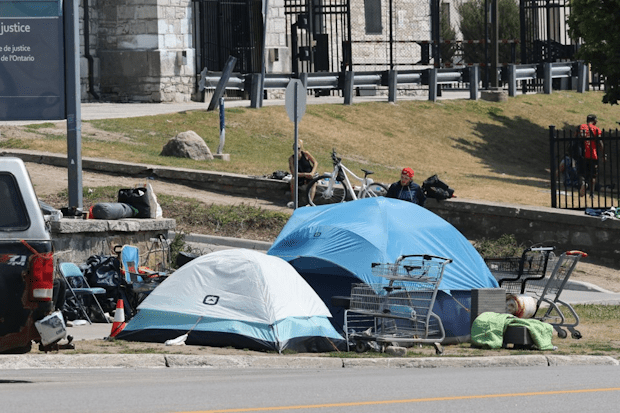
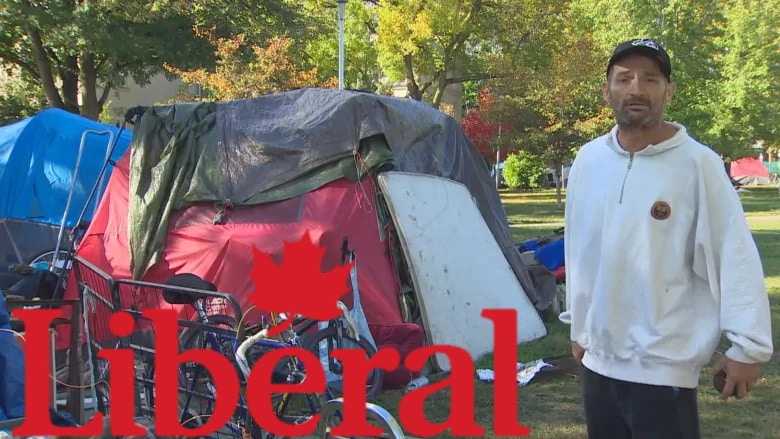
According to a recent City of Toronto report, in October 2024, there were an estimated 15,400 people experiencing homelessness in the city — more than double the approximately 7,300 homeless in April 2021. Of the homeless population, about 80% stay in city-administered sites, 10% in provincially-administered sites, and 10% outdoors.


The Chow regime like all other leftists do not want to fix the homeless crisis.

They see it as a primary source of financing their pet projects and lining the pockets of their commie pals.

Share

Carney’s $26B bet on prefab housing could be a gamechanger — but will everyone play along?

Prime Minister Mark Carney’s vow to double Canadian housing construction to 500,000 units a year would seem to be an ambitious enough goal.

But Carney’s housing plan is also an industrial strategy meant to kick-start a nascent factory-built housing industry and rejuvenate Canada’s ailing forest products sector.

With his $26 billion Build Canada Homes (BCH) agency, which goes into operation this fall, Ottawa hopes to increase production of innovative housing types including prefabricated, modular, panelized and mass timber housing.

Share

A skeptic’s take on the housing crisis: ‘The developer is the good guy’

If housing costs too much, there must not be enough supply. That’s Ottawa’s simple take on the affordable housing crisis in Canada. And their simple solution? Impose policy, including the housing accelerator fund, to get rid of zoning prohibitions and accelerate the building of new homes within existing urban footprints.

But, asks Patrick Condon, professor of urban design at the University of British Columbia: What if the feds are wrong?

Share

‘Where else am I going to go?’: He’s 91 and newly evicted. Why it’s so hard to find him — and many Toronto seniors — a home

The wallet Isidoro Ventullo pulls out to try and pay for brunch at a restaurant in Little Italy is makeshift — a patch of grey duct tape stitched together like a foldable envelope. In it, he has neatly folded in his photo ID, some smaller denominations and a yellow flash card bearing a list of essential phone numbers and names.

At his stage in life, the 91-year-old is determined to hold on to what is familiar — whether it’s a tattered wallet or the neighbourhood he calls home.

It’s partly why more than a month after being evicted from his apartment in Little Italy in the midst of a heat wave, he has yet to find a permanent place to live.

Share

Ford government fails to hit housing target, even after adding LTC beds, student dorms

Tiny Houses for a shrunk people

Despite adding long-term care beds, retirement homes and student dormitories to its housing statistics, the Ford government fell tens of thousands of units short of its goal last year.

New data released by the province this month confirms that even with its modified definitions of new housing, Ontario achieved less than 80 per cent of its self-imposed 125,000-unit target for 2024.


Why is that idiot at Queen’s Park still wanting to import the 3rd world? Oh right his cronies love their slaves.

Share

Housing crisis may get worse, new forecasts show

Carney solves housing crisis.

OTTAWA — Canada’s housing crisis may get worse before it starts to show much relief, as new projections say that the number of housing starts will actually decrease this year and next.

These new estimates, from both public and private sector housing forecasts, contradict political promises from all levels of government to boost supply of homes across the country.


It’s all good Carney and his pals will continue making money off the shortages mass immigration creates.

Share