
Every year, members of Parliament give themselves a pay raise on April 1. Every year, about 80% of Canadians oppose it.
How do these politicians get away with it?

Every year, members of Parliament give themselves a pay raise on April 1. Every year, about 80% of Canadians oppose it.
How do these politicians get away with it?

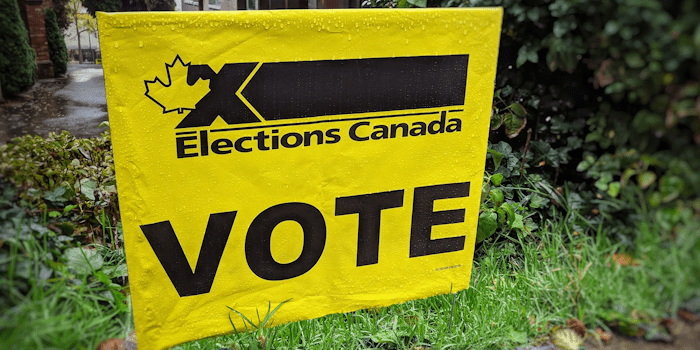
For all the talk of a spring federal election, the case for one is arguably weaker than it appears.
Yes, Canada feels like it’s already in campaign mode.
The ruling Liberals are riding high in the polls. Donald Trump is once again sowing anxiety among Canadians. Floor crossings, including Matt Jeneroux’s move this week, have only added to the fever.
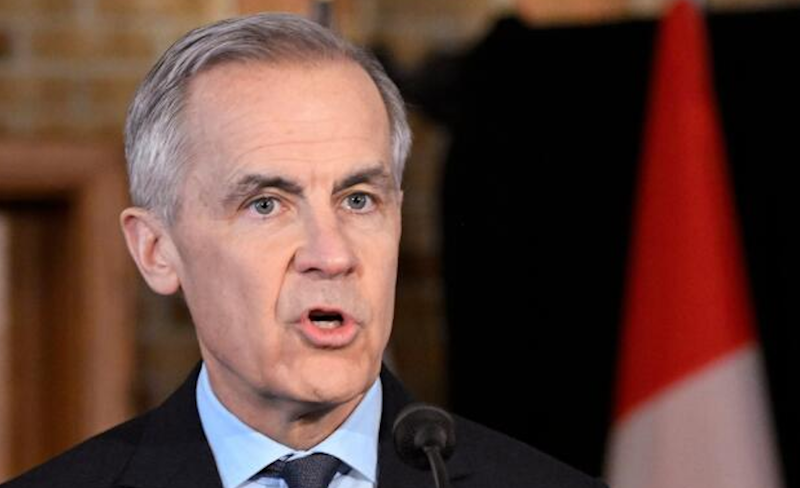
In politics, momentum carries gravitational pull. But gravity is not destiny. And in this case, the risks of misfiring prematurely may be too high for Prime Minister Mark Carney.

When Mark Carney announced Wednesday that Edmonton Conservative MP Matt Jeneroux would cross the floor to join his government, I thought of two recent rumours from the backrooms of Ottawa.
The first rumour spread in November, when Nova Scotia MP Chris d’Entremont let slip that he was thinking about crossing the floor to the Liberals. When Conservative Deputy Leader Andrew Scheer and Deputy Whip Chris Warkentin heard the news, they barged into his office to berate him, only to discover Jeneroux sitting there having a chat with the turncoat red Tory.

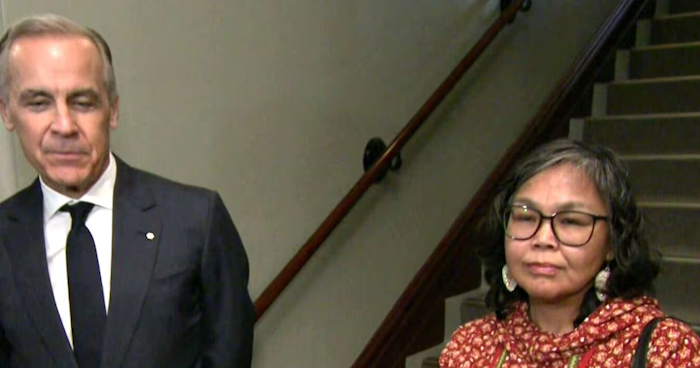
In a move Conservative Leader Pierre Poilievre is calling a betrayal, Conservative MP Matt Jeneroux is joining the Liberal caucus.
“Matt, welcome to the government team,” Prime Minister Mark Carney said Wednesday, sitting down with Jeneroux for a press conference in Edmonton.
The two did not take questions from journalists.

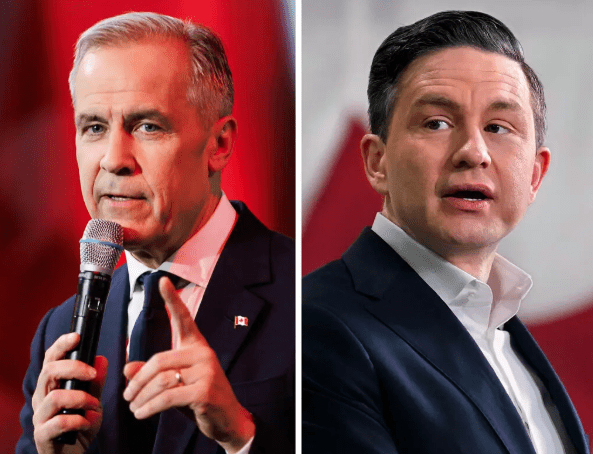
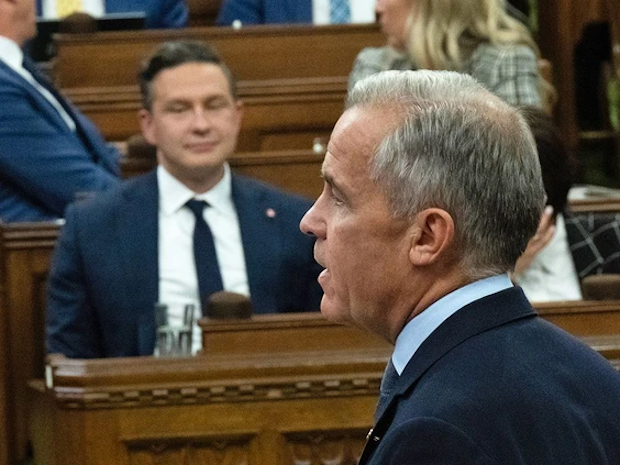
Two weeks ago, Mark Carney and Pierre Poilievre met in the prime minister’s Parliament Hill office in an apparent attempt to find common ground on the government’s legislative agenda.
“My message to him is to work with us,” Poilievre told reporters afterwards.
Perhaps Carney took that message more literally than Poilievre intended.

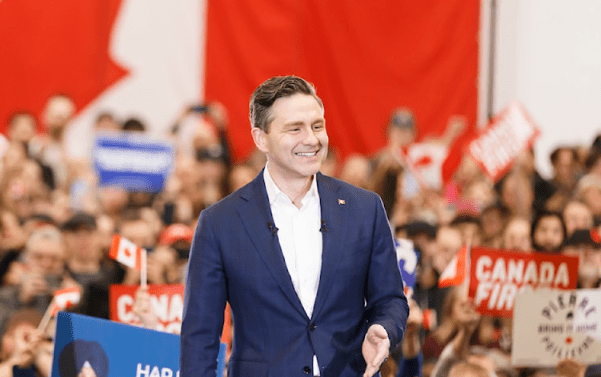
Conservative leader Pierre Poilievre overwhelmingly won his leadership review in January with 87.4 per cent support of the vote. He will be the party leader for the foreseeable future and into the next federal election.
While most Conservatives are hopeful that Poilievre will become prime minister, there are contenders waiting in the wings if he’s unsuccessful. Ontario Premier Doug Ford may be one of them.

Conservative MP Matt Jeneroux is joining the Liberal caucus, according to a social media post by Prime Minister Mark Carney.
“Building a stronger, more resilient, and more independent country will require ambition, collaboration, and occasionally, sacrifice,” Carney wrote. “I am grateful to Matt and his family that he will continue his service as a strong voice for Edmonton Riverbend in Parliament.”

OTTAWA – Conservative Leader Pierre Poilievre says his party will fight for a united Canada as a movement in Alberta pushes for that province to separate.
Answering a question from a reporter today, Poilievre said the Conservatives are “entirely a federalist caucus” and that he has not had a single member of Parliament on his team express they are in favour of Alberta separatism.
The group Stay Free Alberta is seeking a referendum vote for the province to become its own country, and has until May to get nearly 178,000 signatures.

Conservative MP Matt Jeneroux has joined the Liberal caucus, Prime Minister Mark Carney announced on social media Wednesday.

Silence is a decision.
And this is, effectively, where Pierre Poilievre now finds himself on the issue of U.S. President Donald Trump.
Among some Conservative party faithful, there has been a quiet hope, wishful thinking actually, that this issue would cease to be the dominant one. That crime and affordability would re-emerge as ballot-box drivers. That the Trump circus would recede to the periphery.

I wrote the following in my book Under Assault: Interference and Espionage in China’s Secret War Against Canada:
“An economic slump in the U.S. was going to affect Canada’s financial health, and so trade diversification again became a driving consideration. But instead of diversifying trade with like-minded democracies, Canada went begging at the doorstep of the Communist state that had been engaged in foreign interference and espionage against Canada and the U.S. for the past 30 years.”

The fun thing about Ottawa is that it’s a town where people will swear with a straight face that they’re not thinking about a thing they are definitely thinking about, which is also the thing everyone is talking about.
This week, that thing is snap-election speculation.
It all depends on whether Xi decides the time is right.

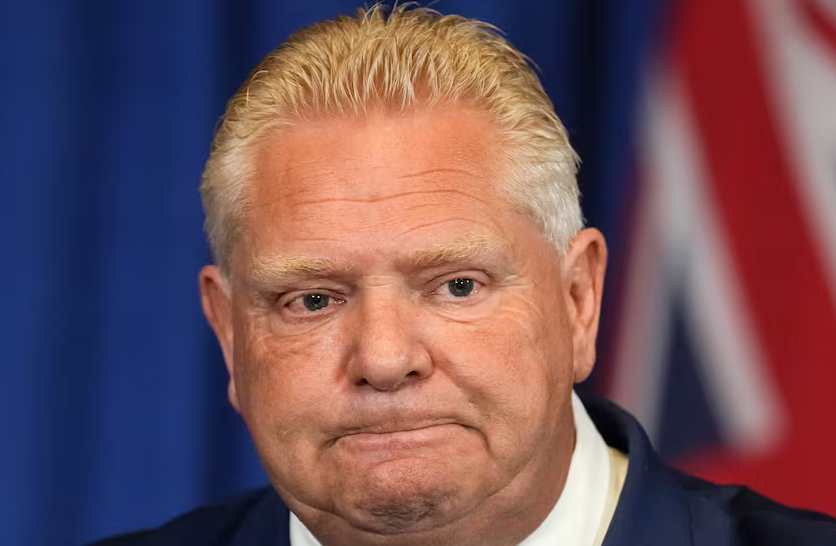
It’s been reported that Premier Doug Ford has told Mark Carney that the prime minister could seize the moment to turn his minority government into a clear majority. The premier should know.
When Ford stood next to Windsor’s Ambassador Bridge a year ago to announce a snap election, he declared it was necessary to get a stronger mandate to protect Ontario. He promised to “fight” against the Trump administration’s tariff threats, adding, “We’ll also be ready to do whatever is necessary to stand up for and protect Ontario, our workers, businesses, communities.”

The Supreme Court of Canada annulled the results of a closely contested riding from last spring’s election on Friday.
The Montreal-area riding of Terrebonne was initially declared for the Bloc Québécois until a judicial recount found the Liberals had won the seat by one vote.
But Nathalie Sinclair-Desgagné, the Bloc candidate, called on the courts to annul the results and call a new election after CBC News reported that a voter had their mail-in ballot returned to them due to a misprint on the return envelope.
The CBC can’t seem to bring itself to say that the Liberal is tossed and a byelection will now have to take place.

When Stephen Harper was Prime Minister I wrote many columns warning about the influence that right wing Americans had on his political operation, and I spent many dreary hours trying to trace his connections south of the border.
I now wonder if that was time well spent because, since the second election of Donald Trump, it has become clear that whatever influence the Republicans had on Harper’s world view, he was always as dedicated to Canadian sovereignty as a prime minister should be.
This guy is almost always wrong, so get ready for a spring vote.