Canada’s Mark Carney tries to strike a balance on Iran

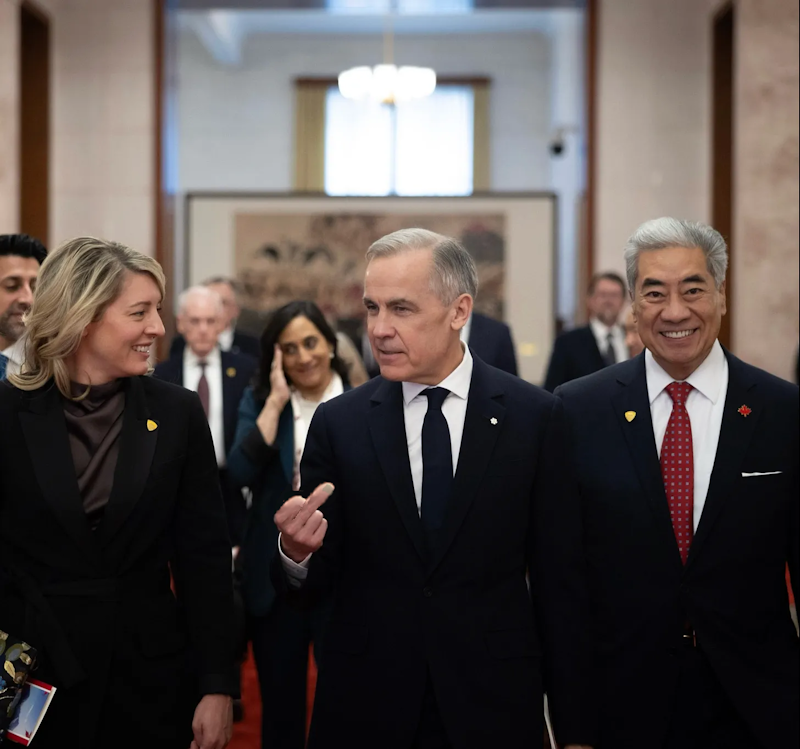
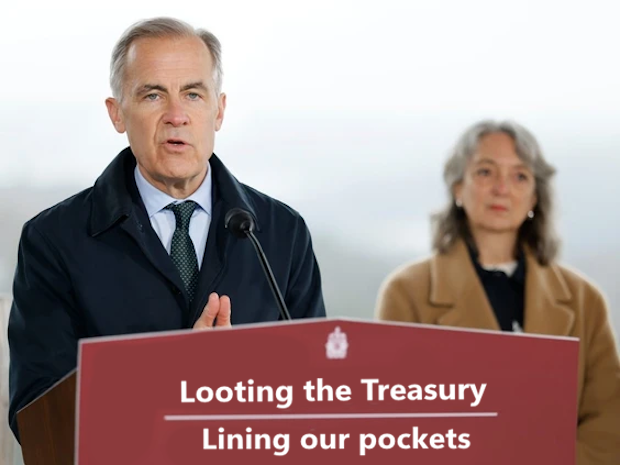
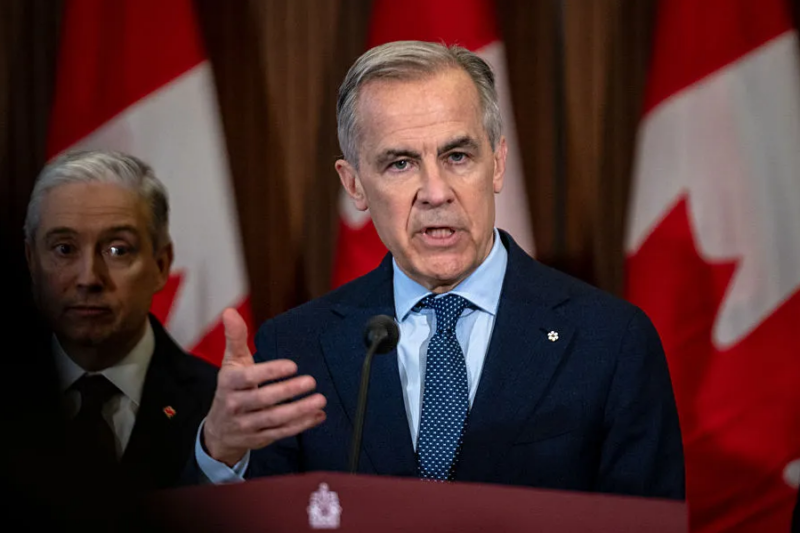
Prime Minister Mark Carney is facing criticism at home as he tries to strike a balance on the US-Israeli military action in Iran, as Canada scrambles to get its citizens out of the region and faces the risk of being dragged into a widening conflict.

Carney expressed strong support for the initial strikes when they launched a week ago, arguing for the value of preventing Iran from obtaining a nuclear weapon and its regime “from further threatening international peace and security”.

Days later, he said it was a position he took “with regret” because the strikes appeared “inconsistent with international law”.

Carney – Man of Jello!

Share

Canada’s PM calls for Andrew to be removed from line of succession for trouble he caused for his pal Ghislaine

Canada’s Prime Minister Mark Carney has called for Andrew Mountbatten-Windsor to be removed from the royal line of succession.

Mountbatten-Windsor was arrested on suspicion of misconduct in public office last month after being accused of sharing confidential material with the late paedophile financier Jeffrey Epstein.

Andrew has previously denied any wrongdoing in relation to Epstein; he has not responded to the BBC’s requests for comment on the specific allegations in relation to the release of millions of Epstein files in January.

Share

LILLEY: Truthfully Canada doesn’t have what’s needed to join Iran war

The discussion going on about whether Canada could or should get involved in the war launched against Iran by the United States and Israel is becoming laughable.

We’ve had Prime Minister Mark Carney say that Canada wasn’t consulted nor asked to participate in the strikes last week.

Share

Mark Carney is outspending Justin Trudeau

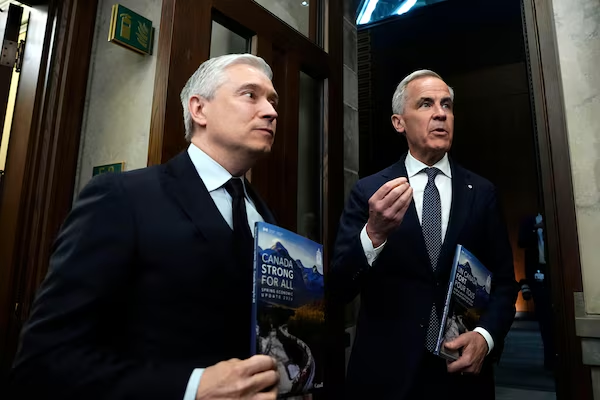
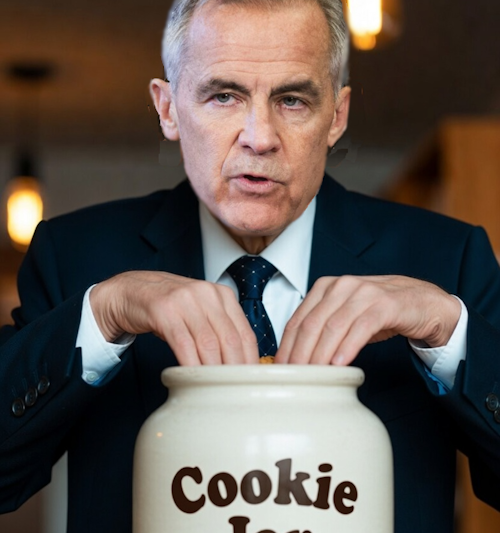
Prime Minister Mark Carney is outspending former prime minister Justin Trudeau. Canada’s last fiscal year – and the estimates for the upcoming 2026-27 fiscal year – are the two largest federal government spending years in the country’s history – aside from that single pandemic year and the countless CERB cheques mailed to locked-down Canadians. So, think about this: global banker Carney is outspending Trudeau, who was admittedly bad at math and did not think of Canada’s fiscal and monetary policy.

Share

Defense Without U.S. Help Is a Live Topic for Canada, Japan and Australia

Prime Minister Mark Carney of Canada landed in Japan on Friday as part of a 10-day tour that also included Australia. All three countries share at least one major concern: how to adapt now that President Trump has made it clear that they will need to look after their own security.

After Mr. Carney met with Prime Minister Sanae Takaichi of Japan, the two leaders provided something of an answer — try to do more together.

“First, most importantly and fundamentally, we are enhancing our security and defense cooperation,” Mr. Carney said after a brief signing ceremony.

Share

MACLEOD: The Beijing Blackout — Inside Carney’s secret police pact with China

When Prime Minister Mark Carney stood in Beijing last month to announce a new “Strategic Partnership,” he spoke of stability and pragmatism. But for those of us watching the fine print, one document stands out as a glaring threat to Canadian sovereignty: the Memorandum of Understanding (MOU) on cooperation between the RCMP and China’s Ministry of Public Security (MPS).

Share

BLACKED OUT: Ottawa censors files on $12.1 million spent searching for alleged Kamloops residential school graves

The federal Department of Crown-Indigenous Relations has redacted nearly all details from internal reports describing how a B.C. First Nation spent millions in taxpayer funding intended to locate alleged graves of children at the former Kamloops Indian Residential School.

Blacklock’s Reporter says documents released under the Access to Information Act show the department labelled the reports “confidential,” concealing details about work undertaken by the Tk’emlups te Secwepemc First Nation after Ottawa provided $12.1 million to support searches tied to claims that 215 children were buried on the site.

Share

Why is Canada elbows-up to Trump, but arms-out for Xi and Modi?

There was a disquieting air of jubilation from Prime Minister Mark Carney and his cabinet back in January when the government announced it had secured a new “strategic partnership” with Beijing.

Not that it wasn’t good news that Canada and China had broken their decade-long stalemate, that relief was coming to Canada’s canola farmers, and that plans were set in motion to diversify our energy, agri-food and wood product exports. But the celebratory tone and pageantry that came with the new partnership seemed incongruent with the reality of the situation, which was that renewing ties with China was a necessary evil for Canada.

Share

Rising grocery costs forcing Canadians to cut meals and rely on credit, survey says

More Canadians are relying on credit to put food on the table — and sacrificing nutrition in the process — according to a new survey that shows how the strain of Canada’s affordability crisis is increasingly surfacing in grocery aisles.

A new survey from insolvency and debt relief firm Spergel finds that a majority of the 269 Canadians questioned said they had skipped meals or reduced portion sizes in the past six months due to financial pressure. Fifty three per cent of the respondents, who were between the ages of 30 and 60, reported using credit, buy-now-pay-later services, lines of credit or payday loans to purchase groceries in the last six months.

Share

Why “Legalize and Tax” Is the Wrong Solution to Our Drug Problem

The economic reasoning is powerful, but it breaks down against reality.

I hate to disagree with my colleague, the great Roland Fryer—and doubly so when it comes to economics. Fryer’s work is consistently both stimulating and insightful, and his contributions to public policy substantially outstrip my own. I nevertheless feel obliged to comment on his recent Wall Street Journal op-ed, in which he uses sound economic reasoning to reach a conclusion I reject: that we should legalize and tax addictive drugs.

Share

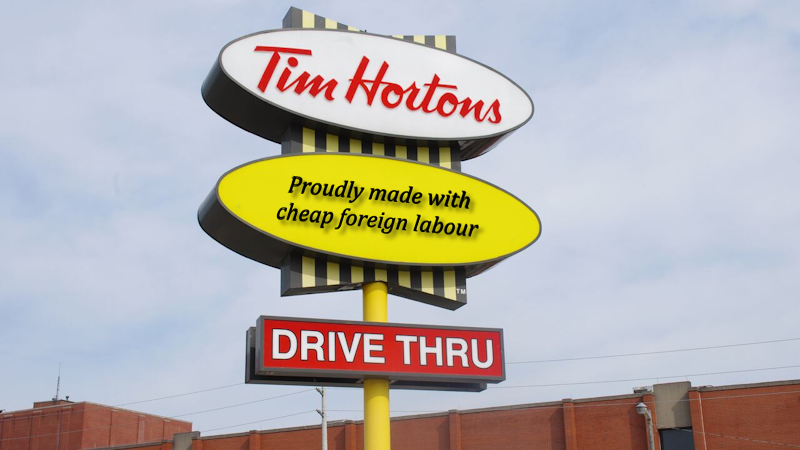
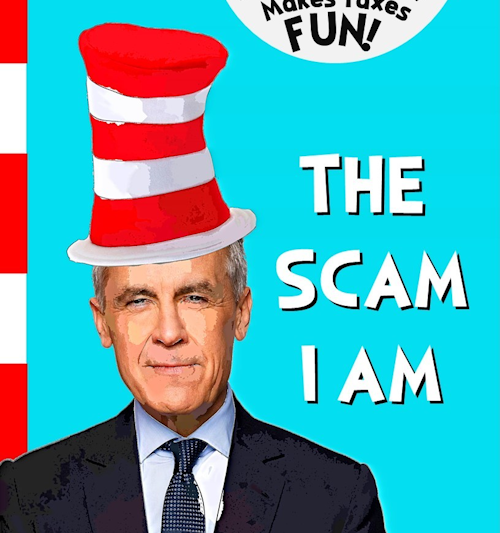
Carney government introduces latest tweak to cheap foreign labour scam

Stupid rhymes with witch

Canada launches new program to grant 33,000 foreign workers permanent residence, immigration minister reveals

… “We have launched it already,” Diab said during an interview with the Star this week, where she also touched on questions about her competence. “I am not in a position to tell you specifically how many so far, but we will in the month of April be able to provide more clarity and more detail on them.”

Government data showed that 2,125,035 temporary residents had their permits expire in 2025 and another 1,938,805 are expected to run out of status in 2026. The questions of where they have gone and will end up have prompted concerns over a potential surge of undocumented population.

Share

Trump’s war in Iran shows Carney has lots to learn about the new world order — one thing most of all

More than two decades ago, the United States invited Canada to join in a new Middle Eastern misadventure. The invitation was premised on a big lie about Saddam Hussein’s supposed weapons of mass destruction.

Prime Minister Jean Chrétien declined to participate. It’s not that he foresaw the disaster to come — but he had a team of good advisers, as well as credible intelligence showing Saddam posed no imminent threat and had had no role in the terrorist attacks of 9/11. Perhaps more important, Chrétien also didn’t trust his American counterpart, President George W. Bush.


That’s a lot of bluster for a guy whose army is more concerned with sex change operations than being combat ready.

Share

Carney’s contradictions: from Davos to New Delhi

OTTAWA—Given his short tenure to date, Prime Minister Mark Carney may not have fully grasped something every leader eventually must: power doesn’t corrupt, it deludes. By reconciling the irreconcilable, it persuades its holder that contradiction is sophistication.

… At the World Economic Forum in Davos back in January, Carney presented himself as the custodian of coherence in a splintering world. He warned against economic coercion, and the fragility of rules-based co-operation. He cautioned against an overreliance on singular partnerships, and urged renewed commitment to multilateralism and international law. It was the technocrat at his level best: sober, strategic, and alert to all the systemic global risks.

Share

Don’t trust Ottawa on Musqueam agreement

Last weekend it became known that the Federal Government had signed an aboriginal rights agreement with the Musqueam First Nation, which acknowledged rights and title “within” a large area encompassing most of Metro Vancouver. This bilateral agreement between the Carney government and the Musqueam sets out their shared intention to “negotiate” Aboriginal title for the Musqueam within their vast claimed territory using the principles of UNDRIP as their lodestar.

Share