
“AI – Artificial Intelligence”

Amazon Is on the Cusp of Using More Robots Than Humans in Its Warehouses

The e-commerce giant now counts more than one million of the machines at its facilities
The automation of Amazon.com facilities is approaching a new milestone: There will soon be as many robots as humans.
The e-commerce giant, which has spent years automating tasks previously done by humans in its facilities, has deployed more than one million robots in those workplaces, Amazon said. That is the most it has ever had and near the count of human workers at the facilities.
Company warehouses buzz with metallic arms plucking items from shelves and wheeled droids that motor around the floors ferrying the goods for packaging. In other corners, automated systems help sort the items, which other robots assist in packaging for shipment.
Entry-level jobs in free-fall after launch of ChatGPT

Entry-level jobs are in free-fall as the rise of AI chatbots such as ChatGPT causes low-paying and graduate roles to disappear.
Recently-released data shows that the number of entry-level roles being advertised has fallen by a third since the launch of OpenAI’s chatbot in November 2022.
According to figures from online jobs board Adzuna, there were 214,934 entry-level jobs on offer in May this year, down by 32pc from just three years ago.
Magazines caught using AI and fake writers for online stories

The publisher of the Belgian editions of Elle and Marie Claire removed articles and profiles it admits were created by AI
Belgian editions of Elle, Marie Claire and other women’s magazines are claimed to have been using artificial intelligence to write hundreds of online articles under the names of fake journalists, complete with photographs and profiles.
“Sophie Vermeulen”, who has written an impressive 403 articles for Elle online this year, was, according to her profile, complete with photograph, “always ready to inspire you with fascinating stories or practical tips. Her passion for fashion and beauty is complemented by a love of travel and literature. Offline, you can spot her on a long walk in nature,” her Elle online profile said.
Something Like Fire
 Will the AI revolution warm us or burn us?
Machines can now talk with us in ways that aren’t preprogrammed. They can draw pictures, write passable (if generic) college essays, and make fake videos so convincing that you and I can’t tell the difference. The first time I used ChatGPT, I almost forgot that I was communicating with a machine.
Artificial intelligence is like nothing that humans have ever created. It consumes vast amounts of data and organizes itself in ways that its creators didn’t foresee and don’t understand. “If we open up ChatGPT or a system like it and look inside,” AI scientist Sam Bowman told Noam Hassenfeld at Vox, “you just see millions of numbers flipping around a few hundred times a second. And we just have no idea what any of it means.”
How Much Energy Does Your AI Prompt Use? I Went to a Data Center to Find Out.

There they were. Golden boxes, louder than a toddler on a red-eye, hotter than a campfire in a heat wave, pricier than a private Caribbean island.
Yes, real, working Nvidia GPUs.
I was under strict “look, don’t touch” orders—as if I’d, what, lick the mesh metal enclosure. Just standing there, I could hear and feel the electricity being devoured.
We’ve all heard about AI’s insatiable energy appetite. By 2028, data centers like this one I visited in Ashburn, Va., could consume up to 12% of all U.S. electricity, according to a report from the Energy Department and Lawrence Berkeley National Lab.
AI Won’t Terminate Us. It Will Just Render Us Irrelevant.
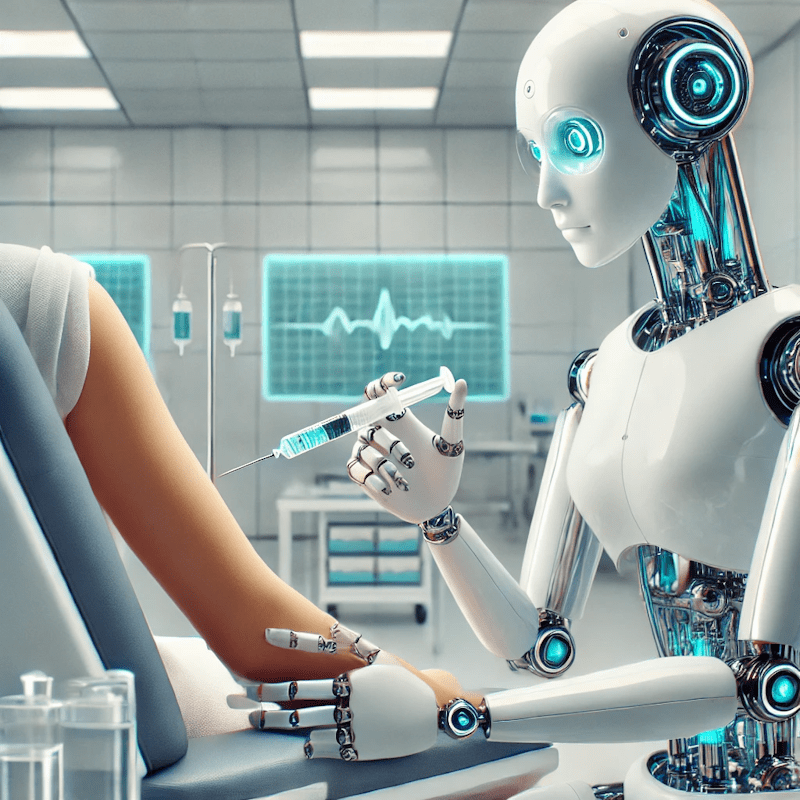
The future of AI won’t resemble The Terminator. Don’t expect devastating explosions or murderous drones. There won’t be metal skeletons stomping on skulls or glowing red eyes scanning resistance fighters. The real takeover will be quieter, colder, more efficient, and less bloody — but in many ways, far more brutal.
It will come with a soft chime, a helpful tone, a perfectly phrased suggestion: “Would you like me to do that for you?”
And most of us will say yes.
Pope Leo issues stark warning about AI’s effects on children

Pope Leo XIV has issued a stark warning regarding the potential negative impact of artificial intelligence on the intellectual, neurological, and spiritual development of young people.
The caution was delivered in a message to a major conference on AI and ethics.
The conference, which saw part of its proceedings held within the Vatican, underscored the Holy See’s growing concern over emerging technologies and their broader implications for humanity.
Will Pope AI The 1st be more or less fallible than humans?
AI in the courtroom ….
LIVE TONIGHT 9PM ET
Deprived Justice: When AI Enters the Courtroom
Can you trust Artificial Intelligence to tell the truth?
Fake court cases
AI-generated assault allegations
Evidence, privilege & power in the age of Artificial Intelligence.Panel: @DonaldBestCA… pic.twitter.com/ozXnZXjtyn
— DonaldBest.CA * DO NOT COMPLY (@DonaldBestCA) June 18, 2025
Share of Canadian businesses and nonprofits using AI doubles over past year

The share of Canadian organizations that reported using AI to create goods and services in the past 12 months has doubled from 6.1 per cent in May 2024 to 12.2 per cent in May 2025, according to Statistics Canada’s Canadian Survey of Business Conditions.
The 2025 survey of 21,357 Canadian businesses and non-profits also shows AI adoption is more likely to reduce rather than increase staffing levels, particularly in the health-care and social assistance fields.
AI at work – Who’s the boss
The chief executive officer of Anthropic – one of OpenAI’s main rivals – doesn’t feel great about all the jobs their chatbots will gobble up. In an interview last month with Axios, Dario Amodei said tech leaders and politicians need to stop “sugar-coating” the economic upheaval ahead. He’s even prepared to put a number on the carnage: Generative AI could eliminate half of all entry-level white-collar jobs in the next one to five years.
My Job as a Journalist Is Going to a Bot
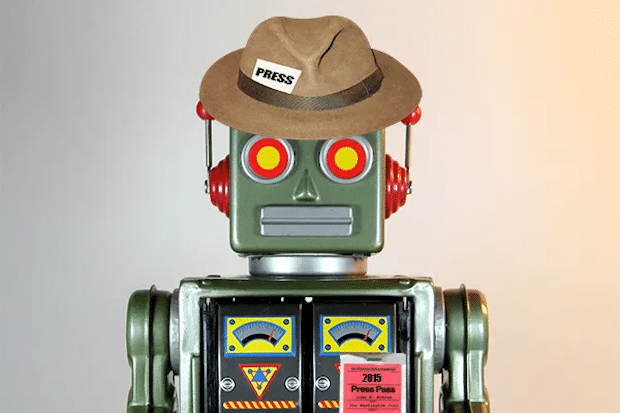
But it’s not all dystopia. The most competent among us will still have jobs, and AI will force us to excel.
It should have been obvious when college students started using ChatGPT to cheat on academic papers that the bots were coming for our bylines — and yet, I think, journalists thought they might be spared. After all, any bot could mimic a badly written college essay, but what journalists do? That requires finesse, skill, and critical thought.
Oops – AI generated video shows Nazi soldier celebrating the liberation of Paris

President Macron’s government has been forced to withdraw an artificial intelligence-generated video celebrating the French Resistance after historians were outraged by errors including a German soldier celebrating the Allied liberation of Paris.
The government had published the video on its official Instagram and TikTok accounts in order to teach young people about the Resistance. However, the 27-second clip showed a soldier wearing a German helmet in a crowd of Parisians celebrating the end of Nazi occupation in 1944. Elsewhere in the crowd someone waved the flag of Japan, Germany’s wartime ally.
Are Chinese robots in the West a trojan horse?

Spurred by Donald Trump’s push for industrial reshoring, Chinese robot manufacturers are aiming to enter into the American market.
Produced in large numbers and at relatively low cost by Chinese firms, these industrial robots would first take on menial logistics tasks, potentially paving the way for more advanced humanoid successors.
But this influx of Chinese robots might come with a catch: the harvesting of factories’ sensitive data. So warned a rival American executive, who said this week that high-end industrial robots are able to collect “massive amounts” of data and intellectual property. Daniel Diez, the chief business officer of Agility Robotics, warned that a walking robot equipped with depth-sensitive cameras would pose enough of a privacy risk that American and European buyers might reject them.
Technology on the cusp of solving another of society’s problems …

Uber to bring self-driving cars on to Britain’s streets next year
Uber is preparing to test fully self-driving taxis on London’s roads for the first time.
The US ride-hailing company confirmed on Tuesday it had signed a deal with Wayve, an autonomous driving and artificial intelligence start-up founded in Cambridge, to pilot its technology on UK roads from next spring.
The trials come after Heidi Alexander, the Transport Secretary, brought forward rules that will allow advanced driverless taxi and bus services to operate on British streets from 2026.
Killer drones are changing war — and may soon think for themselves
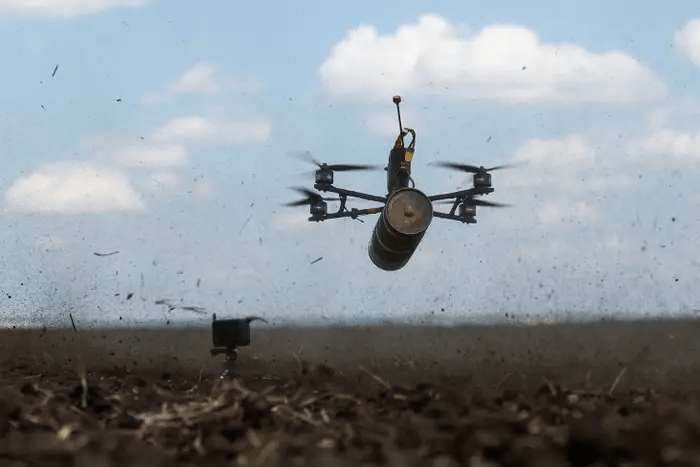
Ukraine’s Operation Spider’s Web attack on Russian airbases caused shockwaves among strategists and military planners around the world. Analysts said more than 20 of Moscow’s hugely expensive long-range bombers, which it will struggle to replace quickly, were destroyed by drones developed from hobbyists’ craft supplies at a cost of just a few thousand pounds each.
The audacious strike has been described as Russia’s Pearl Harbor: an unforeseen sucker punch that has revealed deep vulnerabilities.
New technology, innovatively and daringly used, appears to be denying Russia its strategic advantages — from the size of the country, where bases deep in Siberia were assumed to be safe, to a population more than three times the size of Ukraine’s.