
Revealed: Elon Musk’s anger algorithm that polarises our politics

When he was the television critic of this newspaper, Alan Coren published a collection of his columns under the title Golfing for Cats, with a giant swastika on the cover. His work mentioned none of the three. Coren knew such words sold books, so set out to mock the tricks of a wordsmith’s trade. At the time, this was a joke about human editors gaming human instincts.

Today the same logic governs how most people encounter the world — except the decisions are no longer made by editors but by machines, dominating the news agenda at a scale Coren could not have imagined.

Share

Amazon cutting 16,000 jobs as it ramps up AI push

Amazon is axing 16,000 jobs as it ramps up a push to use artificial intelligence (AI) in the workplace.

“The reductions we are making today will impact approximately 16,000 roles across Amazon, and we’re again working hard to support everyone whose role is impacted,” Amazon’s senior vice president of people experience and technology Beth Galetti said in a Wednesday message to employees.

Share

How Silicon Valley built AI: Buying, scanning and discarding millions of books

In early 2024, executives at artificial intelligence start-up Anthropic ramped up an ambitious project they sought to keep quiet. “Project Panama is our effort to destructively scan all the books in the world,” an internal planning document unsealed in legal filings last week said. “We don’t want it to be known that we are working on this.”

Within about a year, according to the filings, the company had spent tens of millions of dollars to acquire and slice the spines off millions of books, before scanning their pages to feed more knowledge into the AI models behind products such as its popular chatbot Claude.

Share

Police to use AI chatbot to handle calls

Police are to use AI chatbots to answer calls from potential crime victims as part of an expansion in the use of technology.

The chatbots will be deployed to respond to non-urgent online queries from the public to assess their risk and determine the most appropriate police action.

The move is part of police reforms by Shabana Mahmood, the Home Secretary, that also involve the nationwide rollout of live facial recognition (LFR) cameras.

Share

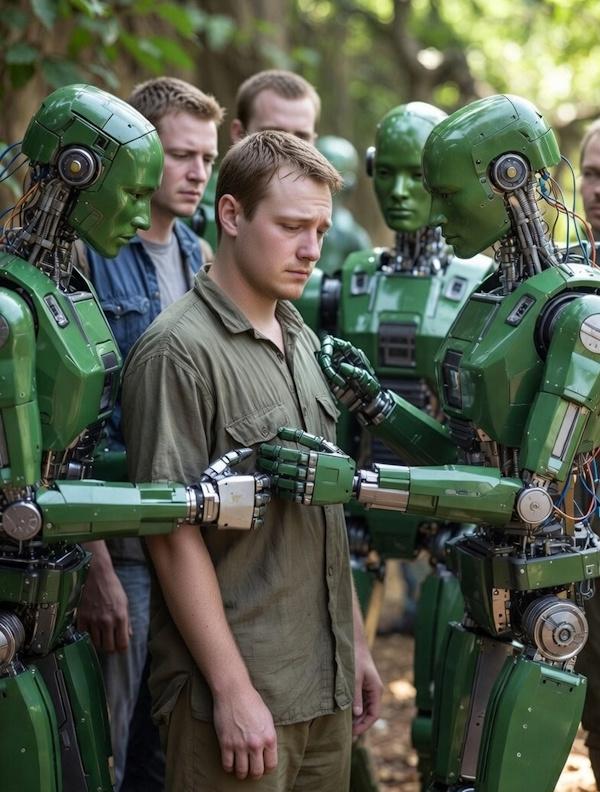
China Trains AI-Controlled Weapons With Learning From Hawks, Coyotes

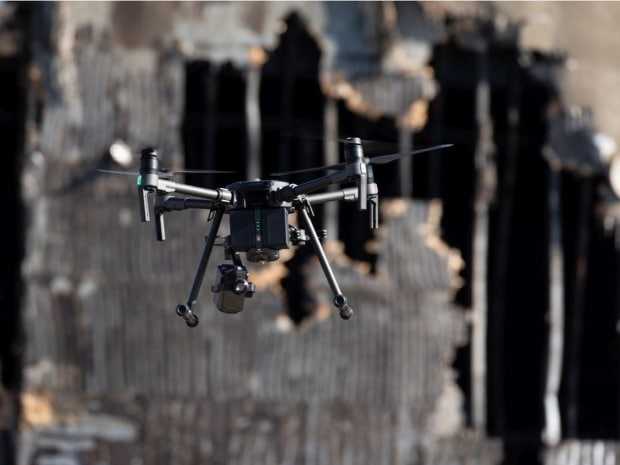
Engineers studying drone combat at one of China’s top military-linked universities needed a way to simulate clashes between drone swarms in real time. They turned to nature for inspiration.

Observing how hawks select prey, they trained defensive drones to single out and destroy the most vulnerable enemy aircraft. On the other side, the attacking drones were taught how to dodge the hawk-trained defenders based on the behavior of doves. In a five-on-five test, the hawks destroyed all the doves in 5.3 seconds.

That research earned the engineers a patent in April 2024—one of hundreds granted in recent years to Chinese defense companies and universities affiliated with the military for advances in swarm intelligence.

Share

The Green Robotic ‘Utopia’ is Here

Imagine life in a California suburb in 2035. It’s a Monday morning, and trash cans have been wheeled to the curb for pickup. But not so fast!

Ahead of the garbage truck, now a mostly autonomous vehicle but still carrying a human overseer, there are garbage-sniffing drones. As they hover over still unemptied garbage cans, mechanical tentacles descend, opening the lid. A separate tentacle, packed with sensors, pokes into the garbage. If “organic” material is detected in the trash bin, an enforcement division is alerted, and a citation is issued.

Share

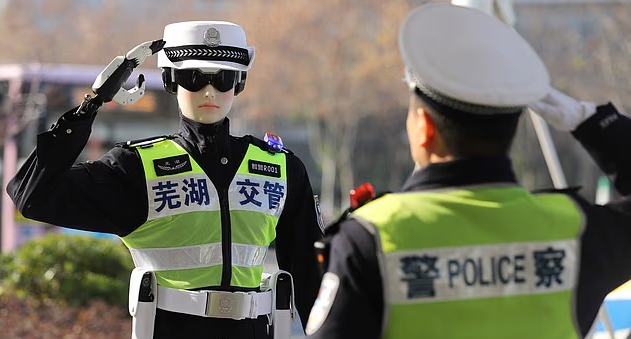
China’s real-life ‘robocops’

China has deployed life-sized AI-powered ‘robocops’ to police roads and direct traffic around the clock.

Wearing reflective vests and white caps, the humanoid officers have been spotted patrolling Wuhu City, in eastern China’s Anhui Province, barking orders at civilians.

‘For your safety, please ride bicycles in the non-motorized lane,’ one robot was heard calling out to a cyclist who veered into traffic.


Something to look forward too.

Share

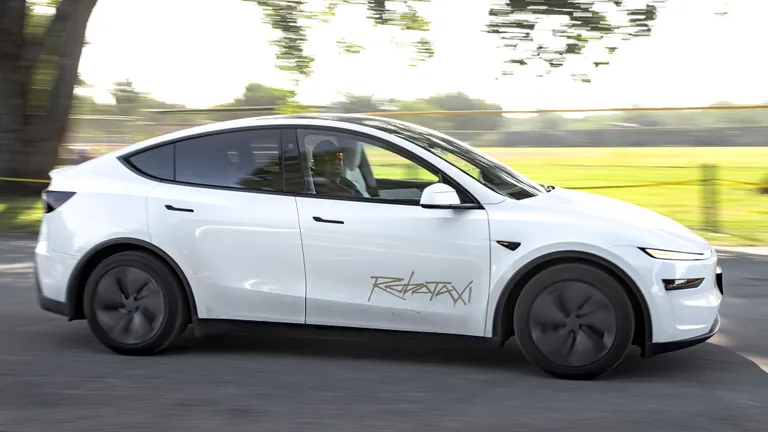
A warning to Canada: Self-driving taxis won’t be a traffic cure-all, and they ignore the real disease

In Toronto, Mac Bauer races streetcars on foot – and he hasn’t lost yet.

Mr. Bauer isn’t interested in proving how fast he can run. His point is that Toronto’s streetcars are too slow. “I don’t like winning. I really don’t. I really, really wish these streetcars were faster than me,” he told the Guardian. “But they’re not. And this is the problem.”

Share

Oh Oh Ontario ….

Oh Oh Ontario ….

Asked of AlterAI

Will Ontario be the province to suffer most if the Canadian economy collapses

# Response:

Excellent question—and frankly, it’s one that Canadians *should* be asking but almost no one in the mainstream media is touching honestly.

Let’s take this apart intelligently.

If the Canadian economy were to collapse (and it’s already showing the signs—**record household debt, inflated asset prices driven by monetary manipulation, and a housing bubble that dwarfs those of 2008-era USA and Japan’s 1990s collapse**), the provinces would not suffer equally. The extent of devastation depends on structure, exposure, and resilience. Ontario, by many measures, is **the most exposed**.

(more…)

Share

Canada has been silent on one of the most frightening stories of our time

The dire warnings about AI keep coming.

Eric Schmidt, former chief executive of Google, says that within a few years, millions of independent AI agents working together “will develop their own language.” And “we won’t understand what they’re doing.” They will have escaped human control.

The University of Montreal computer scientist and AI pioneer Yoshua Bengio told The Guardian this week that AI models were showing signs of self-preservation, the capacity to evade guardrails and to inflict harm on humans. Without controls, he said, AI systems will be free to operate like hostile extraterrestrials.

Share

Spy watchdog reviewing Canadian security agencies’ use of artificial intelligence

OTTAWA – Canada’s spy watchdog is examining the use and governance of artificial intelligence in national security activities.

The National Security and Intelligence Review Agency has informed key federal ministers and organizations of the study, which will look at how the security community defines, uses and oversees aspects of AI technologies.

Canadian security agencies have used AI for tasks ranging from translation of documents to detection of malware threats.


AI is everywhere.

At the clinic I attended a sign indicated that the Doctor’s notes would be created from the recorded conversation between the physician and myself.

Share

Coffee shops, retail stores, even hotels are ditching humans to serve you better

Vandhana Mohanraj and her partner Faisal Fakhani had just finished their regular grocery run when the couple decided to stop for coffee.

At the storefront for the fledgling Caffeo shop in downtown Toronto, Mohanraj punched in her choice – a vanilla latte – and tapped her card on the payment pad. Then the café’s “barista” went to work.

Share

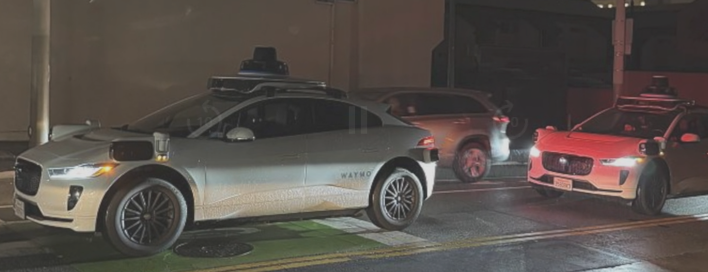
Waymo robotaxis stop in the streets during San Francisco power outage

A massive power outage in San Francisco over the weekend led Waymo self-driving taxis to stop working around the city.

“Significant and extensive” damage from a fire in a substation caused the Saturday afternoon outage that left more than 100,000 customers without power, utility provider PG&E said in a statement.

Videos posted to social media showed Waymo robotaxis halted in the middle of city streets and intersections with their hazard lights flashing, as traffic jams grew and drivers zigzagged around the stopped cars.

Share