Carney risks boosting Western alienation by leaning on his ‘wise men from the East’

Many years ago, a Liberal prime minster, Lester B. Pearson, failed to secure a majority government after several tries, and prepared to retire. But before doing so, he wanted to inject new blood into the upper echelons of his government, and particularly to bolster its base in Quebec, where support for secession was increasing. So Mr. Pearson recruited three impressive Quebeckers into federal politics.

Becoming known as the “three wise men from the East,” they were Jean Marchand, a strong champion of labour rights in Quebec; Gérard Pelletier, a prominent Quebec journalist and intellectual; and Pierre Trudeau, another Quebec intellectual, constitutional scholar, and champion of individual rights and Canadian federalism.

Alienation is Carney’s objective.

Share

HILL: Western independence or bust?

A few days ago, I had a discussion with a widely respected western businessman, and good friend, about the current independence movement in Alberta and Saskatchewan. I was intrigued by his thoughts about how we might advance the goal of greater western autonomy at this time in our history.

We agreed that, despite the gallant efforts of many, for far too many years, the flame for fairness has been repeatedly ignored and snuffed out, again and again. The harsh reality is, if an insufficient number of westerners don’t take the issue of independence seriously, why should eastern Canadians?

Share

I can’t forget Canada froze bank accounts of protesters. Now, singing O Canada feels hollow

I’ve never felt more patriotic pride than when singing O Canada with a crowd of hundreds at a protest shutting down the Coutts border crossing.

It was February 2022. My wife had just lost her job after refusing to get vaccinated against COVID-19. I worried I might be next, but took heart as the trucker convoy headed to Ottawa. We couldn’t join them, so instead we drove south from Calgary to Coutts, Alta., for two days to show our support.

Share

New Alberta referendum rules looming as calls for separation met with opposition petition

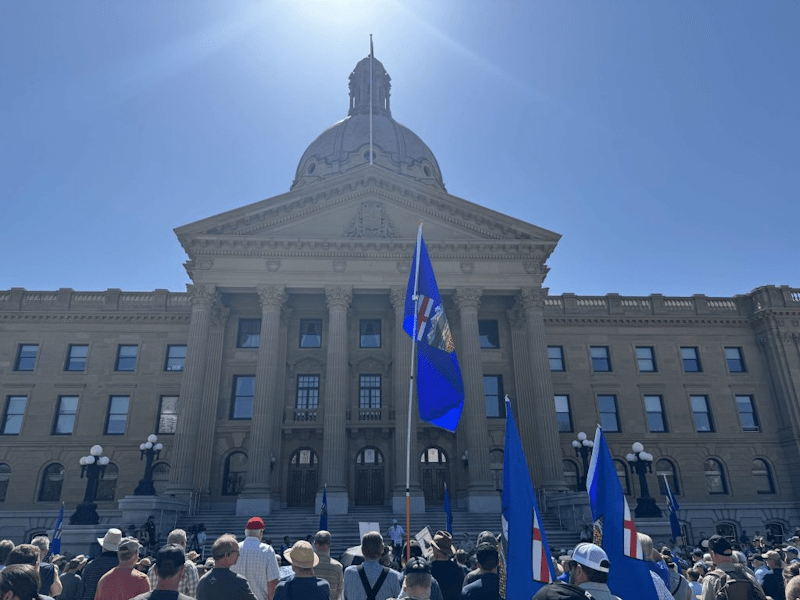
As Canada prepares Tuesday to blow out 158 birthday candles, Alberta plans three days later to formalize rules making it easier to have an independence celebration of its own.

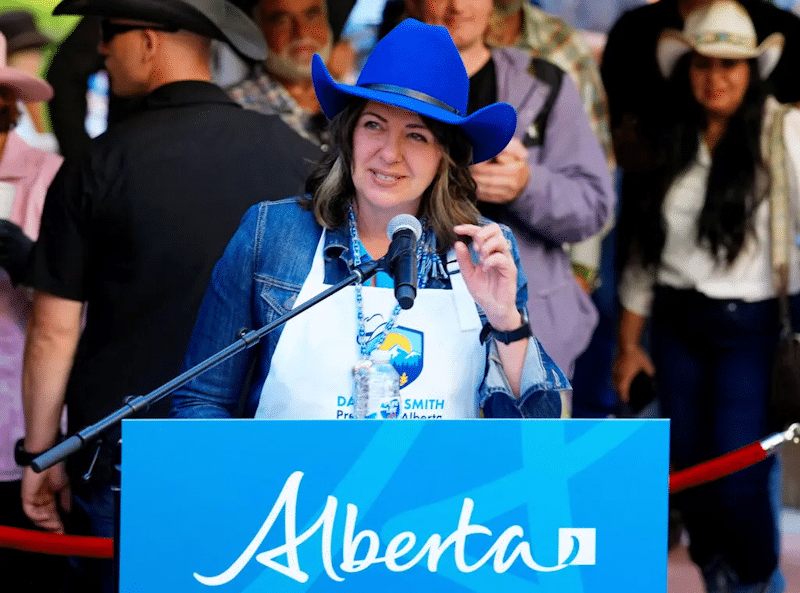
Beginning Friday, Premier Danielle Smith’s United Conservative government is officially lowering the required threshold for citizens to initiate a provincewide referendum, including on separation.

Share

Bernier backs Western independence vote after leadership win

PPC leader Maxime Bernier, hot on the heels of a successful leadership review, hopes Albertans will vote in favour of independence — not to break up Canada, but so that serious concessions will be made by Ottawa.

Bernier won the leadership review with 79.1% of the vote, a drop in approval since his 2021 review, where he garnered a staggering 95.6% approval rate. Notably, voter turnout was significantly lower this time — 32.7% compared to a 57% voter participation rate four years ago.

Share

Mark Milke: Why the West’s separatists could be just as big a threat as Quebec’s

In light of the poor showing by separatist candidates in recent Alberta byelections, pundits and politicians will be tempted to again dismiss threats of western separatism as over-hyped, and too tiny to be taken seriously, just as they did before and after the April 28 federal election.

Much of the initial skepticism came after former Leader of the Opposition Preston Manning authored a column arguing that some in central Canada never see western populism coming. He cited separatist sympathies as the newest example.

Share

Support for Western Separatism Nearing Levels of 1980s Quebec: New Study

The Western separatist movement is reaching levels of support seen during the initial surge of Quebec’s independence movement in the 1980s, says a new study from the Aristotle Foundation for Public Policy.

The report, released on June 26, noted that while support for Western separatism is still not as high as Quebec at the peak of its sovereignty movement, support for western provinces leaving Canada continues to grow.

Share

Data Dive with Nik Nanos: The West is angry

The spectre of Alberta separation is on the horizon. The path to independence is clear. The separatist offramp back to Canada’s federation is trickier.

Western alienation and disenchantment with Ottawa are long-standing and part of Alberta’s political DNA. Right now, the mood in the West is quite ugly. Ask people that live in the Prairie provinces the emotions they feel when they think of the federal government – anger tops the list at 35 per cent followed by pessimism at 26 per cent. Feelings of anger and pessimism towards Ottawa are the most intense in the Prairies, outstripping every other region of the country.

Share

Bell: ‘You should be stunned’: Most Danielle Smith voters would vote for separatism — new poll

The arithmetic rolls out. The devil is in the details. The fine print is where you get the meat and potatoes.

The latest from ThinkHQ polling.

The question. If a provincial referendum was held tomorrow asking Albertans if they would like to remain in Canada or become an independent country, how would you most likely vote?

The top number is just the appetizer.

Share

PINDER: Untrustworthy Ottawa makes independence look more attractive

Some of the responses to my most recent column were interpreted as support for independence, and indeed that is the position of the Western Standard. But my view is more than wordsmithing — independence, if necessary, but not necessarily independence.

A referendum is certainly in our future, and current support will surprise many in Central Canada. My view is that the breakup of Canada would be a colossal failure of all parties and entirely unnecessary. But sadly, it appears inevitable.

Share

PINDER: When Alberta leaves Canada, Saskatchewan must go with it

In any discussion of Western independence, the inclusion of Saskatchewan is imperative. Over a range of issues regarding independence, it polls almost identically to Alberta. Further, not only does it add half of Canada’s current conventional oil production, world-leading reserves and production of potash and uranium, more than half of Canada’s arable land and an array of minerals, but Saskatchewan also prevents detractors from isolating Alberta.

Share

MORGAN: Why should Alberta stay?

Westerners saw it coming but Canada was shocked when support for provincial independence exploded, after Eastern Canada chose to reward the Liberals with a larger government in the general election.

At first, federalists dismissed the provincial sovereignty movement as a fringe minority of loud cranks. They were confident it was little more than a collection of vocal malcontents on social media and there was little of substance to the movement.

Share

Ottawa and Carney must get serious and listen to the West

If Prime Minister Mark Carney doesn’t listen to the West, it’s going to cost Canada.

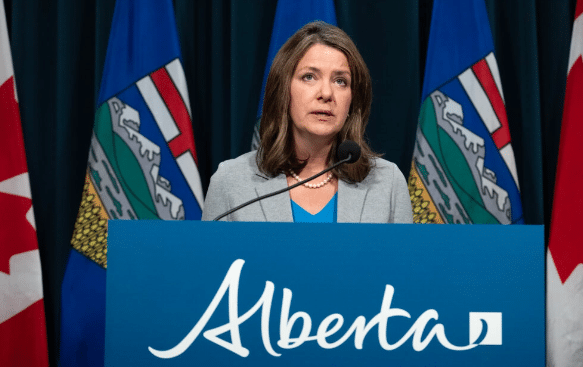
Alberta Premier Danielle Smith and Saskatchewan Premier Scott Moe are demanding that Ottawa stop stomping on their provinces’ natural resource production.

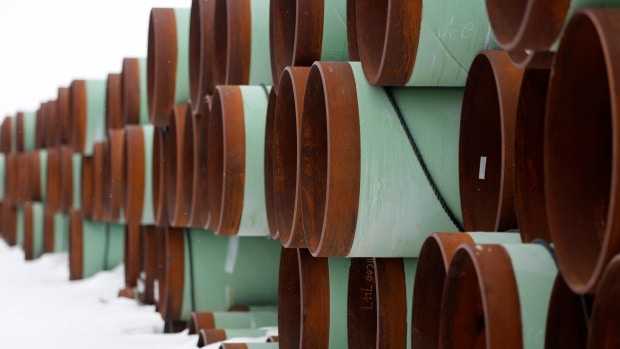
Smith is telling Carney to scrap the “no more pipelines” law, Bill C-69, lift the cap on Alberta’s energy and cancel the looming ban on the sale of new gasoline and diesel vehicles.

Share

ALBERS: Alberta’s inevitable rise to independence

By any measure of common sense — and I emphasize common, not the boutique intellectualism of think tanks or the jargon-fed corridors of Ottawa — Alberta stands today at the most consequential fork in its history.

One road loops endlessly through subservience and stasis; the other leads toward dignity, prosperity, and self-determination. The real question echoing across the Prairies is not “Why would Alberta leave?” but “Why on earth would it stay?”

Share

HANNAFORD: Carney thinks Canada is a country, now he must convince the West

In this much, Mark Carney is different from his predecessor. He thinks Canada is a country with a defining identity.

Regardless of what so many Albertans may feel about independence for Alberta or Saskatchewan today, Justin Trudeau’s cringeworthy New York Times interview ten years ago left us, well… cringing. Canada, he said, was the world’s “first post-national state,” and seemed pleased with the thought. He added for good measure, “There is no core identity, no mainstream in Canada.”

Share