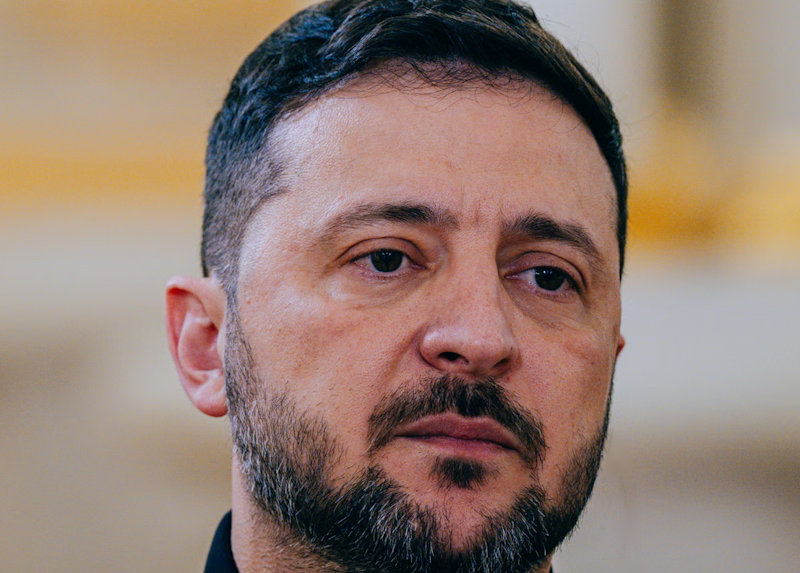
Zelensky Sparks Fury With Threat Against Orbán

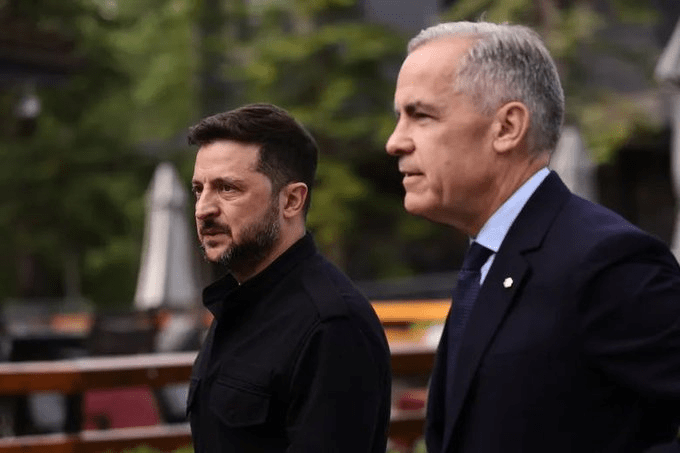
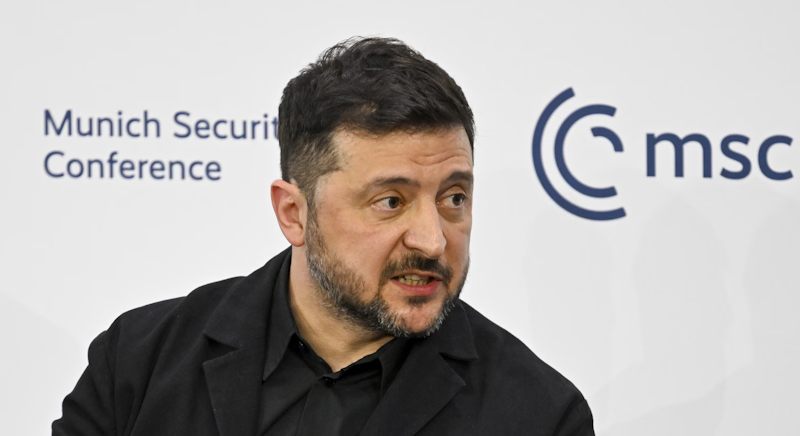
A diplomatic rift has erupted between Kyiv and Budapest after Ukrainian president Volodymyr Zelensky suggested that Ukrainian soldiers could “call and speak” to those blocking a €90 billion EU loan—widely understood to mean Hungarian prime minister Viktor Orbán.

Speaking after a government meeting on Thursday, March 5th, Zelensky said the contact details of those responsible for blocking the funds could be handed to Ukrainian soldiers so they could “call and speak to him in their own language.” The comments quickly triggered condemnation from Hungarian officials and political figures across Europe.

Share

Armed robots take to the battlefield in Ukraine war

Since the start of Russia’s full-scale invasion, the war in Ukraine has developed into a high-tech conflict.

Swarms of spy and killer drones have set the skies of Ukraine abuzz, and uncrewed boats have crippled the Russian navy in the Black Sea.

Now, Ukraine has embarked on a massive programme to deploy armed robots on the ground.

Getting really crappy for the infantry.

Share

Putin willing to accept US security guarantees, says Ukraine

Russia has said it would accept proposals for Ukraine’s postwar security guarantees, according to President Zelensky’s chief of staff.

Kyrylo Budanov said in an interview aired on Ukrainian television: “At the last talks, the Russian side said, for example, that they would accept the security guarantees offered to Ukraine by the United States.”

The agreement has not yet been confirmed by the Kremlin, but it could signal the biggest breakthrough in ceasefire negotiations since the start of the full-scale invasion four years ago.

Share

How the Ukraine war ends

Yesterday, Russia, Ukraine and the US met for yet another round of peace talks in Geneva. At around the same time, scores of missiles and hundreds of drones pummeled Ukrainian infrastructure, causing chaos across eight regions and injuring dozens of people. And, in a sense, both these events are connected: as the war in Eastern Europe enters its fifth year, a peaceful resolution seems no closer than it did a year ago, when Trump began his second term promising a swift end to the conflict. If anything, in fact, peace seems to be receding ever further from reach.

Share

Russia will test Nato in the Baltic, suggests Germany’s top admiral

NATO convoy Baltic Sea

Russian warships are becoming increasingly hostile amid concerns that the Kremlin is seeing how far it can push the alliance’s Article 5 mutual defence clause

Germany is preparing for Russia to escalate its aggression against Nato on the Baltic Sea, the head of its navy has said.

Russian warships have become increasingly hostile, while combat jets have flown recklessly low over Nato vessels and German shipyards and naval bases have been sabotaged, Vice-Admiral Jan Christian Kaack told The Times.

There is significant concern in Europe that the Kremlin might seize on uncertainty around the US commitment to Nato to see how far it can push the alliance’s Article 5 mutual defence clause before it elicits a military response.

Share

How Ukraine’s war effort against Russia has evolved

Soldiers spend weeks or even months in a cramped shelter in a so-called “kill zone,” a stretch as long as 20 kilometers (12 miles) that is largely controlled by enemy drones. There is no way to reach a position by vehicle or evacuate the wounded. Ammunition and food supplies are constantly interrupted.

All of this has become everyday life along the front line during four years of Russia’s full‑scale war against Ukraine. Ukrainian military personnel tell DW how the war has changed.

When soldiers think back to the start of the invasion, they remember the many volunteers and long lines at recruitment offices. That seems unimaginable today.

Share

A war foretold: how the CIA and MI6 got hold of Putin’s Ukraine plans and why nobody believed them

The phone call

William Burns had travelled halfway around the world to speak with Vladimir Putin, but in the end he had to make do with a phone call. It was November 2021, and US intelligence agencies had been picking up signals in the preceding weeks that Putin could be planning to invade Ukraine. President Joe Biden dispatched Burns, his CIA director, to warn Putin that the economic and political consequences if he did so would be disastrous.

Fifteen years earlier, when Burns was US ambassador in Moscow, Putin had been relatively accessible. The intervening years had concentrated the Russian leader’s power and deepened his paranoia. Since Covid had emerged, few had been granted face time. Putin was squirrelled away at his lavish residence on the Black Sea coast, Burns and his delegation learned, and only phone contact would be possible.

Share

Carney pledges sanctions, $2 billion for Ukraine

OTTAWA – Prime Minister Mark Carney promised another $2 billion in military aid and more sanctions on Moscow on Tuesday, as Ukraine marked four years since Russia launched its full-scale invasion

“Four years on, Russia is failing militarily, strategically and economically, and we are in it for the long term,” Carney told reporters before the weekly cabinet meeting on Parliament Hill.

“Russia is failing. The sooner they come to the table and actually participate in peace negotiations, the better it will be.”

h/t Mauser

Share

Zelensky tells BBC Putin has started WW3 and must be stopped

Ukraine’s President Volodymyr Zelensky continues to send out a firm message of defiance.

When we met this weekend in the government headquarters in Kyiv, he said that far from losing, Ukraine would end the war victorious. He was firmly against paying the price for a ceasefire deal demanded by President Vladimir Putin, which is withdrawing from strategic ground that Russia has failed to capture despite sacrificing tens of thousands of soldiers.

Putin, Zelensky told me, has already started World War Three, and the only answer was intense military and economic pressure to force him to step back.

Share

Ukraine’s ambassador to UK blames Zelensky for failed offensive

There was a time when Ukrainian diplomats would quietly excuse Valerii Zaluzhny’s lack of willingness to speak in public in London, whispering concerns about him overshadowing President Zelensky.

But now the ambassador to Britain, widely seen as the top political rival to the Ukrainian leader, has indicated a possible desire to run for the presidency.

In a rare interview, Zaluzhny, 52, refused to explicitly discuss his political ambitions, saying he did not want to risk harming national unity during a war with Russia that is approaching its fourth anniversary.

Share

Musk cuts Starlink access for Russian forces – giving Ukraine an edge at the front

Evidence is mounting that Elon Musk’s decision to deny Russian forces access to his Starlink satellite-based internet service has blunted Moscow’s advance, caused confusion among Russian soldiers and handed an advantage to Ukraine’s defenders.

But for how long? And what can Ukraine’s military achieve in the meantime?

“The Russians… lost their ability to control the field,” a Ukrainian drone operator who goes by the callsign Giovanni told us.

Share

Zelenskyy accuses Russia of ‘trying to drag out’ process as Ukraine talks end without breakthrough

The latest round of US-mediated peace talks between Russia and Ukraine in Geneva on Wednesday ended without a major breakthrough, as fighting continues in a war that will enter its fifth year next week.

Ukraine’s president, Volodymyr Zelenskyy, said no agreement had been reached on the thorniest questions at the negotiations in Switzerland, accusing Moscow of “trying to drag out” the process.

“We can see that some groundwork has been done, but for now the positions differ, because the negotiations were not easy,” he told reporters after the talks.

Share

Robot’s 10-mile frontline scramble to rescue Ukrainian soldier

When the soldier codenamed Blackbird was bundled into the back of the rescue robot, wrapped in a sleeping bag and bound with bloodied tourniquets, his life hung in the balance.

One leg was gone and the other was shattered, looking more like a burned branch than flesh and bone. His right arm, too, was smashed.

If his wounds did not kill him, the cold might have done so. It was minus 10C on the front line south of Kostiantynivka in the darkness of Sunday evening, even without the windchill. From time to time, gusts of snow blew across the robot’s camera.

Share

At least 20 combatants from Canada have been killed in action on the front lines of Ukraine

The Canadian soldier’s cries are anguished, made all the more poignant by the fact he’s recording the sounds with his own Go-Pro camera.

“My foot is f—ed. Help me,” he shouts into the darkening Ukrainian forest, no-man’s land between friendly and Russian lines, before groaning in agony. “Hey, someone, come help me.”

Share