Why Did Vladimir Putin Invade Ukraine?

Nearly three weeks have passed since Russian President Vladimir Putin began his invasion of Ukraine, but it still is not clear why he did so and what he hopes to achieve. Western analysts, commentators and government officials have put forward more than a dozen theories to explain Putin’s actions, motives, and objectives.

Some analysts posit that Putin is motivated by a desire to rebuild the Russian Empire. Others say he is obsessed with bringing Ukraine back into Russia’s sphere of influence. Some believe that Putin wants to control Ukraine’s vast offshore energy resources. Still others speculate that Putin, an aging autocrat, is seeking to maintain his grip on power.

Share

Putin’s Spy Chiefs At the Receiving End of His Fury Over Ukrainian Disaster

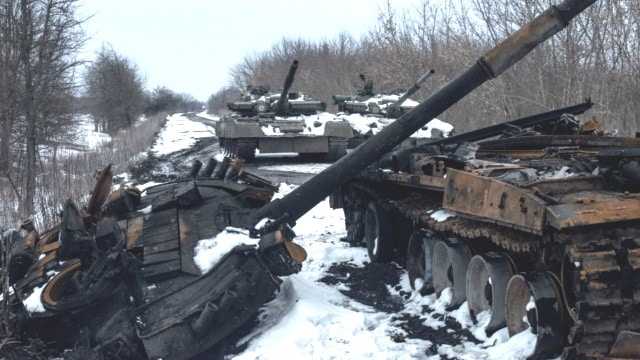
Guy wrote earlier this week about Russian intelligence officials warning that their military faces disaster in Ukraine. The invasion has not really gone according to plan. Russian forces are stalled. Major cities have not been taken; the capital of Kyiv has not been taken. The 40-mile convoy outside of the capital, which is supposedly the force that will deliver the death blow, has not moved in days. The Russian death toll ranges are all over the place. The Ukrainians claim that at least 12,000 Russians have been killed. Other estimates are in the 4-8,000 range. The truth is we don’t know, and we may never know.

Share

Germany to buy 35 Lockheed F-35 fighter jets from U.S. amid Ukraine crisis … Canada will buy cool “fighter jet stickers” with eco-friendly adhesive

Defense Minister assures that adhesive is eco-friendly and water soluble.

BERLIN, March 14 (Reuters) – Germany will buy 35 U.S. F-35 fighter jets to replace its ageing Tornado, it said on Monday, announcing a first big defence deal since Chancellor Olaf Scholz pledged a 100-billion-euro upgrade to the military in response to Russia’s invasion of Ukraine.

The move appeared to be part of a tectonic shift in German security policy, including a pledge to reach NATO’s 2% target for defence spending, after years of accusations that Germany was too dovish towards Moscow in compensation for its Nazi past.

Share

Putin deliberately targeted Ukraine’s ‘foreign legion’ with strike 12 miles from NATO border

Russia deliberately blew up foreign fighters and arms shipments at a Ukrainian base close to the Polish border on Sunday and has vowed to carry out more strikes in a direct warning to the West.

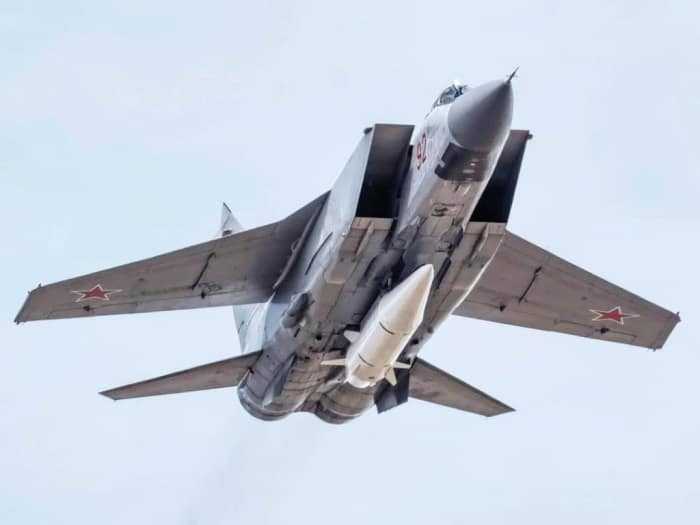
Igor Konashenkov, a spokesman for Russia’s ministry of defence, said the base at Yavoriv – 12 miles from NATO territory – was struck by ‘long-range, high-precision’ weapons because it was hosting ‘foreign mercenaries and a large shipment of foreign weapons’.

He added: ‘The destruction of foreign mercenaries who arrived on the territory of Ukraine will continue.’

Share

Ramzan Kadyrov, Putin’s Chechen pit bull, surfaces in Ukraine

Ramzan Kadyrov, the strongman leader of Chechnya and bloodthirsty stalwart of Russian President Vladimir Putin, has surfaced in Ukraine fighting alongside invading Russian forces.

Kadyrov announced his presence in a Telegram video of himself in uniform and reviewing plans with soldiers. He said the video was from Hostomel, an airfield near Kyiv captured by Russia early in the invasion, which is now into its third week.

Share

Telegram: The digital battlefront between Russia and Ukraine

Western pundits may flock to Twitter and Facebook for the latest news; but the one infosphere that really matters in Russia’s war against Ukraine is Telegram.

The messaging and social media platform has played a central role in the conflict since the outset, both as a vehicle for state propaganda and disinformation, as well as an invaluable news source for ordinary Ukrainians and Russians. That means there’s a lot hinging on a company and app that is poorly understood in the West. And, as the company’s founder Pavel Durov demonstrated when he considered blocking Telegram in both countries last week, a lot also rides on one man’s decisions.

Share

Ukraine and the war for your mind

The conflict on the ground isn’t the only one — there’s plenty of propaganda afoot too

Deterrence works. Russia’s nukes are the only thing keeping the US from full-out war in Ukraine just six months after retreating from Afghanistan. The unprecedented propaganda effort by Ukraine and its helpers in the American mass media to drag the US and NATO directly into the fight has failed — so far. But the struggle — the one for your mind space — is not over.

To understand what follows, you have to wipe away a lot of bull being slung your way. Insanity is not the only explanation for Putin’s actions of the past few weeks. From a Russian standpoint, he is carrying out a rational political-military strategy in Ukraine, seizing Russian-speaking territory such as Donbas, demilitarizing eastern Ukraine by force, and most of all creating a physical buffer zone between his country’s southern border and NATO. That zone may end at the Dnieper River with a loop around Odessa, or it may end at the Polish border, depending on how smoothly things go on the ground and on what level of “back away” message Putin wishes to send NATO.

Share

Orwell Was Right

This weekend I re-read 1984, a book I tend to reach for when I get Defcon-1 depressed about the state of the world. Deep in the novel, Winston ponders the intricacies of doublethink:

To know and not to know, to be conscious of complete truthfulness while telling carefully constructed lies, to hold simultaneously two opinions which canceled out, knowing them to be contradictory and believing in both of them… To forget whatever it was necessary to forget, then to draw it back into memory again at the moment when it was needed, and then promptly to forget it again… that was the ultimate subtlety.

In the last weeks, Russia took an already exacting speech environment to new extremes.

Share

Does Putin have ‘roid rage?’ Sources believe health could explain despot’s behavior: report

Russian President Vladimir Putin’s “increasingly erratic behavior” could be caused by ‘roid rage or a brain disorder such as dementia, according to a new report.

People close to the Kremlin and high-up Western intelligence sources told the Mail on Sunday they think there is a medical condition to explain the Russian despot’s reckless invasion of Ukraine and his bizarre other behavior.

“There has been an identifiable change in his decision-making over the past five years or so,” an unnamed security source told the Mail.

Share

Is there any justification for Putin’s war?

Nazis, genocide, Nato, history: Russia has no shortage of apparent justifications for its war in Ukraine.

But are any of them valid? Were Russian speakers endangered in the country’s east? Is Nato’s expansion a material threat to Moscow? Were there cliques of neo-Nazis running amok in Ukraine?

We assess whether Russia’s claims justify the invasion of a sovereign country.

A good Guardian piece that debunks Putin’s claims.

Share

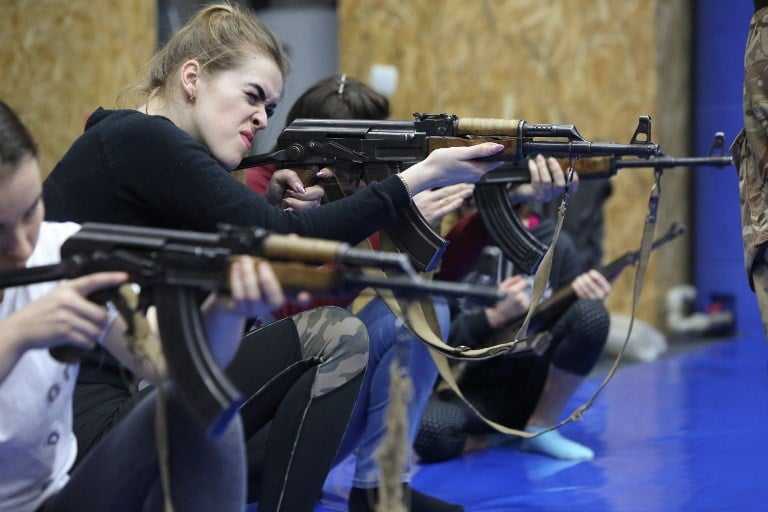
War in Ukraine: Uni to uniform – Ukraine’s new teenage army recruits

Just over a week ago I met a group of young men who had volunteered at a centre in Kyiv to fight for Ukraine.

Most of them were in their late teens, not long out of school. They told me that after three days’ basic training they would head for the front line – or very close to it.

Maksym Lutsyk, a 19-year-old biology student, told me he wasn’t fazed about trying to become a soldier after less than a week of instruction. He’d manage, after five years in the Scouts, not just learning backwoods skills, but also some weapons training. He was 10 when Ukraine’s long war with separatists sponsored by Moscow started in 2014.


Ukraine mourns its fallen as Zelenskiy says 1,300 soldiers killed

Ukraine’s announcement that at least 1,300 of its soldiers have been killed so far during Russia’s invasion has been accompanied by an increasingly public acknowledgement of the country’s losses.

Sombre funeral processions have become a daily sight, with photographs showing rows of flag-draped coffins being delivered for their funerals in cities including Lviv – with its historic garrison church of St Peter and St Paul.

Share

Putin and His One-Man War

When he launched his invasion of Ukraine over two weeks ago, Russian President Vladimir Putin appeared like a man who knew what he was doing. In his televised session with the High Council of National Security, he gave the impression that he had a precise war plan with clear objectives.

Now, however, the possibility of that impression having been wrong cannot be dismissed. In other words: What if the Great Vladimir doesn’t know what he is doing or, worse still, doesn’t know what he wants?

During WW II Soviet generals would ask one another about their typically substantial losses in such callous terms of “How many pencils did you break.” Putin may have suffered up to 10K in deaths so far in a war he didn’t have to fight. He was winning by posturing and would have been rewarded for his patience.

Share

What If Everyone Is Wrong About The Russian Military?

… We were told they were strong, minus the nukes, mostly because they were big, and that assumption continues to this day. But their actions in Ukraine are not that of a world-class military, not by a long-shot. It’s more like a drunken douchebag indiscriminately launching rockets, quite possibly because they lack anything with precision. We can drop a missile down a chimney with the accuracy of Santa Claus, but what if the Russians couldn’t even hit a brick in a brick factory?


Russian military’s corruption quagmire

“There are also reports that Russian advances in Ukraine were slowed by lack of fuel — and this in a country rich with oil and gas. But ineffective control over fuel consumption in the Russian military actually long preceded the war in Ukraine and had historically created opportunities for embezzlement — that is why fuel is often called the Russian military’s “second currency.” It is plausible that the long-standing tradition of corruption in fuel supply decreased the pace of Russian advancement in Ukraine.

It is also important to remember that the weapons currently targeting Ukraine were produced despite this level of corruption. Meanwhile, many technological innovations, including those that could increase the precision of Russian strikes, have never materialized due to graft, embezzlement and fraud.”

Interesting article on corruption – Thank you Oligarchs!


Share