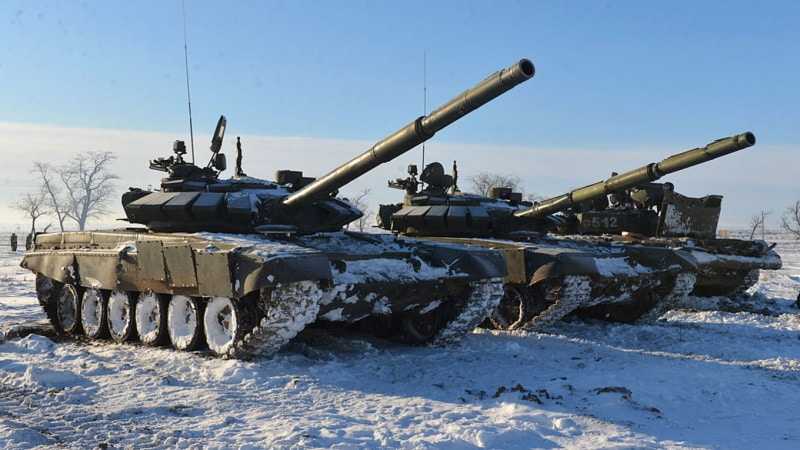
Ukraine war: Russia ‘plans to seize southern Ukraine’

Russia aims to seize southern Ukraine and to open a route to the separatist region of Transnistria in Moldova, a senior Russian general says.

Maj Gen Rustam Minnekayev specified that Moscow would seek to take “full control” over the south in addition to the eastern Donbas region – the stated objective of the Russian authorities.

Transnistria is a small Russian-backed region that borders Ukraine.

It is unclear if Gen Minnekayev’s comments were officially sanctioned.


Russian commander suggests plan is for permanent occupation of south Ukraine

A senior Russian military commander has said that the goal of Russia’s new offensive is to seize control of southern Ukraine and form a land bridge to Crimea, indicating that Russia plans a permanent occupation of Ukrainian territory taken in the war.

Rustam Minnekayev, acting commander of the central military district, also told members of a defence industry forum on Friday that control over southern Ukraine would give Russia access to Transnistria, a pro-Russian breakaway region of Moldova, indicating that Russia may attack the port city of Odesa.

Share

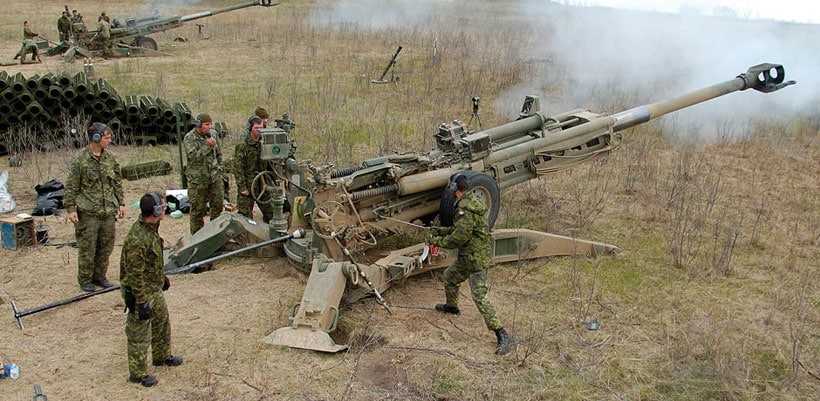
Trudeau says Canada is sending artillery to Ukraine — here’s what that could mean

Prime Minister Justin Trudeau said earlier this week that Canada will send artillery to Ukraine in response to a request from President Volodymyr Zelensky — which would mark a shift in the nature of the military aid Canada is offering the embattled nation.

Though Trudeau hasn’t said what type of artillery Canada plans to provide, he called the move a response to the shifting state of the war as Russia concentrates its forces in eastern Ukraine.

Share

Prospect of Russia using nuclear arms in Ukraine fuels Finland’s Nato debate


Foreign minister Pekka Haavisto says Finns ‘on the streets’ are concerned with nuclear question

The prospect of Russia using nuclear weapons in Ukraine is a key factor behind Finland’s debate over whether to join Nato, the country’s foreign minister has said.

Pekka Haavisto is having a busy few weeks. As Finland’s foreign minister, Haavisto, 64, may soon oversee the biggest political shift the country has experienced since it joined the EU almost three decades ago. “Finland is currently making its choices. And among those choices, Nato membership is one,” Haavisto told the Guardian in an interview on Thursday.


This could make Putin Go Nuke! Report: Chinese credit card processor rebuffs Russian banks

BEIJING (AP) — China’s credit card processor has refused to work with banks in Russia for fear of being targeted by sanctions over its war on Ukraine, cutting off a possible alternative after Visa and Mastercard stopped serving them, according to the Russian news outlet RBC.

UnionPay’s decision affects Sberbank, Russia’s biggest commercial bank, and smaller institutions, RBC reported Wednesday. It cited five unidentified sources in large Russian banks.

Share

Does the Moskva’s Sinking Herald the Death of Surface Combatants?

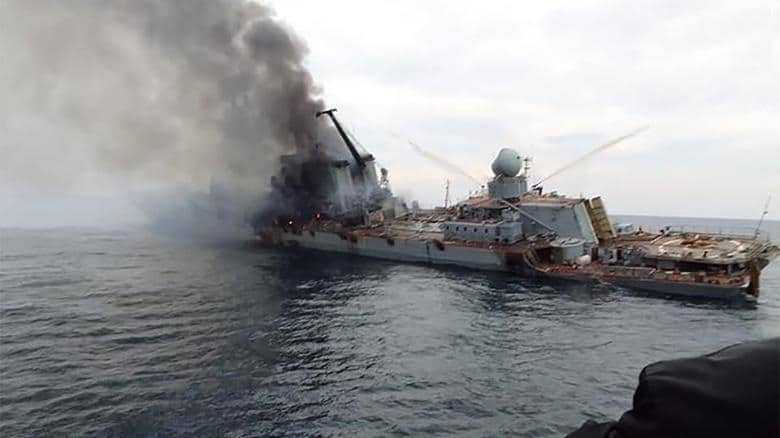
On April 15, 2022, Russian defense authorities announced that the Moskva, a guided-missile cruiser, had sunk while under tow following an onboard blaze caused by an ammunition fire. Before the first official announcements from Moscow, Ukraine claimed to have hit the ship with a pair of locally-developed, shore-based Neptune anti-ship missiles, a claim that was corroborated by U.S. officials. The Russian Navy armada off Ukraine’s coast was observed pulling back farther south, a potential sign of concerns about the threat posed by Ukraine’s missiles.

Share

Russia bans 61 Canadians – no one knows why

A group of 61 Canadians will be “indefinitely prohibited” from entering the Russian Federation, the Russian Foreign Ministry announced Thursday.

These banned individuals include senior government officials, active and retired military personnel, academics and leading media figures.
Among the Canadians banned are foreign and defence policy adviser to the prime minister of Canada Dan Costello, Toronto Mayor John Tory, Ontario Premier Doug Ford, Premier of Alberta Jason Kenney, chairman of the Bank of Canada Tiff Maclem, and president and CEO of CBC/Radio Canada Catherine Tait.

Share

New World Disorder: What the UN Vote on Russia Really Reveals About Global Politics

The latest battle zone in the Russia-Ukraine war was in the quiet, mostly mannerly halls of the United Nations. There, in the UN’s iconic New York headquarters, the world voted on Russia’s largest invasion since World War II — revealing fractures and fissures in global support for democracy.

Suspending Russia from the UN Human Rights Council was technically the issue put before the delegates. But every diplomat knew it was really a vote on Russia’s assault on Ukraine. The consensus for democracy and self-determination was fragile: only 93 states (out of 193) voted for removing Russia from the UNHRC, and therefore condemning its actions against its smaller, weaker neighbor. Another 24 nations (including China) voted with Russia. Most worrisome, 58 countries abstained, refusing to take sides in what many see as a duel between the great powers. Others feared that energy, food, and fertilizer prices might continue to climb if the conflict escalates. (Both Russia and Ukraine are major producers of oil, gas, wheat, and fertilizing petrochemicals — all of which are a matter of life and death for developing nations.) Fear and food are more important to many developing nations than democratic ideals.

Share

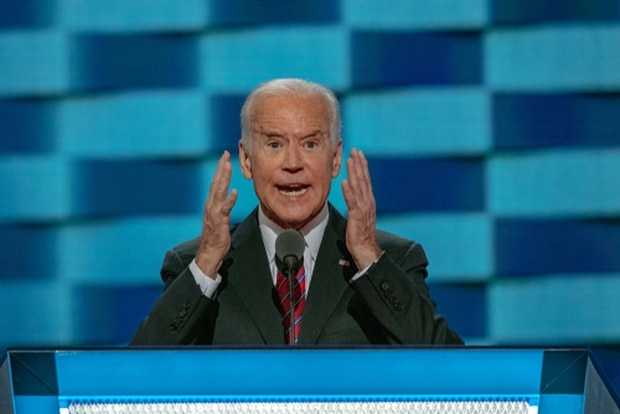
Biden announces heavy artillery, other weapons for Ukraine amid waning public desire for major involvement

WASHINGTON (AP) — President Joe Biden on Thursday announced an additional $800 million in military aid to help Ukraine fight back in its strong but increasingly difficult battle against the Russian invasion, but he also warned that Congress will need to approve even more assistance if the U.S. is to keep up its crucial support.

The new military package includes much needed heavy artillery, 144,000 rounds of ammunition and drones for the escalating battle in the Donbas region of eastern Ukraine. It builds on roughly $2.6 billion in military assistance that Biden had previously approved.

… A poll published Thursday by The Associated Press-NORC Center for Public Affairs Research shows Americans’ desire to get involved has waned somewhat. Some 32% say the U.S. should have a major role in the conflict. That’s ticked down from 40% last month, though it’s slightly higher than the 26% who said so in February. An additional 49% say the U.S. should have a minor role.

Share

Are We Letting Putin Win?

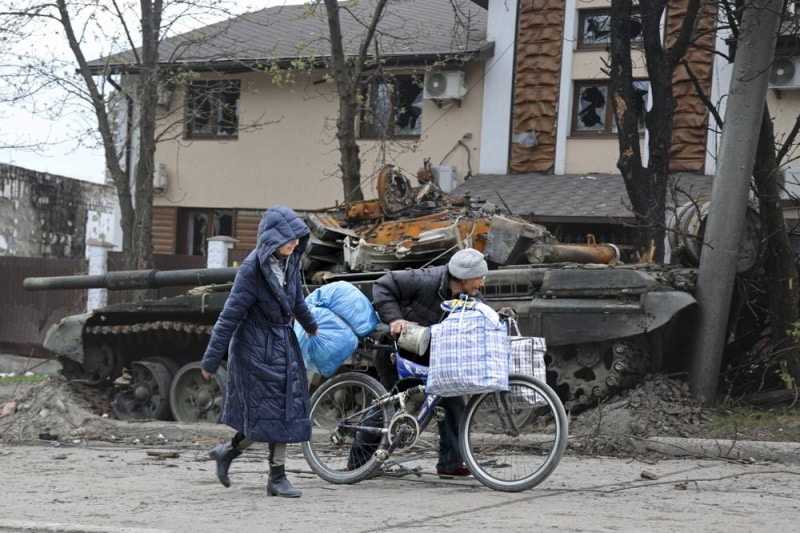
Last month, Russian army tanks entered Mariupol, a peaceful city of 431,000 inhabitants, which has since been bombarded for weeks. Tens of thousands of people left the city; those still there have taken refuge in cellars, often with no food, water or electricity. No one knows how many civilians are still alive in the city.

Russian President Vladimir Putin called in Chechen militias, accused of crimes against humanity, and sent by Ramzan Kadyrov, head of the Russian Federation’s Chechen Republic. Putin seems to be about to deliver an even more brutal assault. Schools, hospitals, supermarkets, retirement homes — Russia has spared nothing. A theater where children were gathered — and the Ukrainians had written the word “children”, hoping that the Russian soldiers would at least spare them — was reduced to ashes. Ukrainian officials estimated that 300 people were killed there. People trying to rescue them also were shelled. A small contingent of Ukrainian soldiers is still heroically resisting Russian forces in what remains of the destroyed city. Is anyone coming to their rescue?

(Link fixed)

Share

Putin tries to claim Mariupol win but won’t storm holdout

KYIV, Ukraine (AP) — Russian President Vladimir Putin tried to claim victory in the strategic port of Mariupol on Thursday, even as he ordered his troops not to storm the last pocket of Ukrainian resistance in the war’s iconic battleground.

Russian troops have besieged the southeastern city since the early days of the conflict and largely pulverized it — and top officials have repeatedly indicated it was about to fall, but Ukrainian forces stubbornly held on. In recent weeks, they holed up in a sprawling steel plant, and Russian forces pounded the industrial site and repeatedly issued ultimatums ordering the defenders to surrender.

“The completion of combat work to liberate Mariupol is a success,” Putin said. “Putting such an important center in the south as Mariupol under control is a success.”

Stung by criticism, Germany says it is open to sending Ukraine heavy weapons

TALLINN, April 21 (Reuters) – Germany is examining what extra maintenance and ammunition its stock of ageing Marder armoured infantry fighting vehicles will need for Ukraine to use them, Foreign Minister Annalena Baerbock said.

On the second day of a tour of Baltic states, Baerbock addressed criticism by allies and commentators of Germany’s apparent foot-dragging on delivering the weaponry Kyiv says it needs to fend off Russian attacks.

Share

America’s Interest in Ukrainian Victory

A Russian defeat could reshape the security landscape to U.S. advantage in Europe and beyond.

On April 8, European Commission president Ursula von der Leyen declared during a visit to Kiev that “Ukraine belongs in the European family,” offering to fast-track Ukraine for EU membership. This dramatic U-turn was comparable in scope with German chancellor Olaf Scholz’s repudiation of the last three decades of Germany’s Russia policy in his February 27 speech to the Bundestag. Meantime, others in Europe, especially Poland, Romania, and the Baltic States, have been relentless in their effort to supply Ukraine with weapons, both from their own stocks and those of other NATO allies. Most importantly, U.S. assistance to Ukraine has been expanding. For the first time in three decades, NATO is speaking with one voice in response to the Russian threat.

Share

Russia’s latest military failures polarise society even more

War critics grow increasingly vocal while state media fuels hatred for the west

Even Vladimir Soloviev, a state TV host, was having trouble swallowing the loss of Russia’s flagship cruiser Moskva last week as he took aim at a rare target: the Russian military.

“You just tell me how you were able to lose it,” he said in an extended temper tantrum on his talkshow, one of Russia’s most popular. “Tell me, what the hell were you doing in that particular area of the Black Sea at that moment?”

Share

Russia deploys up to 20,000 mercenaries in battle for Ukraine’s Donbas region

Russia has deployed up to 20,000 mercenaries from Syria, Libya and elsewhere in its new offensive in Ukraine’s Donbas region, sent into battle with no heavy equipment or armoured vehicles, according to a European official.

The official said the estimates of mercenary involvement on the ground in eastern Ukraine range from 10,000 to 20,000 and that it was hard to break down that figure between Syrians, Libyans and other fighters recruited by the Russian mercenary company, the Wagner Group.

Share

Freeland, allies walk out of G20 meeting over Russian participation

Queen of Ukraine!

Canadian officials, including Deputy Prime Minister and Finance Minister Chrystia Freeland, joined allies in staging a walkout of a G20 meeting in Washington, D.C. on Wednesday in protest of Russia’s involvement.

At Wednesday’s G20 Finance Ministers and Central Bank Governors’ Meeting, Freeland said she and “a number of our democratic partners” got up and left the meeting when Russia sought to intervene.

Share