Kharkiv offensive: Ukrainian army says it has tripled retaken area

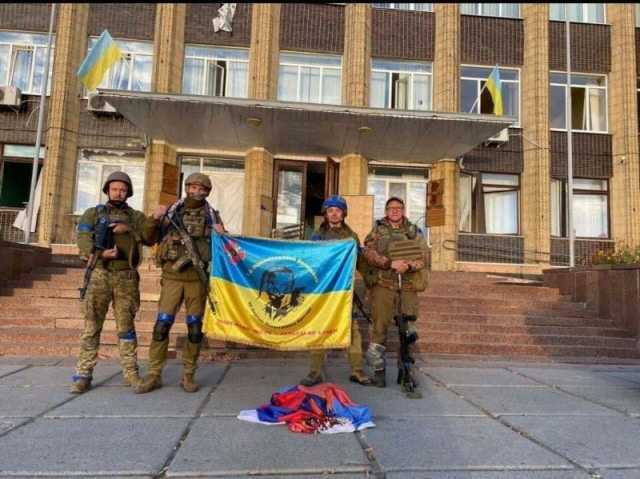
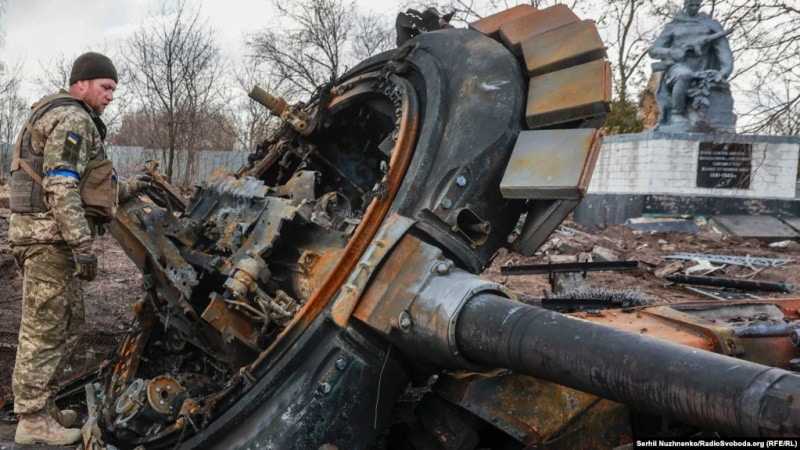
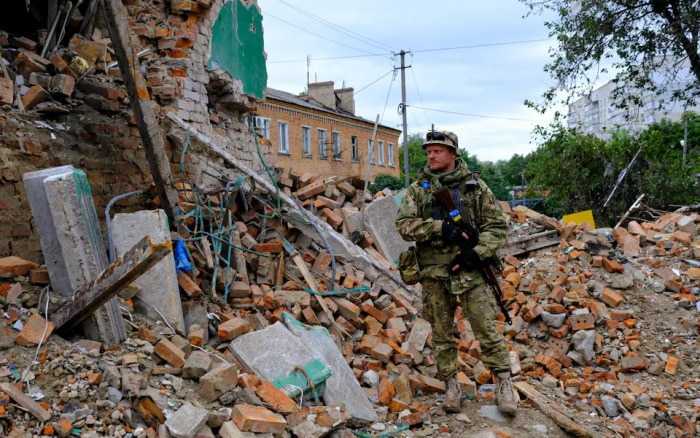
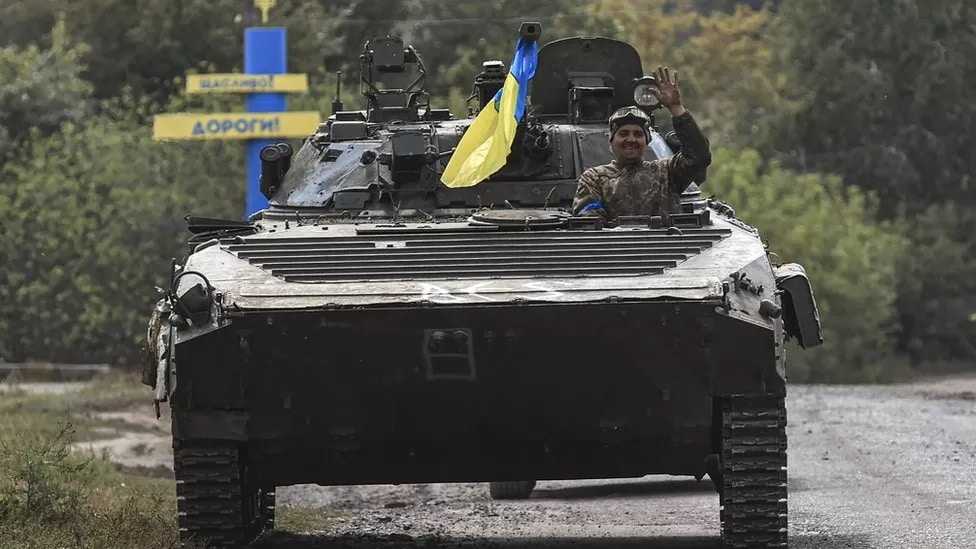
Ukraine’s military says its forces have retaken over 3,000 sq km (1,158 sq miles) during a rapid counter-offensive in eastern Ukraine.

The remarkable advance, if confirmed, means Kyiv’s forces have tripled their stated gains in little over 48 hours.

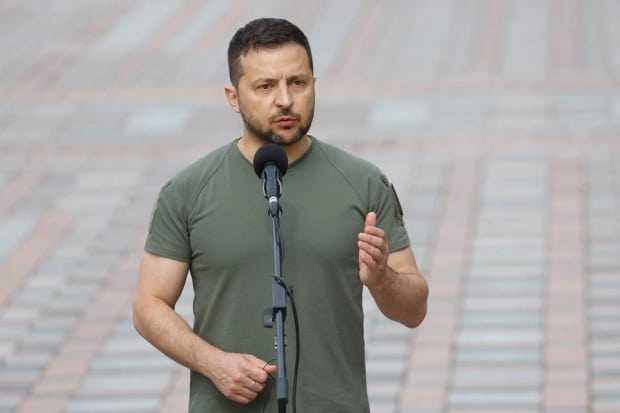
On Thursday evening, President Zelensky put the figure at 1,000 sq km, and then 2,000 sq km on Saturday evening.

The BBC cannot verify the Ukrainian figures, and journalists have been denied access to the frontlines.

A successful offensive means continued western aid. Banning access by the press is not a good look however.

Share

Russian grip on northeast Ukraine collapses after Kyiv severs supply line

KYIV/HRAKOVE, Ukraine, Sept 10 (Reuters) – Moscow abandoned its main bastion in northeastern Ukraine on Saturday, in a sudden collapse of one of the war’s principal front lines after surging Ukrainian forces threatened to encircle the area in a shock advance.

The swift fall of Izium in Kharkiv province was Moscow’s worst defeat since its troops were forced back from the capital Kyiv in March, and could prove a decisive turning point in the six-month-old war, with thousands of Russian soldiers abandoning ammunition stockpiles and equipment as they fled.

Share

Be My Brother, or I Will Kill You

Vladimir Putin’s regime seeks to make “friendship” between Russia and Ukraine a supreme bond—rejection of which can only be punished by death.

In 1960, Vasily Grossman submitted the manuscript of his masterwork Life and Fate to the review Znamya. The editor-in-chief, Vadim Kojevnikov, read it but, appalled, passed it to KGB headquarters in Moscow’s Lubyanka building. The work was immediately confiscated, one might even say kidnapped. The lesson of this massive book (1,200 pages) was unbearable for Soviet power: Grossman, who had been at Stalingrad, explains that Nazism and Communism are two warring brothers, who fight so much because they converge on the essential. Their rivalry is essentially mimetic; today, we know of Stalin’s fascination with Hitler—his admired as much as abhorred double—and that, later, Stalin also fascinated the Führer, as the Red Army pushed back the Wehrmacht and invaded eastern Prussia. The fanaticism of race was fully the equal of the fanaticism of class, each a source of mass murder. This was proven by the German-Soviet Pact of 1939, which included, among its secret clauses, the dividing up of Poland and the Baltic States, as well as the USSR’s massive delivery of petroleum, grains, and minerals to Nazi Germany. As Grossman spelled out in his last novel, Everything Flows, those who saw themselves as enemies were indeed twins, but the crushing of the Third Reich by the USSR, and especially by the Allies, has long dissimulated this terrible truth. “Anti-fascism” became a leitmotif of all Moscow leaders: any enemy of Russia must be fascist.
Share

Zelenskiy to appeal directly to U.S. defense companies

WASHINGTON, Sept 9 (Reuters) – Ukrainian President Volodymyr Zelenskiy is scheduled to speak to U.S. arms makers and military leaders on Sept. 21, when he is expected to make an appeal for more weapons for his country’s defense against Russia, according to an advance notice of the speech seen by Reuters.

Zelenskiy was set to speak by video link before a conference hosted by the National Defense Industrial Association in Austin, Texas, in his first-ever speech to the U.S. defense industry.

Share

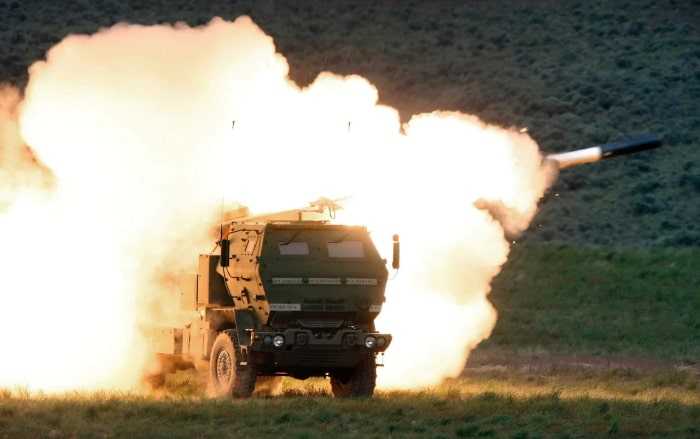
As Ukraine pleads for more weapons, allies warn the cupboards are almost bare

It may appear at times that the U.S. can call on a bottomless pit of military stores to supply Ukraine. Increasingly, however, western allies are balking at taking any more equipment out of their inventories to support the eastern European country’s war against Russia.

It’s an untidy, uncomfortable aspect of alliance politics that was acknowledged publicly on Friday by the secretary general of NATO.

“Some allies are now raising the issue of whether these stocks are depleted too much,” Jens Stoltenberg said after his meeting in Brussels with U.S. Secretary of State Antony Blinken.

Share

Team Putin Admits Their Worst Case Scenario Is Coming True

In the beginning of Russia’s invasion of Ukraine, the Kremlin’s top propagandists predicted a swift victory and derided the Ukrainian military as an unwilling bunch of incompetents. As the war dragged on, they continued to claim that Volodymyr Zelensky’s government was about to fall. Faced with Ukraine’s mounting counteroffensive, which is rapidly achieving impressive gains, Russian propagandists are now describing an enormous horde, armed with the best Western weaponry and swimming in foreign specialists.

Share

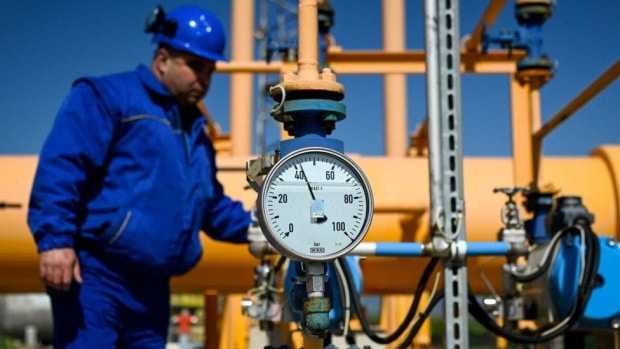
How Russia has weaponised the energy crisis

We must not trade Ukrainian sovereignty for cheaper gas.

Western leaders seemed almost pleased with themselves on Friday afternoon. The G7 finance ministers (from the UK, US, France, Germany, Italy, Japan and Canada) had agreed a plan to cap Russian oil prices. Meanwhile, European Commission president Ursula von der Leyen suggested also capping Russian gas prices. It looked like they were on the brink of reining in soaring energy costs at home, while still putting the squeeze on Russia.

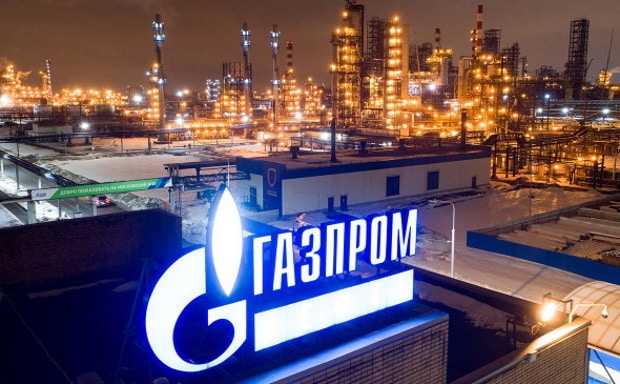
But within hours the mood had soured. Gazprom, the Russian state-owned gas company, announced that the vital Nord Stream 1 gas pipeline to Germany – which supplies approximately 35 per cent of Europe’s gas – would remain shut indefinitely after weeks of intermittent closures. There was more than a whiff of retaliation in the air.

Share

CIA director says Russia’s Ukraine invasion is a failure

The head of the CIA has said Vladimir Putin’s invasion of Ukraine can already be judged as a failure, as Ukrainian troops continue a counteroffensive against Russian occupying forces in the north-east of the country.

William Burns said Putin had underestimated Ukrainian resolve when he decided to invade in February and was now making the same mistake when it came to international support for Kyiv.

Share

German Toilet Paper Company Now Insolvent

The raging energy crisis has claimed another victim: toilet paper.

After enduring the hoarding fiasco brought on by COVID-19 government shutdowns, the future appeared bright for toilet paper manufacturers. Now, however, the energy crisis has wiped out the industry’s success stories in a very short time. The German company Hakle, a traditional toilet paper manufacturer, in business since 1928, has now succumbed to high gas prices and has filed for bankruptcy.

Share

‘Putin’s critics have a choice: flee Russia or rot in jail’

Ilya Yashin had always known that his time as a free man was rapidly running out. The Russian opposition politician was determined to use whatever weeks or months were left to tell his fellow citizens the truth about the war in Ukraine. But the truth is a dangerous thing in President Putin’s Russia.

In early March, eight days after Russia invaded Ukraine, Putin approved a new law that made it a crime to promote “fake” news about the actions of the Russian army. The charge carries a maximum sentence of 15 years in a prison camp. Scores of people have been charged under the law in the six months since it was adopted.

Share

Opinion: Our climate warriors forsake desperate Europe

Europe’s structural dependence on inexpensive hydrocarbon energy from its now-hostile Russian neighbour has had two crucial outcomes. It has amplified and accelerated destabilizing dynamics already in play, bringing about a transformation of the international energy landscape. And it has starkly exposed the spectacular failure of Europe’s 30-year, market-distorting climate policies, in particular its delusions about a renewables-based net-zero energy transition.

Reality is a merciless mistress: remove hydrocarbons and net-zero energy magic vanishes, exposing Europeans to the truly shocking social and economic fall-out of decades of wishful political thinking fundamentally divorced from reality.

Share

Cold showers and al dente pasta: Italy eyes end to Russian gas dependency

A plan by the Italian government to reduce the heating in homes this winter to slash dependency on Russian gas has been mocked by Moscow as “economic suicide”.

Rome said it wanted radiators in Italian homes used for two weeks less this winter and, when turned on, to be set 1C lower, with daily usage also reduced by an hour.

Heating in urban blocks of flats is controlled by city authorities, which are likely to heed the government ruling. Households with independent heating will be asked to comply on a voluntary basis.

Share

Ukraine breaks through enemy lines with ‘tank fist’ in Kharkiv lightning offensive

Kyiv advances 12 miles, as sources on both sides indicate army is trying to reach the strategic junction of Kupiansk

Ukrainian forces have broken through Russian lines with a “tank fist” as they advanced 12 miles on a lightning offensive in Kharkiv region.

The Ukrainian military continued to maintain an official silence about the progress of the battle south of Kharkiv, but multiple unofficial sources on both sides indicated that Ukrainian forces were trying to reach the strategic junction of Kupiansk.

That would leave thousands of Russian troops based in Izyum trapped against the Oskol river, a tributary of the Siversky Donets, with only three vulnerable bridges across which to evacuate.

Share

‘Cut Off One Of Their Ears’: In New Investigation, A Russian Soldier Describes Atrocities In Ukraine

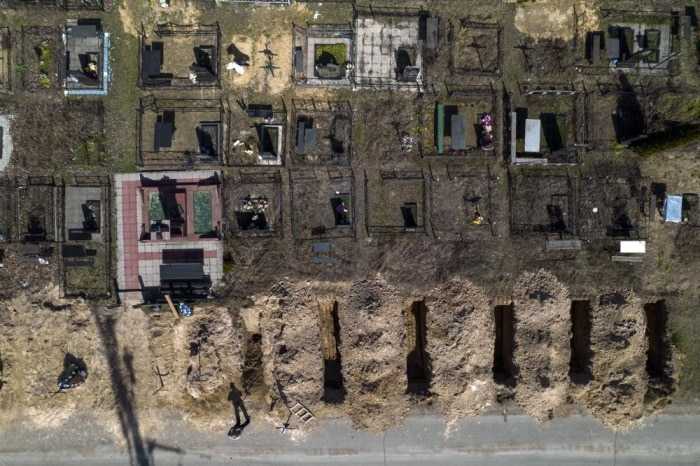
A severed ear. An order to “destroy everything you see.” Houses looted or pulverized by Russian tanks and armored personnel carriers.

Twenty-one-year-old Russian soldier Stanislav Shmatov had no idea the Security Service of Ukraine (SBU) was recording his conversations when he contacted family back in Russia this spring from northeastern Ukraine’s Kharkiv region.

Like other Russian military personnel in Ukraine in the first months after the February 24 invasion, he spoke freely.

Share

When German Environmentalists and Putin’s Government Had a Burning Love Affair

In 2011, the German Baltic Sea Nature Conservation Foundation (Naturschutzstiftung Deutsche Ostsee) was created as a result of an agreement between Nord-Stream, the three main environmental organisations in Germany — WWF, BUND (“Friends of the Earth”), NABU — and the state of Mecklenburg-Western Pomerania. This foundation was immediately provided with a lucrative budget of ten million euros by Nord Stream.

Share