‘Hundreds’ of Russian soldiers killed in Himars strike on holiday resort turned barracks

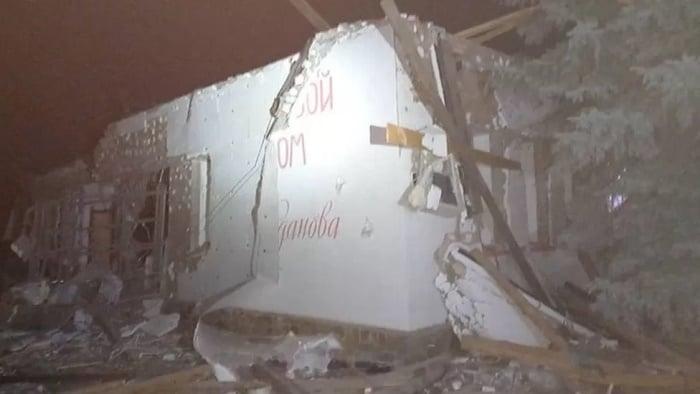
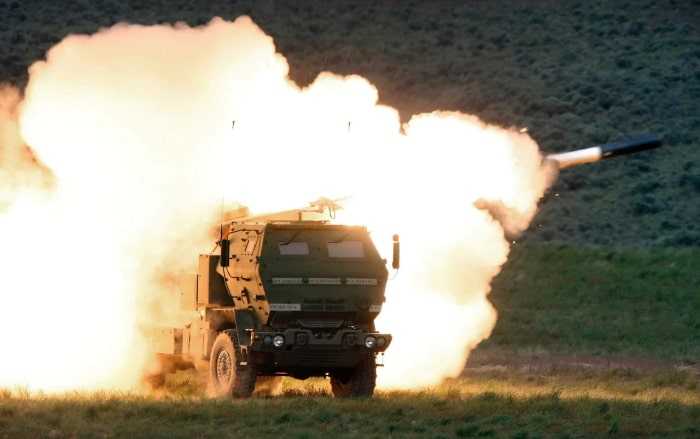
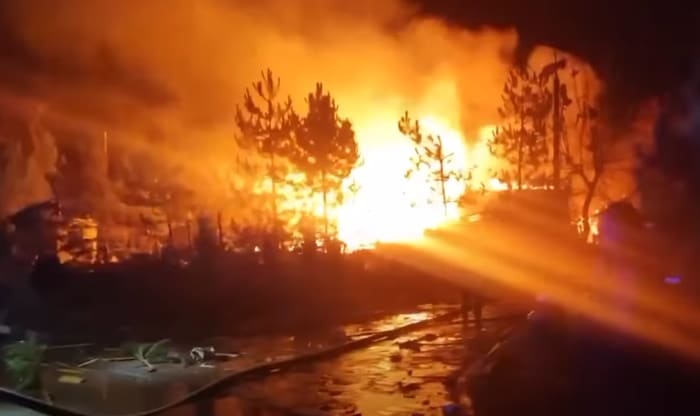
A salvo of Ukrainian Himars missiles fired against a Russian makeshift barracks has killed or wounded as many as 200 troops, Ukrainian officials claimed.

The volley of missiles was said to strike a recreation resort commandeered as accommodation by Russian forces in the occupied city of Melitopol.

The city’s exiled mayor, Ivan Fedorov, said the strike late on Saturday evening had overwhelmed hospitals in the city, with casualties being ferried to Crimea.

Share

Putin’s new strategy to win the propaganda war over Ukraine invasion

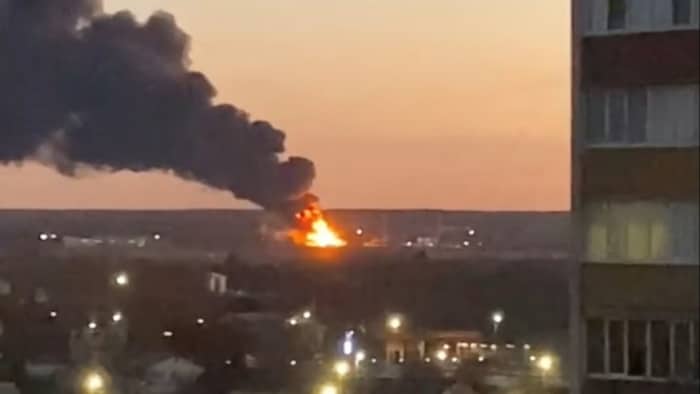
Long-range Ukrainian drone strikes on air bases hundreds of miles inside Russian territory on Monday and Tuesday demonstrated that Kyiv was willing and able to escalate the war on its own terms.

These attacks represent a serious military challenge for the Kremlin but are also politically convenient. They reinforce President Putin’s new message: that this is a national, patriotic struggle for the survival of the Motherland in which there can be no bystanders or backsliders.

Share

Ukraine strikes Wagner HQ in Luhansk, governor says

Ukrainian forces have struck a headquarters of Russia’s Wagner mercenary group in eastern Ukraine, Luhansk’s Ukrainian governor has said.

Serhiy Haidai said a hotel where the group was based in Kadiivka, Luhansk region, was hit. He added there were major Russian losses.

The BBC was unable to independently verify Wagner’s presence at the hotel.

Wagner are state-sponsored mercenaries who act in the Kremlin’s interests, according to Western experts.

Share

Neo-Nazi Russian militia appeals for intelligence on Nato member states

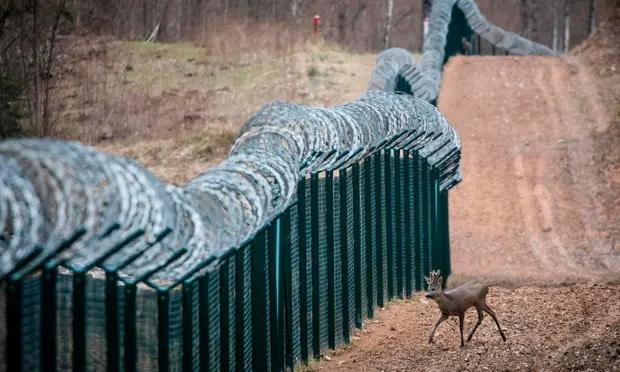
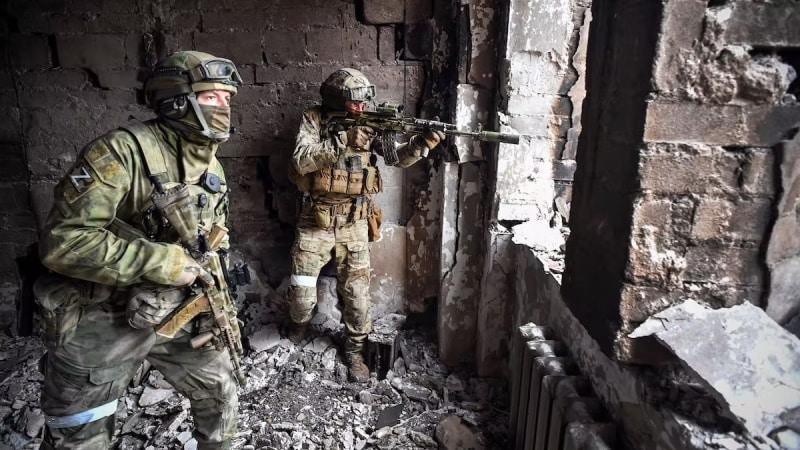
A neo-Nazi paramilitary group linked to the Kremlin has asked its members to submit intelligence on border and military activity in Latvia, Lithuania and Estonia, raising concerns over whether far-right Russian groups are planning an attack on Nato countries.

The official Telegram channel for “Task Force Rusich” – currently fighting in Ukraine on behalf of the Kremlin and linked to the notorious Wagner Group – last week requested members to forward details relating to border posts and military movements in the three Baltic states, which were formerly part of the Soviet Union.

The news has prompted questions over who has overall command over the far-right pro-Kremlin groups fighting in Ukraine.

Share

Thousands of Ukrainians Refugees Homeless in UK

Concerns are mounting in the U.K. about the number of Ukrainian refugees ending up homeless as their initial sponsorships come to an end.

“Hello, I need a help,” one Ukrainian refugee posted in the Facebook group Homes for Ukraine.

My sponsor won’t let me and my mom live with him anymore. It happened abruptly, and I don’t know what to do. I’m looking for renting room for not big money, as soon as possible 🙏One more thing, we have a cat. I would be thankful for any information. Thank you.

According to recent government data, 2,985 Ukrainians are already homeless.

Share

The future of the Wagner Group rests on Bakhmut

The mercenary force is leading the charge for a key battleground in Ukraine

Since late May, Bakhmut in the Donetsk Oblast has been the site of extremely heavy fighting. Yet, until recently, the city had garnered relatively little media attention compared to the successive Ukrainian victories in Kharkov and Kherson. This has changed as of late, with #Bakhmut trending regularly on Twitter and a flood of news reports and opinion pieces on the battle published daily.

Share

The Griner-Bout hostage swap is a victory for the Kremlin

Bout will become a symbol of Moscow’s commitment to its own

After a quiet swap in the United Arab Emirates, Brittney Griner is out of a Russian prison while the Russian arms dealer and presumed intelligence asset Viktor Bout is out of a US one. A little glimmer of humanity amid Cold War 2.0, or a dangerous hostage exchange with Moscow getting the best of the deal? Sadly, this is more the latter.

Share

Ukraine war: US says Iran now Russia’s ‘top military backer’

Russia and Iran’s relationship has warmed to a fully fledged defence partnership, the US has said.

Russia is giving an unprecedented level of military support, said US national security council spokesman John Kirby.

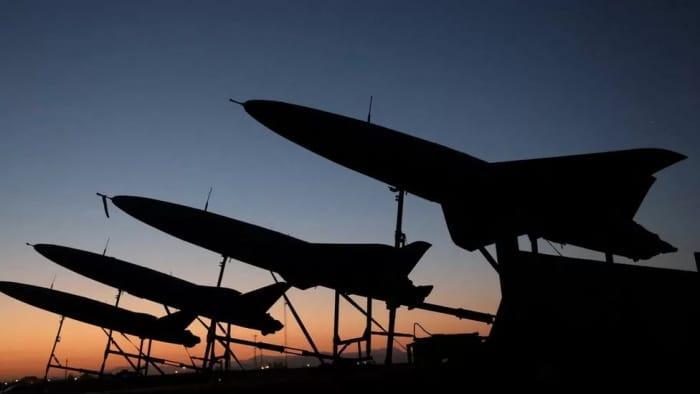
The US has seen reports that the two countries are considering joint production of lethal drones, he added.

Australia has announced it is sanctioning three Iranians and one Iranian business for supplying Russia with drones to use against Ukraine.

Share

U.S. Loses Track of Weapons in Ukraine

On November 27th, Fox News reported that U.S. President Joe Biden’s administration was

scrambling to track the nearly $20 billion in military aid that it has sent to Ukraine as Republicans warn of impending audits when they take control of the House [of Representatives] in January.

Incoming House Speaker Kevin McCarthy, as quoted by Fox News, said that an audit would be aimed at establishing to what extent “the U.S. aid is ending up in the wrong hands.” 

Share

Pentagon gives Ukraine green light for drone strikes inside Russia

The Pentagon has given a tacit endorsement of Ukraine’s long-range attacks on targets inside Russia after President Putin’s multiple missile strikes against Kyiv’s critical infrastructure.

Since daily assaults on civilians began in October, the Pentagon has revised its threat assessment of the war in Ukraine. Crucially, this includes new judgments about whether arms shipments to Kyiv might lead to a military confrontation between Russia and Nato.


The SU-25 is the Russian version of the Warthog

Share

NATO’s secretary general warns that a ‘full blown war’ with Russia is ‘a real possibility.’

NATO’s secretary general warned on Friday that Russia’s war in Ukraine could expand into a wider war with the Atlantic alliance.

The official, Jens Stoltenberg, repeatedly cautioned in media interviews this week against underestimating the situation in Ukraine and emphasized the wider threat President Vladimir V. Putin of Russia could pose to Europe.

“If things go wrong, they can go horribly wrong,” Mr. Stoltenberg said in an interview released on Friday with the Norwegian journalist Anne Lindmo, in which he added that there was “no doubt” a full-blown war against NATO was a “real possibility.”

Share

The Ukraine War one year on, Part 3: Lessons the West needs to learn – quickly

IN THIS final article in the trilogy, I will examine some possible lessons from the war so far. To begin with the Russian military: it clearly has some major issues to address around its doctrine, training, logistics, the integration of all arms and the co-operation of ground forces with air – the Russian Air Force has been far from the overwhelmingly dominant force that might have been expected. Bombardment, as we have already noticed, has papered over the cracks to date, but that would not suffice in a major conflict in which the US Air Force owned the skies. Solving these issues must, therefore, be a major implication for the Russian armed forces. We must expect that they will already be carrying out a ‘lessons-learned’ process, the outcome of which we will not see for a while since lessons are learned only when they result in changes to doctrine, practice or equipment; until then they are merely identified.

Share

What’s At Stake in Ukraine

A new documentary shows why Russia is losing the war.

Afew years ago, I found myself in Amsterdam watching the French intellectual Bernard-Henri Lévy debate Russian intellectual Aleksandr Dugin on the subject of American hegemony and the global order. Before an ambivalent audience at this public symposium, Lévy began with a rousing defense of the liberal creed. Dugin, whose philosophy supports Moscow’s aggressive foreign policy, submitted that liberalism was a species of “totalitarianism.”

Share

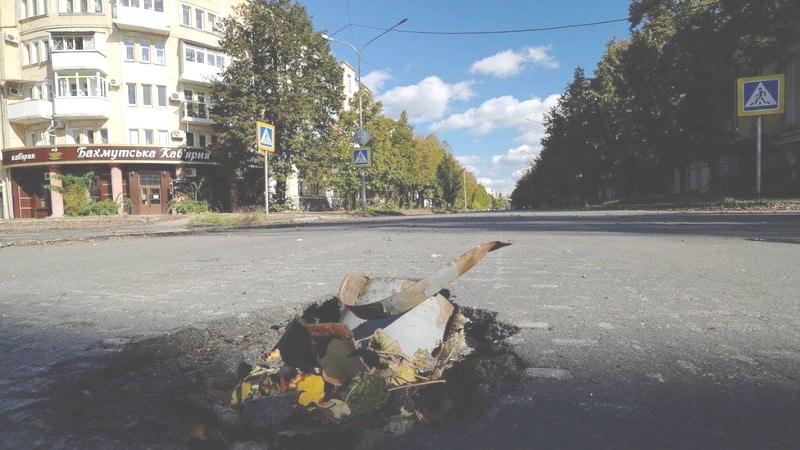
Inside Bakhmut: The strange and senseless death trap draining Ukraine’s tired army

The town has seen hundreds killed or wounded each day in bloody frontal attacks, yet holds little military significance

Peering through a telescope looking for enemy movement in no-man’s land, the Ukrainian soldier points out a warehouse held by Russian forces.

The adversaries are only 300 or 400 yards from their fighting position, uphill across a shattered landscape of blown out buildings and barren fields.

“They throw their meat at us,” says another soldier beside him, grimly referring to the human wave of assaults carried out by Russian mercenaries and poorly-equipped reservists.

Share

The Ukraine War one year on, Part 2: It’s going to be a long, cold winter

YESTERDAY I outlined the view of Western governments and media that Russia is on the back foot and that this is evident from the retreat at Kherson. In this second article I suggest that there is an alternative which could define what winning and losing might look like. The Russians, as I have already noted, are calling up their large pool of trained manpower. While they do this, they are making a calculated exchange of space in return for the time needed to do this. Why? Because once the wet weather of autumn and early winter is replaced any time now by a hard freeze, a winter offensive is entirely possible once the Ukrainians have lost momentum and used up their resources. The Russian Army is quite capable of this.

Share