

Our World

The year of cosmic shock – We’re living through a new Copernican Revolution

President Trump jokingly posts a doctored photo of himself leading an alien in chains out of Area 51, while, on a more serious register, his administration releases a huge tranche of previously undisclosed photos and information about UFOs. Elon Musk muses about human beings becoming an interplanetary species. Bryan Johnson preaches immortality through medicine. Markets panic when Claude’s Mythos AI proves — or appears — to be capable of hacking into some of the globe’s most secure digital systems. And we aren’t even halfway through 2026.
Trump just posted a photo of himself walking with an Alien on Truth Social 👽
We have never been closer to the truth. https://t.co/MEA9T4H1cf pic.twitter.com/0Gw9fdN253
— Interstellar (@InterstellarUAP) May 17, 2026
The young are trapped by hideously low expectations

Virtually everyone who is concerned about the future of the United Kingdom is worried about the recent news that more than one million young people – around one in eight 16- to-24-year-olds – are not in education, employment or training (NEET). The number of NEETs has grown by 195,000 over the past two years.
I am here … endeavoring to perservere
Howdy Y’all!
I am as busy as a bee well as much as Xavier will let me be.
Big changes afoot and much to research before making a leap to a new host.
Looking at providers, seeing if generic host firewalls can provide enough protection against the evil hordes that beset us daily or if I will have to maintain an outside provider.
Back to work I go!
PS Would Simus please check his email!
The Battle Over Britain’s Lost Youth

In psychology there is a concept known as agentic living: the idea that we have some sort of agency over our own lives. At heart it is a throwback to the age-old philosophical question: are we determinists who believe we live at the mercy of a fate already written, or do we, as Augustine hammered out, have freewill? On reading Alan Milburn’s excoriating interim report into ‘the moral crisis’ of one million 16–24 year-olds who are not in work or education (NEETs), it becomes obvious there is a sharp dividing line between determinists and those who attempt to exert agentic freewill.
Born in the ‘50s and ‘60s? Turns out we had it good
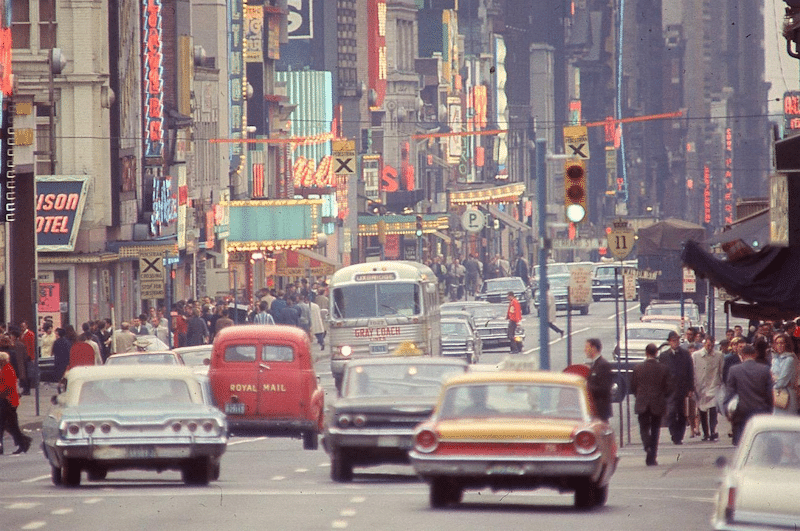
There are countless individual factors that could make anyone’s life less than enjoyable.
And all of us go through various hard times. I myself am going through a very rough patch now, between my health and that of others close to me.
That said, I will make the claim that those of us born in the late ‘50s and early ‘60s won life’s lottery.
Ancient Rome’s Benefits Doom Loop

The Roman Empire grew rich off the backs of other nations. There’s no question about that. War and conquest, but also bequests, made Rome the richest state in the ancient world by the second century BC, a time when wealth was all about gold, silver, land and food production, and slaves.
Rome was also lucky. The death of Alexander in 323 BC saw his vast empire fragment into the Hellenistic kingdoms, mainly of Macedonia, the Seleukid kingdom of Syria, and Ptolemaic Egypt. They enervated themselves over decades of inconclusive wars and were easy pickings for Rome. The people who lived there, exhausted by and sick of endless fighting, acquiesced easily into Roman rule. The Eastern Mediterranean grew richer than had ever been thought possible.
‘The Story of Everything’ 2026

The Story of Everything is a 2026 documentary addressing the question of whether or not science supports the possible existence of a creator God. Before I get too deep in the weeds of this review, let me say, I loved The Story of Everything. The Story of Everything is a polished, professional, engrossing documentary that any thinking person, including high school students, could enjoy. Please go see it in a theater if you can, and if you can’t, grab it up as soon as it appears in other formats. Its run is limited, and in the theater where I saw it, there was only one showing. Otherwise, I would have happily sat through this film three times. I was on the edge of my seat. I want a miniseries continuing the work of the documentary, complete with supplemental materials, including question-and-answer notebooks viewers can fill in to review, test, and reinforce all they’ve learned.

Brawls and Mobs at a Wristwatch Store?
The wristwatch business is always good for a research rabbit hole.
As watchmakers go, Swatch has been one of the most creative. One can now buy a men’s or women’s Swatch for anywhere from $65 to $250, either from thousands of department stores and specialty shops or from online vendors, or even from the 220 official Swatch branded stores all over the world.
Chaotic scenes and fights break out outside Swatch stores across the world with people fighting to get their hands on the new watch collaboration with Audemars Piguet. pic.twitter.com/rhNvnss6KC
— Oli London (@OliLondonTV) May 17, 2026
Canadian schools dispensing with Mother’s, Father’s Day … because, well, you know

Sage Creek Elementary School, located in Winnipeg, Manitoba, has decided to jettison Mother’s Day and Father’s Day presents in favor of much vaguer “family” gifts, which the Increasingly Less White North’s National Post noted is “part of a new trend among some Canadian schools downplaying or eliminating the traditional parental celebrations.”
Gee, I wonder why they are doing this. Just kidding.
No Wonder Men Are Opting Out

The warning signs have been there for decades. Back in 1983, American author Barbara Ehrenreich wrote a powerful book — The Hearts of Men: American Dreams and the Flight from Commitment — arguing that a male revolt was underway. Since the 1950s, she suggested, men had begun rebelling against the breadwinner ethic, inspired by Playboy culture, the counterculture and a desire for personal freedom. They were rejecting the cultural ideology that had shamed them into tying the knot and becoming a good provider, lest they be seen as immature, irresponsible and less than a real man.
Ehrenreich understood that marriage was the mechanism by which society harnessed male productivity. Remove the shame and the yoke comes off.

Canadian Millennials living with parents into adulthood double the rate of Boomers at same age

A new Statistics Canada study has confirmed what housing researchers and young Canadians have argued for years: the generational ladder to homeownership has not just gotten harder to climb for many Millennials, but for an increasing number, it has been pulled up entirely.
Released last week, the study draws on Census of Population data from 1991, 2006, and 2021 to compare how Baby Boomers, Gen Xers, and Millennials each fared in the housing market between ages 25 and 39. The study found Millennials more likely to live with parents, less likely to own, and, when they do own, far less likely to own the kind of home previous generations took for granted.