CANZUK, the EU, and the Future of the West

As I write these words, June 10 was not too long ago, but being before the European, British, and French elections, in some ways it feels like an eternity ago. June 10 is White Rose Day, the day on which, in 1688, the de jure King James III and VIII of England, Scotland, and Ireland was born. It precipitated the overthrow of his father in the so-called Glorious Revolution, the ongoing subjection of the British Monarchy to the political factions dominating Parliament, and the Jacobite uprisings so dear to song and story. In commemoration of the day, this writer had lunch with several other like-minded folk.

Share

I am back! I gots the Power!

The power came back on when things were looking their most bleak at approx 3:30PM.

Our emergency generator was not guaranteed a fuel refill as silly things like hospitals may have needed it more than your stalwart blogger.

That would mean no elevators or water.

But so far so good touch wood.

Please thank Sarcasticat for rising to the occasion and filling in.

Thank you all.

BCF

Share

Kelly McParland: It isn’t just Trudeau — the West is saddled with duds at the top

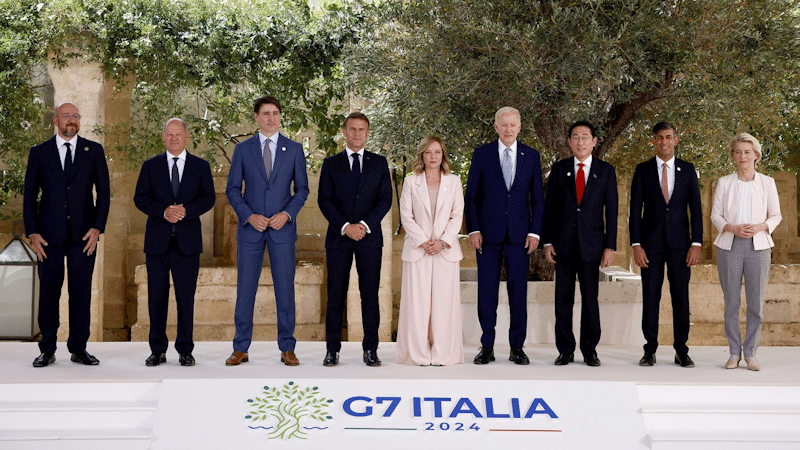
The opening get-together in the annual summer summiteering season was titled G7 Italia, after the location at a posh resort on the Adriatic coast. It should rightly have been Dead Men Walking.

Rarely if ever have so many unpopular, discredited, likely-to-be replaced national “leaders” gathered on a stage to be opped for a photo that would be out of date almost the moment they landed back in the countries that desperately want to be rid of them.

Share

Why it’s too late to stop World War 3

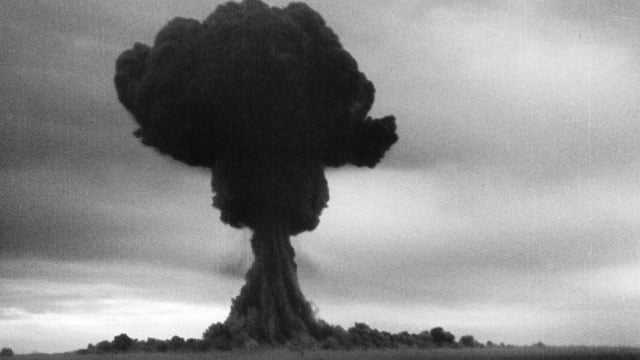
Imagine, for a moment, that the Iranian government ann­ounces it has developed a nuc­lear bomb and threatens to use it on Israel. The United States reacts with the threat of military intervention, as it did in 1991 and 2003 in Iraq. Iran signals that it will not tolerate a third Gulf war and looks for allies. American forces mass to enter Iran, which orders national mobilisation. Russia, China and North Korea express their support for Iran, and Washington expands its intervention force, bringing in a British contingent. Russia enters the game, raising the stakes in the expectation that the West will back down. A nuclear standoff follows, but with tense and itchy fingers on both sides, as leaders gamble on the risk of not striking first, it all ends in disaster. The Third World War begins with an exchange of nuclear fire, and the rest, as they say, is history.

Share

Who will win a post-heroic war?

Neither the West nor its enemies are prepared to fight

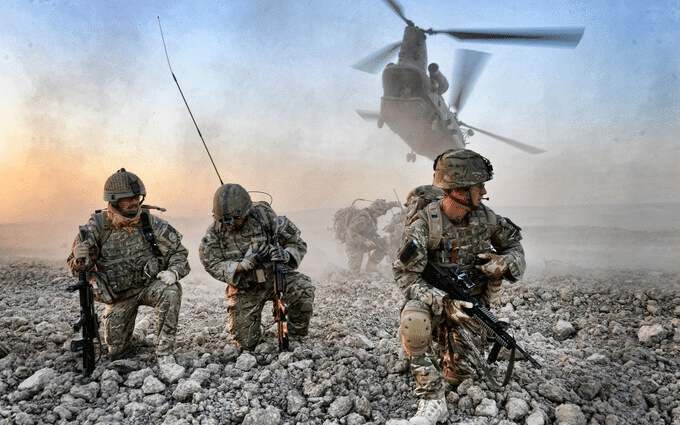
Neither the West not its enemies are prepared to fight. Some 30 years ago, I coined the phrase “post-heroic warfare” to acknowledge a new phenomenon: the very sharp reduction in the tolerance of war casualties. My starting point was President Clinton’s 1993 decision to abandon Somalia after 18 American soldiers were killed in a failed raid. But in truth, post-heroic attitudes had already emerged — and not just in affluent democracies. In 1989, the Soviet Union, whose generals could once lose 15,000 men before breakfast without batting an eyelid, abandoned Afghanistan after 14,453 of its soldiers were killed over almost a decade.

Nor was the post-heroic phenomenon strictly related to the merits, or lack thereof, of any particular act of war. Margaret Thatcher stayed up all night writing personal letters to the families of every one of Britain’s 255 dead in the Falklands. But it did not mollify her critics, who argued that Britain should never have used force, even if it meant that Argentina would be allowed to conquer the islands.

Share

uOttawa launches world’s first master’s degree in psychedelics and consciousness studies

The University of Ottawa has launched a master’s program aimed at equipping students with the knowledge and skills they need to harness the therapeutic potential of psychedelics.

The program, which opens next September, will be housed in the university’s psychology department, but run in partnership with the department of classics and religious studies. Students will be able to take a broad range of courses from neuroscience to comparative mysticism.


This guy was the inspiration for Doc in Back to the Future.

Share

Sometimes People Aren’t Merely Misguided. They Really Are Evil

A difficult concept to explain to ordinary people is that some people and some ideas are unadulterated evil, not just in their implementation but in their conception. Most of us are unfamiliar with evil because we spend much time and effort staying as far away as possible. There’s also an impulse to humanize others. Many want to believe the best in people and trivialize or gloss over readily observable behaviors that might lead to seeing a person as evil. People misinterpret evil acts as separate and apart from having an evil soul.

Share

Revolt of the Normies: Voters Seem Ready to Restore Common Sense

One would not like to become overconfident about the coming European election results—the steady-on advice of The European Conservative’s Ellen Fantini is a must-read—but perhaps we can allow ourselves a moment to savor the taste of flop sweat oozing from the pores of anxious liberals. They sense that something terrible is about to happen to them, and they don’t know what to do.

Share

The Free World: An Alarming Status Report

In the last few years, we have witnessed a world that has become significantly less safe and secure. American and Western policy failures and strategic missteps appear to have emboldened adversaries and undermined allies. A lack of decisive action and coherent strategy has created power vacuums which have been exploited by hostile actors and resulted in increased instability and threats in the West to both national and global security. It seems urgent for the long-term survival of the United States and the Free World – where people enjoy unprecedented freedom of speech, property rights, economic opportunity, religious freedom and other civil liberties – not to accept assaults on these hard-won achievements either at home or abroad.

Share

To the European Right: Don’t Snatch Defeat from the Jaws of Victory

Yet another parasitical EU bureaucracy

While newsrooms across Europe, including ours, scramble to report on the fallout between right-wing parties and analyze what the shake-ups in political groupings might mean for the next European Parliament, we should not forget that the Right has an historic opportunity to make an impact in the larger battle for Europe. It should not be wasted on internal power-struggles and infighting.

Ordinary Europeans do not care about comings and goings in Brussels-based political groupings. “Will they stay in ECR? Will there be a split in ID? Will there be a new faction?” While we will certainly report on these questions, the truth is that nobody in the real world really votes on the basis of whether their party of choice is in the European Conservatives & Reformists (ECR) or in Identity & Democracy (ID). We must be careful not to get so drawn into parliamentary machinations that we lose sight of the big picture.

Share

Google declares the end of the World Wide Web

No company is quite so inseparable from the World Wide Web as Google, which made searching the internet an eponymous verb. The web made Google rich, too, but this week Google relegated it to a submenu. In a design of its next-generation home page that the company showed at its annual I/O developer conference this week, the demotion is quite clear.

Searching now returns a blancmange of content in special pull-out boxes, apps and features, some of it artificially generated. The days of lists of links are over — if you want to see web pages the tech giant now offers a “new ‘Web’ filter” that will refine your search to only see web pages. This may startle Generation Xers whose first taste of the online world was via a web browser, but the web has become a legacy format like the DVD.

Share

How the working class was frozen out of telly

A medium designed for the masses has been colonised by middle-class Tristrams.

Strike a light! New research published this week from the Creative Industries Policy and Evidence Centre has exposed that in film, TV and radio, just over eight per cent of ‘creatives’ are from working-class backgrounds – the lowest percentage in a decade. This does not surprise me in the slightest, though it is always nice to have some juicy stats to confirm what one already suspected.

Share

Gen Z’s Gender Stalemate

Young men and women are increasingly divided.

Sex and politics are clickbait material, so it’s little surprise that The Economist’s early March article “Why Young Men and Women Are Drifting Apart” went viral. In this case, the attention was warranted. The article adds to our understanding of the long-standing gender gap in politics to include the often-puzzling Generation Z, spotlighting trends with implications reaching far beyond any particular election.

Share

How Eurovision became a carnival of nationalism

What happens when you mix chauvinism with continental camp?

As the protests in Malmo over Israel’s inclusion in this year’s Eurovision Song Contest, like the anguished defences of taking part by British and Irish contestants show, the kitschy spectacle is an inherently geopolitical format. In the interests of fairness then, should Palestine, like its neighbour Israel, enter Eurovision?

It is difficult to imagine a coherent argument against it on cultural grounds: after all, one of the arguments Israel’s supporters currently find most objectionable is that Israelis (most of whom are now descended from Middle Eastern Jewish refugees) “really” belong in Europe. In fact, the question is not technically a cultural one: as Palestine is not a member of the European Broadcasting Union, it is not eligible to join. Yet all the other Arab states neighbouring Europe are EBU members, and free to take part if they wish to: Morocco’s 1980 entry was — so far — the only Eurovision entry to be performed in Arabic, while Lebanon only withdrew its planned 2005 entry once the state broadcaster realised it would not be permitted to censor Israel’s performance. But that the question immediately asserts itself as a cultural one — a drawing of borders between our European home, and outsiders — reaches to the very heart of the contest’s meaning.

Share