Trump revives annexation comments as governors say tariffs on Canada will harm Americans

Trump revives annexation comments as governors say tariffs on Canada will harm Americans

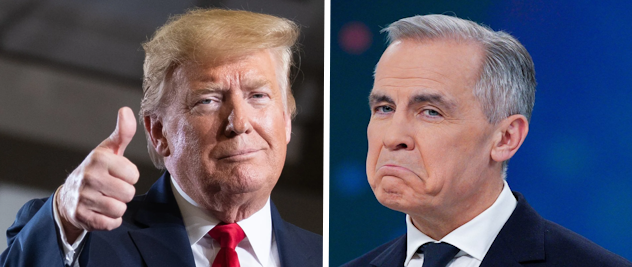
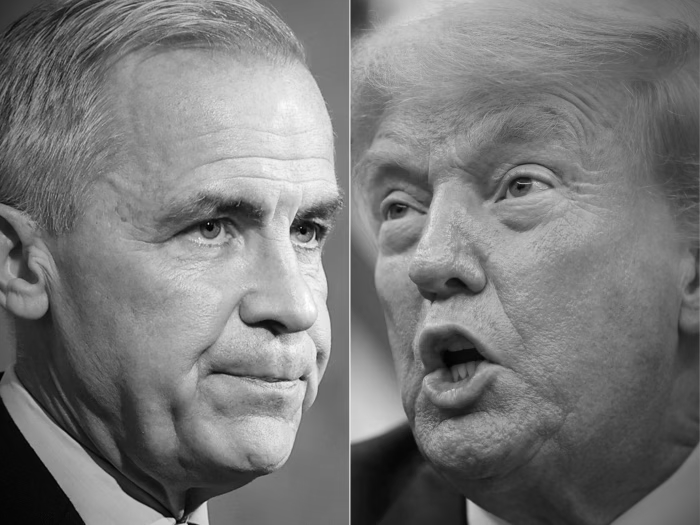
U.S. President Donald Trump is reviving his annexationist rhetoric after Canada walked away from a punishing prospective trade deal.

In his first comments since talks collapsed late Friday, triggering an escalation in Mr. Trump’s continental trade war, the President posted to Truth Social shortly after 1 a.m. on Sunday.

“Canada wants the benefits of being a State, without being one!!! They have also charged our great farmers, for many years, massive amounts of Tariffs. No more!!!” Mr. Trump wrote.

Share

Mark Carney should ally with Michigan Islamist Abdul El-Sayed to score big against Trump in US midterms says Star

Mark Carney should ally with Michigan Islamist Abdul El-Sayed to score big against Trump in US midterms says Star

Abdul El-Sayed wants to be elected this fall as the next U.S. Senator for Michigan.

On Saturday, the Democratic candidate accused his Republican opponent of blindly supporting U.S. President Donald Trump and his new 50 per cent tariffs on Canada, which he said would cost Michigan families thousands of dollars a year.

“He’s a sock puppet who will do whatever Trump wants,” El-Sayed tweeted of Mike Rogers, a former FBI special agent, “no matter what it costs you.”


Abdul El-Sayed to Speak at Conference Calling for Muslim Takeover of U.S.

Share

Trump says Canada wants ‘benefits’ of being US state after trade talks collapse

Trump says Canada wants ‘benefits’ of being US state after trade talks collapse

US President Donald Trump has said Canada wants “the benefits of being a State, without being one” after trade talks between the two countries collapsed late on Friday.

In his first comments since negotiations broke down, triggering new 50% US tariffs on a range of Canadian goods, Trump also said American farmers had been charged “massive amounts of Tariffs” for years.

It comes after Canadian Prime Minister Mark Carney called the fresh tariffs a “miscalculation” designed to “hurt and divide us”.

Share

How to Lose a Trade War

How to Lose a Trade War

U.S.-Canada trade talks collapsed last night. Punitive Trump tariffs will now go into effect. Canada will reciprocate with retaliatory tariffs of its own.

The story may not be over. Donald Trump is notorious for issuing threats, then reversing them. Wars are on, off, on again, off again, then on a third time—but only as a “little detour.” This is not an administration that thinks even one move ahead. But without a supersized Trump TACO, the U.S.-Canada impasse likely won’t resolve soon.

The Trump administration has one big idea about Canada: The U.S. is larger, stronger, and richer than Canada, so Canada must sooner or later surrender to Trump’s demands.

That one big idea is wrong.

David Frum alert.

Share

Canada ‘doesn’t have a military,’ Duffy says as cross-border trade war ignites

Canada ‘doesn’t have a military,’ Duffy says as cross-border trade war ignites

Transportation Secretary Sean Duffy fired back at Canada on live television Sunday morning after Canadian Prime Minister Mark Carney announced “dollar-for-dollar” retaliatory tariffs in response to the new 50% U.S. tariffs.

Speaking on Fox News Sunday, Duffy said it was “foolish” for Canada to start a trade war with the United States, in part, because America’s northern neighbor “doesn’t have a military.” Canada does have a military, though it is much smaller than the U.S. military.

Share

Conservatives call on government to release U.S. trade offer details

Conservatives call on government to release U.S. trade offer details

OTTAWA — Federal conservatives are calling on the government to release the full details of the trade offer from the United States that Canada rejected this week.

In a letter to Trade Minister Dominic LeBlanc, Canada-U.S. relations critic Shuvaloy Majumdar said while his party supports the government’s decision to reject the deal, Parliament is in the dark on what was on the table.

Majumdar said he’s not asking for “negotiating secrets,” but rather information that both the Canadian and U.S. governments already know.


Surely someone took notes? Or did the dog eat them.

Share

Mark Carney doesn’t stop the United States from driving negotiations over a cliff

Mark Carney doesn’t stop the United States from driving negotiations over a cliff

After a week of manufactured drama and unnecessary strain, Prime Minister Mark Carney emerged on Saturday morning to explain “why we’re walking away from a bad deal — and what comes next.”

“For over a year, Canada has worked intensively and in good faith with the United States to negotiate a new, comprehensive trade deal,” Carney said. “We’ve been pragmatic, patient and persistent.”

Apparently that was not sufficient. In a statement released 20 minutes to midnight on Friday night, Carney said that “last-minute changes” in the terms proposed by American negotiators were “unfair, uneconomic, and called into question the reliability of any deal.”

He is a ChiCom asset.

Share

Trump’s Top Trade Representative Details Offer That Canada Rejected

Trump’s Top Trade Representative Details Offer That Canada Rejected

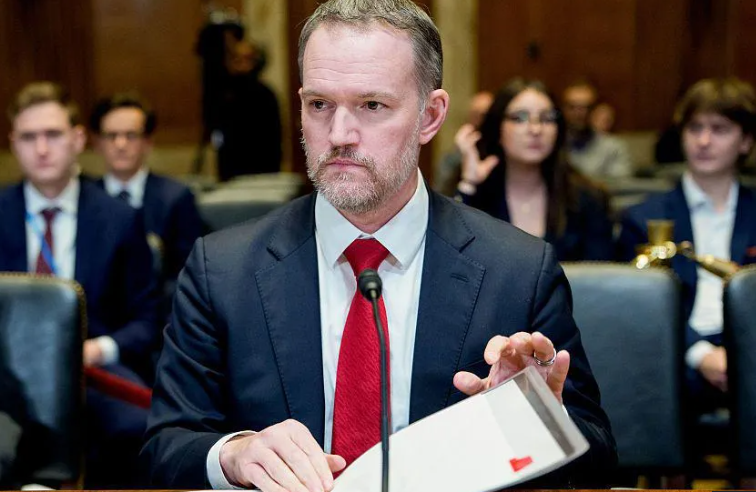
The United States had offered to reduce its tariffs on steel, aluminum and autos, and eliminate a recently imposed tariff on Canadian lumber, before negotiations suddenly collapsed last night, Jamieson Greer, the U.S. trade representative, said Saturday.

In an interview with The New York Times, Mr. Greer detailed previously confidential and unreported elements of the U.S. trade offer to Canada, saying those measures would have given Canada the most preferential treatment of any trading partner.

Share

GOLDSTEIN: Job losses, inflation and bail-outs – the high costs of an all-out trade war

GOLDSTEIN: Job losses, inflation and bail-outs – the high costs of an all-out trade war

In responding to the breakdown of Canada-U.S. trade negotiations late Friday with dollar-for-dollar matching counter tariffs against the U.S. starting on Sept. 8, Prime Minister Mark Carney is embarking on a strategy he said was unrealistic a year ago.

This actually marks the second time he has reversed policy on the issue of dollar-for-dollar retaliatory tariffs.

Share

Inside the 72 hours that cratered the US-Canada trade deal

Inside the 72 hours that cratered the US-Canada trade deal

U.S. Trade Representative Jamieson Greer entered a meeting with Canadian officials Friday afternoon with a frown.

For more than a week, Greer had been in wall-to-wall negotiations with Canada’s top trade officials, and the two sides were tantalizingly close to striking a deal that would break through more than a year of icy diplomatic and economic relations. The two North American neighbors had agreed on the overarching framework. Industry groups and stakeholders had been briefed. A deal seemed imminent.

Hours later, it fell apart.

Share

Mark Carney has cemented his post as leader of the anti-Trump resistance

Mark Carney has cemented his post as leader of the anti-Trump resistance

Prime Minister Mark Carney walked away from a U.S. trade deal Friday night. In doing so, he has cemented his post as the leader of the international resistance to U.S. President Donald Trump.

That may be of little consolation to Canadian alcohol, dairy and automobile producers who are now facing new 50 per cent tariffs on goods exported to America, or indeed to any other tariff-hit industries and companies struggling through the trade war.

But it matters to Canada in a longer-term calculation.


I don’t trust Carney to tell the truth on any matter.

Share

Donald Trump’s negotiators saved Canada from making a big mistake

Donald Trump’s negotiators saved Canada from making a big mistake

Canadians may owe Howard Lutnick a debt of gratitude.

It was a final-hours intervention by the U.S. Commerce Secretary, who’s peculiarly belligerent toward Canada even by the standards of Donald Trump’s White House, which seemed to coincide with new American demands that scuppered the tentative trade agreement between the two countries.

If so, he did Canada a service by reminding Mark Carney and his negotiators who they were dealing with — and saving us from a bad deal that probably would’ve only looked worse down the road.


Trade deal restrictions with other partners like communist China are nothing new, Canada the US and Mexico all agreed to abide by them in CUSMA.

Grok says – Yes, in a limited way: Canada agreed to specific restrictions and conditions under Article 32.10 of CUSMA (also known as USMCA or T-MEC) regarding free trade agreements (FTAs) with “non-market countries i.e. China” There is no general ban on partnering with other nations.

I think word has gone out to the LPC’s media that Lutnick is to be the preferred whipping boy.

Good choice but not the cause of Canada’s woefully poor performance.


More … U.S.-Canada trade talks have collapsed. Carney says these 3 issues torpedoed them

The changes to Auto tariffs are a head scratcher.

Leaks during negotiations said a 15% tariff was agreed upon. A number many have pointed out would be slow suffocation to the auto industry but one Team Carney seemed willing to live with.

A slow death is preferable to sudden shock I agree and that seems to be the collateral damage Carney could accept because ChiCom EV’s!

And I don’t care about Quebec’s culture, the province is a drag on Canada.

Share

LILLEY: Carney walks away, now Canada faces the tariff fallout

LILLEY: Carney walks away, now Canada faces the tariff fallout

Mark Carney has bet that no deal is better than a bad deal – and Canada is about to find out whether that gamble pays off.

By walking away from negotiations with the Americans, Canada now faces 50% tariffs on a long list of goods.

By the sound of what was on offer, the proposed deal with the Americans isn’t one the Prime Minister could sign and sell to the Canadian public.

Share

Jivani calls Carney’s dollar-for-dollar tariff response an ‘overreaction’ that will ‘accelerate conflict’

Jivani calls Carney’s dollar-for-dollar tariff response an ‘overreaction’ that will ‘accelerate conflict’

OTTAWA — Outspoken Ontario Conservative MP Jamil Jivani says that Prime Minister Mark Carney is erring in trying to “accelerate conflict” with the U.S., after cross-border trade talks broke down late Friday night.

Jivani told National Post that Carney struck the wrong tone in a fiery missive, sent just before the midnight deadline, vowing to match imminent 50 per cent tariffs on some Canadian goods “dollar for dollar.”

Read Mark Carney’s full speech after trade talks with the U.S. collapsed

Share