Phoenix Built an Empire of Cubicle Jobs. AI Is Coming to Tear It Down.

Phoenix Built an Empire of Cubicle Jobs. AI Is Coming to Tear It Down.

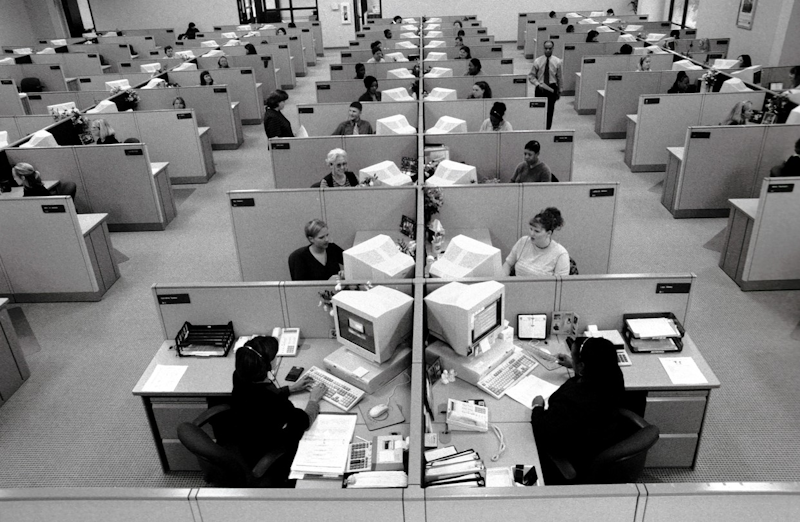
PHOENIX—All around this desert city’s sprawling metro area, low-rise office parks with tinted windows and vast parking lots stretch to the horizon. This is America’s back office.

Abundant land and cheap labor made Phoenix a premier place for companies to stash lower-paid office workers who don’t need to be physically close to clients or headquarters. The cubicle-based jobs—customer service, data entry, payroll processing—created a vital ladder to the middle class, helping replace factory work lost to overseas competition.

Now, these white-collar jobs are fading, too, thanks to continued offshoring and, increasingly, artificial intelligence. Tens of thousands of local workers suddenly face an uncertain future.

Share

In “Magnifica humanitas,” Pope Leo fires a broadside against AI companies

In “Magnifica humanitas,” Pope Leo fires a broadside against AI companies

VATICAN CITY — In his first encyclical, Pope Leo XIV put forth an ode to human dignity in the era of AI on Monday, delivering a far-ranging treatise on the morality of technology that included a dramatic plea for guardrails to ensure that artificial intelligence eases — rather than exacerbates — inequality and poverty, helping to improve conditions for workers and limiting the power of technology companies over the vast computing resources that could reshape how human beings live.

An encyclical is among the highest forms of papal documents, and Leo’s first — his most important writing to date — positions AI as the catalyst of a new kind of industrial revolution, a cognitive one that has already begun to redefine how the world works, lives, plays, loves and wages war. The document sets a clear tone for Leo’s early papacy, elevating the ethics of AI to a religious imperative in the same way Pope Francis did with the fight against climate change a decade ago.

Share

Bank boss apologises for saying AI will replace ‘lower value’ humans

Bank boss apologises for saying AI will replace ‘lower value’ humans

The boss of Standard Chartered has apologised for saying artificial intelligence would replace “lower value” humans.

Bill Winters, who has run the London-listed bank for more than a decade, said this week that Standard Chartered’s push into AI would eliminate thousands of roles, replacing “lower-value human capital” with technology.

The comments sparked a backlash and in a post on LinkedIn on Friday following the uproar, Mr Winters apologised for his choice of words.

Share

Big Tech’s big data-centre problem

Big Tech’s big data-centre problem

In April, the Big Four tech firms – Alphabet, Amazon, Meta and Microsoft – pledged to invest a combined $725 billion in AI infrastructure over the next year. The rosy global future these companies envision is fuelled by a never-ending expansion of data centres. These are massive banks of microchips which require vast energy sources to power them, and large reservoirs of water to cool them.

Share

Why AI will tip human evolution in favour of conservative and religious people

Why AI will tip human evolution in favour of conservative and religious people

THERE is a fascinating short story by EM Forster called The Machine Stops. In this story, humans live underground and are completely reliant on a machine which does everything for them. Strong, healthy people have been bred out because they become unhappy living underground. Then, one day, the machine stops and humans are plunged back into the harsh Darwinian conditions that we were subject to until the Industrial Revolution. The story is a cliff hanger, but the future is obvious: there is going to be mass death.

Share

Sam Altman’s on top in Silicon Valley. Former colleagues keep saying that he’s a liar.

Sam Altman’s on top in Silicon Valley. Former colleagues keep saying that he’s a liar.

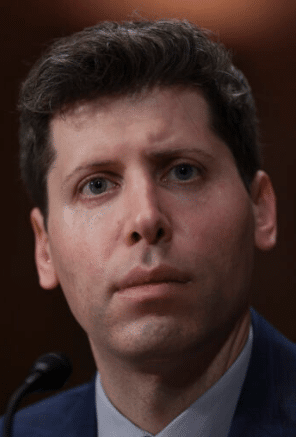
OAKLAND, Calif. — “Do you always tell the truth?” an attorney for Tesla CEO Elon Musk gruffly asked Sam Altman, CEO of ChatGPT maker OpenAI, in federal court this week.

“I believe I’m a truthful person,” Altman replied. The attorney pivoted, asking him if people Altman did business with would ever think he misled them. “I can’t answer that for other people,” said Altman — but several had already had their say in court.

Altman spoke on Tuesday in the closing days of a trial in which several of his onetime close associates, including former OpenAI executives and board members, testified that he misled or lied to them.

Share

Artificial intelligence industry claims looming ‘singularity’ will change everything

Artificial intelligence industry claims looming ‘singularity’ will change everything

It has been called the most important chart in the world.

Every time one of the world’s top artificial intelligence companies unveils a new system, employees at the US research organisation METR put it through its paces, testing its ability to complete a series of increasingly complex tasks.

The tasks are measured by how long each one would take a skilled human.

Share

California’s War on Autonomous Trucking

California’s War on Autonomous Trucking

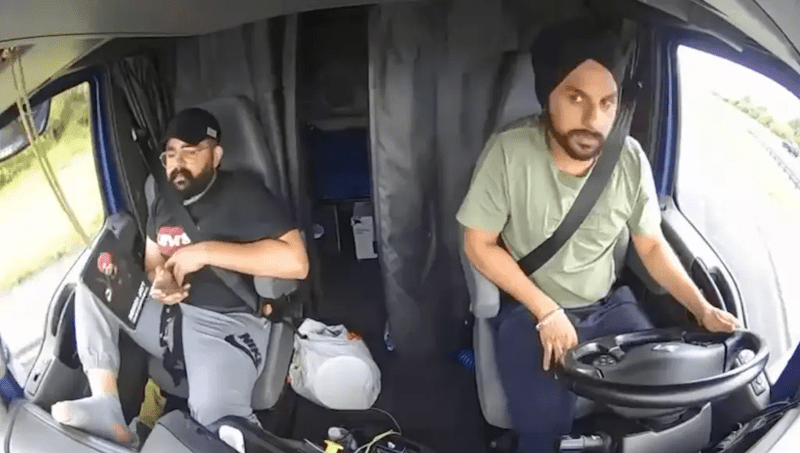
As notorious as California freeways are, the state’s leading gubernatorial candidates are vying to make things even worse. Former Health and Human Services Secretary Xavier Becerra and billionaire fossil-fuel investor Tom Steyer have each vowed to reverse the California DMV policy authorizing autonomous truck testing. Though framed publicly as a safety issue, the candidates occasionally reveal that the real conflict is between labor and technology.

Share

Government-Controlled AI Could Enable Surveillance, Impact Free Expression: Report

Government-Controlled AI Could Enable Surveillance, Impact Free Expression: Report

Greater government control over artificial intelligence in Canada could allow increased surveillance of users and discourage people from speaking freely in private interactions with AI systems, according to a Canadian rights advocacy group.

Increased state involvement in AI systems could also lead to routine government access to private conversations and data, according to a May 5 report by the Justice Centre for Constitutional Freedoms (JCCF).

Share

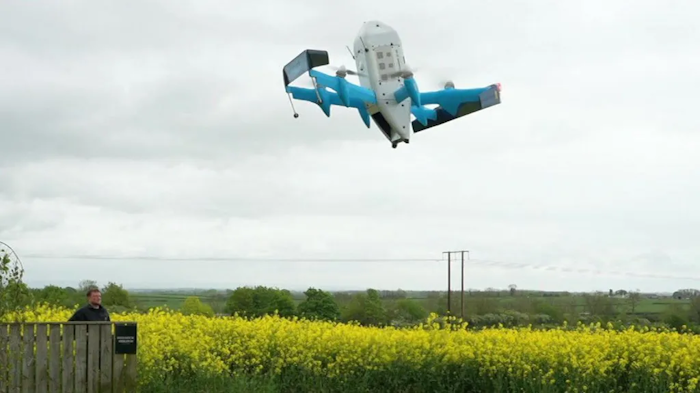
‘We had people come just to see it’: Amazon delivers its first UK parcels by drone

‘We had people come just to see it’: Amazon delivers its first UK parcels by drone

Amazon has become the first retailer in the UK to start a drone delivery service with a limited launch in Darlington, County Durham.

Packages weighing less than 5lb (2.2kg) and containing everyday items such as beauty products, batteries and cables are now being delivered within a 7.5 mile (12km) radius of Amazon’s fulfilment centre.

The tech giant is convinced there is demand for ultra-fast deliveries and hopes to slowly expand the service.

Share

AI Romance and Existential Despair

AI Romance and Existential Despair

David Brooks recently described the skeptical attitude toward romantic relationships, particularly among younger Americans, as “the Great Detachment.” Brooks views our collective renunciation of binding romantic ties as the logical development of a culture that worships the self, prizing individual autonomy above all else. For Brooks, the modern self chiefly exerts its autonomy through the pursuit of professional success. But while the self may be freer and lighter than ever before in terms of obligations to others, Brooks sees it as rootless, friendless, and partnerless.

Share

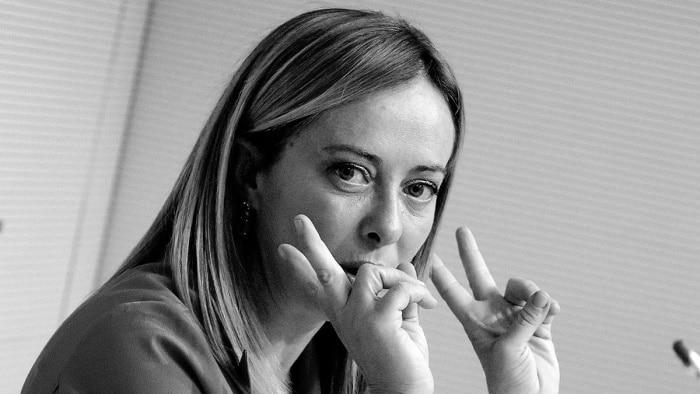
Giorgia Meloni criticises AI-generated photo of herself in lingerie

Giorgia Meloni criticises AI-generated photo of herself in lingerie

Giorgia Meloni has reposted a fake, AI-generated photo of herself dressed in lingerie that has circulated on social media, warning her followers not to trust “dangerous” images they see online.

“There are numerous fake photos of me circulating these days, generated with artificial intelligence and passed off as real by some diligent opponent,” she wrote on X.

Share

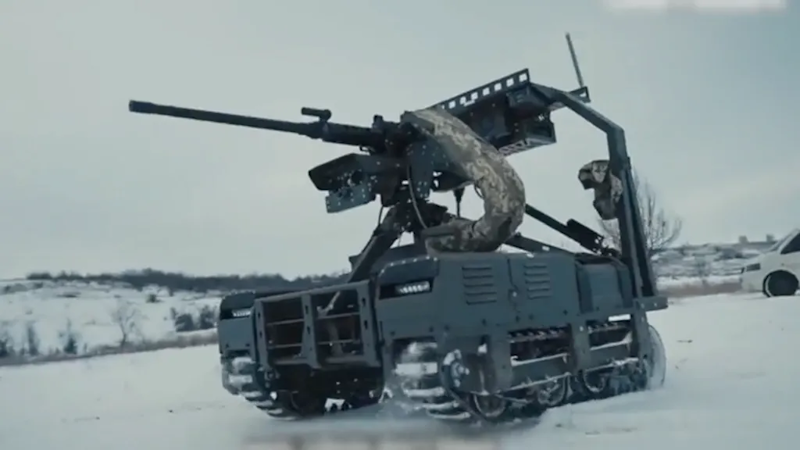
Robot wars – what an operation in Ukraine tells us about the battlefield of the near future

Robot wars – what an operation in Ukraine tells us about the battlefield of the near future

The battlefield in Ukraine could soon feature more robot than human soldiers – that is the startling claim made by a Ukrainian-British military start-up.

The BBC visited UFORCE at its London premises, which are unbranded and discreet, a measure the company says is intended to protect it from potential Russian sabotage.

I wanted to know more about the company because of its involvement in what Ukraine says was an unprecedented military operation: enemy territory being seized using only robots and drones.

Share

Surveillance pricing is discrimination by another name

Surveillance pricing is discrimination by another name

In 2008, on The Price Is Right, retired meteorologist Terry Kniess gave exactly the correct answer – right down to the dollar! – on two grand prizes. Everyone assumed he had cheated, but he said he hadn’t – instead, he memorized the show’s predictable set of prices.

That mind-blowing feat couldn’t happen today. Companies have made it almost impossible to know when the price is “right,” thanks to endless data collection that changes how much things cost across both time and place. Businesses now commonly use computational systems to track behaviour and traits to figure out what consumers might tolerate paying, to extract the maximum possible amount of money from them. This goes by many names: Algorithmic, personalized, surveillant, or even “snitch” pricing (though some economists see it as the holy grail of market efficiency, since everyone is paying what they are willing to pay). Some companies even claim, weakly, that this data collection helps them to deliver personalized and optimized discounts. But no matter what you call it, the result is discriminatory – even as this variance becomes a dominant feature of the modern economy.

Share

Nolte: ‘Tilly Tax’ Floated to Protect Crybaby Actors from Being Replaced by AI

Nolte: ‘Tilly Tax’ Floated to Protect Crybaby Actors from Being Replaced by AI

The latest (dumb) idea floating around to protect actors from AI is something called the Tilly Tax, or a tax that tries to remove the incentive of choosing an AI-generated actor over a human actor.

Over at Forbes, Dr. Lance B. Eliot, an AI scientist, has written a truly superb article that looks at this tax scheme from all angles. Unlike most of the analysis you see about AI vs. Hollywood, Eliot’s write-up is informed, comprehensive, and loaded with the kind of context the entertainment media are afraid to highlight.


Good read … Hollywood’s New Math Favors AI Actors Over Human Actors And Taxing Won’t Stop The Rise Of Synthetic Movie Stars

Share